Connect with us

Opinion

Beyond Protocol: The Tuggar Effect on Nigeria’s Global Standing

Published

on

Adebayo Adeoye

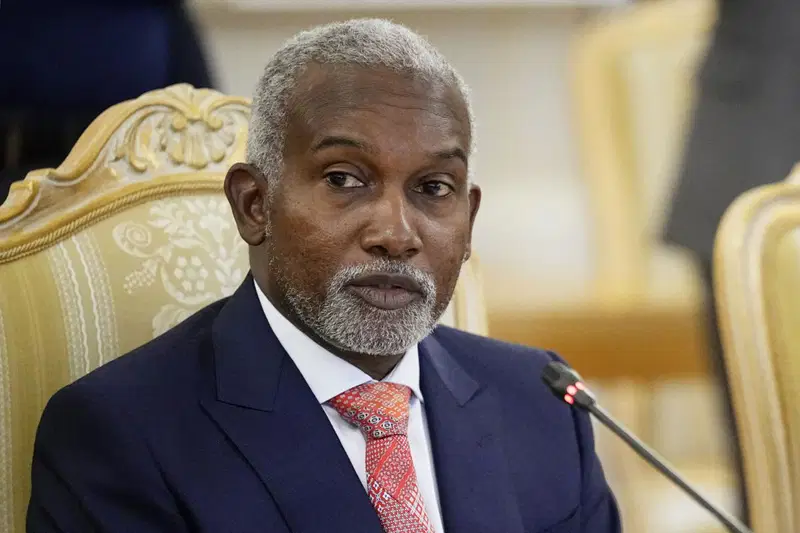
Less than three years after stepping into office as Nigeria’s Minister of Foreign Affairs, Yusuf Maitama Tuggar has steadily carved a distinct imprint on the nation’s diplomatic landscape.

In a world increasingly defined by shifting alliances, economic realignments and delicate geopolitical balances, he has proven himself, beyond rhetoric, to be a round peg in a round hole.

From the very beginning, Ambassador Tuggar approached the ministry not merely as an administrative responsibility, but as a strategic command centre for Nigeria’s global engagement. With an intellect sharpened by experience and a temperament grounded in composure, he has brought clarity and coherence to Nigeria’s foreign policy direction. His style is not loud, yet it resonates. It is measured, yet firm. It is thoughtful, yet decisive.

In multilateral corridors and bilateral negotiations alike, Tuggar has showcased the fine balance between diplomacy and national interest. He speaks with precision, listens with intent, and negotiates with foresight. Under his watch, Nigeria’s voice has not only been heard — it has been respected.

See also  Akinterinwa celebrates Boss, Akeredolu on birthday

From strengthening regional partnerships within Africa to redefining economic diplomacy as a core pillar of engagement, he has demonstrated that foreign policy is not an abstract exercise; it is a tool for national development.

Economic diplomacy, in particular, has gained renewed momentum. Tuggar has consistently advanced conversations that align Nigeria’s external relations with internal growth objectives — trade expansion, investment attraction, diaspora collaboration and strategic partnerships.

His understanding of global power dynamics has allowed Nigeria to navigate complex international waters without losing sight of sovereign priorities.

Beyond policy frameworks and diplomatic communiqués, what distinguishes Ambassador Tuggar is his grasp of nuance. He understands that diplomacy in the 21st century demands adaptability, cultural intelligence and strategic patience. In moments of global uncertainty, his calm articulation of Nigeria’s position has reinforced confidence both at home and abroad.

Ambassador Tuggar stands as more than a minister occupying an office. He represents a refined blend of intellect and pragmatism — a diplomat who truly knows his onions and continues to position Nigeria not merely as a participant in global affairs, but as a consequential voice shaping them.

See also  Sorrow, tears and blood as leadership fail Kano youths!

His diplomatic philosophy reflects both scholarship and experience. Soft-spoken but firm, analytical yet accessible, he understands that modern diplomacy demands more than ceremonial presence. It requires strategic thinking, cultural intelligence and the ability to translate global conversations into domestic gains. In high-level meetings and multilateral forums, he has projected Nigeria not as a peripheral player, but as a nation with agency, voice and influence.

Under his stewardship, Nigeria’s foreign policy architecture has taken on sharper definition. Economic diplomacy has moved from being a slogan to becoming a structured pursuit.

Trade partnerships, investment dialogues and diaspora engagement have gained renewed emphasis, reflecting his belief that diplomacy must ultimately serve the economic aspirations of the Nigerian people. For Tuggar, embassies are not mere outposts; they are gateways for opportunity.

Regionally, his role in strengthening West African cooperation has been marked by balance and foresight. In moments of political strain across the sub-region, Nigeria’s responses have carried both firmness and restraint — a testament to his appreciation of diplomacy as a stabilizing force. Globally, he has continued to articulate Nigeria’s positions on security, development, climate and economic equity with clarity and conviction.

See also  PDP and the Ekiti Question: A Party at the Crossroads

What distinguishes Ambassador Tuggar most, perhaps, is his grasp of nuance. He listens before he speaks. He studies before he acts. He recognises that diplomacy is often about timing as much as it is about language. This deliberate approach has earned him respect among peers and renewed confidence within Nigeria’s diplomatic corps.

Two years on, his tenure reflects a steady recalibration of Nigeria’s external engagements — less reactive, more strategic; less performative, more purposeful.

Ambassador Yusuf Maitama Tuggar has not merely occupied the office of foreign minister; he has grown into it, shaping it with intellect, composure and a forward-looking vision that continues to position Nigeria as a consequential voice in an evolving global order.

Continue Reading
Click to comment

Leave a Reply

Your email address will not be published. Required fields are marked *

Opinion

Happy birthday to an exceptional boss, father, friend and mentor: Otunba Femi Davies

Published

on

By

Today, I celebrate a man whose impact goes far beyond his professional achievements. A distinguished journalist, information guru, data expert, a man of wisdom, a kind-hearted boss, a father figure, a dependable friend and a mentor to me and many others.

Otunba Femi Davies is one of those rare individuals whose greatness is not only measured by what he has achieved but also by the lives he has touched, the people he has inspired and the opportunities he has created for others.

Sir, your kindness, humility, generosity, wealth of experience and willingness to guide others are qualities I deeply admire. You have been more than a boss to me; you have been a father, a friend, a teacher and a source of inspiration. Your words of encouragement, guidance and support remain invaluable.

To many of us who have had the privilege of learning from you, you are a blessing and a shining example of purposeful leadership.

Today, I proudly celebrate you, Baba Praise, Baba Bishop!

See also  Two years after, Yusuf Maitama Tuggar repositions Nigeria globally

As you mark another glorious year, may Almighty God continue to strengthen you, preserve your life, enlarge your coast and bless you with sound health, peace, prosperity and greater accomplishments.

May your days be filled with laughter, your home with happiness and your journey with unlimited testimonies.

You will continue to age gracefully, reap the fruits of your labour and enjoy the rewards of all the good seeds you have planted in the lives of others.

Happy Birthday, Otunba Femi Davies. Long life and prosperity, sir.

With profound respect and appreciation.

Continue Reading

Opinion

President Tinubu at Three: Advancing skills development, strengthening TVET and building a globally competitive Nigeria

Published

on

By

As President Bola Ahmed Tinubu marks his third year in office, Whitecloud TVET Solutions Limited joins millions of Nigerians in reflecting on the progress made in critical sectors that drive national growth, particularly Technical and Vocational Education and Training (TVET), skills development, and human capital advancement.

Over the past three years, the administration has demonstrated a growing commitment to repositioning skills acquisition as a cornerstone of economic development, youth empowerment, job creation, and national productivity. At a time when nations across the world are investing heavily in human capital, Nigeria has continued to take strategic steps toward equipping its citizens with practical, industry-relevant skills needed to thrive in the modern economy.

One of the most remarkable developments within the nation’s skills ecosystem has been the increasing attention given to Technical and Vocational Education and Training. Through policy reforms, stakeholder engagements, and institutional support, TVET is gradually gaining the recognition it deserves as a vital pathway to employment, entrepreneurship, innovation, and sustainable development.

See also  Akinterinwa celebrates Boss, Akeredolu on birthday

Particularly commendable is Nigeria’s growing engagement with WorldSkills International, the global movement dedicated to promoting excellence in vocational, technological, and technical skills. Nigeria’s participation in the WorldSkills community represents a significant milestone in the nation’s journey toward global competitiveness.

Beyond membership, it opens opportunities for Nigerian youths to benchmark their competencies against international standards, participate in global skills competitions, foster innovation, and showcase the immense talent and potential that exists within the country.

WorldSkills serves as a platform where nations prepare their workforce for the future, and Nigeria’s involvement reflects a deliberate commitment to producing a generation of highly skilled professionals capable of competing and excelling on the world stage.

This achievement aligns with the broader vision of creating a workforce that is not only employable but also globally relevant.

We also acknowledge the efforts of the Federal Ministry of Education in driving reforms within the TVET sector. The establishment of strategic committees and frameworks under the leadership of the Federal Ministry of Education under the leadership of the Honourable Minister of Education, Dr Maruf Olatunji Alausa has further strengthened coordination, stakeholder engagement, and implementation of policies aimed at transforming skills development across the country.

See also  Amb. Yusuf Maitama Tuggar: The Man of the People in Bauchi State

Equally worthy of recognition is the pivotal role being played by the Industrial Training Fund (ITF) under the leadership of its Director-General, Dr. Afiz Oluwatoyin Ogun. Through various initiatives focused on vocational training, apprenticeship development, workforce readiness, and industry-driven capacity building, the ITF has continued to bridge the gap between education and industry while supporting the Federal Government’s vision of building a skilled and productive workforce.

The renewed emphasis on practical skills acquisition, digital competencies, entrepreneurship, and industry partnerships has created new opportunities for young Nigerians to acquire relevant knowledge and become active contributors to the nation’s economic transformation.

As a leading organization committed to skills development and technical education, Whitecloud TVET Solutions Limited recognizes these achievements as important building blocks toward a more prosperous and self-reliant Nigeria. We remain committed to supporting government efforts, collaborating with industry stakeholders, and providing world-class training that equips Nigerians with the competencies required for success in today’s rapidly evolving world.

See also  PDP and the Ekiti Question: A Party at the Crossroads

As President Bola Ahmed Tinubu celebrates three years of leadership, we congratulate him on the progress recorded in advancing skills development, strengthening technical education, and laying the foundation for a more competitive and economically resilient nation.

We also commend all stakeholders, institutions, development partners, and industry leaders who continue to contribute to the growth of Nigeria’s TVET and skills ecosystem.

Together, we can build a nation where skills drive prosperity, innovation fuels growth, and every Nigerian has the opportunity to realize their full potential.
Congratulations, Mr. President, on three years of purposeful leadership and commitment to national development.

Signed
Mr. Jasper Oluranti Netufo
Chairman/CEO
Whitecloud TVET Solutions Limited

Continue Reading

Opinion

The Shame of Afe Babalola Way: Why Ekiti and Abuja Must Fix This Road Now

Published

on

By

By Sola Ajisafe, Esq

I was at Afe Babalola University, Ado Ekiti, yesterday for an important function. I felt proud of what one man can do, and angry at what government has failed to do.

The Ado/Ijan Road, now known as “Afe Babalola Way,” is an eyesore. It serves a Federal Polytechnic, a world-class private university, the Ekiti Golf Club, an agricultural settlement, and multiple government establishments. Yet neither the Federal Government nor the Ekiti State Government has treated it as a priority. For 16 years since ABUAD was established, this critical corridor has been left to rot. This is not just bad infrastructure. It is ingratitude.

Chief Afe Babalola, SAN, is Ekiti’s most significant living contribution to Nigeria and the world. A local boy who conquered the legal profession and was recognized by leaders, including Queen Elizabeth II. At 97, he has built what no government in Nigeria has matched.

Over the past sixteen years, he has created employment and opportunity on a scale that rivals the state itself. ABUAD currently employs more than 2,500 academic and non-academic staff, with over 5,000 additional support staff working as cleaners, artisans, drivers, farm hands, and others. That employment base has turned the institution into one of the largest private employers in Ekiti.

The university’s impact has not gone unnoticed. It has been ranked No. 1 in Nigeria by Times Higher Education for four consecutive years, 2022 to 2025, No. 3 in Africa, and No. 84 globally on impact ratings. Those rankings reflect not just academic output but the university’s role in advancing healthcare, research, and community development.

See also  PDP and the Ekiti Question: A Party at the Crossroads

In healthcare, ABUAD operates a Multi-system Hospital ( AMSH) that has become a referral center for the country. The hospital runs an MRI unit, CT-Scanners, Digital X-Ray machines, 17 dialysis machines, and has performed over 400 dialysis procedures. Just two weeks ago, more renal transplants were successfully performed to make a total of 50 renal transplants carried out without complications for donors or recipients in ABUAD. The center also performs cardio-thoracic surgeries and runs an IVF clinic.

Beyond the hospital, Chief Afe Babalola established the Afe Abiye free antenatal program for women in Ekiti State, a model similar to Ondo’s Mother and Child scheme, ensuring that thousands of women receive care without cost. He also established two hospital annexes at Odo Ado( Girigiri) and Basiri all within Ado Ekiti.

His philanthropic contributions to Federal Polytechnic, Ado Ekiti and Ekiti State University coupled with yearly empowerment programmes for Ekiti State farmers, traders, artisans and scholarships for students are monumental.

Where government infrastructure has failed, ABUAD stepped in. The university runs an independent power plant not connected to the national grid, and a private dam that meets the water needs of the university and its farm. It also operates an industrial park with space for 126 factories, and a fully integrated farm that produces vegetables, fruits such as pepper, mangoes, papaya and tomatoes, livestock including birds, fish and other animals, and processed products like flour, cassava, plantain, rice, pepper, and cashew nuts for local consumption and export. The farm even has its own feed mill for livestock, and the institution is involved in recycling to sustain its operations.

See also  ATIKU’S CONSISTENT INCONSISTENCY IS A NATIONAL EMBARRASSMENT — ONI OLALEKAN

The economic multiplier effect is evident. ABUAD attracts students from all 36 states and the FCT, as well as from countries including the US, China, and across Africa. To further open up the State, Chief Afe Babalola personally contributed N2 billion for landing equipment at the newly established Ekiti Cargo Airport and N450 million for the construction of its current car park.

This is what one man did for Ekiti without waiting for Abuja or Ado Ekiti. He even provided his house as the take-off administrative office for the State university at inception.

And what did Ekiti and the Federal Government do in return? They left the road to his university unmotorable.

Governor Biodun Oyebanji is widely regarded as an Omoluabi. Unlike two of his predecessors, he has publicly shown respect for Chief Afe Babalola, prostrating for him in line with Yoruba ethos. But respect without action is empty. Governor Oyebanji recently delivered a lecture at ABUAD, yet avoided the Ado/Ijan Road entirely and came through the bypass. That tells you everything.

See also  The Tuggar Effect: Tuggar’s Entry Sparks Wild Optimism Across Bauchi

President Bola Tinubu is an alumnus of ABUAD, having received an honorary doctorate from the university. The Federal Ministry of Works claimed to have awarded the road two years ago, then passed it to FERMA. Since then, silence. Nothing has been done.

So I ask; How does a country honor its heroes while they are alive? The best gift Ekiti State and the Federal Government can give Chief Afe Babalola at almost a century is not another plaque or title. It is to fix the 8.5km road that bears his name so he can drive on it, and so the students, patients, staff, and investors who keep ABUAD running don’t destroy their vehicles and waste their lives in traffic and dust.

Anything short of immediate resumption and completion of work on this road is a dent on Governor Oyebanji and Minister David Umahi. It tells the world that Nigeria celebrates its builders only in speeches, not in deeds.

Ekiti opened its doors to the world because of ABUAD. The least the world can expect in return is a road that works.

Fix Afe Babalola Way. Now. While the man can still see it.

Oloroogun Sola Ajisafe, Lawyer/Journalist. He is from Oka Akoko, lives and practices law in Akure, Ondo State.

Continue Reading

Trending News