Connect with us

News

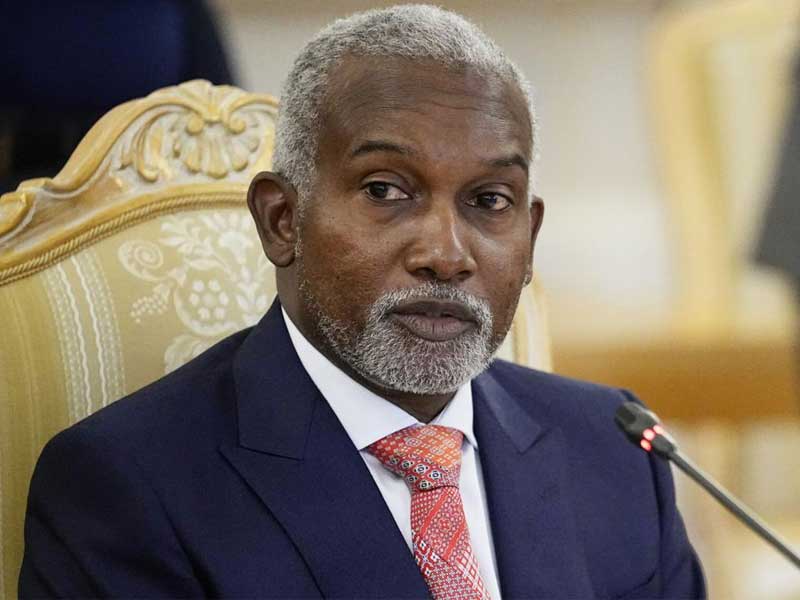
Amb. Yusuf Maitama Tuggar: The Man of the People in Bauchi State

Published

on

By Adebayo Adeoye

In politics, timing is everything. There are moments when a candidate merely contests for office, and there are moments when a candidate arrives as a response to a public mood already searching for expression. In Bauchi State today, supporters of Yusuf Maitama Tuggar believe his emergence belongs firmly in the latter category.

As the All Progressives Congress (APC) inches closer to its governorship primaries ahead of the next electoral cycle, the atmosphere within Bauchi’s political landscape has begun to shift in a manner difficult to ignore.

Conversations in markets, within youth circles, among traditional institutions, and across professional communities increasingly revolve around one question: could Yusuf Maitama Tuggar represent the long-awaited break from a political culture many residents believe has kept the state trapped below its true potential?

For years, Bauchi has remained a state suspended between promise and underperformance. Endowed with vast agricultural opportunities, mineral resources, strategic commercial positioning, and one of the most politically conscious populations in northern Nigeria, it has nevertheless struggled to convert these advantages into broad developmental gains. Roads have been announced but abandoned midway.

Healthcare facilities exist in policy documents more convincingly than in practical reality. Educational institutions continue to lose talent and competitiveness. Across many communities, there is a growing sense that governance has too often become an exercise in survival politics rather than visionary leadership.

It is against this backdrop that Tuggar’s candidacy has begun to attract unusual attention.

When the former Foreign Affairs Minister formally submitted his nomination and Declaration of Interest forms at the APC secretariat, the reactions that followed across parts of Bauchi were striking. Unlike the carefully choreographed rallies that have become routine within Nigerian politics, many observers described the response as spontaneous and organic.

See also  (UPDATED) Edo guber election: INEC uploads 74.68% of results on IREV

There were celebrations not merely from political loyalists but from ordinary supporters who appeared eager to identify with a figure they see as embodying competence, exposure, and administrative seriousness.

In many respects, Tuggar’s appeal lies precisely in the contrast he presents to the conventional political archetype.

Before becoming Foreign Affairs minister ,Tuggar built much of his public profile through diplomacy and institutional service. As Nigeria’s Ambassador to Germany, one of the country’s most strategically significant foreign postings, he represented Africa’s largest economy at the centre of Europe’s industrial and political architecture. During his tenure, he was involved in strengthening bilateral cooperation in areas ranging from trade and investment to security and migration policy.

Those familiar with his diplomatic career often describe him as disciplined, methodical, and intensely policy-driven — qualities not always commonly associated with Nigeria’s rough-and-tumble political environment. Associates say he possesses the rare ability to combine intellectual depth with political accessibility, a balance many politicians struggle to maintain.

Yet beyond personal credentials, Tuggar’s supporters argue that his greatest strength may be his understanding of governance as a practical undertaking rather than a ceremonial occupation.

In his engagements with party stakeholders and community leaders, he has consistently spoken about governance in terms of systems, institutions, planning, and measurable outcomes. Rather than relying solely on emotionally charged political rhetoric, he frames development as a technical challenge requiring competent administration, transparency, and long-term thinking.

See also  Nigerians flood Ireland for asylum

That message appears to resonate strongly among younger voters and professionals who have grown increasingly frustrated with what they perceive as cyclical politics devoid of real progress.

Indeed, there is a generational undercurrent quietly powering the Tuggar movement.

Across northern Nigeria, a significant youth population has become increasingly disillusioned with the recycling of political authority among familiar interests and entrenched patronage networks. In Bauchi particularly, many young people believe the state’s enormous economic and human potential has been repeatedly sacrificed to short-term political calculations.

Tuggar’s background — rooted more in institutional service and international diplomacy than in local political godfatherism — offers a symbolic departure from that tradition.

His supporters believe this distinction matters.

To them, Tuggar represents not merely another aspirant seeking office, but a candidate whose worldview has been shaped by exposure to functioning systems and accountable governance structures abroad. They argue that his years representing Nigeria on the international stage have equipped him with both the discipline and perspective needed to reposition Bauchi competitively within Nigeria’s evolving economic and political landscape.

Of course, politics is rarely moved by credentials alone.

Critics have already begun raising familiar questions that often confront diplomats and technocrats entering domestic politics. Can international experience translate into effective grassroots political management? Can a man accustomed to diplomatic negotiations navigate the complicated realities of state-level power structures, competing interests, and entrenched political loyalties?

These are not insignificant concerns. Nigerian politics, particularly at the state level, rewards coalition-building as much as competence. It demands the ability to negotiate competing ambitions while maintaining political stability across diverse constituencies.

See also  New tourism minister, Lola Ade-John kneels before Tinubu after signing oath of service

Tuggar’s allies insist he is fully aware of these realities. They point to the growing coalition reportedly forming around his candidacy across Bauchi’s three senatorial zones as evidence that his appeal cuts across generational, professional, and community lines. From youth groups to market associations and influential traditional stakeholders, his camp argues that momentum continues to build steadily in his favour.

More importantly, they believe the current political climate in Bauchi has created an opening for a candidate whose central message revolves around credibility and governance reform rather than populist theatrics.

Whether that momentum ultimately translates into electoral success remains uncertain. Nigerian politics has often demonstrated that public enthusiasm does not always guarantee political victory. Structures, alliances, and internal party calculations continue to shape outcomes in ways voters do not always control.

Still, what cannot be dismissed is the psychological shift Tuggar’s emergence appears to have triggered among many Bauchi residents. In a political environment where cynicism has become deeply rooted, he has managed to rekindle something that is increasingly rare in contemporary Nigerian politics: cautious optimism.

And perhaps that explains the growing fascination around his candidacy.

For in the end, elections are not merely contests between politicians. They are contests between competing visions of what people believe their future can become. In Bauchi today, many supporters of Yusuf Maitama Tuggar appear convinced that his candidacy represents more than another political ambition.

To them, it represents possibility.

Continue Reading
Click to comment

Leave a Reply

Your email address will not be published. Required fields are marked *

News

EFCC says it froze Osun account over ‘fraudulent handling’ of N11bn ecological, intervention funds

Published

on

By

The Economic and Financial Crimes Commission (EFCC) has explained that it froze the bank account of the Osun state government over alleged fraudulent handling of N11 billion ecological and intervention funds.

The anti-graft agency, in a statement on Wednesday, said it has been investigating the Osun state government since March regarding the alleged mishandling of the funds.

According to the agency, some officials of the state government, including the accountant-general of the state, had been interviewed by EFCC investigators.

The agency said amid the probe, it observed that huge transfers of funds were being made from the account into different corporate entities since August 2.

“These ongoing investigations of the state government would not have warranted any placement of Post No Debit order on its account but for the precipitate and unwarranted movement of funds from the accounts to different suspicious accounts since August 2, 2026,” the statement reads.

See also  Senate mourns victims of Ikoyi building collapse, calls for professionals' involvement in build projects

“The Commission noticed huge transfers of funds into different corporate entities and had to swiftly halt the trend by freezing the accounts from which such heavy funds are being moved.

“The EFCC’s preventive mandate is a public-inclined framework of safeguarding public funds, assets and resources.

“The Commission cannot watch idly while a state government’s account is being pillaged.”

The anti-graft agency said it is aware of the forthcoming Osun governorship election, adding that it is “uncharitable” to overlook the huge transfers of funds over the “excuse of an upcoming election”.

“The Osun State government account was frozen to save public funds from being looted,” the agency said.

In a letter dated August 5, 2026, and signed by Adenike Babalola, assistant commander of the EFCC on behalf of the director of investigation, the anti-graft agency directed First Bank not to allow withdrawals from the Osun state government’s statutory allocation account as part of an ongoing investigation.

See also  Alleged certificate forgery: Uche Nnaji resigns as minister

The agency instructed the bank to place a post-no-debit restriction on the account pending the conclusion of the probe.

Reacting to the development, Ademola Adeleke, Osun governor, said the state government will not accept a situation in which federal government agencies trample upon the rights of subnational governments.

Adeleke said the Osun government has been witnessing numerous sponsored attacks, including the harassment of Accord party members and the move to stall the operations of LGAs in the state.

Adeleke said he has directed the attorney-general of the state to challenge the “illegality”.

Continue Reading

News

Osun threatens lawsuit as EFCC freezes govt account 10 days to election

Published

on

By

Less than 24 hours after Governor Ademola Adeleke alleged that the Economic and Financial Crimes Commission (EFCC) was planning to freeze the state government account domiciled with First Bank, the anti-graft agency has reportedly freezed the account, according to Vanguard.

The account, reportedly used for the payment of workers’ salaries, was placed on “Post No Debit” status by the anti-graft agency.

The development came hours after Governor Ademola Adeleke raised the alarm that the EFCC was planning to freeze the state government’s accounts and those of top government officials ahead of the August 15 governorship election.

In a statement issued earlier on Wednesday by the Commissioner for Information and Public Enlightenment, Kolapo Alimi, Adeleke described the alleged move as an attempt to cripple government activities before the poll.

The governor had insisted that there was no legal basis for freezing the accounts of a state government, arguing that the EFCC lacked the statutory powers to take such action.

See also  Air Peace rejects NSIB report on pilots’ drug use, says co-pilot cleared by NCAA

However, a source reportedly told Vanguard that the account had already been restricted.

“I can confirm that the state government account has been frozen by the EFCC. It is no longer an allegation. The governor will address the press shortly to update the public on the situation,” the source reportedly told Vanguard.

The reason for the restriction was not immediately known as of the time of filing this report.

The EFCC had yet to issue an official statement on the development.

The development comes as Osun prepares for its August 15 governorship election, with the account restriction expected to generate political reactions ahead of the poll.

Meanwhile, the state’s Attorney General and Commissioner for Justice, Oluwole Jimi-Bada, had said he has the mandate of the governor to sue the Economic and Financial Crimes Commission for freezing the government accounts.

Jimi-Bada said a ‘Post no debit’ letter from the EFCC was forwarded to the management of the First Bank where Osun government accounts were domiciled on Wednesday.

See also  (UPDATED) Edo guber election: INEC uploads 74.68% of results on IREV

The commissioner, who expressed readiness to proceed to court, said the move by the anti-graft agency may hamper government’s business, noted that Governor Ademola Adeleke was not using state funds to run its campaign for reelection.

“I have the mandate of the governor to proceed to the Federal High Court to challenge this move. EFCC can investigate the accounts but it can’t freeze the accounts without order of court.

Continue Reading

News

WAEC releases 2026 WASSCE results, withholds 167,486 candidate’s results over malpractice 

Published

on

By

The West African Examinations Council says it is withholding the results of 167,486 candidates, representing 8.59 per cent of those who sat the 2026 Computer-Based West African Senior School Certificate Examination for School candidates, over alleged examination malpractice.

This was disclosed by the Head of WAEC Nigeria National Office, Dr Amos Dangut, who announced the release of the results in Lagos on Wednesday.

The number of withheld reults, however, represents a decline from the 9.7 per cent recorded in 2025.

Dangut said the council withheld the affected results due to various infractions, including the increasing use of mobile phones in examination halls despite the existing ban and organised cheating in some schools.

“The increasing use of cell phones in the examination hall, in spite of the existing ban, and organised cheating in some schools, are other nagging issues,” Dangut said.

He added that some supervisors and invigilators found assisting candidates in malpractice had been arrested and would face disciplinary action through the relevant state ministries of education.

See also  Fountain of Life Church names Pastor Odukoya’s son, Jimmy senior pastor

A total of 1,959,668 candidates from 24,207 schools registered for the examination across Nigeria, Benin Republic, Côte d’Ivoire and Equatorial Guinea, while 1,950,726 candidates eventually sat for the examination.

1,200,514 candidates (61.54 per cent) obtained credits and above in at least five subjects, including English Language and Mathematics.

1,687,378 candidates (86.50 per cent) secured credits and above in a minimum of five subjects, with or without English Language and Mathematics.

The number of candidates who obtained credits in five subjects including English and Mathematics dropped by 1.42 percentage points compared with the 2025 examination.

Of the 1.2 million candidates who achieved credits in English and Mathematics:

558,883 (28.65 per cent) were male.

641,631 (32.89 per cent) were female.

Overall, 997,267 females (51.12 per cent) and 953,459 males (48.88 per cent) participated in the examination.

WAEC said 1,834,695 candidates, representing 94.05 per cent, had their results fully processed and released, while the results of 116,031 candidates (5.95 per cent) were still being processed.

See also  Air Peace rejects NSIB report on pilots’ drug use, says co-pilot cleared by NCAA

The council also disclosed that 1,213 candidates with special needs participated in the examination. They included:

137 visually impaired candidates;

491 candidates with hearing impairment;

55 spastic and mentally challenged candidates; and

41 physically challenged candidates.

The 2026 examination marked the second edition of the Computer-Based WASSCE for School Candidates, following the introduction of the format by WAEC.

Dangut said the council introduced several innovations, including the Digital Examiner Mark System to improve the speed of processing results, serialisation of question papers to curb malpractice, and a new portal that allows candidates to generate e-PINs directly for checking their results.

The examination was conducted between April 24 and June 19, 2026, with 102,708 examiners involved in marking across 88 marking venues.

Dangut, who described the briefing as his third and final engagement as WAEC Nigeria National Office head, said candidates sponsored by states indebted to the council would not have their results released until the outstanding payments were cleared.

See also  (UPDATED) Edo guber election: INEC uploads 74.68% of results on IREV

Continue Reading

Trending News