Connect with us

Opinion

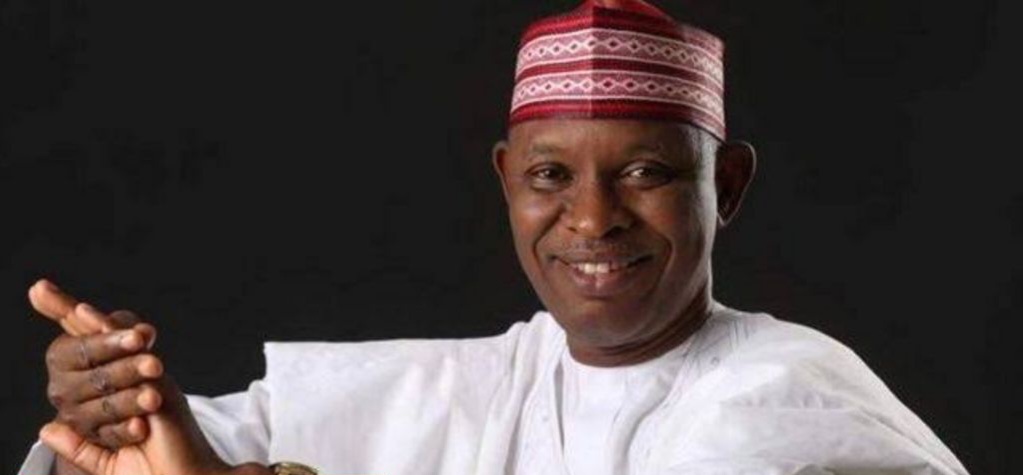
Abba Kabir Yusuf: A Visionary Leader Poised to Transform Kano State

Published

on


As the new government prepares to take office in Kano State, there is a sense of anticipation expectation and excitement in the air.

Abba Kabir Yusuf, the Governor-elect, is a leader who brings with him a wealth of experience in infrastructure, governance, and leadership.

With his strategic vision and dedication to progress, Abba Kabir Yusuf is without doubt well-positioned to take the state to new heights.

In this article, we will analyze the opportunities that lie ahead and how Abba Kabir Yusuf’s transformative agenda, coupled with the support of the citizens, will shape the future of Kano State.

A Track Record of Excellence

Abba Kabir Yusuf’s impressive track record speaks volumes about his commitment to public service. Having served as a commissioner in the executive council of Kano State from 2011 to 2015, he has already demonstrated his ability to drive change and deliver results.

His experience in the state’s Works, Housing, and Transport sector has equipped him with the necessary expertise to tackle the infrastructure challenges that lie ahead.

A Vision for Transformation

Abba Kabir Yusuf’s vision for Kano State is one of transformation and progress. With his background in the field of ⁰engineering and his understanding of the state’s unique needs, he is well-positioned to address critical issues such as transportation, housing, and water resources.

His commitment to improving the lives of the people of Kano State is unwavering, and he has outlined a comprehensive plan to ensure inclusive growth and development.

Infrastructure Development

One of the key areas where Abba Kabir Yusuf will make a significant impact is infrastructure development. He possesses the technical knowledge and expertise required to spearhead projects that will transform the state. From building modern roads and bridges to revitalizing the transportation system, Abba Kabir Yusuf will create an enabling environment for economic growth and improve the overall quality of life for the people of Kano State.

See also  Tinubu and Osinbajo: The true story of how they met, By Bayo Onanuga

Economic Empowerment

Abba Kabir Yusuf understands that sustainable economic development is essential for the progress of any state. He recognizes the importance of diversifying the economy, attracting investments, and creating job opportunities for the youth. Through strategic partnerships and policies that promote entrepreneurship and innovation, Abba Kabir Yusuf aims to unleash the full potential of Kano State and position it as a hub for economic activities in the region.

Education and Human Capital DevelopmentInvesting in education and human capital is a fundamental pillar of Abba Kabir Yusuf’s agenda. He recognizes that a well-educated population is essential for the sustainable development of any society. By improving the quality of education, providing access to vocational training, and promoting skill development programs, he aims to empower the citizens of Kano State and equip them with the tools they need to thrive in the 21st-century economy.

Citizen Engagement and Inclusivity

Abba Kabir Yusuf’s leadership style is characterized by inclusivity and citizen engagement. He understands the importance of listening to the concerns and aspirations of the people he serves. By promoting transparency, accountability, and participatory governance, he will ensure that the voices of all citizens are heard and that their contributions play a central role in shaping policies and programs.

Conclusion
As Abba Kabir Yusuf assumes office as the Governor of Kano State, there is a sense of optimism and hope for the future. With his wealth of experience, strategic vision, and dedication to progress, he is well-prepared to take the state to the next level. Through infrastructure development, economic empowerment, education, and inclusive governance, Abba Kabir Yusuf will transform Kano State into a thriving and prosperous state that serves as a model for sustainable development. His commitment to improving the lives of the people, coupled with his expertise in infrastructure and governance, positions him as a transformative leader capable of bringing about positive change.

See also  Kosofe 2023: Why I'm against Hon Rotimi Agunsoye's 3rd term ambition

Under Abba Kabir Yusuf’s leadership, Kano State will witness a new era of progress and development. The opportunities that lie ahead are immense, and with the support of the citizens, the state will experience advancements in key sectors such as infrastructure, education, and economic empowerment. Abba Kabir Yusuf’s agenda encompasses the aspirations and needs of the people, ensuring that no one is left behind.

Moreover, his inclusive approach to governance will foster a sense of belonging and active participation among the citizens. By engaging with the people and valuing their input, he will create a government that truly represents their interests and works towards their collective well-being.

Abba Kabir Yusuf’s tutelage under Rabiu Kwankwaso as his leader is marked by loyalty, dedication to duty, and a corruption-free attitude. Abba has served the state of Kano in various capacities without any blemishes, demonstrating his commitment to honest governance. He has also made a notable commitment by stating that no member of his family will participate in governance, indicating his determination to run the state without engaging in corrupt practices.

Abba’s political journey began as a personal assistant (PA) to former Governor Rabiu Kwankwaso, a position he held for 12 years from 1999 to 2011.

He later served as a private secretary to the government and was later appointed commissioner for works, housing, and transport. Throughout this time, Abba remained dedicated to Kwankwaso’s leadership, describing him as his leader and expressing utmost respect and trust for him.

Moreover, Abba’s relationship with Kwankwaso goes beyond professional duties. He is also the son-in-law of Kwankwaso, further solidifying their bond. In 2019, Kwankwaso mobilized support for Abba to challenge the incumbent Governor Abdullahi Ganduje, who had fallen out with Kwankwaso and the Kwankwasiyya movement. Abba won the initial election but faced a supplementary election due to the declaration of some areas as needing a rerun. Ultimately, Ganduje was declared the winner.

See also  Army rescue 17 girls in raids on baby-making factory in Nigerian-Cameroon border

Despite his ties to Kwankwaso, Abba has emphasized his independence and his commitment to governing in his own capacity. He has stated that Kwankwaso will not interfere in his work, but rather provide advice and guidance when necessary. Abba recognizes the value of Kwankwaso’s experience and welcomes his input for the betterment of governance in Kano state.

As the governor-elect of Kano state, Abba Kabir Yusuf carries the hopes of the people who expect him to bring an end to Ganduje’s administration and uphold the principles of the Kwankwasiyya movement. With his dedication to duty, clean track record, and determination to lead with integrity, Abba is poised to fulfill these expectations and steer the state toward progress and development.

As we look towards the future, there is great anticipation for the transformative changes that Abba Kabir Yusuf’s administration will bring. With his strategic positioning, wealth of experience, and dedication to progress, he is poised to lead Kano State to new heights of prosperity and development.

The journey towards transforming Kano State begins now, and with Abba Kabir Yusuf at the helm, we can confidently embrace a future filled with boundless opportunities and achievements. Let us rally behind our new Governor and work hand in hand to build a better, brighter, and more prosperous Kano State for generations to come.

Hon.Adeboro Onibalusi writes from Akure, Ondo state

Continue Reading
Click to comment

Leave a Reply

Your email address will not be published. Required fields are marked *

Opinion

Beyond Protocol: The Tuggar Effect on Nigeria’s Global Standing

Published

on

By

Adebayo Adeoye

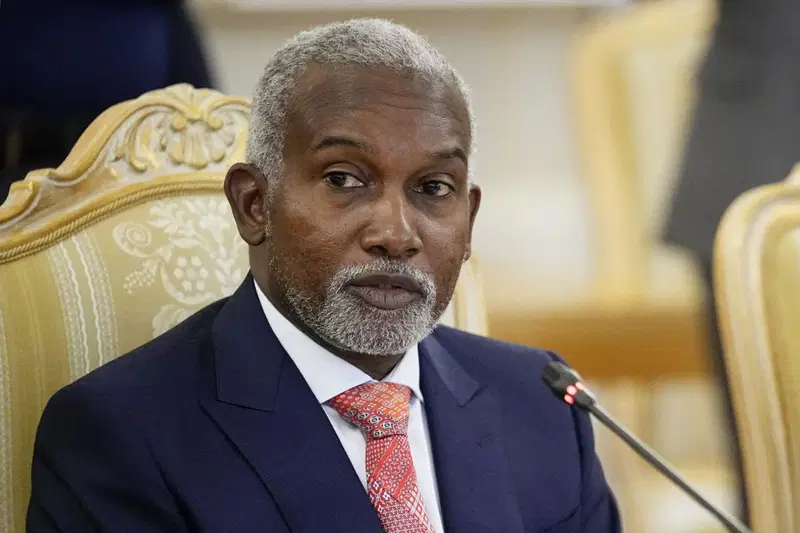
Less than three years after stepping into office as Nigeria’s Minister of Foreign Affairs, Yusuf Maitama Tuggar has steadily carved a distinct imprint on the nation’s diplomatic landscape.

In a world increasingly defined by shifting alliances, economic realignments and delicate geopolitical balances, he has proven himself, beyond rhetoric, to be a round peg in a round hole.

From the very beginning, Ambassador Tuggar approached the ministry not merely as an administrative responsibility, but as a strategic command centre for Nigeria’s global engagement. With an intellect sharpened by experience and a temperament grounded in composure, he has brought clarity and coherence to Nigeria’s foreign policy direction. His style is not loud, yet it resonates. It is measured, yet firm. It is thoughtful, yet decisive.

In multilateral corridors and bilateral negotiations alike, Tuggar has showcased the fine balance between diplomacy and national interest. He speaks with precision, listens with intent, and negotiates with foresight. Under his watch, Nigeria’s voice has not only been heard — it has been respected.

See also  Appeal for urgent Government Intervention

From strengthening regional partnerships within Africa to redefining economic diplomacy as a core pillar of engagement, he has demonstrated that foreign policy is not an abstract exercise; it is a tool for national development.

Economic diplomacy, in particular, has gained renewed momentum. Tuggar has consistently advanced conversations that align Nigeria’s external relations with internal growth objectives — trade expansion, investment attraction, diaspora collaboration and strategic partnerships.

His understanding of global power dynamics has allowed Nigeria to navigate complex international waters without losing sight of sovereign priorities.

Beyond policy frameworks and diplomatic communiqués, what distinguishes Ambassador Tuggar is his grasp of nuance. He understands that diplomacy in the 21st century demands adaptability, cultural intelligence and strategic patience. In moments of global uncertainty, his calm articulation of Nigeria’s position has reinforced confidence both at home and abroad.

Ambassador Tuggar stands as more than a minister occupying an office. He represents a refined blend of intellect and pragmatism — a diplomat who truly knows his onions and continues to position Nigeria not merely as a participant in global affairs, but as a consequential voice shaping them.

See also  Tinubu and Osinbajo: The true story of how they met, By Bayo Onanuga

His diplomatic philosophy reflects both scholarship and experience. Soft-spoken but firm, analytical yet accessible, he understands that modern diplomacy demands more than ceremonial presence. It requires strategic thinking, cultural intelligence and the ability to translate global conversations into domestic gains. In high-level meetings and multilateral forums, he has projected Nigeria not as a peripheral player, but as a nation with agency, voice and influence.

Under his stewardship, Nigeria’s foreign policy architecture has taken on sharper definition. Economic diplomacy has moved from being a slogan to becoming a structured pursuit.

Trade partnerships, investment dialogues and diaspora engagement have gained renewed emphasis, reflecting his belief that diplomacy must ultimately serve the economic aspirations of the Nigerian people. For Tuggar, embassies are not mere outposts; they are gateways for opportunity.

Regionally, his role in strengthening West African cooperation has been marked by balance and foresight. In moments of political strain across the sub-region, Nigeria’s responses have carried both firmness and restraint — a testament to his appreciation of diplomacy as a stabilizing force. Globally, he has continued to articulate Nigeria’s positions on security, development, climate and economic equity with clarity and conviction.

See also  Missing person notice: Help find Oshola Daniel Oluwaseyi

What distinguishes Ambassador Tuggar most, perhaps, is his grasp of nuance. He listens before he speaks. He studies before he acts. He recognises that diplomacy is often about timing as much as it is about language. This deliberate approach has earned him respect among peers and renewed confidence within Nigeria’s diplomatic corps.

Two years on, his tenure reflects a steady recalibration of Nigeria’s external engagements — less reactive, more strategic; less performative, more purposeful.

Ambassador Yusuf Maitama Tuggar has not merely occupied the office of foreign minister; he has grown into it, shaping it with intellect, composure and a forward-looking vision that continues to position Nigeria as a consequential voice in an evolving global order.

Continue Reading

Opinion

Monday Lines 1| Ibadan Is Oyo | Lasisi Olagunju

Published

on

By

On Monday, 25 March, 1946, Chief I. B. Akinyele, Chief James Ladejo Ogunsola, Messrs D. T. Akinbiyi and E. A. Sanda, the very cream of the Ibadan educated elite, met behind closed doors with Oyo town delegates at the secretariat in Ibadan. One of them got home that day and wrote in his diary that they “could reach no agreement because we (Ibadan) flatly refused to pay one penny towards the Alaafin’s salary.”

Yet, some 84 years earlier (1862), the same Ibadan went to war against friends, family, and acquaintances in support of Alaafin. Ibadan destroyed Ijaiye because its ruler, Kurunmi, was rude and unruly to the Alaafin. He had to die because he refused to recognise the king whose father made him Aare, and who made Oluyole Basorun of Ibadan.

Ibadan of 1862 served Oyo and its Alaafin; that of 1946 damned them. Between the first stance and the second, what changed or what caused the change? The tongue. The body. Disposition. Reciprocal respect. My Christian friend pointed at a verse in the Bible: “And the king answered the people roughly. In a blustering manner, gave them hard words and severe menaces…” Then it was “To your tent, O Israel!”

On Sunday, 3 February, 2008, twelve out of the then seventeen members of Oyo State Council of Obas and Chiefs visited the Alaafin in Oyo. They said they were there “to solidarise and pay traditional respect to our permanent chairman.” From that visit came a ten-point resolution which was published as an advertorial on page 27 of the Nigerian Tribune of 5 February, 2008. The title of that advert is: ‘Oyo obas back Alaafin for permanent chairmanship of Council of Obas and Chiefs.’ The fifth of the resolutions is the shortest and most categorical: The obas declared that in Oyo State, “remove the Alaafin, and all other obas are equal.”

The obas who signed that statement were the Eleruwa of Eruwa, Olugbon of Orile Igbon, Okere of Saki, Aseyin of Iseyin, Iba of Kisi, Onpetu of Ijeru, Onjo of Okeho, Sabi Ganna of Iganna, Aresaadu of Iresaadu, Onilalupon of Lalupon, Onijaye of Ijaye and Olu of Igboora.

Now, read that list again – and this is where I am going: In the Saturday Tribune of January 17, 2026 (two days ago), an advert celebrating the reconstitution of the obas’ council with the Olubadan as rotational chairman was signed by six of those who signed the 2008 advert which celebrated Alaafin’s permanent chairmanship. These are: Eleruwa of Eruwa, Olu of Igboora, Olugbon of Orile-Igbon, Onpetu of Ijeru, Okere of Saki and Aseyin of Iseyin.

Yesterday’s “permanence” becomes today’s “rotation,” each wrapped in the rhetoric of unity, justice, and tradition. We see obas who were with Oyo in 2008 shifting allegiance to Ibadan in 2026. What this suggests is not moral collapse but the old, unembarrassed truth about power: it obeys seasons. Our obas, like politicians, have read too much of Geoffrey Chaucer. They move in steps that suggest that time, when it shifts, rearranges loyalties as effortlessly as it rearranges hierarchies.

See also  Tinubu and Osinbajo: The true story of how they met, By Bayo Onanuga

Friendship and politics define statuses and hierarchies. Governor Rashidi Ladoja in 2004 decentralised the council of obas into zones and directed each paramount oba to preside over their area. His decision was based on the fact and logic that there was no throne of Oyo State for the kings to fight over. I agree with that reasoning, and, in fact I do not think any council anywhere is necessary as conclave of obas. However, last week, Oba Rashidi Ladoja assumed office as chairman of an undecentralised council of obas. What has changed?

Ladoja’s successor, Governor Adebayo Alao-Akala in 2007, made Alaafin permanent chairman. The Olubadan and Soun of Ogbomoso kicked and would have nothing to do with that arrangement. The governor ignored them. He said he was following the law. But the same Alao-Akala, on his way out of government in May 2011, used the House of Assembly to reverse that decision. Because his friendship with the Alaafin had expired, he made the position rotational in the following order: 1. Olubadan; 2. Soun of Ogbomoso; 3. Alaafin of Oyo. Check the Nigerian Tribune of 3 May, 2011, page 4.

Were all these about history, or about that fluid thing called change? What was obviously at play there was (and is) politics; and in politics, nothing is constant; not truth, not friendship. What exists is interest. “There is no fellowship inviolate, No faith is kept, when kingship is concerned,” says Second Century BC Roman poet, Ennius. Obas, institutions and palaces that took a position in 2008, are this year taking a directly opposing stand. What changed? Is it about the person of the last Alaafin and the persona of the incumbent?

In his caustic response to last week’s inauguration of Oyo State Council of Obas, Alaafin Akeem Owoade referred to himself as “superior head of Yorubaland.” Did he have to write that? And, what does it mean? Whatever that claim was meant to achieve has attracted negative vibes from every corner of Yorubaland. I read resentment and resistance even when its author knows it is a plastic claim. In the old understanding of the world, the ancients spoke of two ruling forces: Love, which binds; and Strife, which sunders. The palace, no less than the cosmos, is governed by this uneasy pair. The oba in Yorubaland reigns within the contradiction. The crown draws devotion even as it breeds resentment. It commands reverence when it is humble and just in its royalty; it invites resistance when haughty and proud.

Shakespeare, in Richard III, speaks about kings’ “outward honour” and “inward toil.” In Hamlet, he says “The king is a thing…Of nothing.” In Henry V, he says the “king is but a man, as I am” and therefore prone to errors courtiers make. No two kings are the same; no two reigns score the same marks. There are definitely differences in engagement between the last Alaafin and this new one. Alaafin Adeyemi III went out to make quality friends and read good books; his successor, so far, appears distant and aloof. I am interested in who, among obas and commoners, are his friends. I am eager to know the books he reads. His handlers should help him to succeed by telling him to look more forward than backwards. A lot of 19th century data which he romanticises are no longer valid. For instance, Ibadan of the past saw itself as part of Oyo; today’s Ibadan sees Oyo as part of its inheritance. Read Professor Bolanle Awe in her ‘The Ajele System: A Study of Ibadan Imperialism in the Nineteenth Century’ (1964). Mama reminds everyone who argues with history that “the direct heirs of the Old Oyo empire…regrouped themselves in three main centres at Oyo, Ijaye and Ibadan.” So, Ibadan is Oyo while today’s Oyo is not necessarily Ibadan.

See also  Missing person notice: Help find Oshola Daniel Oluwaseyi

People who understand the dynamics of power and history would insist that Ibadan’s defiance in 1946 and its earlier zeal in 1862 are not contradictions so much as timestamps. We see and feel Ibadan challenging Oyo, even feeling insulted by suggestions of being subjects of Alaafin. Authority once defended as sacred becomes, under a new alignment of interests, negotiable. This Oyo has everything a father has, except age. It has a history of leadership. But has Oyo provided the right leadership in the last one year? You remember what King Sunny Ade sings should be done to Egungun that dances for twenty years and remains in poverty? You throw away its mask and costume and promote Gelede. That is why institutions today act selectively; and actors remember the past strategically. What appears as amnesia or inconsistency is cold calculation. The past is not denied; it is merely edited.

Every Alaafin since 1830 has had to contend with the Ibadan factor. Ibadan is pro-Oyo but it won’t accept suggestions of Alaafin and Oyo overlordship. And that is because the founders of Ibadan were shareholders of Oyo, both the old and the new. In particular, they see in Oyo and its monarchy partners, not lords. Indeed, Ibadan never believed/believes there was (is) a king anywhere for them to worship. Professors I. A. Akinjogbin and E. A. Ayandele say the early Ibadan “prided themselves as a group who had nothing but contempt for the crowns.” Indeed, in July 1936 when the city wanted its Baale to become known and called ‘Olubadan’, its leaders made it clear that what they wanted was the change in title; they did not want an oba who would rob them of their republican freedom. Is that not the reason for its very unique lack of royal or ruling houses? Read Toyin Falola’s ‘Ibadan’, pages 681 and 682.

See also  Appeal for urgent Government Intervention

The new Alaafin has no excuse for making cheap and expensive mistakes. His heritage is goodly and his court is not lacking in quality men and women. When he was made oba a year ago (January 2025), Professor Toyin Falola, easily Africa’s preeminent historian and Yoruba patriot, wrote a long piece of advice for the man chosen as our Alaafin. The title of that piece is: ‘Alaafin Owoade and Yorùbá Renaissance.’ It was primarily written for the new king to read. If he read it, I am not sure many of today’s challenges would spring and hang on his nascent reign. Every paragraph of the essay is gold, every line golden. If he read it last year, he should read it again and make it his operations manual. Take these: “He must learn history. I can reveal to the new Alaafin that his immediate predecessor took time to understand history. Alaafin Adeyemi’s power of retentive memory was second to none. He had a memory arsenal covering almost 500 years…

“Alaafin Owoade must know history…The new Alaafin must not engage in historical revisionism as his counterparts now do. Rewriting history is dangerous, as in saying the Benin Empire owes little to Ile-Ife and Oranmiyan. Conflating Ugbo with Igbo is a wrong-footed interpretation of the past. He needs not to dabble into issues of superiority around who the superior king was in the past. Oyo and Ile-Ife are constant in the people’s history because they represented the seats of economic and political power and the spiritual rallying point of the Yorùbá people. Let him explore the consensus around historical prestige: the foundation of prominent Yorùbá ancestors and the creation of a glorious history.”

So far, it would appear that Alaafin Owoade has not benefited from the nuggets in the Falola advice. He should go back to it. He should also go out to make quality friends among his brother obas. He needs them. If there are people he needs to beg, he should beg them. Nothing is damaged (yet) beyond repairs. Like flights of planes, every reign has tough beginnings. In tension and turbulence, the expertise of the pilot makes a lot of difference. If the Alaafin refuses to spread his eyes first, no guest will sit on the mat he spreads, no matter how beautiful.

He also needs to know (or remember) that power attracts, but it also repels. This is why allegiance cannot be ordered into existence; it must be patiently won. It is also why sovereignty carries its own burden, captured in the timeless lament of the dramatist: uneasy lies the head that wears a crown. For the Alaafin to remain tall, he must woo Ibadan and other Yoruba towns with friendship; he cannot summon their loyalty by proclamation.

(Published in the Nigerian Tribune on Monday, 19 January, 2026

Continue Reading

Opinion

PDP and the Ekiti Question: A Party at the Crossroads

Published

on

By


The judgment of the Federal High Court nullifying the last PDP governorship primary in Ekiti should be more than a legal setback. it should serve as a loud warning.


The PDP is on the edge of losing Ekiti, not because it lacks popular support, but because it has failed, repeatedly, to build and deploy an effective internal crisis-resolution mechanism.


For a party that prides itself on experience and structure, it is troubling that internal disagreements are allowed to fester until they are settled by the courts. This is not strength; it is institutional weakness.


If this trend continues, history will not be kind to those currently entrusted with leadership of the party in the South West. They will be remembered, not for rebuilding the PDP, but for presiding over avoidable damage to its fortunes.


The reality is simple. If a fresh primary is conducted and Dr Wole Oluyede emerges again, there is no guarantee that supporters of Funsho Ayeni will fully mobilise for him. The reverse is also true. A divided PDP cannot win a governorship election in Ekiti, no matter how unpopular the ruling party may be.

See also  Title: Financial Metrics Analysis in Agribusiness: Unveiling Overlooked Indicators


This is why the party must think beyond ego and faction. PDP leaders should urgently explore a consensus option that prioritises unity, stability, and electability.


The party must resolve to embrace a candidate that has displayed clear examples of restraint, loyalty, and a willingness to sacrifice personal ambition for the survival of the party. The PDP needs a natural unifying force at a time when the PDP needs healing, not further strain.


Ekiti is too important to be lost on the altar of unresolved internal conflicts. The PDP must choose unity now, or risk collective regret tomorrow.

Continue Reading

Trending News