Connect with us

Opinion

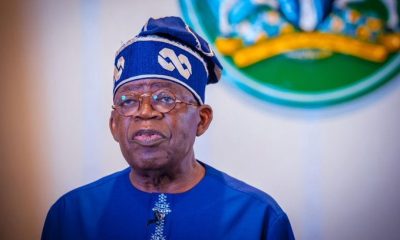
Tinubu and Osinbajo: The true story of how they met, By Bayo Onanuga

Published

on


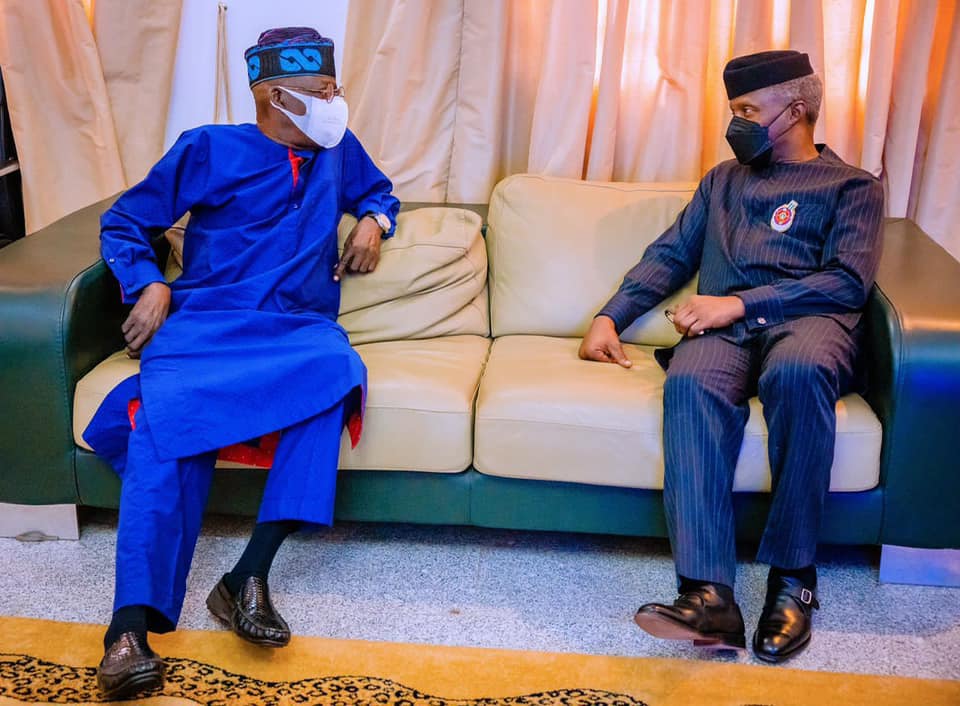
I never wanted to write this story but I was inspired to do so today, following Buba Galadima’s interview with the Punch on Monday. Buba struck a chord when he spoke about the issue of trust in the relationship between Bola Ahmed Tinubu and Vice President Professor Yemi Osinbajo.

You think Osinbajo should have given up his presidential ambition for loyalty to Tinubu?, Buba was asked.

He replied: “If he doesn’t, can you now trust him? If you look at how Osinbajo came with Tinubu and he’s now contesting against Tinubu who brought him, how safe would you be to work with such a person?

“If the man who did all this to someone who made him commissioner, made him this, made him that and he is now fighting him. You will now want to fight for him now, what would be your status later in life with him?”.

Just like Buba, I feel strongly that Osinbajo has grossly violated the trust that ordinarily should exist between him and Tinubu.

Contrary to the stories in the social media, I was the one God used to bring Osinbajo into Tinubu’s circle in January 1999.

Tinubu had just won the election as governor of Lagos State and days after, we met on the 6th floor of Kresta Laurel at Maryland, which Otunba Gbenga Daniel donated for our use. On this day, Tinubu shared with us some of the ‘certain’ appointments he intended to make. Those who were at the meeting were Otunba Daniel, Dele Alake and I. Tinubu sat at the head of the table as he said he would make Rafiu Tinubu the Lagos State Head of Service. We argued over this and he justified the planned appointment by saying that Rafiu, who is now late, was a senior permanent secretary in the Lagos Civil Service.

See also  Nigerians will continue to feel impact of our projects long after my exit – Buhari

“Attorney-General will be Bayo Oriola”, Tinubu said.

I shot back and said: ” I have a better person for you”, my exact words. Tinubu was startled by my interjection.

“Who is that,” he asked.

“He is a Law Professor and the man who drafted our company’s MOU. He crafted it in a brilliant way that protected us from the founding partners. Without this, the other shareholders would have thrown us out”, I explained.

I also said Osinbajo had worked with Prince Bola Ajibola, who was the Attorney-General and Minister of Justice under President Babangida.

Dele and Otunba Daniel did not oppose my nomination, surprisingly. Tinubu also appeared eager to meet the “wonder lawyer” that I have just sold to him, to replace a man, who had served as the lawyer to the campaign.

“Go and bring him”, Tinubu said.

Before the meeting ended, Tinubu also settled on his nominee for Information Ministry. It was to be Dele Alake and I said I would return to my office to continue journalism.

See also  Tinubu celebrates Buhari on 80th birthday

After the meeting, I went to Osinbajo’s house in Ogudu to invite him to meet the new governor, Bola Tinubu. I remember entering the apartment from the kitchen. The wife was there when I delivered the message and left the house with him, later.

I have never published this story before and hereby want to apologise to my namesake Bayo Oriola, for blocking what should have rightly been his entitlement, going by the role he played during the campaign. I hope Oriola would have the heart to forgive me.

This event happened 23 years ago. Thus a few days ago, I asked Alake to fill the memory gap. Here is what he sent to me from the U.S.

“I remember that day very well. I had actually mentioned Jebby ( Osinbajo’s nickname) to Asiwaju before that meeting. He said we’ll see. You can ask Asiwaju himself. Which was why I didn’t object when you mentioned him at the meeting because it reinforced what I had told him.

“My mentioning Jebby’s name was solely because we were classmates in Igbobi college – same classroom, together with Tunde Fowler, Ade Ashekun, (the one he made ambassador to Canada) and Tunde Durosinmi Etti, former Commissioner under Ambode. Jebby and I were also attending the same church, Baptist Sheperd Hill Obanikoro, and his father’s house in Obanikoro not far from my dad’s house in Pedro road at the back of the church.

See also  I’ll never view one-party state as good for Nigeria, says Tinubu

“After you mentioned his name that day , Asiwaju still asked Gbenga Daniel again and Gbenga also okayed him.

” Asiwaju knows all these. You were the one that mentioned him openly at the meeting while I had mentioned him a day or two before in private and Asiwaju again confirmed his name from Daniel.

“When Asiwaju told me he also asked about him from Daniel I then told him that Daniel, myself and yourself were contemporaries in UNILAG and he laughed that we were doing Akoka solidarity”.

Looking back now, did I regret what I did in January 1999. Yes, I would say I have some regret, especially since my action hurt Bayo Oriola. And my apology to Oriola once again. I could not have foreseen today’s turn of events between Tinubu and Osinbajo, who I nominated to be justice commissioner.

Bayo Onanuga, a publisher, is a former managing director of the News Agency of Nigeria

Opinion

President Tinubu at Three: Advancing skills development, strengthening TVET and building a globally competitive Nigeria

Published

on

By

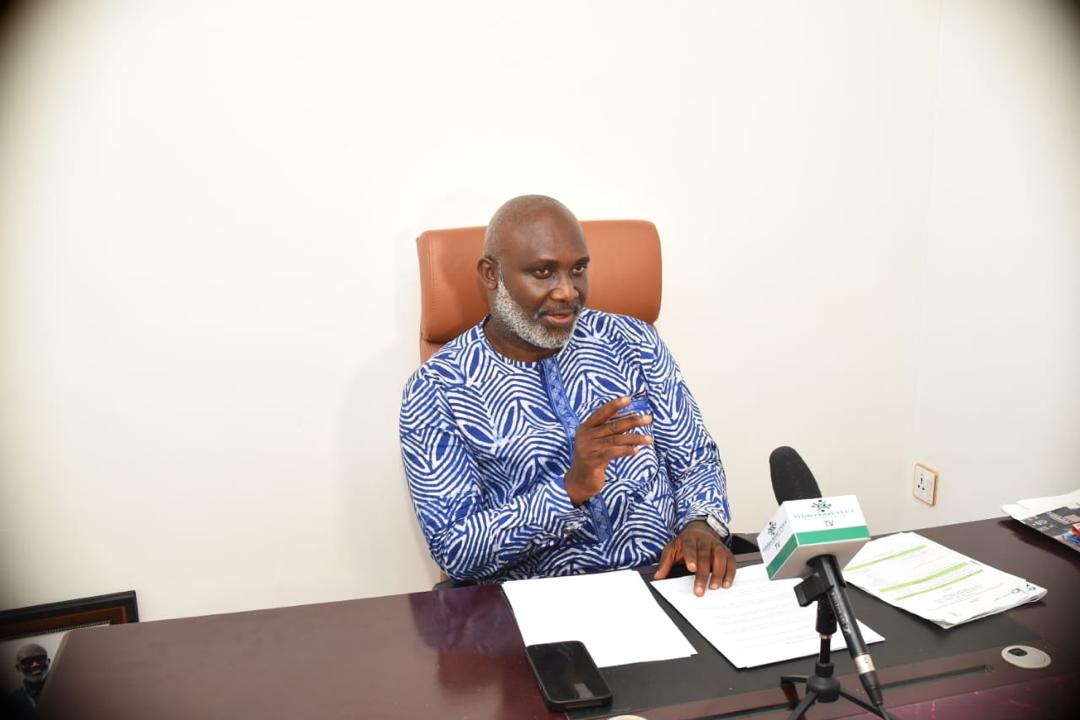
As President Bola Ahmed Tinubu marks his third year in office, Whitecloud TVET Solutions Limited joins millions of Nigerians in reflecting on the progress made in critical sectors that drive national growth, particularly Technical and Vocational Education and Training (TVET), skills development, and human capital advancement.

Over the past three years, the administration has demonstrated a growing commitment to repositioning skills acquisition as a cornerstone of economic development, youth empowerment, job creation, and national productivity. At a time when nations across the world are investing heavily in human capital, Nigeria has continued to take strategic steps toward equipping its citizens with practical, industry-relevant skills needed to thrive in the modern economy.

One of the most remarkable developments within the nation’s skills ecosystem has been the increasing attention given to Technical and Vocational Education and Training. Through policy reforms, stakeholder engagements, and institutional support, TVET is gradually gaining the recognition it deserves as a vital pathway to employment, entrepreneurship, innovation, and sustainable development.

See also  Dangote, Elumelu, Rewane enlisted as Tinubu inaugurates economic team

Particularly commendable is Nigeria’s growing engagement with WorldSkills International, the global movement dedicated to promoting excellence in vocational, technological, and technical skills. Nigeria’s participation in the WorldSkills community represents a significant milestone in the nation’s journey toward global competitiveness.

Beyond membership, it opens opportunities for Nigerian youths to benchmark their competencies against international standards, participate in global skills competitions, foster innovation, and showcase the immense talent and potential that exists within the country.

WorldSkills serves as a platform where nations prepare their workforce for the future, and Nigeria’s involvement reflects a deliberate commitment to producing a generation of highly skilled professionals capable of competing and excelling on the world stage.

This achievement aligns with the broader vision of creating a workforce that is not only employable but also globally relevant.

We also acknowledge the efforts of the Federal Ministry of Education in driving reforms within the TVET sector. The establishment of strategic committees and frameworks under the leadership of the Federal Ministry of Education under the leadership of the Honourable Minister of Education, Dr Maruf Olatunji Alausa has further strengthened coordination, stakeholder engagement, and implementation of policies aimed at transforming skills development across the country.

See also  Atiku is a serial loser, Tinubu tells tribunal

Equally worthy of recognition is the pivotal role being played by the Industrial Training Fund (ITF) under the leadership of its Director-General, Dr. Afiz Oluwatoyin Ogun. Through various initiatives focused on vocational training, apprenticeship development, workforce readiness, and industry-driven capacity building, the ITF has continued to bridge the gap between education and industry while supporting the Federal Government’s vision of building a skilled and productive workforce.

The renewed emphasis on practical skills acquisition, digital competencies, entrepreneurship, and industry partnerships has created new opportunities for young Nigerians to acquire relevant knowledge and become active contributors to the nation’s economic transformation.

As a leading organization committed to skills development and technical education, Whitecloud TVET Solutions Limited recognizes these achievements as important building blocks toward a more prosperous and self-reliant Nigeria. We remain committed to supporting government efforts, collaborating with industry stakeholders, and providing world-class training that equips Nigerians with the competencies required for success in today’s rapidly evolving world.

See also  Buhari meets Tinubu in London

As President Bola Ahmed Tinubu celebrates three years of leadership, we congratulate him on the progress recorded in advancing skills development, strengthening technical education, and laying the foundation for a more competitive and economically resilient nation.

We also commend all stakeholders, institutions, development partners, and industry leaders who continue to contribute to the growth of Nigeria’s TVET and skills ecosystem.

Together, we can build a nation where skills drive prosperity, innovation fuels growth, and every Nigerian has the opportunity to realize their full potential.
Congratulations, Mr. President, on three years of purposeful leadership and commitment to national development.

Signed
Mr. Jasper Oluranti Netufo
Chairman/CEO
Whitecloud TVET Solutions Limited

Continue Reading

Opinion

The Shame of Afe Babalola Way: Why Ekiti and Abuja Must Fix This Road Now

Published

on

By

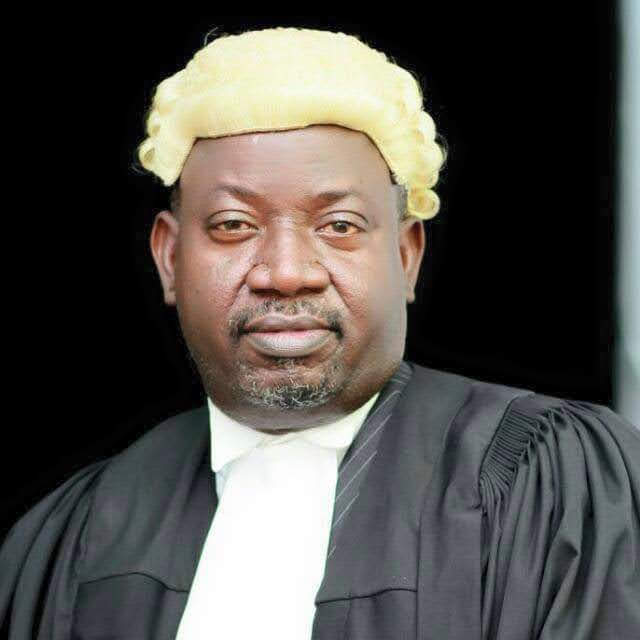
By Sola Ajisafe, Esq

I was at Afe Babalola University, Ado Ekiti, yesterday for an important function. I felt proud of what one man can do, and angry at what government has failed to do.

The Ado/Ijan Road, now known as “Afe Babalola Way,” is an eyesore. It serves a Federal Polytechnic, a world-class private university, the Ekiti Golf Club, an agricultural settlement, and multiple government establishments. Yet neither the Federal Government nor the Ekiti State Government has treated it as a priority. For 16 years since ABUAD was established, this critical corridor has been left to rot. This is not just bad infrastructure. It is ingratitude.

Chief Afe Babalola, SAN, is Ekiti’s most significant living contribution to Nigeria and the world. A local boy who conquered the legal profession and was recognized by leaders, including Queen Elizabeth II. At 97, he has built what no government in Nigeria has matched.

Over the past sixteen years, he has created employment and opportunity on a scale that rivals the state itself. ABUAD currently employs more than 2,500 academic and non-academic staff, with over 5,000 additional support staff working as cleaners, artisans, drivers, farm hands, and others. That employment base has turned the institution into one of the largest private employers in Ekiti.

The university’s impact has not gone unnoticed. It has been ranked No. 1 in Nigeria by Times Higher Education for four consecutive years, 2022 to 2025, No. 3 in Africa, and No. 84 globally on impact ratings. Those rankings reflect not just academic output but the university’s role in advancing healthcare, research, and community development.

See also  Mother sells son N400,000 to fund Dubai trip, jailed 12 years

In healthcare, ABUAD operates a Multi-system Hospital ( AMSH) that has become a referral center for the country. The hospital runs an MRI unit, CT-Scanners, Digital X-Ray machines, 17 dialysis machines, and has performed over 400 dialysis procedures. Just two weeks ago, more renal transplants were successfully performed to make a total of 50 renal transplants carried out without complications for donors or recipients in ABUAD. The center also performs cardio-thoracic surgeries and runs an IVF clinic.

Beyond the hospital, Chief Afe Babalola established the Afe Abiye free antenatal program for women in Ekiti State, a model similar to Ondo’s Mother and Child scheme, ensuring that thousands of women receive care without cost. He also established two hospital annexes at Odo Ado( Girigiri) and Basiri all within Ado Ekiti.

His philanthropic contributions to Federal Polytechnic, Ado Ekiti and Ekiti State University coupled with yearly empowerment programmes for Ekiti State farmers, traders, artisans and scholarships for students are monumental.

Where government infrastructure has failed, ABUAD stepped in. The university runs an independent power plant not connected to the national grid, and a private dam that meets the water needs of the university and its farm. It also operates an industrial park with space for 126 factories, and a fully integrated farm that produces vegetables, fruits such as pepper, mangoes, papaya and tomatoes, livestock including birds, fish and other animals, and processed products like flour, cassava, plantain, rice, pepper, and cashew nuts for local consumption and export. The farm even has its own feed mill for livestock, and the institution is involved in recycling to sustain its operations.

See also  I’ll never view one-party state as good for Nigeria, says Tinubu

The economic multiplier effect is evident. ABUAD attracts students from all 36 states and the FCT, as well as from countries including the US, China, and across Africa. To further open up the State, Chief Afe Babalola personally contributed N2 billion for landing equipment at the newly established Ekiti Cargo Airport and N450 million for the construction of its current car park.

This is what one man did for Ekiti without waiting for Abuja or Ado Ekiti. He even provided his house as the take-off administrative office for the State university at inception.

And what did Ekiti and the Federal Government do in return? They left the road to his university unmotorable.

Governor Biodun Oyebanji is widely regarded as an Omoluabi. Unlike two of his predecessors, he has publicly shown respect for Chief Afe Babalola, prostrating for him in line with Yoruba ethos. But respect without action is empty. Governor Oyebanji recently delivered a lecture at ABUAD, yet avoided the Ado/Ijan Road entirely and came through the bypass. That tells you everything.

See also  Troops neutralise terrorists, arrest arms supplier in multiple operations

President Bola Tinubu is an alumnus of ABUAD, having received an honorary doctorate from the university. The Federal Ministry of Works claimed to have awarded the road two years ago, then passed it to FERMA. Since then, silence. Nothing has been done.

So I ask; How does a country honor its heroes while they are alive? The best gift Ekiti State and the Federal Government can give Chief Afe Babalola at almost a century is not another plaque or title. It is to fix the 8.5km road that bears his name so he can drive on it, and so the students, patients, staff, and investors who keep ABUAD running don’t destroy their vehicles and waste their lives in traffic and dust.

Anything short of immediate resumption and completion of work on this road is a dent on Governor Oyebanji and Minister David Umahi. It tells the world that Nigeria celebrates its builders only in speeches, not in deeds.

Ekiti opened its doors to the world because of ABUAD. The least the world can expect in return is a road that works.

Fix Afe Babalola Way. Now. While the man can still see it.

Oloroogun Sola Ajisafe, Lawyer/Journalist. He is from Oka Akoko, lives and practices law in Akure, Ondo State.

Continue Reading

Opinion

Hisbah, Alcohol, VAT: An Unpopular Opinion

Published

on

By

Bamidele Johnson

VAT does not know who drinks what. Every time news breaks of Hisbah, Kano State’s moral police, smashing bottles of beer, millions of people, mostly in the South, erupt in rage.

Band A rage, that is. Most of the anger, I believe, is expressed by people who identify as Christians and who see the Muslim North as bad news.

The comment sections, especially on Facebook, burn hottest. The question that comes up again and again is why should states that ban the consumption of alcohol receive VAT from alcohol? I used to think this was a clever gotcha, but I no longer do. The argument rests on a moral instinct that feels good but dissipates in the face of law, economics, or basic fairness.

The claim is simple. If some states ban alcohol and even use religious agencies to seize or destroy it, they should not benefit from VAT generated from alcohol produced elsewhere. It sounds like justice. It is not. It is fiscal confusion. I do not expect this view to be popular with the permanently enraged.

See also  Court to rule on final forfeiture of London property linked to Useni, Ozekhome Jan 26

VAT is not a prize awarded to states that host certain industries, but a national consumption tax collected by the Federal Government and shared using agreed constitutional formula.

Once collected, the money loses memory of its origin. It stops being alcohol VAT, gambling VAT, pork VAT, nightclub VAT or interest-based banking VAT. It is just VAT.

This debate is often framed as entitlement. If you ban alcohol, you should not “chop” alcohol money. I do not think states with Hisbah and other agencies that convulse at the thought of liquor are taking alcohol money. What they receive are statutory allocations from a common pool to which all parts of the federation contribute in different ways.

No state earns VAT by permission. None. Every state receives VAT by membership; because Nigeria exists as one fiscal unit.

There is also the small matter of selective memory. If moral purity is the standard, alcohol cannot be the only issue. VAT also comes from gambling, interest-based banking, insurance tied to interest and uncertainty, pork-based food items, nightclubs, adult entertainment, lottery and media content that would give religious leaders across faiths fits.

See also  Atiku now divider-in-chieF, Tinubu campaign organisation mocks PDP presidential candidate

Southern states do not reject VAT because some of it comes from predatory loans, betting apps, pornography-adjacent entertainment or music and films churches regularly denounce. Moral filtering becomes impossible once the lens widens.

The argument also ignores economic reality. Citizens of states with alcohol aversion and moral police pay VAT outside their states every day. They travel, trade, bank, rent homes, insure assets, borrow money and work across Nigeria.

VAT is paid at the point of consumption, not at that of belief. A trader buying goods in Onitsha or a traveller spending in Lagos pays VAT regardless of what their home state bans. To deny their states a share is to believe that the economy stops at state boundaries.

The noise around Hisbah and smashed beer bottles, while emotionally powerful, is a distraction. Destroying alcohol within a state is an internal regulatory choice that has nothing to do with national revenue sharing.

A state can ban an activity locally without losing access to federal resources generated nationally. There is also an uncomfortable undertone that deserves honesty.

See also  Tinubu celebrates Buhari on 80th birthday

The Southern position suggests that religious difference should determine fiscal worth and that some Nigerians deserve less because their moral codes are stricter or simply different. Once accepted, that idea does not stop at alcohol. It starts asking who truly belongs and on what moral terms. That is no fiscal argument.

If we believe Nigeria should abandon pooled revenue and adopt strict derivation, the honest path is to argue for full constitutional restructuring and fiscal federalism across all sectors.

It is weak to single out alcohol and gambling as a special moral exception while enjoying the same system everywhere else.

VAT is not a moral endorsement of how other Nigerians live. It is the price of sharing a country. Sharing a country means no group gets to redesign the national revenue framework in the image of its own theology after the money has already been collected.

Continue Reading

Trending News