Connect with us

Opinion

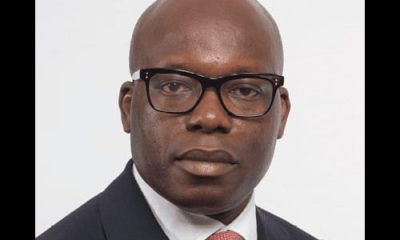
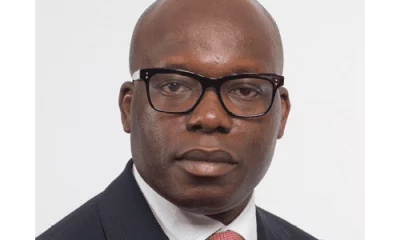
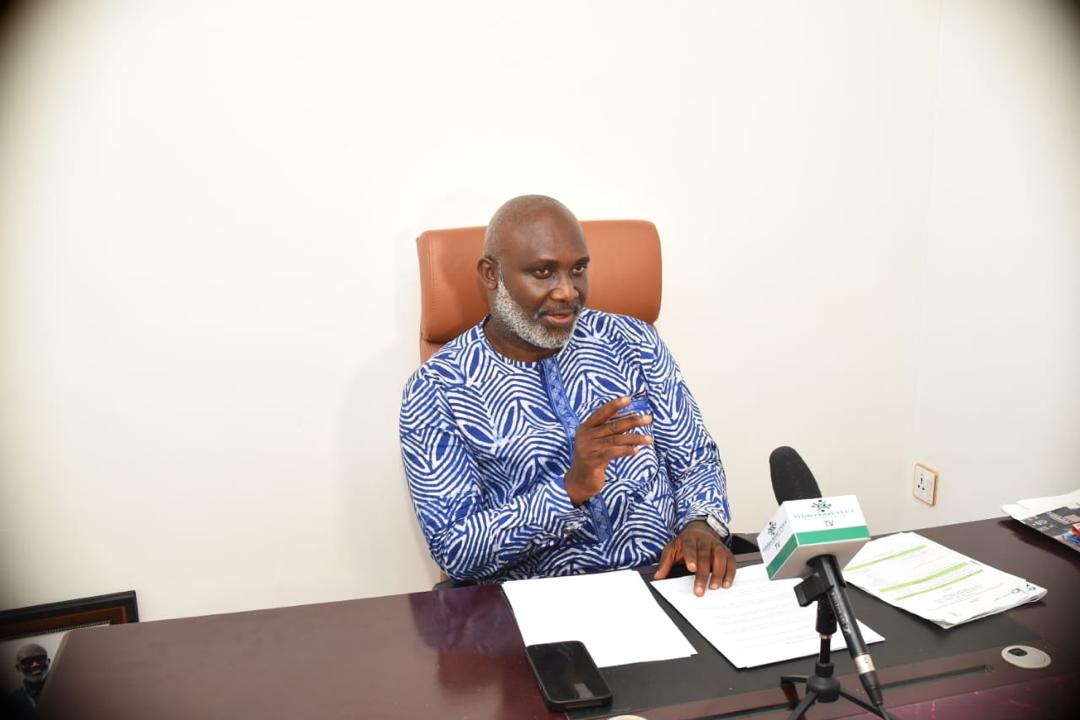
Jubril Adewale Tinubu’s Bold Path for Oando

Published

on


Last year, Oando Plc celebrated 30 years of phenomenal growth in the Nigerian oil industry, setting the stage for its future.

As the company is set to unveil its plan for the next journey, analysts believe that under Jubril Adewale Tinubu’s visionary leadership, Oando PLC is set to redefine Africa’s energy landscape, evolving from an oil giant into a global force driving sustainability, innovation, and prosperity over the next two decades, writes Festus Akanbi.

In compiling the recent landmark developments in the Nigerian business scenes, one story that cannot be waived aside is that of the phenomenal growth of the only indigenous oil giant in Nigeria, Oando Plc.

Analysts have described the organisation as the pride of Africa. By solidifying its eminent position in the Nigerian oil industry, it is winning more ground and breaking barriers.

It was this landmark that signposted the 30th anniversary of the company which was marked with pomp and ceremony at the tail end of 2024.

The truth is that Oando continued to turn the corner in terms of profitability which it recorded in 2023 and 2024, and which has spurred a series of decisions that have rewarded shareholders and employees for their loyalty, resilience, and steadfastness.
It was this chain of achievements that formed the theme of the celebration called ‘Symphony of Success,’ described as a grand celebration of Oando’s journey from a small oil trading business to a multi-billion-dollar energy giant.

In writing about Oando’s rise to the pinnacle of the Nigerian oil industry, one cannot but talk about its Group Chief Executive Officer, Mr. Wale Tinubu, whose transformative leadership has been the cornerstone of Oando’s meteoric rise from a modest oil marketing firm to a continental energy powerhouse.
With unparalleled vision and audacious strategy, he orchestrated landmark acquisitions, such as Agip Nigeria and ConocoPhillips’ Nigerian assets, securing Oando’s dominance in upstream oil exploration and production. His relentless drive for diversification integrated the company’s operations across the energy value chain, while bold investments in natural gas infrastructure positioned Oando as a critical player in Africa’s energy transition.


Tinubu’s mastery of complex financial engineering and commitment to sustainability has not only ensured the company’s resilience amidst volatile markets but also redefined it as a symbol of African excellence on the global stage. Under his stewardship, Oando has become a beacon of innovation, ambition, and enduring success.

See also  Wale Tinubu wows at Afreximbank 2022

Having marked its 30th anniversary to the admiration of its stakeholders, the question one is tempted to ask is can this rising organisation maintain this trajectory in the next 20 years?

Analysts explained that the future of Oando PLC shimmers like a sunrise over Africa’s boundless horizons, brimming with promise and transformation.

They argued that over the next two decades, the company stands poised to transcend its legacy, evolving into a titan of sustainable energy that marries innovation with impact.

According to industry analysts, like a river carving new paths, Oando will channel its ingenuity into harnessing the sun, wind, and earth’s latent power, becoming a vanguard of Africa’s green revolution.


“Its reach will extend beyond Nigeria’s borders, weaving a network of energy solutions that electrify industries, empower communities, and ignite dreams across the continent.

Anchored by a bold commitment to environmental stewardship and guided by technological brilliance, Oando’s journey will be one of resilience and reinvention. It will not merely adapt to a changing world but shape it, standing tall as a beacon of progress, a harbinger of hope, and a testament to the indomitable spirit of Africa.


A Profitable Performance in 2024
To Oando, Nigeria’s leading indigenous energy group listed on both the Nigerian and Johannesburg Stock Exchanges, the proof of the pudding is in the eating as it ended last year on a spectacular note when it released its nine-month performance results.

As a consolidation of its impressive showing in 2023, Oando Plc’s nine-month results showed a 36 per cent increase in revenue, as it declared N3.2trillion for the period in 2024 as against N2.3 trillion posted in the corresponding period of 2023.


Operating Profit for the period declined by 23%, primarily driven by an increase in administrative expenses mainly due to foreign exchange losses from the revaluation of payables and borrowings.
Profit-after-tax for the period was N76.3 billion, a decline of 31% from N110.2 billion in the same period of 2023, driven by foreign exchange losses and net finance costs.

See also  Akinterinwa celebrates Boss, Akeredolu on birthday


The performance was also affected by the rising cases of pipeline vandalism and theft in the Niger Delta.


The positive performance, according to Tinubu is a testament to the company’s resilience amidst a challenging environment. He said: “Our performance for the nine months ended September 30, 2024, reflects our resilience and unwavering focus on delivering value amidst a challenging operating environment.

” We achieved a 36% increase in revenue to N3.2 trillion and a Profit After Tax of N76.3 billion, despite ongoing pipeline vandalism, sabotage, theft in the Niger Delta, and foreign exchange volatility.


“Since the acquisition of NAOC, we have increased production by 40%, growing from 22,000 boepd pre-acquisition to 30,675 boepd currently. This progress has been driven by the deployment of quick-win strategies that have enhanced operational efficiencies and demonstrated the transformative potential of the acquisition.


“The integration process is advancing smoothly, and our immediate focus remains on executing strategic initiatives to maximise the value of our expanded portfolio. With this stronger foundation and a clear roadmap for growth, we are confident in our ability to deliver long-term, sustainable value to all stakeholders.”


Looking at the figures reeled out by the company, the operating environment was unfavourable, but with a tested hand like Tinubu on the saddle, Oando Plc was able to weather the tide and set an audacious target for the company in the new year.


During the nine months ended September 30, 2024, the average production was 20,560 boe/day, compared to 21,529 boe/day in 2023. In 2024, production consisted of 6,525 bbls/day of crude oil, 254 bbl/day of NGLs, and 13,782 boe/day of natural gas. Production decrease was a result of increased shut-in wells for repairs from sabotage and theft-related activities.


No Going Back on Development of Oil, Gas Infrastructure

Despite the challenging environment, Oando’s management did not just fold its hands as it continued the development of oil and gas assets and exploration activities.

According to its financial statement, during the nine months to September 30, 2024, the Group incurred $12.7 million in capital expenditure related to the development of oil and gas assets and exploration and evaluation activities, compared to $47.4 million in the nine months to September 30, 2023.

See also  Lawyer petitions police, DSS over alleged defamatory publications, threat to life


Oando has been able to build the largest indigenous integrated energy company in Sub-Saharan Africa.


These comprised Oando Marketing Limited, one of the largest downstream petroleum marketing companies in Nigeria with over 500 retail outlets across Nigeria, Ghana, and Togo.

There’s also Oando Supply and Trading Limited, incorporated in 2004, one of the largest independent traders of crude and refined petroleum products in sub-Saharan Africa.

Besides, Oando Gas & Power Limited, incorporated in 2004, is a pioneer in the development of Nigeria’s foremost gas distribution network, spanning 264 km and serving over 150 industrial and commercial customers in Lagos, Calabar, and Port Harcourt.

Oando Energy Services Limited, incorporated in 2005, is Nigeria’s largest indigenous oilfield services provider, enhancing indigenous participation with a fleet of five rigs, while Oando Energy Resources is regarded as one of Nigeria’s foremost indigenous upstream oil and gas companies.

Give it to the company’s chief executive, over the years, he has demonstrated expertise in structuring complex financing deals, often involving partnerships with global institutions, to fund Oando’s growth.
His financial acumen ensured the company remained competitive despite Nigeria’s challenging business environment.


The company also focuses on gas to power in the quest to make Nigeria environmentally friendly. Oando has invested heavily in natural gas infrastructure, becoming a key player in Nigeria’s domestic gas market. This move aligns with the global energy transition and positions the company as a contributor to Nigeria’s energy security.


Talking about the future of Oando, observers said with the global push for decarbonisation, Oando is likely to increase investments in renewable energy sources like solar, wind, and green hydrogen. The company could evolve into a leading player in Africa’s clean energy transition.


Oando may also expand its operations beyond West Africa, leveraging its experience to tap into opportunities in other emerging markets. One also expects the company to focus on digital transformation with increased technology adoption, such as AI, IoT, and blockchain, which could optimize operations, improve efficiency, and enhance customer experiences.


Culled from Thisday.

Opinion

Hisbah, Alcohol, VAT: An Unpopular Opinion

Published

on

By

Bamidele Johnson

VAT does not know who drinks what. Every time news breaks of Hisbah, Kano State’s moral police, smashing bottles of beer, millions of people, mostly in the South, erupt in rage.

Band A rage, that is. Most of the anger, I believe, is expressed by people who identify as Christians and who see the Muslim North as bad news.

The comment sections, especially on Facebook, burn hottest. The question that comes up again and again is why should states that ban the consumption of alcohol receive VAT from alcohol? I used to think this was a clever gotcha, but I no longer do. The argument rests on a moral instinct that feels good but dissipates in the face of law, economics, or basic fairness.

The claim is simple. If some states ban alcohol and even use religious agencies to seize or destroy it, they should not benefit from VAT generated from alcohol produced elsewhere. It sounds like justice. It is not. It is fiscal confusion. I do not expect this view to be popular with the permanently enraged.

See also  Oando boss, Adewale Tinubu takes centre stage at Guyana Energy Conference

VAT is not a prize awarded to states that host certain industries, but a national consumption tax collected by the Federal Government and shared using agreed constitutional formula.

Once collected, the money loses memory of its origin. It stops being alcohol VAT, gambling VAT, pork VAT, nightclub VAT or interest-based banking VAT. It is just VAT.

This debate is often framed as entitlement. If you ban alcohol, you should not “chop” alcohol money. I do not think states with Hisbah and other agencies that convulse at the thought of liquor are taking alcohol money. What they receive are statutory allocations from a common pool to which all parts of the federation contribute in different ways.

No state earns VAT by permission. None. Every state receives VAT by membership; because Nigeria exists as one fiscal unit.

There is also the small matter of selective memory. If moral purity is the standard, alcohol cannot be the only issue. VAT also comes from gambling, interest-based banking, insurance tied to interest and uncertainty, pork-based food items, nightclubs, adult entertainment, lottery and media content that would give religious leaders across faiths fits.

See also  Lawyer petitions police, DSS over alleged defamatory publications, threat to life

Southern states do not reject VAT because some of it comes from predatory loans, betting apps, pornography-adjacent entertainment or music and films churches regularly denounce. Moral filtering becomes impossible once the lens widens.

The argument also ignores economic reality. Citizens of states with alcohol aversion and moral police pay VAT outside their states every day. They travel, trade, bank, rent homes, insure assets, borrow money and work across Nigeria.

VAT is paid at the point of consumption, not at that of belief. A trader buying goods in Onitsha or a traveller spending in Lagos pays VAT regardless of what their home state bans. To deny their states a share is to believe that the economy stops at state boundaries.

The noise around Hisbah and smashed beer bottles, while emotionally powerful, is a distraction. Destroying alcohol within a state is an internal regulatory choice that has nothing to do with national revenue sharing.

A state can ban an activity locally without losing access to federal resources generated nationally. There is also an uncomfortable undertone that deserves honesty.

See also  Jubril Adewale Tinubu: The Rising Profile of An Oil and Gas Titan

The Southern position suggests that religious difference should determine fiscal worth and that some Nigerians deserve less because their moral codes are stricter or simply different. Once accepted, that idea does not stop at alcohol. It starts asking who truly belongs and on what moral terms. That is no fiscal argument.

If we believe Nigeria should abandon pooled revenue and adopt strict derivation, the honest path is to argue for full constitutional restructuring and fiscal federalism across all sectors.

It is weak to single out alcohol and gambling as a special moral exception while enjoying the same system everywhere else.

VAT is not a moral endorsement of how other Nigerians live. It is the price of sharing a country. Sharing a country means no group gets to redesign the national revenue framework in the image of its own theology after the money has already been collected.

Continue Reading

Opinion

Beyond Protocol: The Tuggar Effect on Nigeria’s Global Standing

Published

on

By

Adebayo Adeoye

Less than three years after stepping into office as Nigeria’s Minister of Foreign Affairs, Yusuf Maitama Tuggar has steadily carved a distinct imprint on the nation’s diplomatic landscape.

In a world increasingly defined by shifting alliances, economic realignments and delicate geopolitical balances, he has proven himself, beyond rhetoric, to be a round peg in a round hole.

From the very beginning, Ambassador Tuggar approached the ministry not merely as an administrative responsibility, but as a strategic command centre for Nigeria’s global engagement. With an intellect sharpened by experience and a temperament grounded in composure, he has brought clarity and coherence to Nigeria’s foreign policy direction. His style is not loud, yet it resonates. It is measured, yet firm. It is thoughtful, yet decisive.

In multilateral corridors and bilateral negotiations alike, Tuggar has showcased the fine balance between diplomacy and national interest. He speaks with precision, listens with intent, and negotiates with foresight. Under his watch, Nigeria’s voice has not only been heard — it has been respected.

See also  Wale Tinubu wows at Afreximbank 2022

From strengthening regional partnerships within Africa to redefining economic diplomacy as a core pillar of engagement, he has demonstrated that foreign policy is not an abstract exercise; it is a tool for national development.

Economic diplomacy, in particular, has gained renewed momentum. Tuggar has consistently advanced conversations that align Nigeria’s external relations with internal growth objectives — trade expansion, investment attraction, diaspora collaboration and strategic partnerships.

His understanding of global power dynamics has allowed Nigeria to navigate complex international waters without losing sight of sovereign priorities.

Beyond policy frameworks and diplomatic communiqués, what distinguishes Ambassador Tuggar is his grasp of nuance. He understands that diplomacy in the 21st century demands adaptability, cultural intelligence and strategic patience. In moments of global uncertainty, his calm articulation of Nigeria’s position has reinforced confidence both at home and abroad.

Ambassador Tuggar stands as more than a minister occupying an office. He represents a refined blend of intellect and pragmatism — a diplomat who truly knows his onions and continues to position Nigeria not merely as a participant in global affairs, but as a consequential voice shaping them.

See also  Oando: Three decades of outstanding excellence

His diplomatic philosophy reflects both scholarship and experience. Soft-spoken but firm, analytical yet accessible, he understands that modern diplomacy demands more than ceremonial presence. It requires strategic thinking, cultural intelligence and the ability to translate global conversations into domestic gains. In high-level meetings and multilateral forums, he has projected Nigeria not as a peripheral player, but as a nation with agency, voice and influence.

Under his stewardship, Nigeria’s foreign policy architecture has taken on sharper definition. Economic diplomacy has moved from being a slogan to becoming a structured pursuit.

Trade partnerships, investment dialogues and diaspora engagement have gained renewed emphasis, reflecting his belief that diplomacy must ultimately serve the economic aspirations of the Nigerian people. For Tuggar, embassies are not mere outposts; they are gateways for opportunity.

Regionally, his role in strengthening West African cooperation has been marked by balance and foresight. In moments of political strain across the sub-region, Nigeria’s responses have carried both firmness and restraint — a testament to his appreciation of diplomacy as a stabilizing force. Globally, he has continued to articulate Nigeria’s positions on security, development, climate and economic equity with clarity and conviction.

See also  Oando Plc: Oil Giant Ensuring Gender Parity

What distinguishes Ambassador Tuggar most, perhaps, is his grasp of nuance. He listens before he speaks. He studies before he acts. He recognises that diplomacy is often about timing as much as it is about language. This deliberate approach has earned him respect among peers and renewed confidence within Nigeria’s diplomatic corps.

Two years on, his tenure reflects a steady recalibration of Nigeria’s external engagements — less reactive, more strategic; less performative, more purposeful.

Ambassador Yusuf Maitama Tuggar has not merely occupied the office of foreign minister; he has grown into it, shaping it with intellect, composure and a forward-looking vision that continues to position Nigeria as a consequential voice in an evolving global order.

Continue Reading

Opinion

Monday Lines 1| Ibadan Is Oyo | Lasisi Olagunju

Published

on

By

On Monday, 25 March, 1946, Chief I. B. Akinyele, Chief James Ladejo Ogunsola, Messrs D. T. Akinbiyi and E. A. Sanda, the very cream of the Ibadan educated elite, met behind closed doors with Oyo town delegates at the secretariat in Ibadan. One of them got home that day and wrote in his diary that they “could reach no agreement because we (Ibadan) flatly refused to pay one penny towards the Alaafin’s salary.”

Yet, some 84 years earlier (1862), the same Ibadan went to war against friends, family, and acquaintances in support of Alaafin. Ibadan destroyed Ijaiye because its ruler, Kurunmi, was rude and unruly to the Alaafin. He had to die because he refused to recognise the king whose father made him Aare, and who made Oluyole Basorun of Ibadan.

Ibadan of 1862 served Oyo and its Alaafin; that of 1946 damned them. Between the first stance and the second, what changed or what caused the change? The tongue. The body. Disposition. Reciprocal respect. My Christian friend pointed at a verse in the Bible: “And the king answered the people roughly. In a blustering manner, gave them hard words and severe menaces…” Then it was “To your tent, O Israel!”

On Sunday, 3 February, 2008, twelve out of the then seventeen members of Oyo State Council of Obas and Chiefs visited the Alaafin in Oyo. They said they were there “to solidarise and pay traditional respect to our permanent chairman.” From that visit came a ten-point resolution which was published as an advertorial on page 27 of the Nigerian Tribune of 5 February, 2008. The title of that advert is: ‘Oyo obas back Alaafin for permanent chairmanship of Council of Obas and Chiefs.’ The fifth of the resolutions is the shortest and most categorical: The obas declared that in Oyo State, “remove the Alaafin, and all other obas are equal.”

The obas who signed that statement were the Eleruwa of Eruwa, Olugbon of Orile Igbon, Okere of Saki, Aseyin of Iseyin, Iba of Kisi, Onpetu of Ijeru, Onjo of Okeho, Sabi Ganna of Iganna, Aresaadu of Iresaadu, Onilalupon of Lalupon, Onijaye of Ijaye and Olu of Igboora.

Now, read that list again – and this is where I am going: In the Saturday Tribune of January 17, 2026 (two days ago), an advert celebrating the reconstitution of the obas’ council with the Olubadan as rotational chairman was signed by six of those who signed the 2008 advert which celebrated Alaafin’s permanent chairmanship. These are: Eleruwa of Eruwa, Olu of Igboora, Olugbon of Orile-Igbon, Onpetu of Ijeru, Okere of Saki and Aseyin of Iseyin.

Yesterday’s “permanence” becomes today’s “rotation,” each wrapped in the rhetoric of unity, justice, and tradition. We see obas who were with Oyo in 2008 shifting allegiance to Ibadan in 2026. What this suggests is not moral collapse but the old, unembarrassed truth about power: it obeys seasons. Our obas, like politicians, have read too much of Geoffrey Chaucer. They move in steps that suggest that time, when it shifts, rearranges loyalties as effortlessly as it rearranges hierarchies.

See also  ENI Deal: Oando set to boost oil output to 50,000 BPD

Friendship and politics define statuses and hierarchies. Governor Rashidi Ladoja in 2004 decentralised the council of obas into zones and directed each paramount oba to preside over their area. His decision was based on the fact and logic that there was no throne of Oyo State for the kings to fight over. I agree with that reasoning, and, in fact I do not think any council anywhere is necessary as conclave of obas. However, last week, Oba Rashidi Ladoja assumed office as chairman of an undecentralised council of obas. What has changed?

Ladoja’s successor, Governor Adebayo Alao-Akala in 2007, made Alaafin permanent chairman. The Olubadan and Soun of Ogbomoso kicked and would have nothing to do with that arrangement. The governor ignored them. He said he was following the law. But the same Alao-Akala, on his way out of government in May 2011, used the House of Assembly to reverse that decision. Because his friendship with the Alaafin had expired, he made the position rotational in the following order: 1. Olubadan; 2. Soun of Ogbomoso; 3. Alaafin of Oyo. Check the Nigerian Tribune of 3 May, 2011, page 4.

Were all these about history, or about that fluid thing called change? What was obviously at play there was (and is) politics; and in politics, nothing is constant; not truth, not friendship. What exists is interest. “There is no fellowship inviolate, No faith is kept, when kingship is concerned,” says Second Century BC Roman poet, Ennius. Obas, institutions and palaces that took a position in 2008, are this year taking a directly opposing stand. What changed? Is it about the person of the last Alaafin and the persona of the incumbent?

In his caustic response to last week’s inauguration of Oyo State Council of Obas, Alaafin Akeem Owoade referred to himself as “superior head of Yorubaland.” Did he have to write that? And, what does it mean? Whatever that claim was meant to achieve has attracted negative vibes from every corner of Yorubaland. I read resentment and resistance even when its author knows it is a plastic claim. In the old understanding of the world, the ancients spoke of two ruling forces: Love, which binds; and Strife, which sunders. The palace, no less than the cosmos, is governed by this uneasy pair. The oba in Yorubaland reigns within the contradiction. The crown draws devotion even as it breeds resentment. It commands reverence when it is humble and just in its royalty; it invites resistance when haughty and proud.

Shakespeare, in Richard III, speaks about kings’ “outward honour” and “inward toil.” In Hamlet, he says “The king is a thing…Of nothing.” In Henry V, he says the “king is but a man, as I am” and therefore prone to errors courtiers make. No two kings are the same; no two reigns score the same marks. There are definitely differences in engagement between the last Alaafin and this new one. Alaafin Adeyemi III went out to make quality friends and read good books; his successor, so far, appears distant and aloof. I am interested in who, among obas and commoners, are his friends. I am eager to know the books he reads. His handlers should help him to succeed by telling him to look more forward than backwards. A lot of 19th century data which he romanticises are no longer valid. For instance, Ibadan of the past saw itself as part of Oyo; today’s Ibadan sees Oyo as part of its inheritance. Read Professor Bolanle Awe in her ‘The Ajele System: A Study of Ibadan Imperialism in the Nineteenth Century’ (1964). Mama reminds everyone who argues with history that “the direct heirs of the Old Oyo empire…regrouped themselves in three main centres at Oyo, Ijaye and Ibadan.” So, Ibadan is Oyo while today’s Oyo is not necessarily Ibadan.

See also  Jubril Adewale Tinubu: The Rising Profile of An Oil and Gas Titan

People who understand the dynamics of power and history would insist that Ibadan’s defiance in 1946 and its earlier zeal in 1862 are not contradictions so much as timestamps. We see and feel Ibadan challenging Oyo, even feeling insulted by suggestions of being subjects of Alaafin. Authority once defended as sacred becomes, under a new alignment of interests, negotiable. This Oyo has everything a father has, except age. It has a history of leadership. But has Oyo provided the right leadership in the last one year? You remember what King Sunny Ade sings should be done to Egungun that dances for twenty years and remains in poverty? You throw away its mask and costume and promote Gelede. That is why institutions today act selectively; and actors remember the past strategically. What appears as amnesia or inconsistency is cold calculation. The past is not denied; it is merely edited.

Every Alaafin since 1830 has had to contend with the Ibadan factor. Ibadan is pro-Oyo but it won’t accept suggestions of Alaafin and Oyo overlordship. And that is because the founders of Ibadan were shareholders of Oyo, both the old and the new. In particular, they see in Oyo and its monarchy partners, not lords. Indeed, Ibadan never believed/believes there was (is) a king anywhere for them to worship. Professors I. A. Akinjogbin and E. A. Ayandele say the early Ibadan “prided themselves as a group who had nothing but contempt for the crowns.” Indeed, in July 1936 when the city wanted its Baale to become known and called ‘Olubadan’, its leaders made it clear that what they wanted was the change in title; they did not want an oba who would rob them of their republican freedom. Is that not the reason for its very unique lack of royal or ruling houses? Read Toyin Falola’s ‘Ibadan’, pages 681 and 682.

See also  Beyond Protocol: The Tuggar Effect on Nigeria’s Global Standing

The new Alaafin has no excuse for making cheap and expensive mistakes. His heritage is goodly and his court is not lacking in quality men and women. When he was made oba a year ago (January 2025), Professor Toyin Falola, easily Africa’s preeminent historian and Yoruba patriot, wrote a long piece of advice for the man chosen as our Alaafin. The title of that piece is: ‘Alaafin Owoade and Yorùbá Renaissance.’ It was primarily written for the new king to read. If he read it, I am not sure many of today’s challenges would spring and hang on his nascent reign. Every paragraph of the essay is gold, every line golden. If he read it last year, he should read it again and make it his operations manual. Take these: “He must learn history. I can reveal to the new Alaafin that his immediate predecessor took time to understand history. Alaafin Adeyemi’s power of retentive memory was second to none. He had a memory arsenal covering almost 500 years…

“Alaafin Owoade must know history…The new Alaafin must not engage in historical revisionism as his counterparts now do. Rewriting history is dangerous, as in saying the Benin Empire owes little to Ile-Ife and Oranmiyan. Conflating Ugbo with Igbo is a wrong-footed interpretation of the past. He needs not to dabble into issues of superiority around who the superior king was in the past. Oyo and Ile-Ife are constant in the people’s history because they represented the seats of economic and political power and the spiritual rallying point of the Yorùbá people. Let him explore the consensus around historical prestige: the foundation of prominent Yorùbá ancestors and the creation of a glorious history.”

So far, it would appear that Alaafin Owoade has not benefited from the nuggets in the Falola advice. He should go back to it. He should also go out to make quality friends among his brother obas. He needs them. If there are people he needs to beg, he should beg them. Nothing is damaged (yet) beyond repairs. Like flights of planes, every reign has tough beginnings. In tension and turbulence, the expertise of the pilot makes a lot of difference. If the Alaafin refuses to spread his eyes first, no guest will sit on the mat he spreads, no matter how beautiful.

He also needs to know (or remember) that power attracts, but it also repels. This is why allegiance cannot be ordered into existence; it must be patiently won. It is also why sovereignty carries its own burden, captured in the timeless lament of the dramatist: uneasy lies the head that wears a crown. For the Alaafin to remain tall, he must woo Ibadan and other Yoruba towns with friendship; he cannot summon their loyalty by proclamation.

(Published in the Nigerian Tribune on Monday, 19 January, 2026

Continue Reading

Trending News