Connect with us

Uncategorized

Bauchi APC in Crisis: How a Governorship Primary Became a Political Powder Keg

Published

on

By Adebayo Adeoye

All is clearly not well within the ranks of the All Progressives Congress in Bauchi State.

What should, ordinarily have been a defining moment for party unity and strategic positioning ahead of the 2027 elections, has instead deepened mistrust, widened internal divisions and exposed dangerous cracks within the party.

For an opposition party still struggling to regain political momentum in one of Nigeria’s most competitive states, the timing could hardly be worse. Rather than serving as a launchpad for renewed ambition, the governorship primary has become a stark reflection of the APC’s internal dysfunction — one that could shape its political fortunes long before voters head to the polls.

Last Friday’s governorship primary, which produced former Governor Mohammed Abubakar as candidate, was expected to rally party faithful around a credible challenger for 2027. Instead, it has triggered widespread controversy and bitter reactions across the party.

What ought to have strengthened internal cohesion has, in many quarters, been condemned as deeply flawed, opaque and lacking the transparency required to inspire confidence among party members. Allegations of backroom deals, imposed outcomes and the sidelining of longstanding stakeholders have rapidly evolved from whispers into open accusations the party leadership can no longer ignore.

The resulting credibility crisis is not merely reputational; it strikes at the institutional foundations necessary for any serious electoral campaign.

See also  Atiku, Wike, Saraki, 11 others go to battle as PDP primary begins

For many observers and loyal party members, the exercise represented more than a routine internal contest. It was a test of the APC’s democratic credentials and its readiness to reposition itself after years of electoral setbacks in Bauchi.

The party had a rare opportunity to demonstrate discipline, inclusiveness and a genuine commitment to internal democracy. It had the chance to show voters that it had learned from past mistakes and was prepared to offer a coherent alternative to the ruling Peoples Democratic Party.

Instead, the primary has left many supporters frustrated, alienated and uncertain about the party’s direction. What should have united the APC has instead pushed it closer to fragmentation.

Concerns continue to grow over what critics describe as the complete absence of participatory democracy in favour of a forced consensus process.

These concerns were reinforced by comments attributed to the endorsed candidate, Mohammed Abubakar, and by the controversial declaration of results announced by retired AIG John Abang, which many party stakeholders insist reflected a predetermined outcome rather than a credible electoral exercise.

The grievances extend far beyond the immediate contestants and their campaign teams. Ward officials, delegates and grassroots mobilisers — the very backbone of electoral politics in Nigeria — feel sidelined and betrayed after investing time, loyalty and resources into a process they believe disregarded their voices.

These are the individuals who organise communities, mobilise voters and translate party messaging into electoral support. When such actors lose faith in the process, the consequences are rarely passive. In closely contested political environments like Bauchi, disillusionment at the grassroots can prove decisive.

See also  Kaduna killings: Death toll rises to 25

The broader political context makes the crisis even more consequential. Bauchi has long been a battleground state where power has alternated between the APC and the PDP.

Governor Bala Mohammed has significantly consolidated the PDP’s political networks and influence across the state. Against that backdrop, the APC’s most realistic path to electoral competitiveness in 2027 depended on presenting a united front, a credible candidate and a compelling alternative vision.

The governorship primary was therefore not just an internal exercise; it was a strategic moment capable of defining the party’s electoral future. Instead, it has handed the ruling party an early political advantage.

More troubling still is the growing fear that unresolved grievances could trigger defections, weaken party cohesion and embolden rival political forces ahead of 2027.

Nigerian political history repeatedly shows that opposition parties rarely succeed when consumed by internal divisions and leadership disputes. In many cases, electoral defeats stem less from the popularity of opponents than from unresolved internal crises allowed to fester unchecked. Bauchi itself has witnessed this pattern before, and the APC now risks repeating it.

Indeed, the party faces one of its most consequential internal tests in recent years. Influential figures across the state are reportedly disenchanted with both the outcome of the primary and the manner in which it was conducted.

See also  Nigeria not delaying interest payments to savings bondholders - Presidency

Quiet consultations outside official party structures have already begun — often an early sign of possible realignments. In several local governments, ward executives are said to be demoralised and uncertain about committing themselves to a process they no longer trust.

If left unresolved, the fallout could cripple grassroots mobilisation, weaken fundraising efforts and push influential stakeholders toward strategic defections, political abstention or alternative alliances.

For a party serious about reclaiming political relevance in Bauchi, unity cannot remain a slogan recited at press conferences while the conditions necessary for unity are undermined in practice.

Reconciliation, dialogue and genuine inclusion must now become urgent priorities. That requires more than symbolic appeals for calm. It demands credible engagement with aggrieved aspirants, delegates and grassroots structures. It requires transparent mechanisms for addressing grievances and accountability for actions that have left the party more divided than before the primary.

The 2027 election is approaching quickly, and time is not on the APC’s side. The window for reconciliation and political recovery remains open, but not indefinitely. The party must now make a clear choice: unity with all its difficult compromises, or division with all its predictable consequences.

Continue Reading
Click to comment

Leave a Reply

Your email address will not be published. Required fields are marked *

Uncategorized

They didn’t call me fake when I campaigned for Obi, Archbishop hits back at critics over Tinubu endorsement

Published

on

By

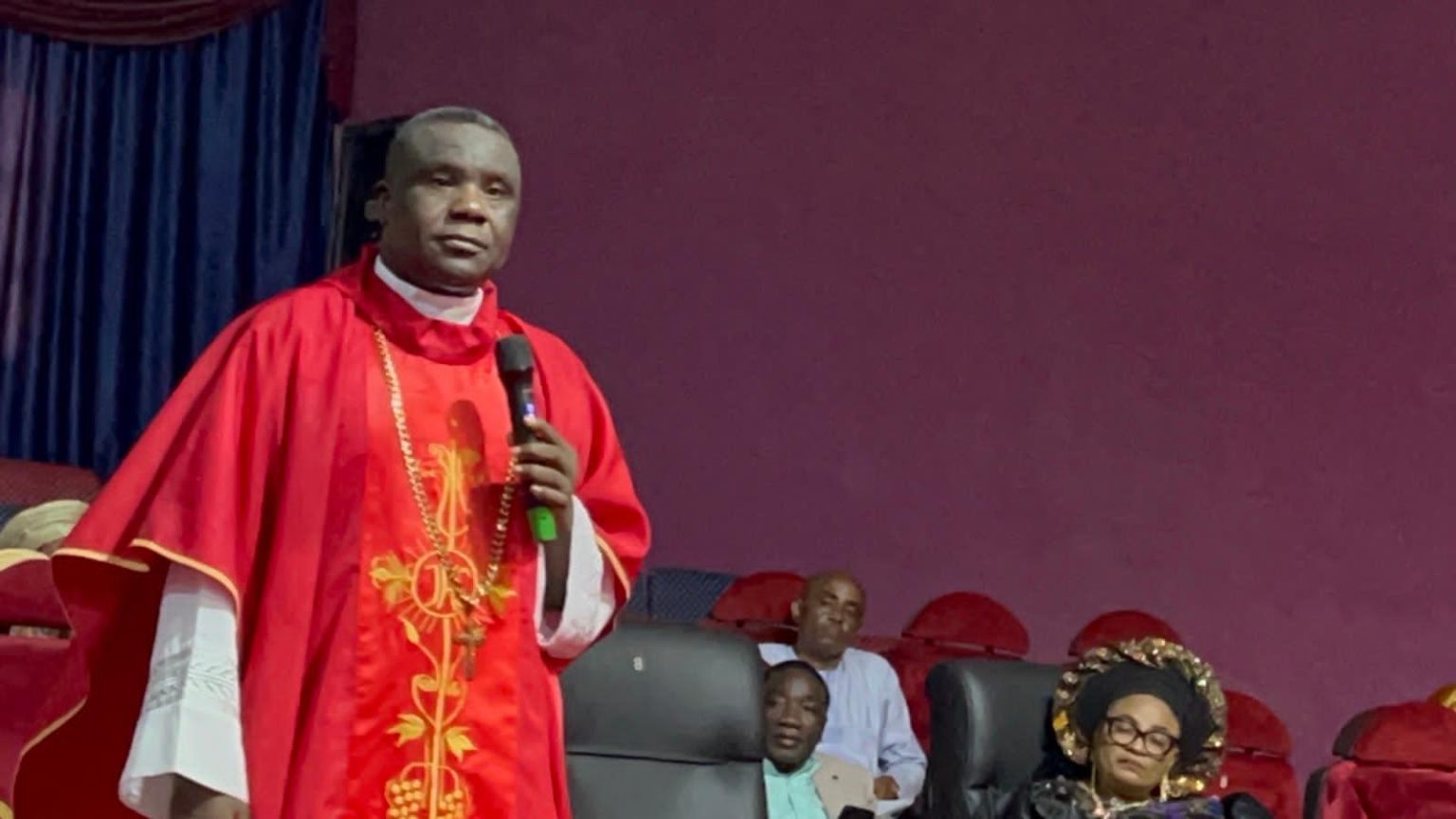
The president-general of the Charismatic Bishops Conference of Nigeria (CBCN), Archbishop Leonard Kawas, has hit back at his critics by defending his support for President Bola Tinubu’s re-election bid, saying his involvement in Nigerian politics predates the current administration.

The Archbishop’s defence follows criticism of the group’s endorsement of Tinubu, with some Nigerians questioning his credentials as a bishop.

But speaking during an interview on Arise TV, Archbishop Kawas said he had spent 25 years in the clergy and supported political leaders in the past, including Olusegun Obasanjo, Goodluck Jonathan, Atiku Abubakar and Peter Obi, without being labelled a fake bishop.

“I travelled around this country with Doyin Okupe. I travelled around this country at 2 am with John Dara and others. We were campaigning from church to church, and nobody called me a fake bishop,” he said. 

“I campaigned for my leader, reverend Jolly Nyame, and he became governor of my state, Taraba state. He appointed me chairman of the Christian Welfare Board, and nobody called me fake then.

See also  Signals on Oriental Dating Sites You must know

“I supported Peter Obi at the initial stage of his presidential ambition. I went with him everywhere in Nigeria. And he never gave me one dollar, one naira.

 “Neither did he even ever ask me one day how I came to the campaign. He will just see me at the campaign, and we will pray for him. I paid for the transportation of six clergymen. And nobody called me fake. We were on television everywhere.”

Kawas said he supported Jonathan since his time as deputy governor of Bayelsa state and later joined in his presidential campaign.

“I was one of the people who prophesied that we would see him in Abuja. And he came to Abuja, and he became vice-president and then president from the doctrine of necessity,” Kawas said.

“And then he won the election. I was on his presidential campaign council. I was the only bishop in Goodluck Jonathan’s presidential campaign council, and I took the campaign everywhere. Nobody called me fake.

See also  You're not required to remove hijab during UTME registration, JAMB tells candidates

“Is it now, because I have prayed and God has led me to support Bola Tinubu, that I suddenly become fake? he asked.

Continue Reading

News

NAF airstrikes kill over 18 high-profile terrorists, destroy logistics centres in Borno

Published

on

By

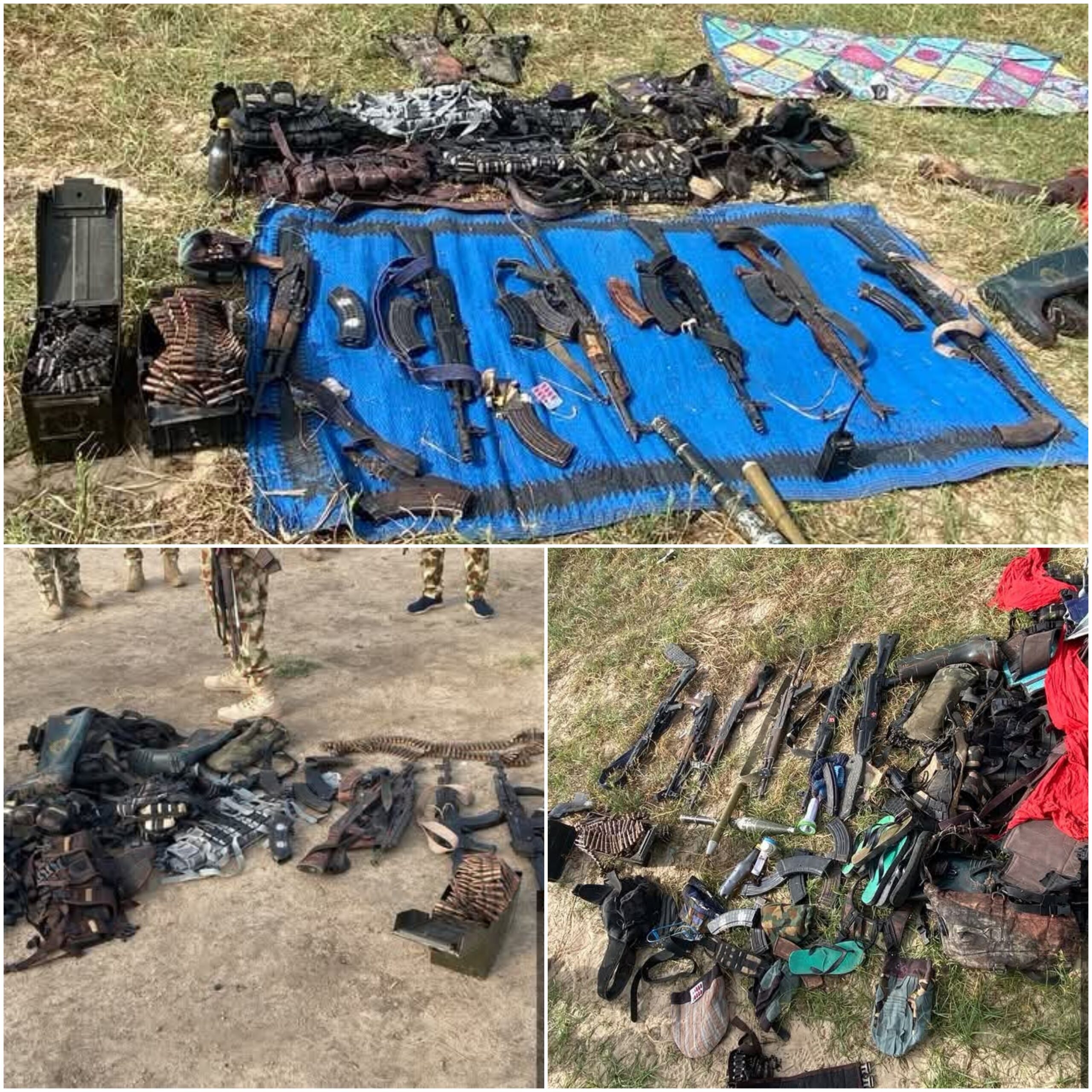
More than 18 terrorists have been neutralised in strikes by the Nigerian Air Force (NAF), while several logistics hubs at Tumbunma Baba in the Tumbuns general area of Borno State were destroyed.

According to a statement by the military on Friday, the operation, conducted by the Air Component of Operation Hadin Kai (OPHK), in coordination with ground troops of Sector 1, followed weeks of intelligence gathering and surveillance,

The Military Information Officer of OPHK, Capt. Mohammed Goni, said intelligence had indicated the presence of high-profile terrorist elements using the islands as meeting points and logistics nodes.

He said further surveillance and confirmatory Intelligence, Surveillance and Reconnaissance (ISR) operations conducted from Wednesday, September 9, pinpointed several terrorist structures and logistics hubs in the area.

According to him, the intelligence-led operation culminated in kinetic strikes in the early hours of Friday, September 11, after the targets were positively identified.

See also  UPDATED: FG has uncovered 32 food smuggling routes in Sokoto - Shettima

“Following positive identification of the targets, the air platforms acquired and engaged the designated locations with precision munitions, with ground troops occupying all likely escape routes for further direct fire engagements,” he said.

Goni said the strikes destroyed the targeted structures and “neutralised over 18 terrorist elements”, disrupting terrorist activities and degrading their ability to use the enclave as a gathering and support base.

He said post-strike assessment indicated an estimated 85 per cent success in achieving the intended operational objectives.

The operation, he said, underscored the effectiveness of intelligence-led operations, timely ISR confirmation and the coordinated employment of air assets in synergy with ground troops.

Goni said OPHK would continue to work with other security agencies and stakeholders to deny terrorists the freedom to operate, regroup or establish logistics and support infrastructure across the North East.

“Working in concert with all security agencies and stakeholders, OPHK will continue to conduct intelligence-driven operations to deny terrorist elements the freedom to operate, regroup or establish logistics and support infrastructure across the Theatre,” he said.

See also  Female banker commits suicide in Lagos

Continue Reading

Uncategorized

Nepal flood death toll crosses 1,000 as victims buried in mass graves

Published

on

By

No fewer than 1,050 people have died and nearly 4,000 people are still missing following last week’s devastating flooding in Nepal.

The death toll is reported to have risen to 1,050, while about 4,000 people remain missing, including 583 foreign nationals.

Also, specialised rescue teams from China, India and Nepal have reportedly built temporary bridges to reach remote areas in desperate efforts to rescue nearly 300 workers trapped inside tunnels.

Nepal’s disaster management authority ​said on Tuesday that no fewer than 639 people remain stranded in devastated hydropower stations that have become the focus of rescue efforts.

The disaster left at least ⁠2.2 million tons of debris, according to a preliminary estimate by the United Nations Development Programme (UNDP), including parts of buildings, rocks, and sediment.

“The amount of debris shows the scale ​of the destruction and the challenge communities face as they clear homes, roads and public spaces and begin to rebuild,” it said.

See also  You're not required to remove hijab during UTME registration, JAMB tells candidates

In a social media post on Monday, Prime Minister Balendra Shah said
more than 11,000 people have been rescued, and power ​and communication lines were restored in some areas,

“We did not have the time to grab anything before fleeing,” said a survivor from the hard-hit Rasuwa district, who had walked to Nuwakot with scores of other survivors. “What we were wearing is the only pair of clothes we have. And even they are wet from rain.”

On Tuesday, the Nepali Army, in a social media post, said it rescued 119 people by air, including a British national.

“So far, the Nepal Army has rescued a total of 3,891 people by air, including 273 foreign nationals,” the army said.

Meanwhile, Nepal has begun burying victims of the flood in mass graves after taking DNA samples.

According to Nepalese authorities, 1,003 bodies had been recovered, with 3,916 people still unaccounted for.

Continue Reading

Trending News