Connect with us

News

Bauchi APC in Crisis: How a Governorship Primary Became a Political Powder Keg

Published

on

By Adebayo Adeoye

All is clearly not well within the ranks of the All Progressives Congress in Bauchi State.

What should, ordinarily have been a defining moment for party unity and strategic positioning ahead of the 2027 elections, has instead deepened mistrust, widened internal divisions and exposed dangerous cracks within the party.

For an opposition party still struggling to regain political momentum in one of Nigeria’s most competitive states, the timing could hardly be worse. Rather than serving as a launchpad for renewed ambition, the governorship primary has become a stark reflection of the APC’s internal dysfunction — one that could shape its political fortunes long before voters head to the polls.

Last Friday’s governorship primary, which produced former Governor Mohammed Abubakar as candidate, was expected to rally party faithful around a credible challenger for 2027. Instead, it has triggered widespread controversy and bitter reactions across the party.

What ought to have strengthened internal cohesion has, in many quarters, been condemned as deeply flawed, opaque and lacking the transparency required to inspire confidence among party members. Allegations of backroom deals, imposed outcomes and the sidelining of longstanding stakeholders have rapidly evolved from whispers into open accusations the party leadership can no longer ignore.

The resulting credibility crisis is not merely reputational; it strikes at the institutional foundations necessary for any serious electoral campaign.

See also  INSECURITY: Buhari to meet 109 Senators tonight

For many observers and loyal party members, the exercise represented more than a routine internal contest. It was a test of the APC’s democratic credentials and its readiness to reposition itself after years of electoral setbacks in Bauchi.

The party had a rare opportunity to demonstrate discipline, inclusiveness and a genuine commitment to internal democracy. It had the chance to show voters that it had learned from past mistakes and was prepared to offer a coherent alternative to the ruling Peoples Democratic Party.

Instead, the primary has left many supporters frustrated, alienated and uncertain about the party’s direction. What should have united the APC has instead pushed it closer to fragmentation.

Concerns continue to grow over what critics describe as the complete absence of participatory democracy in favour of a forced consensus process.

These concerns were reinforced by comments attributed to the endorsed candidate, Mohammed Abubakar, and by the controversial declaration of results announced by retired AIG John Abang, which many party stakeholders insist reflected a predetermined outcome rather than a credible electoral exercise.

The grievances extend far beyond the immediate contestants and their campaign teams. Ward officials, delegates and grassroots mobilisers — the very backbone of electoral politics in Nigeria — feel sidelined and betrayed after investing time, loyalty and resources into a process they believe disregarded their voices.

These are the individuals who organise communities, mobilise voters and translate party messaging into electoral support. When such actors lose faith in the process, the consequences are rarely passive. In closely contested political environments like Bauchi, disillusionment at the grassroots can prove decisive.

See also  'Report intended to cause fear’ — Police deny Boko Haram arrests in Lagos

The broader political context makes the crisis even more consequential. Bauchi has long been a battleground state where power has alternated between the APC and the PDP.

Governor Bala Mohammed has significantly consolidated the PDP’s political networks and influence across the state. Against that backdrop, the APC’s most realistic path to electoral competitiveness in 2027 depended on presenting a united front, a credible candidate and a compelling alternative vision.

The governorship primary was therefore not just an internal exercise; it was a strategic moment capable of defining the party’s electoral future. Instead, it has handed the ruling party an early political advantage.

More troubling still is the growing fear that unresolved grievances could trigger defections, weaken party cohesion and embolden rival political forces ahead of 2027.

Nigerian political history repeatedly shows that opposition parties rarely succeed when consumed by internal divisions and leadership disputes. In many cases, electoral defeats stem less from the popularity of opponents than from unresolved internal crises allowed to fester unchecked. Bauchi itself has witnessed this pattern before, and the APC now risks repeating it.

Indeed, the party faces one of its most consequential internal tests in recent years. Influential figures across the state are reportedly disenchanted with both the outcome of the primary and the manner in which it was conducted.

See also  Bauchi APC in Crisis: How a Governorship Primary Became a Political Powder Keg

Quiet consultations outside official party structures have already begun — often an early sign of possible realignments. In several local governments, ward executives are said to be demoralised and uncertain about committing themselves to a process they no longer trust.

If left unresolved, the fallout could cripple grassroots mobilisation, weaken fundraising efforts and push influential stakeholders toward strategic defections, political abstention or alternative alliances.

For a party serious about reclaiming political relevance in Bauchi, unity cannot remain a slogan recited at press conferences while the conditions necessary for unity are undermined in practice.

Reconciliation, dialogue and genuine inclusion must now become urgent priorities. That requires more than symbolic appeals for calm. It demands credible engagement with aggrieved aspirants, delegates and grassroots structures. It requires transparent mechanisms for addressing grievances and accountability for actions that have left the party more divided than before the primary.

The 2027 election is approaching quickly, and time is not on the APC’s side. The window for reconciliation and political recovery remains open, but not indefinitely. The party must now make a clear choice: unity with all its difficult compromises, or division with all its predictable consequences.

Continue Reading
Click to comment

Leave a Reply

Your email address will not be published. Required fields are marked *

News

US releases identities of 24 Nigerians arrested for alleged fraud, money laundering

Published

on

By

The United States Department of Homeland Security (DHS) has released the names and photographs of 24 Nigerians arrested by immigration authorities in relation to alleged criminal offences, as the country continues its deportation operations.

According to the DHS, the suspects were arrested in different parts of the United States by Immigration and Customs Enforcement (ICE).

The alleged offences listed against them include wire and mail fraud, money laundering, drug-related crimes, identity theft, assault, forgery and cruelty towards a child.

In a statement announcing the arrests, the DHS said the publication was intended to show non-US citizens with criminal records who had been arrested by immigration enforcement officers.

“The U.S. Department of Homeland Security is highlighting the worst of worst criminal aliens arrested by the U.S. Immigration and Customs Enforcement (ICE),” the statement reads.

“Under DHS leadership, the hardworking men and women of DHS and ICE are fulfilling President Trump’s promise and carrying out mass deportations – starting with the worst of the worst – including the illegal aliens you see here.”

See also  Bauchi APC in Crisis: How a Governorship Primary Became a Political Powder Keg

The list released by DHS identifies the Nigerian nationals, the alleged offences associated with their arrests and the locations where they were apprehended.

The list published by the department identifies the Nigerian nationals, the offences associated with their cases and the locations where they were arrested.

Emmanuel Omowaiye was arrested for mail fraud in  Richmond, Texas.

Laurene Onwuka arrested for fraud and impersonation in Chantilly, Virginia.

Olusegun Shonekan arrested for wire fraud in Newark, New Jersey.

Olusegun Olaseni was arrested for amphetamine sale in Greencastle, Indiana.

Peter Ude was arrested for wire fraud; in Atlanta, Georgia.

Newton Jemide was arrested for wire fraud, conspiracy and mail fraud in  Fort Dix, New Jersey.

Shedrack Umukoro was arrested for money laundering, Yazoo City, Mississippi.

Olasoji Akinbode was arrested for fraud and impersonation in Kearny, New Jersey.

Oluwatosin Afolabi was arrested for fraud, Conroe, Texas.

Alameen Adetunji Tokosi was arrested for drug possession in Chicago, Illinois.

See also  Good morning! Here Are Some Major News Headlines In The Newspapers Today: Old naira notes will remain legal tender indefinitely, says CBN

Joshua Ipoade was arrested for wire fraud in Atlanta, Georgia.

Michael Orji was arrested for weapons violation, fraud, identity theft, wire fraud, false citizenship and money laundering in Oxford, Wisconsin.

Ahmadu Apooyin was arrested for drug-related offence in Baltimore, Maryland.

Teslim Kiriji was arrested for money laundering in Yazoo City, Mississippi.

Onomen Uduebor was arrested for identity theft in Seattle, Washington.

Charles Ochi was arrested for money laundering in white Deer, Pennsylvania.

Daniel Eta was arrested for wire fraud in White Deer, Pennsylvania.

Ifeanyi Ibennah was arrested for cruelty towards a child in Tampa, Florida.

Kazeem Runsewe was arrested for wire fraud in Thomson, Illinois.

Fatiu Lawal was arrested for wire fraud in Lompoc, California.

Justin Akubueze was arrested for money laundering in Orem, Utah.

Moyinoluwaseun Okeowo was arrested for larceny, forgery and concealing stolen property in Orlando,
Florida.

Babajide Oluwaseun Faseyi was arrested for assault in Alden, New York.

Bright Eigbedion was arrested for money laundering in Lompoc, California.

See also  Army buries Guards Brigade officer, soldiers killed in Abuja terrorist attack

Continue Reading

News

Ogun 2027: Adebutu faults INEC over exclusion from governorship candidates list, tells supporters to remain calm

Published

on

By


Oladipupo Adebutu, the Peoples Democratic Party (PDP) governorship candidate in Ogun State, has faulted the decision of the Independent National Electoral Commission (INEC) to leave out his name from the list of governorship candidates.

Adebutu, in a statement addressing the development, said he remained a registered member of the PDP and had completed the necessary registration and documentation within the stipulated period.

“I have not at any point left the PDP, and my commitment to our great party remains unwavering,” he said.

According to him, the governorship primary that produced him as the party’s candidate was conducted with INEC officials present as observers, adding that relevant documents were submitted for verification, certification and confirmation.

The PDP candidate said the circumstances surrounding the exclusion raised concerns, particularly as other party candidates contesting for the House of Assembly, House of Representatives and Senate had appeared on INEC’s published lists.

Adebutu said the Ogun State PDP had expressed concern over what it described as undue pressure from the ruling All Progressives Congress (APC) on INEC, adding that the party would pursue the matter through appropriate channels.

See also  Banned: Stay away from partisan politics, Catholic orders Mbaka

“We will pursue this matter through the appropriate channels and insist that due process is respected,” he said.

He also alleged that the party had faced attempts to frustrate its campaign, including restrictions on its billboards, attacks at campaign grounds and harassment of members.

According to him, such challenges would not deter the party from participating in the democratic process or seeking the support of voters across the state.

“No amount of intimidation should prevent the people of Ogun State from having a fair opportunity to choose leaders of choice,” Adebutu said.

He urged PDP members, supporters and residents of Ogun State to remain calm while the party takes the necessary steps to address the omission.

“The party has spoken, and the necessary steps are being taken to address this matter. I remain confident that it will be resolved, and I assure you that I will not abandon the struggle to bring the leadership and relief our people deserve,” he said.

See also  Good morning! Here Are Some Major News Headlines In The Newspapers Today: Old naira notes will remain legal tender indefinitely, says CBN

Adebutu described the party’s ambition as a broader effort to improve the welfare and development of Ogun State, rather than a struggle centred on an individual.

“Our cause is bigger than any individual. It is about the dignity of our people, the progress of our state and the right of Ogun people to determine our own future,” he said.

Reaffirming his commitment to the party’s campaign message, Adebutu said, “OGUN FOR OGUN is more than a slogan. It is a call for leadership rooted in our people, responsive to our needs and committed to our welfare.”

He concluded by urging supporters to remain focused and resolute, declaring: “The journey to a better Ogun continues.”

Continue Reading

News

12 killed, over three hundred injured as terror group attacks Saudi Arabia airport

Published

on

By


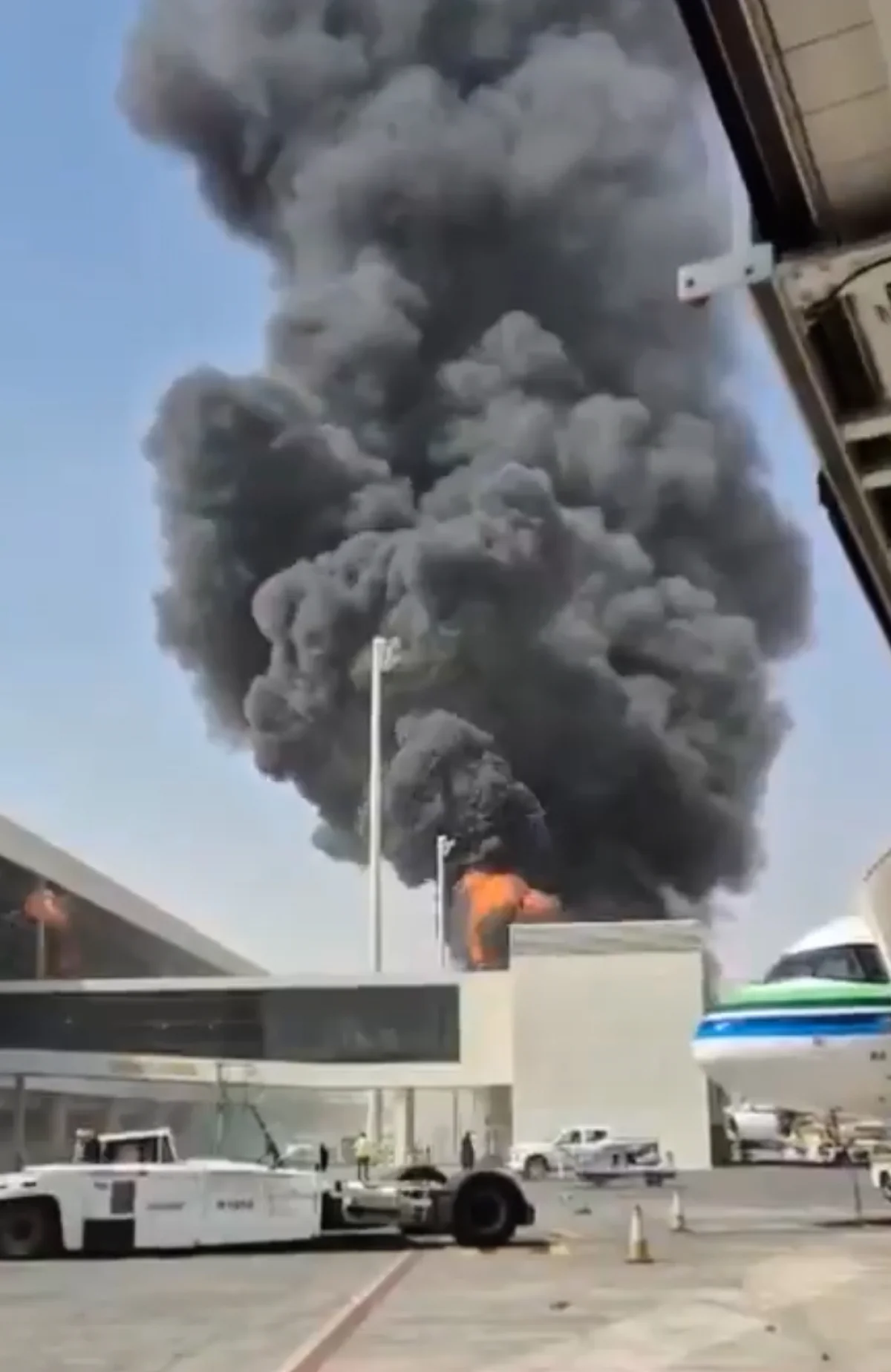
Twelve people were killed, while 309 others were injured following a deadly attack on the Riyadh’s international airport in Saudi Arabia by suspected Yemen’s Houthis.

The attack, reportedly the deadliest on Saudi soil in more than a decade, has prompted the Saudi-led coalition to vow on Sunday a decisive response against the group.

The coalition described the attack as a “full-fledged war crime” that a diplomatic source attributed to a missile.

The attack came during an unprecedented wave of Houthi strikes on the kingdom since a truce in the group’s long-running war with Yemen’s Riyadh-backed government unravelled in July.

The spiralling violence has raised the possibility of a wider escalation, with US President Donald Trump signalling Washington could join military action against the fighters.

A passenger told AFP they witnessed a strike in the airport’s domestic terminal.

“I was on gate 403,” the witness said. “I saw 401 hit, I saw injured in front of my eyes. Everyone was running.”

See also  INSECURITY: Buhari to meet 109 Senators tonight

According to reports, four Saudi citizens were among those killed in the attack, as well as two Bangladeshis, one US citizen, one Egyptian, one Jordanian, one Syrian, one Palestinian and one Sudanese, the kingdom’s civil aviation authority said in a statement.

It said some of the 309 wounded were in serious condition.

Operations at the airport were suspended following the attack and authorities said damage assessments were ongoing.

The attack prompted health officials to activate a rare mass call-up of doctors to deal with the “serious emergency situation”, a medical source said.

Two doctors said that several pilgrims headed to Mecca were among the wounded.

Schools in Riyadh switched to remote learning for the second time in a month.

Parents in the capital received emails Sunday seen by AFP, citing an order from the education ministry, saying “all schools in Riyadh will switch to distance learning for the entire week”.

“The cowardly terrorist attack by the Terrorist Houthi Militia… which resulted in deaths and injuries among civilian passengers and airport staff, constitutes a full-fledged war crime,” coalition spokesman Major General Turki al-Malki said in a statement on X.

See also  Senate tackles Obasanjo, says it's satanic to claim NASS fixes own salaries

Earlier, the coalition said it had intercepted missiles targeting Saudi Arabia and destroyed launch platforms.

The Houthis claimed a series of attacks targeting the airport on Thursday that killed three people and damaged a plane, though they did not immediately take responsibility for any new strikes on Saturday.

Saturday’s attack was the deadliest in the kingdom since May 2015, when a suicide bombing by the Islamic State (IS) jihadist group killed 21 worshippers in a Shia mosque in the eastern Qatif governorate.

The civil war in Yemen flared back to life in July after a four-year, UN-brokered truce collapsed, months into a wider Middle East war that has rocked the region and roiled energy supplies and markets.

Saudi Arabia leads an international coalition that has supported Yemen’s government militarily since 2015 and is now being drawn deeper into its impoverished neighbour’s conflict.

Asked on Saturday whether he had changed his mind about joining Saudi strikes on the group, Trump said: “We may.”

See also  Bauchi APC in Crisis: How a Governorship Primary Became a Political Powder Keg

He said he would be speaking with Saudi Crown Prince Mohammed bin Salman, calling what happened in the kingdom “not acceptable”.

US media outlets have reported that previous Saudi requests for US military assistance in dealing with the Houthis have been rebuffed.

Continue Reading

Trending News