
Opinion
Ex-Queen Naomi and beheaded skulls in mògún shrine – Festus Adedayo


Festus Adedayo
In my piece of last week, I made a tangential reference to the place of African magic in modern matters. It was in the discussion of the calamity that befell Nigeria a few days to Christmas. Ibadan, the capital city of the Yoruba, had taken a sizeable chunk of the tragedy. Thirty five persons, the bulk of whom were kids, had been trampled to death in a stampede. The dead and a crowd estimated to be about ten thousand, had heeded the invitation to attend a funfair where freebies, which included the sum of N5000, would be shared per attendee. Three persons were arrested and charged before an Ibadan magistrate court on account of the deaths. They were Naomi Silekunola, an ex-Queen of the Ooni of Ife, Oba Enitan Ogunwusi, Ojaja I1; Oriyomi Hamzat, a popular radio owner, and presenter and principal of the school that served as venue for the event.
Since the Queen’s somersault from the pinnacle of grace to the nadir of sharing smelly, dingy cell with ordinary criminals in the Agodi Correctional Centre, subtle, muffled and repressed thoughts have variously been expressed about what could have transpired. Questions asked range from, could there be a causal link between the fate of ex-Queen Naomi and her abandoned Queendom? Or, is it a reinforcement of the historical Yoruba wise-saying of fatalism, which says that among the innumerable beheaded skulls quartered in Mògún, the ones belonging to unjustly beheaded ones were many (Orí yéye ní Mògún, ìpín àìsè l’ó pò)?
The truth is, as products of their past, many Africans still reason with the mindset of their genes. Over a century after the white man and Arabs brought Christianity and Islam to Africa, though they substantially succeeded in fumigating Africa’s mindset of magic and occult practices, they left a hugely syncretic Africa. Like Gabriel Okara painted in his poem, Piano and Drums, Africa carries its piano – a symbol of the Whiteman’s modernity – with his right hand, and holds fervently to his drum – symbolising traditional Africa – with his left. In a world where science is king and defines every stratum of our existence, there is a great push towards voiding the power of metaphysics, the foundation upon which the drum, which Africa holds tightly by its left hand, rests.
In a December 2021 Instagram post, Queen Naomi unilaterally announced her divorce from the Ooni. After “bless(ing) the Lord almighty for His faithfulness in the last three years of my marriage,” Naomi revealed that she “endure(d).. to make (the marriage) work” as she, “many times… smiled through the struggle.” Finally, the Queen revealed that she was “moving on,” stating that, “today, I announce the beginning of a new dawn and the close of a chapter. Today, I am a mother to God’s unique gift. I am no longer a slave to my thoughts of perfection. I, at this moment, announce that I shall no longer be referred to as wife to the Ooni of Ife or as Queen of Ile-Ife but as the Queen of the people and mother of my adorable prince.” Were the gods of Ile-Ife happy at that gloat over their king? Since then, she had indeed moved on. Once in a while, she advertised her sultry beauty on social media and her Christianity. It was akin to the conquest smile of a conquistador. It was believed that the decision of the Ooni to embark on a serial acquisition of wives thereafter was a response to the subtle disgrace he suffered at the hands of a wife who divorced him on social media.
Today, Africa scarcely sees with the eye of Africa but with the eye of western science, data and computer. So, the question is, is there any science to African magic? Or put differently, is there magic? Is there sorcery? Can our forefathers, whose systems of beliefs were woven around this corpus of knowledge of incantations, magic, sorcery, and the synergy between spirit and man for many centuries, be said to be ignoramuses? These were the same people who were credited with the great arts and science of carvings and bronze. The Benin Bronze sculptures, brilliantly and elaborately chiselled from metal and wood, became ornaments that white colonialists stole and kept in antiquities. Cast in plaques, commemorative heads, animal and human figures, ornaments, pieces of royal regalia, they adorned western museums until rescued and returned to Africa. The Nok people, now known to inhabit the northern and central part of Nigeria, existed from roughly 900 BCE to 200 CE. In their science and arts, they worked on iron to make terracotta sculptures. In the Alaafin palace of Oyo, a drainage system built over a century exists which till today, drains rainfall in a twinkle of an eye, no matter its volume.
As brilliant as our forefathers were, they also engaged in the barbaric practices of human sacrifices, cannibalism, witchcraft and money rituals. They believed in the centrality of spiritual beings and their relationship with the spirit world. This spirit world was believed by them to be responsible for happiness, protection, material wealth and health. They also believed that any dislocation from the spirit world led to sickness, barrenness, death, among others. It was probably why they engaged in human rituals. A scholar once explained that, in human body parts rituals, the soul of the sacrificed victim is sent on an errand to the supra-physical realm. There, the soul engages in the laborious exercise of harvesting wealth for the usage of the victimiser.
In 1970s Nigeria, parents sternly warned their wards to avoid being alone in desolate places. It was the period when that caustic-mouthed Yoruba Apala songster, Late Fatai Olowonyo, released the vinyl that bore that iconic track entitled L’áyée Gbómogbómo (In this world of kidnappers). Padding the song up with his rhythmic acoustic guitar sound that literally sent dancers into gymnastic fits, Olowonyo warned, especially the young ones, to avoid lone-walking as kidnappers luxuriated in lonely places. When they grabbed their victims, he warned, such victims honked like trapped mice. “L’áyé gbómo-gbómo, ìwo nìkàn má se dá rìn mó, bí wón bá kì ó mó’lè l’ábé àgbàdo, wàá sì má dún fín ín bí omo eku…” he sang.
I first came in contact with the epistemological body of knowledge of African magic in my pre-teen years. I lived with my parents in a town called Ikirun, in today’s Osun State. There was this highly dreaded spiritualist called Baba Iyanda Aladokun. It was not possible to live in Ikirun without a sniff of the whiff of Aladokun’s spiritual prowess. His magical powers were legendary. For seven years, boy Aladokun was said to have been declared missing, allegedly carried away by whirlwind called Àjà, only to surface thereafter. His known speciality was in the spiritual healing of mentally-challenged patients. He was my late father’s older friend. My father and I frequented his house almost every Saturday.
Aladokun’s house was usually filled to the brim with all manner of patients. Dark, pot-bellied and most times wearing agbádá, Baba Aladokun sat cupped up in a corner of his herbal hospice, welcoming oncoming people afar off with his cryptic, “e wèé” – greetings which a pre-teen boy like me smothered the urge to laugh at. Many of the patients were brought to his herbal sanatorium from several lands away. Some were Igbo as well. When his patients were in the twilight of recuperating, Aladokun loaned them to farmers like my father to work on their farms for fees. The farmers in turn gave him reports of the perceived level of the patients’ sanity. On the farm, armed with cutlasses and hoes, my father would ask that we gave the recuperating patients some distance, lest they return to status quo ante and feasted their weapons on us. My father however engaged them in dialogues which were most times intelligible.
My father told me the story of how one of Aladokun’s daughters’ pregnancy was once disowned by the man who impregnated her. The case was taken to the Ikirun police station. Aladokun appeared where his daughter and the man were, with the police. He promptly, with the sign of his hand, inter-placed the baby from his daughter’s stomach into the man’s. The man immediately appeared with an advanced pregnancy. There and then, he held his daughter’s hand, headed home with her and told the police he had no case against the man any longer. On another occasion, he had asked his daughter to go buy soft drinks for waiting guests. Uncomfortable with her long stay getting the drinks purchased, Aladokun merely fiddled with the wind and on his palms were the soft drinks which he placed before the guests. The daughter merely came back and handed him the remainder of the money.
A few years after, Baba Aladokun was embroiled in allegation of human body parts rituals. The police criminal investigation department (CID) had received reports that the herbalist had veered into human body parts rituals. A female police detective who pretended to be mentally deranged was seconded to his sanatorium. In the course of simulating mental derangement, she reportedly witnessed the herbalist pounding the body of a newly born baby in a mortar which was then garnished with black soap and other accoutrements. Baba Aladokun was subsequently arrested, remanded in the Ilesa prisons and later released for want of evidence. I remember my father used to go pay him visits in the prison. Not long after, specifically in 1984, one of the old herbalist’s mentally ill patients suddenly ran amok and beheaded him right inside his sanatorium.
African kings, no matter their erstwhile religious backgrounds, are believed to be beneficiaries and inheritors of a system of African medicine, sorcery, magic and witchcraftcy which dates centuries. The late Alaafin of Oyo, Oba Lamidi Adeyemi, once let me into some of the details. For instance, a traditional DNA system exists in the Oyo palace which ensured that bastards cannot be brought into the palace as princes and princesses. In the palaces of many Yoruba towns are believed to be headquartered witches whose powers help the monarchy to fight its battles. This is most times unsolicited. Ile-Ife is said to parade several deities whose priests, at cock-crow, as custom, are expected to rain curses on the Ooni’s enemies and bless those who wish him well. Many people, however, believe that all these are a mythic system that has kept palaces fortified from invaders and evildoers.
So, when a 31-year-old woman, who set out to favour the less-privileged in a fun fair, suddenly landed in one of the most notoriously famous prisons around, a few days after this noble effort, to what do we put that: happenstance, fate; normal encounter of man or spiritual recompense for openly disgracing a foremost king in Yorubaland on the social media? In the wake of the calamity, the Ooni palace masterfully disconnected the monarchy from her travails, and de-linked her and her actions from the palace, while subtly empathising with her.
Some people have also argued that the fates of Naomi and Oriyomi Hamzat can be compared to the historical Yoruba wise-saying that depicts fatalism. It is a philosophical school which subjugates all actions, events and occurrences to fate or destiny. The history behind the wise-saying is that, in ancient days, Mògún was where persons accused of committing heinous crimes were incarcerated. Once the king was persuaded of their guilt, he ordered their beheading right inside Mògún, which makes the prison a place where hordes of skulls were kept. However, many of them were victims of petty conspiracies who never committed the crime they were accused of.
So, the saying goes that, of the innumerable heads quartered in Mògún, the ones belonging to unjustly beheaded ones were many (Orí yéye ní Mògún, ìpín àìsè l’ó pò). Today, prisons across the world are Mògún which house just persons unjustly incarcerated. Many have also died unjustifiably, either from the supple hands of the law or the coarse brunt of lawlessness. On June 16, 1944, for instance, 14-year-old George Stinney was executed in the electric chair of Columbia, America. He was accused of having killed two white girls who earlier approached him and his sister while playing in their yard to ask where they could find flowers. The bodies of the girls were later found the following morning. Seventy years later, a South Carolina judge held that Stinney could not have murdered the two girls. He vacated the conviction. So, are Queen Naomi and Hamzat victims of this ancient fatalism?
As we approach the New Year, I pray we will not be victims of an unjust world; now, in the new year and all through our sojourn on this divide.
Nigerians in Súàrá Sòbó bus
I have been asked severally what my opinion was on last week’s presidential media chat. First, I must commend the presidency for hosting the chat, though belatedly after 19 months of holding back. When the people hear directly from their leaders and not from third parties they didn’t elect, it affords them the opportunity of psycho-analysing the man at the helm of affairs, match his gestures with policies and project what the leadership’s future strides will be.
It was also gladsome to see the president radiating warmth, confidence and mastery of his craft. He appeared to have learned the ropes of a limitless presidential powers. He must have warmed himself up to the behemoth powers at his disposal, next to God’s. You could see this as he exuded confidence in himself and his office. Unlike the pre-and early Bola Tinubu presidency optics we had, the president appeared physically stable and in better health. I was glad to see stability as he raised his hands in gesticulation. We thank God for presidential health mercies.
As they say, the divide between confidence and arrogance, much as it is as long as the Zambezi River, could be paper-thin as well. Though clothed in a cloak of confidence, the Bola Tinubu I saw in that interview wore arrogance on his lapel. Beneath that, you could see a God mentality. I didn’t hear anywhere throughout the interview where the president accepted that he was human, capable of frailties and wrongs. I saw King Herod and the clowns of power shouting “This is the voice of God, not man!” The tax bills were chiselled straight from the stone plate of Moses, he seemed to have said. They are irreversible. And to the north which thought it had him by the balls, like the man who knows tomorrow, the president proclaimed that he would live till 2027, go through the presidential election and win. He would not probe military top brass whose fat stomachs and fat epaulettes are euphemisms for the toads of wars – apologies to Eddie Iroh – which they have become from filching Nigeria’s wealth in an endless war. He didn’t err when, pounced upon by the Herodian spirit, he pronounced that “subsidy was gone,” he said. While Nigerians die in droves from hunger, the president literally clinked wine glasses for being the greatest reformist in human history.
When I heard the president compare his reform to a woman going through the pangs of labour – “and the child may die” – but at the end of the birth, everybody is happy, the mentality that drives the president came out vividly to me like the first flick of a movie in a dark cinema. I saw a heart scarred and scorched like the sand dunes of the desert. I didn’t see blood flowing through the veins at all. Immediately I understood. The political furnace has forged in the smithy a stone statue devoid of feelings.
Nigeria of the 1950s and early 1960s had very many interesting personalities. Western Region had its fair share of such. One of them was a man named Súàrá Sòbó (Sobo pronounced as ‘Sorbor’). He was a prominent transporter who held the transportation industry of the time by its jugular. An Ibadan man of the Òópó ‘Yéosà clan who lived in an area now known as Ring Road, Súàrá Sòbó was wealthy and had a fleet of lorries in his pool. As a trade logo, Súàrá Sòbó’s lorries always had monkeys chained to their entrance, which excited and attracted passengers to them.
However, his lorries soon acquired a very unflattering typecast. Any passenger who boarded them was literally embarking on a journey that had no certain time or terminal point of disembarkment as the lorry could be arrested for having no particulars, and the inappropriate conduct of the drivers and conductors, which led to road accidents, were legendary. The otherwise pleasurable ride with a monkey on board to marvel at its close resemblance of man could turn awry. It thus became a peculiar refrain in the Western Region to say a man had entered Súàrá Sòbó’s lorry, an equivalent of today’s One Chance lingo among youth. Odolaye Aremu, then Ibadan-based, Ilorin-born dadakúàdà musician, once sang of the untimely passage of Súàrá Sòbó, years after. At a celebration in his house, said Odolaye, Súàrá Sòbó had hosted the crème de la crème of Ibadan, where roast mutton and turkey flesh were feasted upon. People were shocked when, six days later, Súàrá Sòbó’s sudden death was announced to the world.
As I stood up from watching the interview, I shook my head languidly. I was sorry for us. All I saw were 200 million Nigerians sequestered inside the Súàrá Sòbó bus. We must pray that the Herodian spirit which pounced on Olusegun Obasanjo doesn’t repeat its tragic pounce on Mr. President. If it does, Tinubu would have a third term and more, becoming a Hastings Kamuzu Banda at the drop of a hat. And nothing would happen.
One year after for Aketi and Aiyedatiwa
Last Friday was the first anniversary of the passage of Rotimi Akeredolu, ex-Ondo State governor. It was also the first anniversary of his successor, Lucky Aiyedatiwa, in office. We thus must be grateful to Aiyedatiwa for immortalising Akeredolu, famously known as Aketi that same day. Aketi was an ecumenical spirit – borrowing from Wole Soyinka’s burial oration for Chief Bola Ige. Aside from naming a court after Aketi, Aiyedatiwa organised a lecture in the former NBA president’s remembrance.
Stubbornly courageous, Aketi cared not whose ox got gored while he spoke his mind. You could be president or an emperor; Aketi brought out the muck in your eye, in your very before. I once wrote against his government’s stoppage of an ancient traditional festival in Akure, the state capital and asked him why he didn’t do same to the Igogo festival in his Owo country home. He had just lost his mother and I called thereafter to commiserate with him but he used the occasion to spank me. He told me I was talking nonsense and tutored me on what he called the security implication of allowing the festival. Till he died, his sobriquet for me was “Akure l’o kan” – it is the turn of Akure. Not minding him being my elderly friend, I didn’t support his governorship. I supported his opponent who was my kinsman. And he knew. But Aketi was indeed a great man.
Though the people of the state capital believed he preferenced his Owo home in infrastructure more than the state capital and that he disdained Akure and its monarchy, Aketi had some quite ambitious projects earmarked for the capital. Unfortunately, he couldn’t complete them.
When last week, one of Aiyedatiwa’s aides, Kikelomo Isijola, took to the media, on the anniversary of the governor’s first year in office, to commend him for some infrastructural projects she claimed her boss had pulled through, she received barbs severally from people who saw her effort as whitewashing a dirty boulder. Many people hold that, in the last 25 years of democratic governance, Ondo State has been extremely unlucky in the hands of its governors. Except under Olusegun Agagu and Olusegun Mimiko where the state received infrastructural lifting, the state is generally perceived to be backward development-wise. While the state collects one of the hugest federal revenues as an oil-producing state, its capital city is one of the most underdeveloped in the Southwest. Ado-Ekiti, which became capital about three decades ago, is rated far more developed than Akure.
During his swearing-in, Aiyedatiwa promised to complete the projects left by Aketi. One of these is the Oda-Ijoka dualization project in Akure, The uncompleted projects, according to Aiyedatiwa, would receive urgent attention. He specifically mentioned Oba Osupa–Oluwatuyi–Ijoka (Akure) dualisation, completion of Oda dual carriage (Akure), completion of Akure flyover (Onyearugbulem-Shagari-Irese), construction of 15.89km selected roads in Ondo township among many others. A year after, none of them has been completed. Even Isijola claimed the projects are 60% completed, many of them almost six years after. The state football team has been playing its home matches in Ijebu-Ode, Ogun State, due to the infrastructural horror that the state’s stadium is. The internal roads in Akure are in impassable conditions with no modern developmental strides befitting of a state capital in the city.
If it is reckoned that, were Aketi to be alive, his joint ticket with Aiyedatiwa would expire in two months’ time for another government to take over, those projects would automatically have been abandoned projects.
Aiyedatiwa should make the people of Ondo state joyful as he vividly was immediately he heard of the passage of his boss. Office goes beyond the grandeur surrounding it; it entails responsibility and working for the people.
Opinion
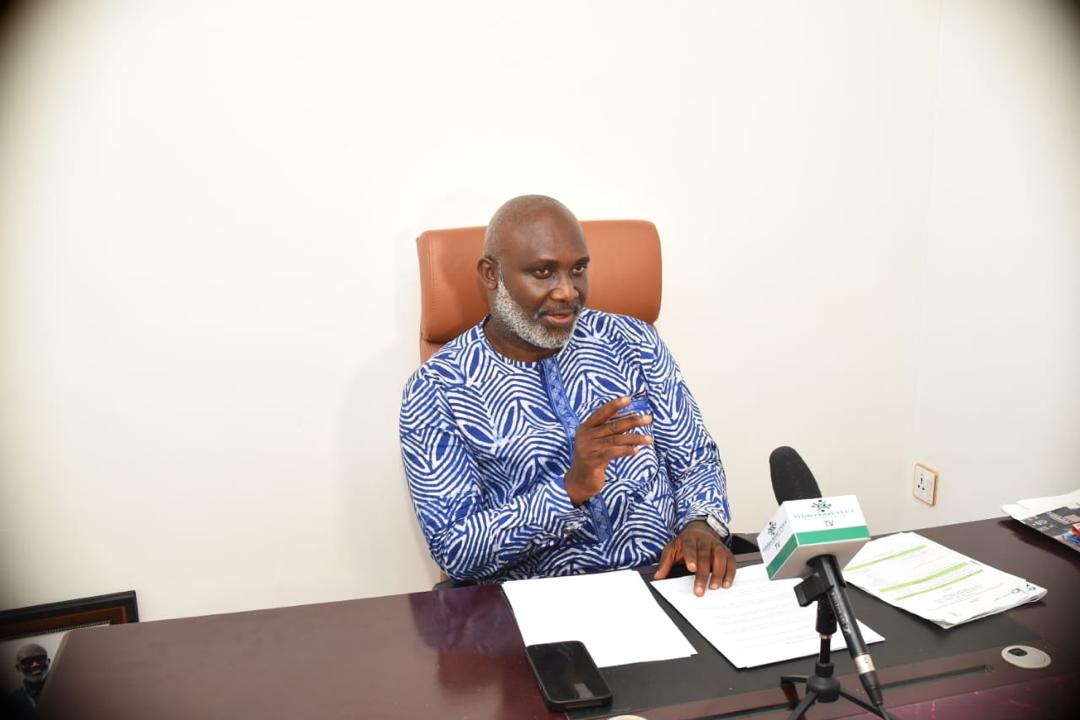
President Tinubu at Three: Advancing skills development, strengthening TVET and building a globally competitive Nigeria


-
 News4 years ago
Insecurity: Buhari presides over National Security Council meeting (Photos)
-
 Privacy5 years ago
Self-imposed Oba vacates ‘palace’ after warnings by community
-

 News5 years ago
Nollywood Actress Nkechi Blessing speaks on plastic surgery, big butts
-
 Entertainment4 years ago
DJ Dimple Nipple dropped by longtime boyfriend after claiming D’Prince allegedly demanded sex for roles
-

 News5 years ago
Plus size rocks: Ghanaian plus size dancer who can’t travel by air because of her size
-
 Opinion5 years ago
Leave our community, Imobi orders self-imposed Oba
-

 News5 years ago
How CCTV ’caught’ Baba Ijesha molesting minor
-

 Sports5 years ago
Meet Ashleigh Plumptre, the ‘Oyinbo’ member of Nigeria Super Falcons [Video]