Connect with us

Business

‘It’s not true’ — oil marketers disagree with Dangote refinery on substandard products claim

Published

on


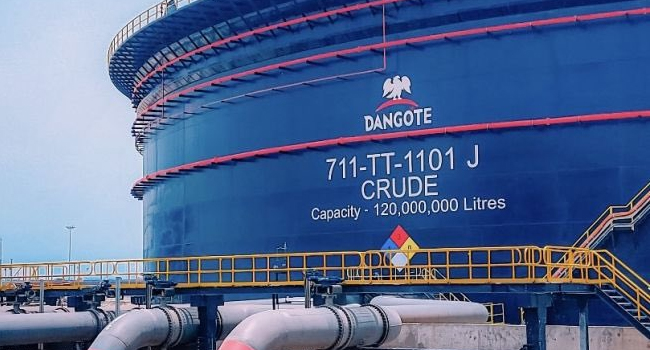
Oil marketers under the aegis of the Depot and Petroleum Products Marketers Association of Nigeria (DAPPMAN) have disputed the Dangote refinery’s claims implying that petrol sold at lower prices by others is substandard.


On November 3, the Dangote refinery said any oil marketer that sells petrol cheaper than the price it offers is importing a lower quantity.


The factory said its prices are benchmarked against the international prices and the amount the Nigerian National Petroleum Company (NNPC) Limited sold to local marketers post-deregulation.


Reacting to the claim in a statement on Tuesday, Olufemi Adewole, executive secretary of DAPPMAN, said none of its members work with anyone to import low-quality products into the country.


“We have said this for the umpteenth time, and it bears repeating, those in the downstream sector business of petroleum products trade are patriotic Nigerians who will not shortchange Nigerian citizens for filthy lucre,” Adewole said.


“Our members are in this business to add value to the businesses of their fellow Nigerians and not to defraud them.

See also  Why we reduced petrol price – Dangote


“Prices of products in the international market are dynamic as they are dictated by prevailing circumstances at every given situation. We calculate our landing costs based on the dynamics of market forces, and the templates are always in the public domain.


“To claim that if the landing cost of imported product happens to be lower than that of the refinery indicates importation of low quality product is not only preposterous, but also fallacious. In any case, the management of the refinery has, until now, kept its cost and prices close to its chest and put it away from public scrutiny.”


Adewole said the refinery’s comment is targeted at projecting DAPPMAN’s members negatively before the public.


He also said such claims cannot help the company’s desire to have oil marketers patronise its products.


“What will ensure such patronage is transparency, fairplay, and readiness to compete with others, including foreign refineries, on an even keel and on a level playing field,” he added.

See also  Marketers can’t lift petrol without NNPC approval – Dangote refinery


‘NMDPRA HAS MODERN LABORATORY’

The DAPPMAN executive secretary said the company’s claim that the Nigerian Midstream and Downstream Petroleum Regulatory Authority (NMDPRA) does not have a modern laboratory to test imported fuel is false.


“A regulator must have access to modern, state of the art laboratory at every point in time, whether owned by it or others. Such laboratories must be of world standard,” he said.


“The regulator, and indeed, the marketers, have access to such world-class laboratories, which include: SGS, Inspectorate, and Interterk, among others.


“If fuel marketers were bringing in off-spec fuel, this wouldn’t have been difficult to detect. How many vehicles in the last one year have reported engine problems resulting from bad fuel? Where are the reports about environmental pollution occasioned by the usage of low quality fuel?

“It is a false statement to claim that any product brought in with a landing price lower than the price offered by the Dangote Refinery is a substandard product.

See also  It’s time for FG to remove petrol subsidy - Aliko Dangote


“It is the management of the refinery that will need to tweak its template to reflect the crude for naira sales and other incentives which the federal government has graciously extended to the refinery.”

Adewole also said the members were surprised to know that the refinery has a 500 million litres fuel reserve.


“We were surprised because we believe that if the Refinery has such huge stock, it is the marketers that should be put in the know first,” the executive secretary said.


“Secondly, it was even more surprising given that the news came about the time the refinery was working on rationing what each marketer could pick from the refinery. If they had such huge stock, how is it then that they are rationing what marketers could buy.”


Adewole said the association will continue to play by the rules and will not be tired of advocating for a level playing field, and a competitive and transparent sector.

Continue Reading
Click to comment

Leave a Reply

Your email address will not be published. Required fields are marked *

Business

Wema Bank meets CBN’s recapitalisation, retains national banking license

Published

on

By

Wema Bank, Nigeria’s oldest indigenous national bank and pioneer of Africa’s first fully digital bank, ALAT, has successfully met and surpassed the Central Bank of Nigeria’s (CBN) recapitalisation requirements, reaffirming its status as a National bank.

This achievement represents a critical milestone in the Bank’s growth journey, reflecting its ability to meet regulatory expectations and its deliberate strategy to scale sustainably, strengthen its balance sheet, and reinforce its position within Nigeria’s banking sector.

The milestone follows the Bank’s successful completion of a ₦150 billion Rights Issue and an additional ₦50 billion special placement in 2025, bringing its Total Qualifying Capital to ₦264.7 billion, well above the regulatory minimum.

This achievement was concluded six months ahead of the CBN’s stipulated deadline, further reinforcing the Bank’s strong financial position, shareholder confidence, and long-term growth trajectory.

Earlier in April 2026, the Central Bank of Nigeria also formally confirmed that Wema Bank, alongside 32 other financial institutions across international, national, and regional categories, had successfully concluded the recapitalisation process.

Notably, Wema stands among only ten national banks that met and surpassed the minimum required capital threshold, thereby sustaining its national banking license.

See also  Dangote refinery asks court to void import licences of NNPCL, Matrix Petroleum, others in ₦100bn suit

This milestone not only affirms regulatory compliance but also signals a new phase of accelerated growth for the Bank; one defined by stronger capital base, increased capacity to support customers, and a reinforced position within Nigeria’s competitive banking landscape.

Commenting on the milestone, the Managing Director/Chief Executive Officer of Wema Bank, Moruf Oseni, stated, “The successful completion of our recapitalisation exercise is a defining moment for Wema Bank. It is a strong validation of our strategy, our performance, and the enduring confidence our shareholders and stakeholders have in our vision. We have not only met the CBN’s requirements; we have exceeded them, reinforcing our position as a National Bank with the scale, strength, and stability to compete and lead.”

In March 2024, the Central Bank of Nigeria announced the recapitalisation programme requiring all national banks to maintain a minimum capital base of ₦200 billion.

The initiative was designed to strengthen the resilience of financial institutions, enhance their capacity to absorb economic shocks, and position them to drive sustainable economic growth.

In response, Wema Bank embarked on a strategic capital raise through the stock market, successfully strengthening its shareholder base and securing the required capital through strong participation from existing investors.

See also  I’m not desperate to be president - Atiku

The ₦150 billion Rights Issue, which opened on April 14, 2025, and closed on May 21, 2025, marked a significant step in this journey. This was subsequently complemented by a ₦50 billion special placement later in the year, ensuring the Bank not only met but exceeded the regulatory threshold well ahead of schedule.

For Wema Bank, this journey is a testament to its transformation. After regaining its national license in 2015, the Bank has consistently demonstrated financial discipline and strategic foresight. By raising the necessary capital primarily from existing shareholders, the Bank has underscored a deep-seated mutual trust between the institution and its investors.

Speaking further on what this achievement means for the Bank’s future and its customers, Oseni added: “This milestone strengthens our ability to compete at scale, deepen our market presence, and deliver more value to our customers across Nigeria through improved access to credit, enhanced digital banking experiences, and innovative financial solutions. It positions us to play an even bigger role in powering Nigeria’s economy while continuing to deliver sustainable value to all our stakeholders.

See also  Yahaya Bello dances with Ododo at Kogi palace

Looking ahead, we remain focused on deepening our market presence, driving customer-centric innovation, and strengthening our role as a catalyst for growth across retail, SME, and corporate segments. This is not just about retaining our license; it is about building a bigger, stronger, and more impactful Wema Bank.”

The successful conclusion of the recapitalisation process underscores Wema Bank’s financial strength, disciplined execution, and unwavering commitment to regulatory compliance as it continues to expand its footprint across Nigeria.

With a significantly strengthened capital base, the Bank is now positioned to do more – support more customers, enable more businesses, and unlock more opportunities across every segment it serves.

As it enters this new phase, Wema Bank is not only reaffirming its status as a National Bank; it is stepping forward with greater scale, sharper ambition, and a clear intent to lead.

The Bank remains firmly committed to powering progress, driving innovation through ALAT, and delivering sustained value; powering a future of possibilities for all its stakeholders.

Continue Reading

Business

Oando plans $750 million drilling campaign, expects funding boost from Iran turmoil

Published

on

By

Nigeria’s leading energy firm, Oando, plans to raise up to $750 million this year for a drilling campaign that could boost output by 300%, tapping improved investor appetite for West African producers amid turmoil linked to the Iran war, Group Chief Executive of the firm Jubril Adewale ‌Tinubu, CON, told Reuters in an interview recently.

The oil and gas company is among a handful of local companies that have snapped up assets from oil majors in the past decade as they exit Nigerian onshore. This year, surging energy prices should open more funding sources for producers in the region, Tinubu said.

We are pushing very, very hard towards getting the financing that we need to do an extensive drilling campaign,” Tinubu told Reuters.

Nigeria is Africa’s biggest oil producer with crude and condensate output of around 1.6 million barrels a day.

Oando, whose production averaged just over 32,000 barrels of oil equivalent per day in ⁠fiscal 2025, aims to drill as many as 100 wells to boost output, particularly from assets purchased from Western majors ConocoPhillips and Eni.

See also  Tinubu will determine price of our petrol, says Dangote

While in the past the company had struggled with securing cash for drilling due to investor worries that Africa was an “unsafe environment”, the Iran war and Russia’s invasion of Ukraine in 2022 have shifted that view, Tinubu said.

“Africa is very, very peaceful compared to these regions,” he said.

Already, Tinubu said there was a shift in demand for Nigeria’s crude, with more cargoes sailing to Asia to replace Gulf oil trapped due to the closure of the Strait of Hormuz.

FUNDING SQUEEZE FROM EUROPE
Oando has raised $3 billion-$4 billion in the past decade, much of it from European banks, the GCE said, the bulk of which went toward acquisitions.

European banks had now almost completely withdrawn from African hydrocarbons due to climate concerns, he said, pushing Oando to funders including the African Export-Import Bank and the African Finance Corporation, and to oil trading houses ‌including Vitol, ⁠Trafigura, Glencore and Mercuria.

See also  EFCC re-arraigns ex-Kwara gov, ex-commissioner over alleged N5.78bn fraud

However, Africa needed more “substantial long-term funding”, he added.
More Gulf banks were interested in hydrocarbon projects in Africa and more parties were joining their syndications, while private equity funds and hedge funds were also more active in funding African energy, he said.

Oando recently expanded into Angola, and Tinubu said they are exploring opportunities in Ghana and Ivory Coast.

Africa should pool capital available at home, via pension funds and other sources, to fund large-scale capital projects, he added.

Geopolitical turmoil will have “long-reaching strategic implications for global ⁠energy security”, he said, and keep focus on West Africa’s reserves.

“Even if the ceasefire lasts, which, hopefully it will, it wouldn’t change the fact that consistently, you’re going to find disruptions,” he said.

GASOLINE EXPORTS, BUSINESS OPPORTUNITIES

Nigeria, Tinubu said, is well placed to draw funding after a landmark 2021 overhaul of its hydrocarbon law and reforms by current President ⁠Bola Tinubu, his uncle, to currency and costly petrol subsidies.

See also  ISIS appoints Sani Shuwaram as new ISWAP leader

The new 650,000 barrel-per-day Dangote Oil Refinery on the outskirts of Lagos, Tinubu said, highlighted the value of Nigeria’s resources.

Tinubu, whose company was once among the nation’s largest fuel importers, said imports were now only needed to test for pricing or during refinery maintenance.

Longer term, ⁠Tinubu hopes to exploit some of Oando’s own gas production for petrochemicals and fertilizers to further boost the value added to Nigerian resources.

The company was working to “streamline” financials to avoid further delays in filing audited statements with the Nigerian Exchange after deadline extension in recent years.

In August, Oando’s board signed off on a proposal to launch a multi-instrument issuance programme of up to $1.5 billion.
-Culled from Reuters.

Continue Reading

Business

Oando plans $750 million drilling campaign, expects funding boost from Iran turmoil

Published

on

By

Nigeria’s leading energy firm Oando plans to raise up to $750 million this year for a drilling campaign that could boost output by 300%, tapping improved investor appetite for West African producers amid turmoil linked to the Iran war, Group Chief Executive of the firm Jubril Adewale ‌Tinubu, CON, told Reuters in an interview recently.

The oil and gas company is among a handful of local companies that have snapped up assets from oil majors in the past decade as they exit Nigerian onshore. This year, surging energy prices should open more funding sources for producers in the region, Tinubu said.

We are pushing very, very hard towards getting the financing that we need to do an extensive drilling campaign,” Tinubu told Reuters.

Nigeria is Africa’s biggest oil producer with crude and condensate output of around 1.6 million barrels a day.

Oando, whose production averaged just over 32,000 barrels of oil equivalent per day in ⁠fiscal 2025, aims to drill as many as 100 wells to boost output, particularly from assets purchased from Western majors ConocoPhillips and Eni.

See also  Arise News bias, blackmailing Tinubu - Campaign Organisation

While in the past the company had struggled with securing cash for drilling due to investor worries that Africa was an “unsafe environment”, the Iran war and Russia’s invasion of Ukraine in 2022 have shifted that view, Tinubu said.

“Africa is very, very peaceful compared to these regions,” he said.

Already, Tinubu said there was a shift in demand for Nigeria’s crude, with more cargoes sailing to Asia to replace Gulf oil trapped due to the closure of the Strait of Hormuz.

FUNDING SQUEEZE FROM EUROPE
Oando has raised $3 billion-$4 billion in the past decade, much of it from European banks, the GCE said, the bulk of which went toward acquisitions.

European banks had now almost completely withdrawn from African hydrocarbons due to climate concerns, he said, pushing Oando to funders including the African Export-Import Bank and the African Finance Corporation, and to oil trading houses ‌including Vitol, ⁠Trafigura, Glencore and Mercuria.

See also  Dangote refinery slashes ex-depot petrol price to N825 — second cut in February

However, Africa needed more “substantial long-term funding”, he added.

More Gulf banks were interested in hydrocarbon projects in Africa and more parties were joining their syndications, while private equity funds and hedge funds were also more active in funding African energy, he said.

Oando recently expanded into Angola, and Tinubu said they are exploring opportunities in Ghana and Ivory Coast. Africa should pool capital available at home, via pension funds and other sources, to fund large-scale capital projects, he added.

Geopolitical turmoil will have “long-reaching strategic implications for global ⁠energy security”, he said, and keep focus on West Africa’s reserves.
“Even if the ceasefire lasts, which, hopefully it will, it wouldn’t change the fact that consistently, you’re going to find disruptions,” he said.

GASOLINE EXPORTS, BUSINESS OPPORTUNITIES
Nigeria, Tinubu said, is well placed to draw funding after a landmark 2021 overhaul of its hydrocarbon law and reforms by current President ⁠Bola Tinubu, his uncle, to currency and costly petrol subsidies.

See also  Dangote refinery asks court to void import licences of NNPCL, Matrix Petroleum, others in ₦100bn suit

The new 650,000 barrel-per-day Dangote Oil Refinery on the outskirts of Lagos, Tinubu said, highlighted the value of Nigeria’s resources.

Tinubu, whose company was once among the nation’s largest fuel importers, said imports were now only needed to test for pricing or during refinery maintenance.
Longer term, ⁠Tinubu hopes to exploit some of Oando’s own gas production for petrochemicals and fertilizers to further boost the value added to Nigerian resources.

The company was working to “streamline” financials to avoid further delays in filing audited statements with the Nigerian Exchange after deadline extension in recent years.

In August, Oando’s board signed off on a proposal to launch a multi-instrument issuance programme of up to $1.5 billion.
-Culled from Reuters.

Continue Reading

Trending News