Connect with us

Business

OANDO @30: The success story of an iconic brand

Published

on


For OANDO Plc, the last three decades have been quite memorable looking back at various exciting periods. In that period, the oil giant has experienced more roses than thorns. The company, which started out as an oil services company in 1994 has grown in leaps and bounds to become one of sub-Saharan Africa’s leading indigenous energy companies.

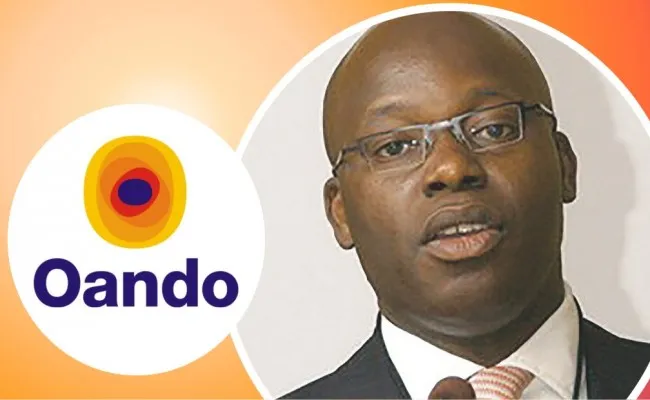
With the deep understanding that Ocean and Oil Services Limited was established been to supply diesel and Low Pour Fuel Oil (LPFO) to various shipping firms and offshore exploration companies in Nigeria, Wale Tinubu has indeed come a long way to establish himself as one of Africa’s successful businessman.

The story of OANDO Plc, which would make an excellent case study for young and aspiring businessmen, is about three young men – Wale Tinubu, Mofe Boyo and Jite Okoloko – who dared to dream and with hard work and dedication, turned the dream into reality.

For the records, it was no doubt a humble beginning, as the budding oil company started out only with a vessel, MT Carolina, anchored in Bonny Island, Rivers State to supply diesel and Low Pour Fuel Oil (LPFO) to off-shore companies from the Port-Harcourt, Rivers State refinery.

But with dedication, hard work and a very strong belief, in just six years after its emergence on the nation’s thriving oil market, Ocean and Oil Services Limited started to show flashes of a potentially big player, particularly with the acquisition of six ships, a development that shocked its morbid critics who didn’t give it any chance of survival.

The success story continued in 2000 when Wale Tinubu and his co-travellers made open an ambitious desire to acquire a 30 % controlling interest in the defunct Unipetrol. At the time, the audacious move was a swift response to the government’s decision to sell its controlling 60% stake in Unipetrol Plc, an integrated downstream oil marketing company.

No one believed that Ocean and Oil Services Limited, an upstart company, would acquire an already top-quoted company on the Lagos Stock Exchange. But for Tinubu and his team, nothing is impossible if you believe and go for it.

See also  CBN sacks boards of Union, Keystone, Polaris and Titan banks

To the surprise of the naysers, some renowned seasoned technocrat and other nitpickers, the planned acquisition recorded no hitch, as it was completed in a record time. By 2001, Ocean and Oil Services had increased its shares in Unipetrol to 42%. The company reportedly wrought this magic with an impressive support from its foreign technical partners, Compagnia Espanola De Petroleos (CEPSA), the second largest oil group in Spain.

The fire in the magic wand burntly brightly once again in 2002, when these enterprising and go-getting businessmen fortuitously became the object of global interest. Again, to the disbelief of many, Ocean and Oil Services Limited acquired a 60% stake in Agip Nigeria Plc.

For the benefit of those who do not know the story, it all began when Agip Petroli International BV of Italy decided to divest from the downstream sector. With their eyes fixed on the future, the business partners, after wide consultations and meeting of minds, bought over the foreign company’s shares and added Agip Nigeria Plc, the company’s local subsidiary, to their portfolio, using a N9.2 billion four-year syndicated loan from a consortium of local and international lenders, to finance its purchase.

The magical success story continued about one year after, when in 2003, the newly acquired companies were merged, resulting in the historic birth of Oando Limited. That singular audacious move, in the eyes of many players in the industry, spoke to the sense and rhyme in the saying of Henry Ford, an American industrialist and founder of Ford Motor Company that “ Coming together is a beginning, staying together is progress and working together is success.”

In a spate of three decades, Tinubu and his partners have indeed stayed together and worked together. These success stories should, therefore, not be a surprise to anyone who has followed the story in the last 30 years. It is a story that has defied all imaginable hypotheses, as Oando Plc has climbed one ladder after another to become a global brand.

See also  Wale Tinubu remembers Ngozi Okonkwo one year after

It is an indisputable fact that in those three decades, Tinubu and his partners have been able to maintain their preeminence in the sector owing to the value-added services rendered by the company’s subsidiaries: Oando Marketing Limited, OML, one of the largest downstream petroleum marketing companies in Nigeria with over 500 retail outlets across Nigeria, Ghana, and Togo; Oando Supply and Trading Limited, OST, one of the largest independent traders of crude and refined petroleum products in sub-Saharan Africa incorporated in 2004; Oando Gas & Power Limited, OGP, a pioneer in the development of Nigeria’s foremost gas distribution network, spanning 264km and serving over 150 industrial and commercial customers in Lagos, Calabar and Port Harcourt incorporated in 2004; Oando Energy Services Limited, OES, Nigeria’s largest indigenous oilfield services provider incorporated in 2005 to enhance indigenous participation with a fleet of 5 rigs; Oando Energy Resources, OER, one of Nigeria’s foremost indigenous upstream oil and gas companies.

Today, history its replete with how Oando Energy Resources, OER, had, in 2014, acquired ConocoPhillips Nigerian assets for $1.8bn (inclusive of working capital), secured a 20% interest in the NAOC-Joint Venture (“the JV”) and augmented its total net 2P reserves to 503 million barrels of oil equivalent (mmboe), with peak net production levels of 45,000 barrels of oil equivalent per day (kboep/d).

Again, in 2016, industry watchers were astounded when news broke that the Company was divesting from its Naira-earning businesses to focus on its US$-earning portfolio.

So far, Tinubu has proven that he and his team can see tomorrow today. In 2021, the Company added Oando Clean Energy Limited to his portfolio. Though it aims to design and deliver clean energy projects, it is ultimately to fast-track the nigeria’s energy requirements, while also fulfilling the United Nation’s Race to Net Zero.

See also  Oando boss Wale Tinubu, Femi Otedola, Dangote, others to attend Nigeria-India presidential business summit

In May 2023, the Company rolled out two electric mass transit buses in fulfilment of the Proof-of-Concept Phase, with 552 buses to be secured by the end of 2023. In August 2024, OANDO completed the acquisition of 100% of Eni’s interest in NAOC, the operating company of the JV, thereby increasing its stake in the JV from 20% to 40%, and securing operatorship of the JV as well as doubling its 2P reserves to 996.2 mmboe.

More than ever before, Tinubu seems to be unstoppable in the effort to continuously expand the company’s exploratory asset base portfolio, while positioning itself for the energy transition through the development of its renewable energy business.

Expectedly, like every mango trees filled with juicy fruits would attract stones, OANDO Plc and Wale Tinubu have attracted timid attacks from those who are and intimidated by the rising profile of the company and its Group Chief Executive Officer. Their latest efforts came into focus recently with the linking the achievements to President Bola Tinubu and Nigeria’s Presidency.

The tiny seed sown by the three young men about 30 years ago has today grown into a mighty tree under which countless number of humans from across the globe seek refuge. The did not germinate and grow into the mighty tree overnight, it took 30 years of hard work, dedication and perhaps sleepless nights. It is for reasons like these that it make no sense hinging the success story of OANDO on President Bola Tinubu, who only emerged as Nigeria’s President a little over one year ago.

And for OANDO Plc, as it celebrates its 30 years anniversary, everyone is waiting with bated breath for the next move from the man whose driving force is to make success of the dream the three young men had three decades ago.

Happy anniversary to OANDO Plc

Business

CBN revokes licences of 46 microfinance banks

Published

on

By

The Central Bank of Nigeria (CBN) has revoked the operating licences of 46 microfinance banks (MFBs).

The apex bank cited the failure of the banks to meet regulatory requirements for continued operation.

In a statement issued on Wednesday by Hakama Sidi-Ali, acting director of corporate communications, the apex bank said the revocation took effect from July 1, 2026, in line with Sections 12 and 13 of the Banks and Other Financial Institutions Act (BOFIA), 2020.

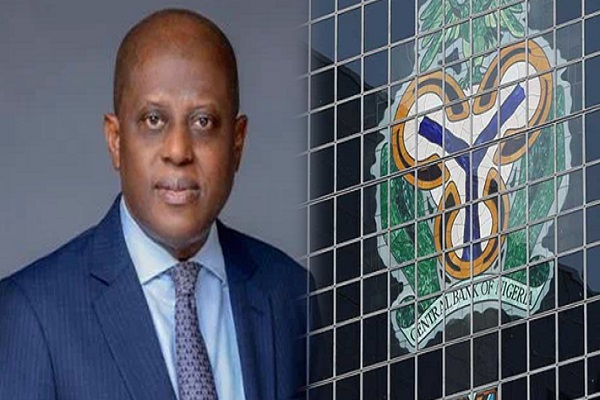
The CBN said the action was approved by Olayemi Cardoso, the apex bank governor, as part of efforts to safeguard the stability of the financial system, protect depositors and ensure compliance with regulatory standards.

“According to the revocation order, the action became necessary because of one or more of the circumstances: Insufficient assets to meet liabilities, closure of operations without the CBN approval, Inactivity and cessation of financial intermediation, failure to commence operations within 12 months of licence approval, and failure to maintain minimum capital funds unimpaired by losses,” CBN said.

See also  Wale Tinubu remembers Ngozi Okonkwo one year after

“The revocation of the licences is part of the Bank’s ongoing efforts to safeguard the stability of the financial sector, protect depositors, and ensure that licensed institutions comply with current laws and regulatory requirements,” the statement reads.

CBN added that it remains committed to promoting a safe, sound and resilient financial system and would continue to take supervisory and regulatory actions where necessary to maintain public confidence in Nigeria’s financial sector.

The affected microfinance banks are:

1. Minji-Se Churchill MFB (tier 1) in Rivers

2. Merchant MFB (tier 2) in Abia

3. Janmaa MFB (tier 1) in Kwara

4. Busu MFB (tier 2) in Niger

Advertisement

5. Gold MFB (tier 1) in Lagos

6. Zain MFB, formerly Dawakin Tofa MFB, a tier 2 lender in Kano

7. Bompai MFB (tier 1) in Kano

8. Ajwa MFB (tier 2) in Kano

Advertisement

9. Now Now Digital MFB (tier 2) in Kano

10. Crystabel Microfinance Bank (tier 1) in Bayelsa

See also  Dunlop, Mitsubishi, Marina Investment… CAC delists 80,000 companies dormant for 10 years

11. Chanelle MFB (state-based) in Lagos

12. Abia SME MFB (tier 1) in Abia

13. Kamba MFB (tier 2) in Kebbi

14. Iwade MFB (tier 2) in Ogun

15. Winview MFB (tier 1) in Abuja

16. Zuru MFB (tier 2) in Kebbi

17. Minjibir MFB (tier 1) in Kano

18. Shanono MFB (tier 2) in Kano

19. Sumaila MFB (tier 2) in Kano

20. Rimin Gado MFB (tier 2) in Kano

21. Mwaghavul MFB (state-based) in Plateau

22. Sycamore MFB (tier 2) Kano

23. TOFA MFB (tier 2) in Kano

24. Safegate MFB (tier 1) in Lagos

25. Creekline MFB (tier 2) in Delta

26. Bestar MFB (tier 1) in Oyo

27. Livingspring MFB (tier 1) in Cross River

28. Apple MFB (tier 2) in Ogun

29. Stanford MFB (state-based) in Uyo

30. Frontline MFB (tier 2) in Anambra

31. Zafec MFB (tier 2) in Kaduna

32. Supreme MFB (tier 1) in Lagos

See also  Wale Tinubu, Dangote, Wale Edun, Obaigbena others attend Nigeria-Saudi Business Forum

33. Bejin-Doko MFB (tier 2) in Niger

34. Kanopoly MFB (tier 1) in Kano

35. Bellbank MFB, formerly Tsanyawa (Tier 2), in Kano

36. Yeneng MFB (tier 2) in Plateau

37. Creditville MFB (tier 1) in Lagos

38. MBAG MFB (tier 1) in Lagos

39. Straight Sahara MFB (tier 1) in Benue

40. Our Pass MFB (tier 2) in Ondo

41. VERDANT MFB (tier 1) in Lagos

42. Basawa MFB (tier 2) in Kaduna

43. Casha MFB (tier 2) in Abuja

44. Esteem MFB (tier 2) in Kano

45. Enterpreneur MFB (tier 1) in Lagos

46. Avantus MFB (tier 2) in Osun

It would be recalled that the CBN increased the capital base for banks, in March 2024, giving them until March 31, 2026, to meet the requirements.

On March 6, 2026, the financial regulator disclosed that 30 banks have met the minimum capital requirement.

Continue Reading

Business

Wema Bank launches Hackaholics 7.0, increases grand prizes to N150m

Published

on

By

introduces 3 tracks, 7 Verticals,

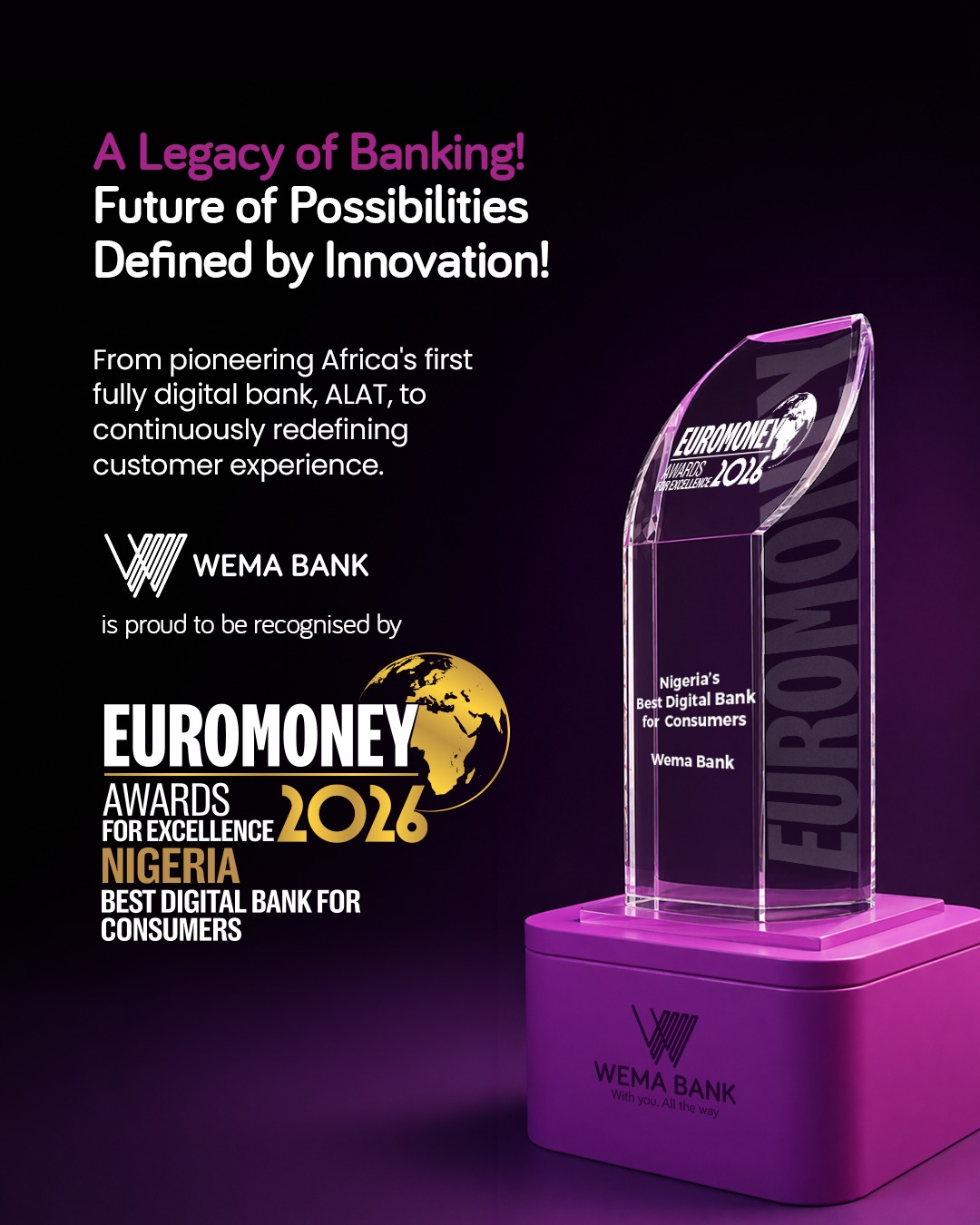
Wema Bank, Nigeria’s oldest indigenous national bank, most innovative and pioneer of Africa’s first fully digital bank, ALAT, has announced the 7th edition of its flagship innovation initiative, Hackaholics.

The announcement was made on Wednesday, July 1, 2026, during the official press conference at the Wema Bank Head Office in Lagos, Nigeria.

Launched in 2019, Hackaholics is Wema Bank’s youth and tech-focused initiative designed to serve as a platform for young Africans with creative, game-changing, tech-driven ideas and products, and to bring innovative their ideas to life.

Since its launch, Hackaholics has discovered thousands of groundbreaking solutions, supported over 10,000 startups, engaged 50,000 participants, developed over 100 solutions from scratch and disbursed $500,000,000 in grant prizes to dozens of winners whose remarkable solutions have earned top spot in the past 6 editions.

With the launch of Hackaholics 7.0, Wema Bank is set to execute the biggest Hackaholics edition yet.

See also  Oando plans $750 million drilling campaign, expects funding boost from Iran turmoil

Themed “Powering Possibilities”, Hackaholics 7.0 will kick off with an open call for applications, calling on all young Africans with creative tech-driven solutions across any of the 7 verticals: Financial Inclusion, Healthcare, Digital Transformation, Education, Sustainability, Social Impact and Future of Work.

Each application is to be made via the portal at hackaholics.wemabank.com, under one of three tracks: The Startup Pitch Competition, Hackathon and the newly introduced Social Impact track.

Following the application window, Hackaholics 7.0 will then proceed on a national tour which will touch 10 pitch centres across the six geopolitical zones of Nigeria.

Each pitch centre will serve as a hub for innovators within the region to pitch their creative solutions and get the opportunity to secure the top spot in their pitch centre, and ultimately, proceed to the grand finale where the winners of Hackaholics 7.0 will be announced.

Speaking on the Bank’s inspiration behind Hackaholics’ exceptional seven-year journey, Wema Bank’s MD/CEO, Moruf Oseni, reiterated the Bank’s commitment to powering innovation, empowering youth and promoting economic growth in Africa.

See also  NUPRC approves Oando’s acquisition of Agip

According to him, “At Wema Bank, we believe that institutions have a responsibility that extends beyond providing commercial services. We have a responsibility to create meaningful opportunities, provide the right resources, enable innovation to thrive, and support the ecosystems that will shape today’s youth as well as tomorrow’s economy.

“This sense of responsibility is what has driven the evolution of Hackaholics from inception till date. With Hackaholics, we have, and we are investing in the next generation of innovators, inspiring innovation that will impact lives, strengthening Nigeria’s innovation ecosystem and giving youth a platform to make meaningful use of their creativity; and the numbers continue to speak volumes.”

Declaring the application window open, Tajudeen Bakare, Wema Bank’s Divisional Executive, Business Support, added, “As we launch Hackaholics 7.0 today, we are opening up a new phase of opportunities for more Nigerian youth to challenge themselves, explore their creativity and become startup founders.

“I encourage every young Nigerian with a passion for innovation to leverage the opportunity that we have carefully curated through Hackaholics and get ahead of the curve in today’s dynamic work landscape.

See also  Oando Group Chief Executive, Adewale Tinubu, Celebrates Nigerian Workers on May Day

“Together, we can continue to build an ecosystem where innovation flourishes, opportunities expand, and young people are empowered to create solutions that shape the future.”

Hackaholics 7.0 is free, and open to any Nigerian youth who has innovative ideas and solutions to pitch. Interested startups and innovators can apply at hackaholics.wemabank.com. All updates on the Hackaholics 7.0 journey will be made available on the Bank’s website @wemabank.com as well as its social media platforms @wemabank and @alat_ng.

Continue Reading

Business

Wema Bank’s 5 for 5 rewards delivers ₦17.96m to 273 customers in one month

Published

on

By

One month after launching the Season 5 of its flagship 5 for 5 Rewards campaign, Wema Bank has rewarded 273 customers with a total of ₦17.96 million, demonstrating the strong early impact of its refreshed customer rewards platform and reinforcing its commitment to rewarding everyday banking.

Launched on May 2, 2026, as part of the Bank’s 81st anniversary celebration, this season of the campaign introduced a more structured and inclusive rewards framework designed to encourage positive financial habits while recognising customer loyalty across the Youth, Women and Mass Market segments.

The season opened with a special anniversary activation at Ikeja City Mall, where 81 customers received ₦81,000 each, resulting in ₦6.56 million in rewards on launch day. Since then, the campaign has continued to reward customers through daily and monthly draws, with an additional 192 winners emerging within the first month.

Across the Youth segment, 37 students have received rewards worth ₦4.4 million, including 20 students who received ₦50,000 PocketMoni rewards and 17 university students who received ₦200,000 each in Tuition Support.

See also  Wale Tinubu, Dangote, Wale Edun, Obaigbena others attend Nigeria-Saudi Business Forum

The Women segment also recorded strong participation, with 12 customers receiving ₦150,000 each through the #SelfCare category, while the Mass Market segment recorded the highest number of winners. Within the first month, 120 customers received daily cash rewards, and 23 customers won ₦200,000 each in the monthly draw, bringing total rewards in the category to ₦5.2 million.

Commenting on the campaign’s early impact, Wema Bank’s Managing Director and Chief Executive Officer, Moruf Oseni, said; “At Wema Bank, we believe loyalty should be rewarded in ways that are meaningful, transparent and accessible. The response to Season 5 of the 5 for 5 Rewards campaign has been encouraging, and seeing hundreds of customers benefit within just one month reinforces our belief that everyday banking should create everyday opportunities.

Beyond rewarding transactions, we are encouraging positive financial habits while delivering real value to our customers. He added; “This is only the beginning. With more reward categories, more winners and more opportunities still ahead, we remain committed to creating meaningful impact for our customers and ensuring more Nigerians experience the value of banking with Wema.”

See also  FAAC shares N786bn to FG, states, LGs

Customers can participate by opening or reactivating a Wema Bank account, funding it with a minimum of ₦5,000, maintaining an average monthly balance of ₦5,000, and completing at least five transactions every month using the ALAT app, Wema or ALAT cards, or *945#.

With over ₦170 million earmarked for rewards between May and December 2026, thousands more customers are expected to benefit as the campaign continues, reaffirming Wema Bank’s commitment to rewarding loyalty, promoting positive financial behaviour and delivering value beyond banking.

Continue Reading

Trending News