Connect with us

Trending News

WASSCE: ASUU, NUT clash over FG’s ban of under-18 candidates

Published

on


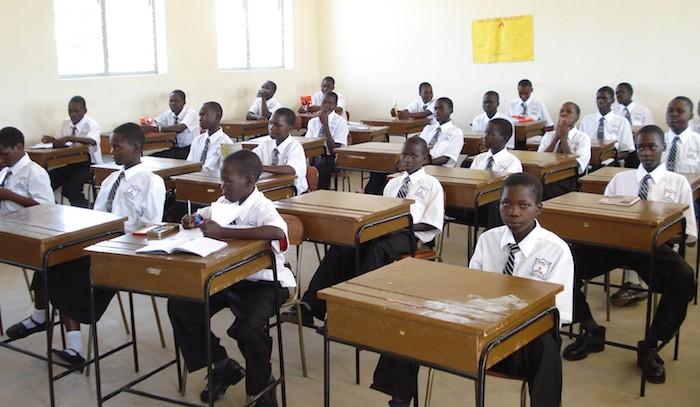
The Nigeria Union of Teachers has condemned the Federal Government’s decision to ban under-18 candidates from sitting for the West African Senior School Certificate Examination and the National Examination Council, even as the Academic Staff Union of Universities backed the policy, according to reports.


The Minister of Education, Prof. Tahir Mamman, announced on Channels Television’s ‘Sunday Politics’ programme that the Federal Government had instituted a new age policy for secondary school leaving examinations, setting the minimum age at 18.


This means underage candidates will no longer be allowed to sit for the West African Senior School Certificate Examination and the Senior School Certificate Examination, both crucial for advancing to tertiary education.


The directive also affects the West African Examinations Council, which administers the WASSCE, and the National Examinations Council responsible for the SSCE. Additionally, Mamman confirmed that the age limit to undertake the Unified Tertiary Matriculation Examination, overseen by the Joint Admissions and Matriculation Board, will also be 18.


He added that this was not a new policy.


“For the avoidance of doubt, this is not a new policy; this is a policy that has been there for a long time,” Mamman stated.


“Even basically, if you compute the number of years pupils, and learners are supposed to be in school, the number you will end up with is 17 and a half – from early child care to primary school to junior secondary school and then senior secondary school. You will end up with 17 and a half by the time they are ready for admission.


“So, we are not coming up with a new policy, contrary to what some people are saying; we are just simply reminding people of what is existing. In any case, NECO and WAEC, henceforth, will not be allowing underage children to write their examinations. In other words, if somebody has not spent the requisite number of years in that particular level of study, WAEC and NECO will not allow them to write the examination.”


The minister went further to give a breakdown of the number of years pupils were expected to spend between child care and senior secondary school. According to him, early care is expected to last for the first five years. Pupils are expected to begin primary one at the age of six, spend six years in primary school and move to junior secondary school at the age of 12, spend three years, before moving to senior secondary school at the age of 15, then spend another three years before leaving for university at the age of 18.


Last month, Mamman, in a meeting with JAMB and other education stakeholders, insisted that the UTME should be set at 18 years.

See also  Terrorists attack Niger hospital, kill two, abduct doctor, two other health workers


Mamman stated, “JAMB is hereby notified that there is now a ban on underage students, those under the age of 18, from our tertiary institutions for the 2024 admissions… It doesn’t require a statement of the minister… we are only restating what is in the law.”


However, the law sparked criticisms, particularly from university stakeholders, as many of those categorised as underage candidates had already taken the UTME without anticipating the directive. This posed a threat to potential 16 and 17-year-olds, who had already passed the UTME and were seeking admission into universities.


Following the disapproval, the minister reversed the directive, allowing candidates from 16 years to be admitted into the university as it previously stood until 2025.


However, following Sunday’s pronouncement, Mamman insisted that there was no going back on the policy.


The minister said, “It is 18 (years). What we did at the meeting that we had with JAMB (in July) was to allow this year and for it to serve as a kind of notice for parents that this year, JAMB will admit students who are below that age but from next year, JAMB is going to insist that anybody applying to go to university in Nigeria meets the required age, which is 18.”


But the Secretary-General, NUT, Dr Mike Ene, said that changes in society, like early enrollment in crèches due to economic pressures, made it unrealistic to restrict learning based on age.


“The only way this policy could work is if it’s implemented from the foundation. By that, I mean starting at the primary school level. In the past, before a child was allowed to start school, they had to pass a basic test — like reaching their hand over their head to touch the opposite ear. If they couldn’t, they were sent back home.


“However, things have changed. Nowadays, due to economic pressures, parents enroll their children in crèches early, which means both parents have to work,” Ene said.

“Teachers at these crèches begin to educate the children, and they start learning quickly. You can’t stop them from learning because the brain is structured to keep developing—once learning stops, the brain stagnates.”


He added that exceptional students, who might be younger but academically advanced, were not considered in the policy, warning that the policy could lead to legal challenges and urged the government to rethink it, calling it poorly conceived.


“You also have to consider exceptional students. Some students are 16 years old in SS3. Is the minister taking these scenarios into account? What are these students supposed to do? Wait two more years? I see this as a policy that could lead to numerous legal challenges. The government needs to rethink this thoroughly. It is poorly conceived.”

See also  FG owing Ogun over N300bn for federal roads rehabilitation, says Abiodun


Also speaking, National President, ASUP, Mr Shammah Kpanja, maintained that the decision to allow students under 18 to sit for exams should depend on their abilities, saying that gifted students might not need to spend the full years in school.


He advised the government to focus on critical issues like providing functional equipment in schools, addressing infrastructure deficits and improving teachers’ welfare, rather than on exam age restrictions.


Kpanja stated, “One issue with policy is that if it’s not realistic, it can lead to distorted information. The decision of whether a student should be 18 or younger to sit for exams should depend on the student’s abilities. Some students are exceptionally gifted and don’t need to spend all those years in school if they demonstrate a high level of intelligence.


“What we need is for the government to ensure that basic schools are equipped with functional facilities. In some villages around Abuja, you’ll find children sitting on the ground in schools, with many buildings lacking roofs. These are the real issues that need addressing. The welfare of teachers and the availability of functional libraries in most public secondary schools are also lacking. These should be the government’s targets — addressing infrastructure deficits instead of focusing on mundane matters.”


The polytechnic lecturer questioned the government’s priorities, pointing out inconsistencies, such as allowing child marriages in the North, while restricting younger students from taking WAEC.


“Did their children sit for WASSCE at 18 years? You allow young girls to marry at 12 in the North, but they can’t take WAEC at 16? What are the government’s priorities?”


Also, the Secretary-General, Committee of Vice-Chancellors of Nigerian Universities, Prof. Yakubu Ochefu, stated that the VCs would meet in September to take a stand on the policy.


“It has not been discussed by the committee. The committee will meet in September to have a conversation on it. For now, we do not have a position on the matter.”


He added, “In my view, we’ve been operating the 6-3-3-4 system, which is tied to specific age brackets. When a child reaches a certain age, they are expected to be at a certain educational level. This policy has been part of the law for years, though it hasn’t been enforced. Why is it now, when someone attempts to enforce it, that it becomes a problem for Nigerians? Yes, there are exceptional children, but they can be enrolled in schools for gifted children once they demonstrate such abilities.”


On his part, WAEC Head of National Office, Dr Amos Dagnut, emphasised that education in Nigeria was regulated by the government, adding that they had the right to enforce any policy they deemed fit.

See also  FG grounds Arik Air fleet over $2.5m debt


He said, “If the government is regulating education, it is within their purview to do so. We at WAEC do not regulate or keep records of candidates’ ages, as these details are submitted to us by the schools.”


National President, Academic Staff Union of Universities, Prof. Emmanuel Osodeke, maintained that ASUU had not yet discussed the matter, but stated on a personal note that children should follow the standard academic progression: six years in primary school, six years in secondary school, and then move on to university at the age of 18.


Osodeke questioned the rush to enter university, stating, “Why are we focusing on university at such a young age? How many years do you spend in the university? For most courses, it’s four years; for Medicine, it’s five. We can’t reduce these durations.


“They should allow the system to function as intended and give their children time to rest. Adulthood begins at 18, so why force a child to go to the university or rent an apartment at 15? We need to consider the well-being of these children.”


Similarly, National President, All Nigeria Confederation of Principals of Secondary Schools, Mallam Musa Ibrahim, expressed support for the government’s decision, stating that It was not just about intelligence; but more about emotional maturity.

He attributed the high failure rates in national examinations to students under 18 sitting for them.


“A student might be intellectually ready, but if they are not emotionally prepared, they can be vulnerable. When a young student finishes secondary school and enters the university at a very young age, they are exposed to the influence of older, more experienced students. This can lead to negative outcomes, including susceptibility to cultism.


“We see cases where students who looked like they belong to secondary school are actually in university, and they’re often below or just slightly above 18. That’s why we support this policy—so we can nurture these students to enter university as mature individuals who can think for themselves and resist negative influences. Social media and unscrupulous individuals in universities can easily corrupt younger students, whose primary goal should be learning.


“Allowing children under 18 to write SSCE is not the best approach and creates problems for us. We’ve seen high failure rates in WAEC, and last year, all the top scorers were from Ghana. Despite 1.8 million Nigerian students registering, none of them achieved top scores. Parents are also contributing to the issue by pushing their children to graduate too quickly.”

Metro News

NDLEA arrests two France-bound Nigerians with 200 cocaine wraps

Published

on

By

The National Drug Law Enforcement Agency (NDLEA) says its operatives have arrested two Nigerians based in Europe with ingested 200 wraps of cocaine weighing 3.46Kg while attempting to travel from Abuja to Paris, France.

According to a statement issued on Sunday by NDLEA’s spokesperson, Femi Babafemi, the suspects, identified as Aliocus Odife and Sam Blackborn, were arrested on Wednesday, October 28, during the outward clearance of an Air France flight, AF 832, at the Nnamdi Azikiwe International Airport, Abuja.

Babafemi said the suspects, who had returned to Nigeria for holidays, were arrested after body scans confirmed that they had ingested illicit substances.

He said Odife, who lives in France and works in a factory, arrived in Nigeria on October 21 for a short holiday but was arrested while attempting to return to Europe.

Odife was said to have confessed to ingesting 110 wraps of cocaine, which he subsequently excreted under observation. The drugs weighed 1.901kg.

See also  BBNaija: Phyna wins season 7, clinches N100m grand prize

The statement partly read,  “Two Europe-based Nigerian ‘businessmen’ who flew home on holiday and attempted to return to Paris, France with their bellies loaded with cocaine have been arrested by operatives of the  NDLEA at the Nnamdi Azikiwe International Airport, Abuja.

“The duo, Aliocus Godian Odife and Sam Blackborn, were intercepted on Wednesday, 28th October 2026, during the outward clearance of Air France flight AF 832 from Abuja to Paris. Both men have excreted a total of 200 wraps of the Class A drug weighing 3.460 kilogrammes.

“Odife, who claims to live in France where he works in a factory, had arrived in Nigeria for a short holiday on 21st October.

“He was, however, arrested by NDLEA operatives on his return flight a few days later, when he was subjected to a body scan, which confirmed the presence of foreign objects in his stomach.

“Under interview, he admitted to having ingested 110 pellets of cocaine. He was placed under observation during which he excreted all 110 wraps, which tested positive for cocaine with a total weight of 1.901 kilogrammes.”

See also  UPDATED: Supreme court reserves judgement in FG’s suit seeking full LGA autonomy

Babafemi added that his co-traveller, Blackborn, also tested positive during a body scan and confessed to swallowing 90 wraps of cocaine.

According to the agency, he excreted all the wraps under observation, with the substances weighing 1.559kg.

Meanwhile, NDLEA operatives on patrol along the Abuja-Kaduna Expressway arrested a woman, Aisha Isah, with 266 rounds of live AK-47 ammunition

Continue Reading

News

Relief as suspected Ebola cases in Adamawa tested negative

Published

on

By

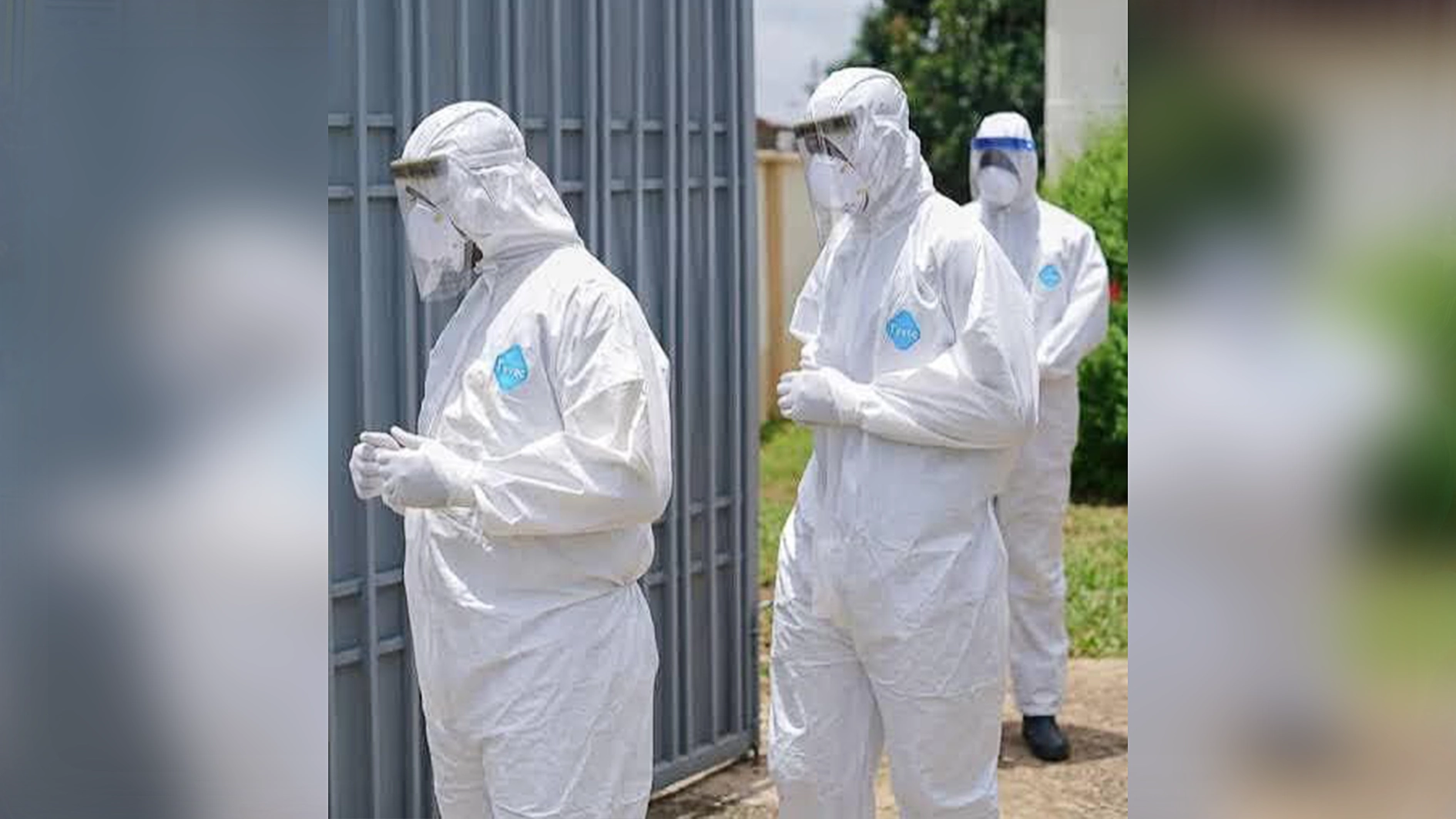
The Nigeria Centre for Disease Control and Prevention (NCDC) has said that there are currently no laboratory-confirmed cases of Ebola  in Adamawa.

The NCDC had on Saturday said that there were two suspected cases of Ebola in the north-east state, adding that the individuals had been isolated while contact identification was ongoing.

But in a statement on Sunday, the director-general of NCDC, Jide Idris,
said samples collected from the two individuals, who had symptoms suggestive of Ebola, tested negative after two rounds of testing.

“The report was received by the Adamawa State Public Health Emergency Operations Centre (PHEOC) in the early hours of 30 October 2026, following the identification of two individuals presenting with symptoms suggestive of Ebola, requiring further investigation,” the statement reads.

“Hence the alert that was released early this evening. The individuals have been isolated, and appropriate public health measures have been initiated.

“Samples were collected for laboratory testing to establish the cause of the illness. Fortunately, the samples turned out negative for EBV after two rounds of testing.”

See also  Terrorists attack Niger hospital, kill two, abduct doctor, two other health workers

Idris commended the Adamawa health commissioner and his team for their “proactive approach”, adding that the NCDC was working closely with the state government to investigate the report of suspected Ebola cases.

“Currently, there is no laboratory-confirmed Ebola case in Adamawa state,” he said.

“The index case previously confirmed in the Federal Capital Territory remains the only confirmed case reported in Nigeria to date.”

He urged the public to remain calm and avoid sharing unverified information or speculating about the situation.

“The public is encouraged to obtain information from official government and public health communication channels,” he said.

Idris described Ebola as a serious infectious disease that requires prompt identification, appropriate clinical management and effective infection prevention and control measures.

“Anyone experiencing symptoms such as fever, severe weakness, headache, muscle pain, vomiting, diarrhoea or unexplained bleeding, particularly following relevant exposure, should seek immediate medical attention and inform healthcare workers of any relevant travel or contact history,” he said.

See also  Nnamdi Kanu sues FG, south-east govs, others for labelling IPOB as terrorist group

“Individuals should avoid self-medication and follow the advice of healthcare professionals.”

Nigeriaconfirmed its first Ebola case in more than a decade on October 20, after a 42-year-old Swiss woman tested positive for the Bundibugyo strain in Abuja.

The patient, who had travelled from Uganda to Nigeria, was subsequently isolated and treated by Nigerian health workers.

On Monday, the federal governmentevacuated the patient to Switzerland aboard a medical plane.

Her husband, who was identified as a close contact, was also evacuated to Switzerland.

Ali Pate, coordinating minister of health and social welfare, said the patient was clinically much improved, stable, conscious and communicating, with her laboratory test results approaching baseline levels.

Continue Reading

News

Good morning! Nigerian Newspapers Headlines: 2027: S’West ADC leaders revolt against Atiku

Published

on

By

1. Many leaders of the African Democratic Congress in the South-West have expressed dissatisfaction with what they described as the marginalisation of the party’s structure in the region by the ADC presidential candidate, Atiku Abubakar, ahead of the 2027 presidential election.

The ADC leaders, including some state chairmen and governorship candidates, alleged that Atiku had been conducting his political activities in the region through his friends and allies, while leaving the party structure sidelined as presidential campaign activities prepared to gather momentum.

2. A United States federal court has rejected an attempt to obtain discovery from President Bola Ahmed Tinubu and DCI Group in an ongoing Freedom of Information Act (FOIA) lawsuit involving the Federal Bureau of Investigation (FBI) and the Drug Enforcement Administration (DEA). 

3. The Zamfara State Commissioner of Police, CP Muhammad Bello, has confirmed the “rescue of three of the six Islamic clerics kidnapped on September 12 while travelling to Talata Mafara, Zamfara State.” Bello gave the confirmation in an interview with select reporters in Gusau. He said the rescue followed a multi-agency collaboration and seamless synergy between the Office of the National Security Adviser, ONSA, the Department of State Services, DSS, and police operatives.

See also  Good morning! Here Are Some Major News Headlines In The Newspapers Today: Nigeria’s Air Force chief visit Italy to buy 34 fighter jets, helicopters – Official

4. The Grand Patron of the PBAT Door-to-Door Movement, Chief Government Ekpemupolo, popularly known as Tompolo, Osun State Governor, Ademola Adeleke, and the Minister of Marine and Blue Economy, Adegboyega Oyetola, have set a target of at least 1.5 million votes for President Bola Tinubu in the 2027 presidential election. According to a statement, the target was announced on Saturday in Osogbo during the inauguration of the movement’s state and local government structures.

5. Nigerians lose no less than N75bn annually to visa application expenses across foreign missions, with rejected Schengen visa applications alone accounting for an estimated €11.5m, equivalent to about N19bn in 2025.
This is according to a visa-cost analysis report obtained by Sunday PUNCH from the Ministry of Foreign Affairs

6. With one accord, the governors of Enugu, Imo, Ebonyi, and Anambra States yesterday urged the people of the Southeast to avoid political distractions, and vote massively for President Bola Tinubu in next year’s presidential election. Governors Peter Mbah, Hope Uzodimma, Francis Nwifuru and Charles Soludo, said it was necessary for the zone to support Tinubu’s re-election bid to enable him consolidate the gains of his administration’s economic reforms

See also  Fayose says PDP has no moral right to cry foul, advises Atiku to retire peacefully to Dubai

7. Former Speaker of the House of Representatives, Rt. Hon. Yakubu Dogara, has said Nigeria’s security challenges predate the administration of President Bola Tinubu, noting that terrorism, insurgency and banditry had been entrenched in the country before 2023 when Tinubu assumed office. He said the country’s security problems were rooted in years of porous borders, illegal arms proliferation, youth unemployment and the spread of extremist ideologies.

8. Minister of the Federal Capital Territory, FCT, Mr Nyesom Wike has directed supporters of President Bola Tinubu to deliver their polling unit in the forthcoming 2027 general elections. Addressing the supporters, Wike framed the upcoming general elections as a critical opportunity for residents of the nation’s capital to rectify past electoral missteps and unite under a strategic development banner.

9. The Independent National Electoral Commission, INEC, has removed the name of the Kano State governorship candidate of the National Democratic Congress, NDC, Aminu Abdussalam Gwarzo, from its updated list of candidates for the 2027 general elections. A check on the commission’s website shows that the names of Gwarzo and his deputy were conspicuously missing from the updated list.

See also  The cocaine godfather: NDLEA arrests husband, wife, recovers multi-billion-naira Cocaine

10. Four young men have been arrested by the Bauchi State Police Command for allegedly abducting and gang-raping a 12-year-old girl in Sakwa District, Zaki Local Government Area of the state. The suspects were arrested following a complaint by the victim’s 50-year-old father, who reported the incident at the Sakwa Divisional Police Headquarters on Thursday.

Continue Reading

Trending News