The Nigeria Union of Teachers has condemned the Federal Government’s decision to ban under-18 candidates from sitting for the West African Senior School Certificate Examination and the National Examination Council, even as the Academic Staff Union of Universities backed the policy, according to reports.
The Minister of Education, Prof. Tahir Mamman, announced on Channels Television’s ‘Sunday Politics’ programme that the Federal Government had instituted a new age policy for secondary school leaving examinations, setting the minimum age at 18.
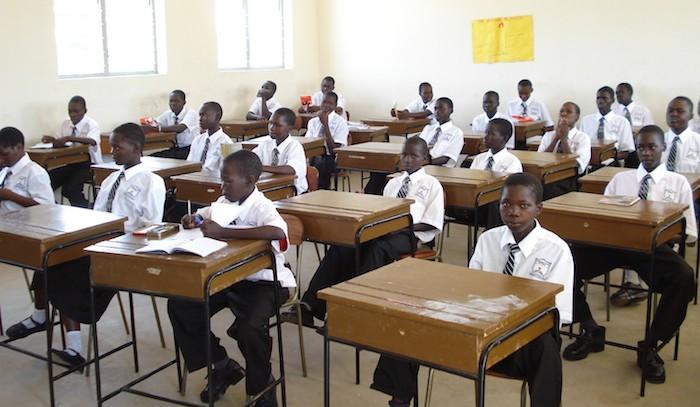
This means underage candidates will no longer be allowed to sit for the West African Senior School Certificate Examination and the Senior School Certificate Examination, both crucial for advancing to tertiary education.
The directive also affects the West African Examinations Council, which administers the WASSCE, and the National Examinations Council responsible for the SSCE. Additionally, Mamman confirmed that the age limit to undertake the Unified Tertiary Matriculation Examination, overseen by the Joint Admissions and Matriculation Board, will also be 18.
He added that this was not a new policy.
“For the avoidance of doubt, this is not a new policy; this is a policy that has been there for a long time,” Mamman stated.
“Even basically, if you compute the number of years pupils, and learners are supposed to be in school, the number you will end up with is 17 and a half – from early child care to primary school to junior secondary school and then senior secondary school. You will end up with 17 and a half by the time they are ready for admission.
“So, we are not coming up with a new policy, contrary to what some people are saying; we are just simply reminding people of what is existing. In any case, NECO and WAEC, henceforth, will not be allowing underage children to write their examinations. In other words, if somebody has not spent the requisite number of years in that particular level of study, WAEC and NECO will not allow them to write the examination.”
The minister went further to give a breakdown of the number of years pupils were expected to spend between child care and senior secondary school. According to him, early care is expected to last for the first five years. Pupils are expected to begin primary one at the age of six, spend six years in primary school and move to junior secondary school at the age of 12, spend three years, before moving to senior secondary school at the age of 15, then spend another three years before leaving for university at the age of 18.
Last month, Mamman, in a meeting with JAMB and other education stakeholders, insisted that the UTME should be set at 18 years.
Mamman stated, “JAMB is hereby notified that there is now a ban on underage students, those under the age of 18, from our tertiary institutions for the 2024 admissions… It doesn’t require a statement of the minister… we are only restating what is in the law.”
However, the law sparked criticisms, particularly from university stakeholders, as many of those categorised as underage candidates had already taken the UTME without anticipating the directive. This posed a threat to potential 16 and 17-year-olds, who had already passed the UTME and were seeking admission into universities.
Following the disapproval, the minister reversed the directive, allowing candidates from 16 years to be admitted into the university as it previously stood until 2025.
However, following Sunday’s pronouncement, Mamman insisted that there was no going back on the policy.
The minister said, “It is 18 (years). What we did at the meeting that we had with JAMB (in July) was to allow this year and for it to serve as a kind of notice for parents that this year, JAMB will admit students who are below that age but from next year, JAMB is going to insist that anybody applying to go to university in Nigeria meets the required age, which is 18.”
But the Secretary-General, NUT, Dr Mike Ene, said that changes in society, like early enrollment in crèches due to economic pressures, made it unrealistic to restrict learning based on age.
“The only way this policy could work is if it’s implemented from the foundation. By that, I mean starting at the primary school level. In the past, before a child was allowed to start school, they had to pass a basic test — like reaching their hand over their head to touch the opposite ear. If they couldn’t, they were sent back home.
“However, things have changed. Nowadays, due to economic pressures, parents enroll their children in crèches early, which means both parents have to work,” Ene said.
“Teachers at these crèches begin to educate the children, and they start learning quickly. You can’t stop them from learning because the brain is structured to keep developing—once learning stops, the brain stagnates.”
He added that exceptional students, who might be younger but academically advanced, were not considered in the policy, warning that the policy could lead to legal challenges and urged the government to rethink it, calling it poorly conceived.
“You also have to consider exceptional students. Some students are 16 years old in SS3. Is the minister taking these scenarios into account? What are these students supposed to do? Wait two more years? I see this as a policy that could lead to numerous legal challenges. The government needs to rethink this thoroughly. It is poorly conceived.”
Also speaking, National President, ASUP, Mr Shammah Kpanja, maintained that the decision to allow students under 18 to sit for exams should depend on their abilities, saying that gifted students might not need to spend the full years in school.
He advised the government to focus on critical issues like providing functional equipment in schools, addressing infrastructure deficits and improving teachers’ welfare, rather than on exam age restrictions.
Kpanja stated, “One issue with policy is that if it’s not realistic, it can lead to distorted information. The decision of whether a student should be 18 or younger to sit for exams should depend on the student’s abilities. Some students are exceptionally gifted and don’t need to spend all those years in school if they demonstrate a high level of intelligence.
“What we need is for the government to ensure that basic schools are equipped with functional facilities. In some villages around Abuja, you’ll find children sitting on the ground in schools, with many buildings lacking roofs. These are the real issues that need addressing. The welfare of teachers and the availability of functional libraries in most public secondary schools are also lacking. These should be the government’s targets — addressing infrastructure deficits instead of focusing on mundane matters.”
The polytechnic lecturer questioned the government’s priorities, pointing out inconsistencies, such as allowing child marriages in the North, while restricting younger students from taking WAEC.
“Did their children sit for WASSCE at 18 years? You allow young girls to marry at 12 in the North, but they can’t take WAEC at 16? What are the government’s priorities?”
Also, the Secretary-General, Committee of Vice-Chancellors of Nigerian Universities, Prof. Yakubu Ochefu, stated that the VCs would meet in September to take a stand on the policy.
“It has not been discussed by the committee. The committee will meet in September to have a conversation on it. For now, we do not have a position on the matter.”
He added, “In my view, we’ve been operating the 6-3-3-4 system, which is tied to specific age brackets. When a child reaches a certain age, they are expected to be at a certain educational level. This policy has been part of the law for years, though it hasn’t been enforced. Why is it now, when someone attempts to enforce it, that it becomes a problem for Nigerians? Yes, there are exceptional children, but they can be enrolled in schools for gifted children once they demonstrate such abilities.”
On his part, WAEC Head of National Office, Dr Amos Dagnut, emphasised that education in Nigeria was regulated by the government, adding that they had the right to enforce any policy they deemed fit.
He said, “If the government is regulating education, it is within their purview to do so. We at WAEC do not regulate or keep records of candidates’ ages, as these details are submitted to us by the schools.”
National President, Academic Staff Union of Universities, Prof. Emmanuel Osodeke, maintained that ASUU had not yet discussed the matter, but stated on a personal note that children should follow the standard academic progression: six years in primary school, six years in secondary school, and then move on to university at the age of 18.
Osodeke questioned the rush to enter university, stating, “Why are we focusing on university at such a young age? How many years do you spend in the university? For most courses, it’s four years; for Medicine, it’s five. We can’t reduce these durations.
“They should allow the system to function as intended and give their children time to rest. Adulthood begins at 18, so why force a child to go to the university or rent an apartment at 15? We need to consider the well-being of these children.”
Similarly, National President, All Nigeria Confederation of Principals of Secondary Schools, Mallam Musa Ibrahim, expressed support for the government’s decision, stating that It was not just about intelligence; but more about emotional maturity.
He attributed the high failure rates in national examinations to students under 18 sitting for them.
“A student might be intellectually ready, but if they are not emotionally prepared, they can be vulnerable. When a young student finishes secondary school and enters the university at a very young age, they are exposed to the influence of older, more experienced students. This can lead to negative outcomes, including susceptibility to cultism.
“We see cases where students who looked like they belong to secondary school are actually in university, and they’re often below or just slightly above 18. That’s why we support this policy—so we can nurture these students to enter university as mature individuals who can think for themselves and resist negative influences. Social media and unscrupulous individuals in universities can easily corrupt younger students, whose primary goal should be learning.
“Allowing children under 18 to write SSCE is not the best approach and creates problems for us. We’ve seen high failure rates in WAEC, and last year, all the top scorers were from Ghana. Despite 1.8 million Nigerian students registering, none of them achieved top scores. Parents are also contributing to the issue by pushing their children to graduate too quickly.”












 Privacy5 years ago
 News5 years ago
 News4 years ago

 News5 years ago
 Opinion5 years ago
 News5 years ago
 Sports4 years ago