Connect with us

News

Quick facts about the Samoa agreement: The 39 anti-LGBTQ countries — including an Islamic republic — that signed the Agreement

Published

on


The controversial Samoa Agreement has become a topic of discussion for many Nigerians as they wonder what it entails since the news that Nigeria has signed.


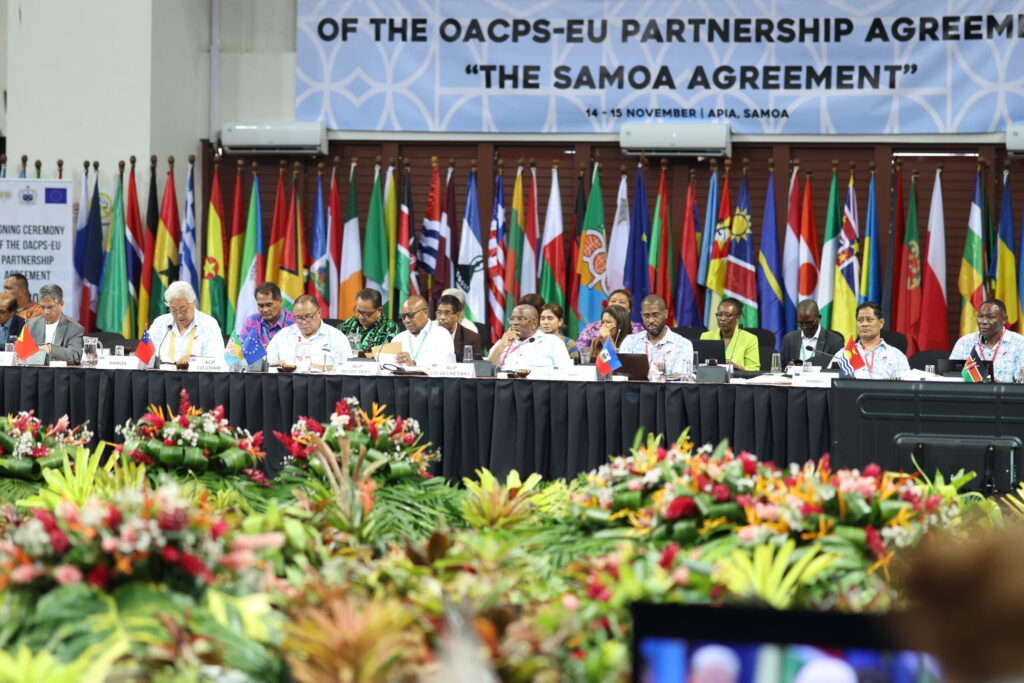
On November 15, 2023, the European Union and member states came together to sign one new partnership agreement, which was referred to as the Samoa Agreement.


The member states that signed the agreement are called the Organisation of African, Caribbean and Pacific States, also known as OACPS.


About 27 member states from the EU signed the agreement and 79 African, Caribbean and Pacific countries came together to also sign the agreement.


According to the European Council, the Samoa Agreement is the overarching framework for European Union (EU) relations with African, Caribbean, and Pacific (ACP) countries.
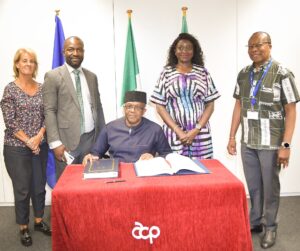
The foundation agreement was signed on November 15, 2023, and took effect January 1, 2024, to serve as a new legal framework for EU relations with 79 countries collectively forming the Organisation of African, Caribbean and Pacific States (OACPS). It will last for an initial 20-year period.


SAMOA AGREEMENT SIGNATORIES

Signatories to the Samoa Agreement are 48 African countries, 16 countries from the Caribbean and 15 Pacific countries — accounting for about two billion people.


Africa

South Africa, Angola, Cape Verde, Benin, Botswana, Burkina Faso, Burundi, Cameroon, Central African Republic, Comoros, Congo (Brazzaville), Congo (Kinshasa), Côte d’Ivoire, Djibouti, Eritrea, Ethiopia , Gabon, Gambia, Ghana, Guinea, Guinea-Bissau, Equatorial Guinea, Kenya, Lesotho, Madagascar, Liberia, Malawi, Mali, Mauritius, Islamic Republic of Mauritania, Mozambique, Namibia, Niger, Nigeria, Uganda, Rwanda, Sao Tome and Principe, Senegal, Seychelles, Sierra Leone, Somalia, Sudan, Eswatini, Tanzania, Chad, Togo, Zambia, Zimbabwe.

See also  Tinubu orders resolution of disagreements with UAE on Emirates Airline, visa issuance


The Caribbean

Antigua and Barbuda, Bahamas, Barbados, Belize, Cuba, Grenada, Guyana, Haiti, Jamaica, Dominican Republic, Saint Christophe and Nevis, Saint Vincent and Grenadines, Saint Lucia, Suriname, Trinidad and Tobago


The Pacific

Cook Islands, Marshall Islands, Solomon Islands, Fiji, Kiribati, Micronesia, Nauru, Niue, Palau, Papua New Guinea, Samoa, Timor Leste, Tonga, Tuvalu, Vanuatu.


THE LGBTQ+ CONTROVERSY

Nigeria’s Same-Sex Marriage Prohibition Act (SSMPA) passed in 2014 prohibits lesbian, gay, bisexual, and transgender (LGBT) rights and criminalises marriage between people of same sex and civil unions.
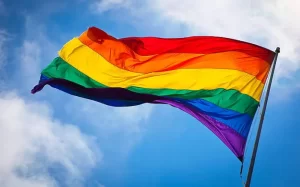

LGBTQ FLAG

Nigeria’s legal position on same-sex marriage was what fuelled the uproar that followed its signing of the Samoa Agreement.


On Thursday, a media report claimed that some clauses of the agreement allegedly compel underdeveloped and developing nations to support the agitations by LGBTQ+ people for recognition.


The claims have been established to be false.


Mohammed Idris, the minister of information and national orientation, clarified that the federal government ensured that the agreement did not contravene the 1999 Constitution (as amended) and other extant laws.


The government has also explained that the agreement is strictly for the economic development of the country — as against claims that it contains provisions for same-sex marriage.


OTHER ANTI-LGBT COUNTRIES THAT SIGNED SAMOA AGREEMENT

Among the signatories to the Samoa Agreement are countries with anti-LGBTQ laws, including those governed by Islamic laws or with a predominantly Muslim population.


SAMOA, WHICH HOSTED THE FOUNDATION SUMMIT IN 2023, CRIMINALISES SAME-SEX RELATIONS BETWEEN MEN
Like Nigeria, their laws do not support same-sex marriage — otherwise they would not have signed the Samoa Agreement if it mandated LGBTQ+ rights.

See also  Pope Francis authorizes blessings for same-sex couples


Samoa itself, where the agreement is named after for hosting the foundation summit, criminalises same-sex relations between men, which is called sodomy.


Consensual same-sex relations are illegal in over 30 African countries.


Of the 79 signatories, Muslim-majority countries such as Sudan, Somalia, Mauritania, Comoros, Gambia and Sierra Leone are among the countries that have criminalised gay relations.


Somalia’s penal code, for instance, mandates a three-year prison sentence, or a death sentence that may be imposed under Sharia laws.


In April 2024, Uganda passed a law that allows death penalty for “aggravated homosexuality” and up to a decade imprisonment for same-sex relations.


For Mauritania, a Muslim country, same-sex sexual activity is prohibited under the penal code which criminalises “acts against nature”.


The provision, with its origins in Islamic law, carries a maximum penalty of death by stoning for men and imprisonment for women.


In Sudan, a conservative Muslim country, same-sex relations is prohibited under the 1991 penal code, with a maximum penalty of life imprisonment.


The law previously allowed for flogging and death penalty until 2020 when it was relaxed.


East Africa’s Comoros laws, influenced by French, Islamic and customary laws, prohibit same-sex marriage, with a penalty of five years imprisonment and a fine.


That these countries have criminalised LGBTQ+ sexual relations yet signed the Samoa Agreement gives further credence to the fact that the agreement does not mandate them, Nigeria inclusive, to become pro-LGBTQ+.


It is worth noting that among the signatories are also countries that have legalised same-sex marriage through court decisions or legislative actions.


The countries include Antigua and Barbuda, Jamaica, Dominican Republic, Saint Lucia, Trinidad and Tobago, Cuba, and Belize.

See also  Police dismiss inspector for ‘N29.8m theft’, demote three officers over ‘extortion’

Below are quick facts about the Samoa Agreement

1. The Samoa Agreement is a partnership agreement and a vital legal framework for cooperation between the EU and its member states, on the one hand, and members of OACPS on the other.


2. The multilateral agreement is colloquially called the ‘Samoa Agreement’ because its signing took place on the Island of Samoa in Oceania during the 46th session of the ACP-EU Council of Ministers.


3. The agreement, signed by Nigeria and other members of the OACPS, is based on six key priorities to tackle the main challenges in the member countries over the next two decades.


4. The Nigerian Ambassador to the Kingdom of Belgium, Grand Duchy of Luxembourg and the European Union, Obinna Onowu, signed the agreement on behalf of the Nigerian Government at the OACPS Secretariat in Brussels on June 28, 2024.


5. The priorities include human rights, democracy and governance; peace and security; human and social development; inclusive, sustainable economic growth and development; environmental sustainability and climate change; and mobility/migration.


6. An important principle of the agreement is that ‘’the Parties shall make decisions and undertake actions at the most appropriate domestic, regional or multi-country level’’.


7. No Lesbian, Gay, Bisexual, Transgender and Queer clause in the agreement.


8. The EU and all its member states signed the agreement on November 15, 2023. Out of the 79 members of the OACPS, 74, including Nigeria, signed before the deadline of June 30, 2024.
Continue Reading
Click to comment

Leave a Reply

Your email address will not be published. Required fields are marked *

News

EFCC says it froze Osun account over ‘fraudulent handling’ of N11bn ecological, intervention funds

Published

on

By

The Economic and Financial Crimes Commission (EFCC) has explained that it froze the bank account of the Osun state government over alleged fraudulent handling of N11 billion ecological and intervention funds.

The anti-graft agency, in a statement on Wednesday, said it has been investigating the Osun state government since March regarding the alleged mishandling of the funds.

According to the agency, some officials of the state government, including the accountant-general of the state, had been interviewed by EFCC investigators.

The agency said amid the probe, it observed that huge transfers of funds were being made from the account into different corporate entities since August 2.

“These ongoing investigations of the state government would not have warranted any placement of Post No Debit order on its account but for the precipitate and unwarranted movement of funds from the accounts to different suspicious accounts since August 2, 2026,” the statement reads.

See also  Tinubu orders resolution of disagreements with UAE on Emirates Airline, visa issuance

“The Commission noticed huge transfers of funds into different corporate entities and had to swiftly halt the trend by freezing the accounts from which such heavy funds are being moved.

“The EFCC’s preventive mandate is a public-inclined framework of safeguarding public funds, assets and resources.

“The Commission cannot watch idly while a state government’s account is being pillaged.”

The anti-graft agency said it is aware of the forthcoming Osun governorship election, adding that it is “uncharitable” to overlook the huge transfers of funds over the “excuse of an upcoming election”.

“The Osun State government account was frozen to save public funds from being looted,” the agency said.

In a letter dated August 5, 2026, and signed by Adenike Babalola, assistant commander of the EFCC on behalf of the director of investigation, the anti-graft agency directed First Bank not to allow withdrawals from the Osun state government’s statutory allocation account as part of an ongoing investigation.

See also  How I was able to ‘stand up’ again after my son's death – Davido

The agency instructed the bank to place a post-no-debit restriction on the account pending the conclusion of the probe.

Reacting to the development, Ademola Adeleke, Osun governor, said the state government will not accept a situation in which federal government agencies trample upon the rights of subnational governments.

Adeleke said the Osun government has been witnessing numerous sponsored attacks, including the harassment of Accord party members and the move to stall the operations of LGAs in the state.

Adeleke said he has directed the attorney-general of the state to challenge the “illegality”.

Continue Reading

News

Osun threatens lawsuit as EFCC freezes govt account 10 days to election

Published

on

By

Less than 24 hours after Governor Ademola Adeleke alleged that the Economic and Financial Crimes Commission (EFCC) was planning to freeze the state government account domiciled with First Bank, the anti-graft agency has reportedly freezed the account, according to Vanguard.

The account, reportedly used for the payment of workers’ salaries, was placed on “Post No Debit” status by the anti-graft agency.

The development came hours after Governor Ademola Adeleke raised the alarm that the EFCC was planning to freeze the state government’s accounts and those of top government officials ahead of the August 15 governorship election.

In a statement issued earlier on Wednesday by the Commissioner for Information and Public Enlightenment, Kolapo Alimi, Adeleke described the alleged move as an attempt to cripple government activities before the poll.

The governor had insisted that there was no legal basis for freezing the accounts of a state government, arguing that the EFCC lacked the statutory powers to take such action.

See also  CBN issues updated guidelines for BDCs, removes N200m caution fee

However, a source reportedly told Vanguard that the account had already been restricted.

“I can confirm that the state government account has been frozen by the EFCC. It is no longer an allegation. The governor will address the press shortly to update the public on the situation,” the source reportedly told Vanguard.

The reason for the restriction was not immediately known as of the time of filing this report.

The EFCC had yet to issue an official statement on the development.

The development comes as Osun prepares for its August 15 governorship election, with the account restriction expected to generate political reactions ahead of the poll.

Meanwhile, the state’s Attorney General and Commissioner for Justice, Oluwole Jimi-Bada, had said he has the mandate of the governor to sue the Economic and Financial Crimes Commission for freezing the government accounts.

Jimi-Bada said a ‘Post no debit’ letter from the EFCC was forwarded to the management of the First Bank where Osun government accounts were domiciled on Wednesday.

See also  How I was able to ‘stand up’ again after my son's death – Davido

The commissioner, who expressed readiness to proceed to court, said the move by the anti-graft agency may hamper government’s business, noted that Governor Ademola Adeleke was not using state funds to run its campaign for reelection.

“I have the mandate of the governor to proceed to the Federal High Court to challenge this move. EFCC can investigate the accounts but it can’t freeze the accounts without order of court.

Continue Reading

News

WAEC releases 2026 WASSCE results, withholds 167,486 candidate’s results over malpractice 

Published

on

By

The West African Examinations Council says it is withholding the results of 167,486 candidates, representing 8.59 per cent of those who sat the 2026 Computer-Based West African Senior School Certificate Examination for School candidates, over alleged examination malpractice.

This was disclosed by the Head of WAEC Nigeria National Office, Dr Amos Dangut, who announced the release of the results in Lagos on Wednesday.

The number of withheld reults, however, represents a decline from the 9.7 per cent recorded in 2025.

Dangut said the council withheld the affected results due to various infractions, including the increasing use of mobile phones in examination halls despite the existing ban and organised cheating in some schools.

“The increasing use of cell phones in the examination hall, in spite of the existing ban, and organised cheating in some schools, are other nagging issues,” Dangut said.

He added that some supervisors and invigilators found assisting candidates in malpractice had been arrested and would face disciplinary action through the relevant state ministries of education.

See also  How I was able to ‘stand up’ again after my son's death – Davido

A total of 1,959,668 candidates from 24,207 schools registered for the examination across Nigeria, Benin Republic, Côte d’Ivoire and Equatorial Guinea, while 1,950,726 candidates eventually sat for the examination.

1,200,514 candidates (61.54 per cent) obtained credits and above in at least five subjects, including English Language and Mathematics.

1,687,378 candidates (86.50 per cent) secured credits and above in a minimum of five subjects, with or without English Language and Mathematics.

The number of candidates who obtained credits in five subjects including English and Mathematics dropped by 1.42 percentage points compared with the 2025 examination.

Of the 1.2 million candidates who achieved credits in English and Mathematics:

558,883 (28.65 per cent) were male.

641,631 (32.89 per cent) were female.

Overall, 997,267 females (51.12 per cent) and 953,459 males (48.88 per cent) participated in the examination.

WAEC said 1,834,695 candidates, representing 94.05 per cent, had their results fully processed and released, while the results of 116,031 candidates (5.95 per cent) were still being processed.

See also  Pope Francis authorizes blessings for same-sex couples

The council also disclosed that 1,213 candidates with special needs participated in the examination. They included:

137 visually impaired candidates;

491 candidates with hearing impairment;

55 spastic and mentally challenged candidates; and

41 physically challenged candidates.

The 2026 examination marked the second edition of the Computer-Based WASSCE for School Candidates, following the introduction of the format by WAEC.

Dangut said the council introduced several innovations, including the Digital Examiner Mark System to improve the speed of processing results, serialisation of question papers to curb malpractice, and a new portal that allows candidates to generate e-PINs directly for checking their results.

The examination was conducted between April 24 and June 19, 2026, with 102,708 examiners involved in marking across 88 marking venues.

Dangut, who described the briefing as his third and final engagement as WAEC Nigeria National Office head, said candidates sponsored by states indebted to the council would not have their results released until the outstanding payments were cleared.

See also  Despite returning N6.39bn, ex-accountant-general, Otunla to face trial for fraud

Continue Reading

Trending News