Connect with us

Business

Local refining may crash petrol price to N300/litre – Modular refineries

Published

on


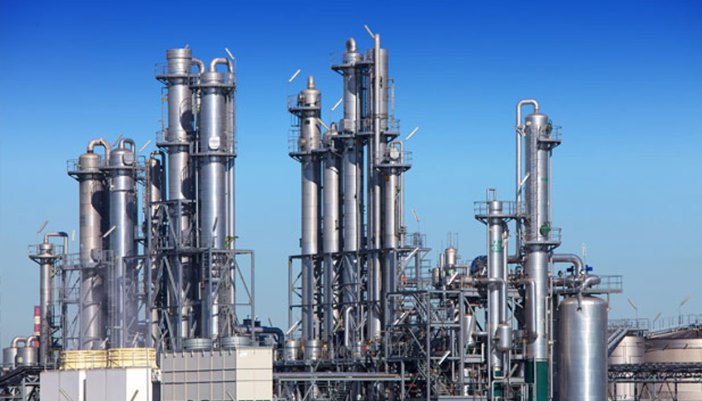
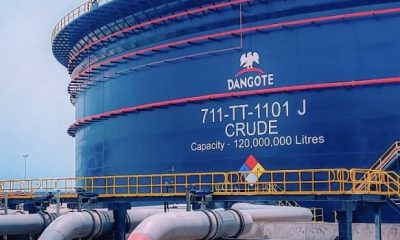
The pump price of Premium Motor Spirit, popularly called petrol, should drop to about N300/litre following the commencement of massive production by the Dangote Petroleum Refinery and other indigenous producers, operators of modular refineries stated on Sunday.


However, they pointed out that this would be achieved when the government ensures the provision of adequate crude oil to local refiners, stressing that refineries abroad were ripping off Nigeria.


Speaking under the aegis of the Crude Oil Refinery Owners Association of Nigeria, they explained that what happened to the cost of diesel after Dangote started producing it, would happen to petrol price once it is being produced massively in Nigeria.


CORAN is a registered association of modular and conventional refinery companies in Nigeria.


“A lot of companies today benefit from the importation of petroleum products at the expense of Nigerians,” the Publicity Secretary, CORAN, Eche Idoko, stated.

Acoording to Idoko, “if we begin to produce PMS today in large volumes, provided there is adequate crude oil supply, I can assure that we should be able to buy PMS at N300/litre as the pump price.


“Why make Nigerians buy it at almost N700/litre when you know that if you allow refineries work the price will come down? Is it because you want to satisfy the global refiners abroad that are making so much from us?”

Speaking on arguments that it is not possible to have such a drop in price because crude oil, the raw material for PMS, is price in dollars, the CORAN official insisted that petrol price would crash once it is being produced massively by indigenous refiners.


He said, “We were selling diesel for N1,700 to N1,800/litre, but as soon as Dangote refinery started production he brought down the price to N1,200/litre. What other proofs do you need?

See also   Africans are a special case but everyone will gradually accept, Pope Francis on same-sex blessings


As I speak to you now there is every tendency that before December diesel price will drop further. The only reason reason why diesel is not doing below N1,000/litre is because of our exchange rate.


“If the exchange rate drops, diesel will drop below the N1,000/litre price. Now the exchange rate concern is because Dangote imports crude. If he is not importing, the exchange rate may not have so much effect, though he is still buying crude in dollars (in Nigeria) anyway.”


On May 18, 2024, Africa’s richest man, Aliko Dangote, stated that following the laid-down plans of the Dangote refinery, Nigeria would no longer need to import petrol starting June this year.


Dangote had also stated that his refinery could meet West Africa’s petrol and diesel needs, as well as the continent’s aviation fuel demand. He spoke at the Africa CEO Forum Annual Summit in Kigali, expressing optimism about transforming Africa’s energy landscape.

“Right now, Nigeria has no cause to import anything apart from gasoline (petrol) and by sometime in June, within the next four or five weeks, Nigeria shouldn’t import anything like gasoline; not one drop of a litre,” the billionaire had declared.


Also, Dangote had earlier in the year crashed the pump price of diesel to N1,200/litre when the commodity was selling at between N1,700 and N1,800/litre at the time.


He further dropped the price to below N1,000/litre, but could not sustain this price due to the rise in exchange rate. The refinery eventually returned the price to the initial rate of N1,200/litre.

Speaking on Sunday, the CORAN spokesperson stated that this was why the modular refiners had been calling for the sale of crude oil at the naira equivalent of the dollar rate.


See also  Petrol price may come down soon as NNPCL, marketers fuel vessels arrive next week – IPMAN

“We have told them (government) that even the dollars that you are asking us to use and buy this product, it is detrimental to the country. Strengthen the naira. We will buy at the international market rate, but at a naira equivalent.


“These are the issues and they know these things but we can’t explain why they really can’t take decisions to change these concerns.


“Get crude to local refineries, allow crude purchase in naira equivalent, make the environment business-friendly and watch locally produced petroleum product prices crash,” Idoko stated.


Nigeria currently has 25 licensed modular refineries. Five of them are operating and producing diesel, kerosene, black oil and naphtha. About 10 are under various stages of completion, while the others have received licences to establish.


Operators of modular refineries earlier stated that aside from the five that are in operation currently, the remaining plants are embattled due to the major challenge of crude oil unavailability, a development that has stalled funding from financiers.

“Only about five of our members have completed their refineries. The others are having a major challenge.


“This challenge is that the people who are supposed to finance them have not disbursed financing for construction because they want some level of guarantee.


“A guarantee that if they finish the refinery, they are going to get feedstock, which, of course, is crude oil,” Idoko had explained.


Oil marketers also believe that the cost of petrol should be lower than its current price once its production begins in Nigeria.


They welcomed the comment of Dangote that his refinery should start pumping out petrol this month, and expressed hope that the cost would be less than the price which the Nigerian National Petroleum Company Limited currently sells.

“We expect a reduced price for locally produced PMS, as I’ve earlier told you,” the National President, Independent Petroleum Marketers Association of Nigeria, Abubakar Maigandi, stated.

See also  'You're mischievous' — Dangote refinery counters NNPC’s claim of selling petrol at N898 per litre


Maigandi, while speaking from Saudi Arabia, on Sunday, also stated no date has been communicated to marketers on when Dangote would release petrol to the market. Officials of Dangote refinery have remained mute on this.

“It is a welcome development if the refinery can start releasing PMS this month because as marketers we are currently set to start buying the product from the plant,” Maigandi stated.


The IPMAN president earlier stated that marketers were discussing with the managers of the plant, but not specifically on petrol pricing.

“We have been discussing, but not about the price of petrol yet, rather on other matters such as the registration of members for the purchase of petrol and diesel from the refinery.


“It is true that we have started buying diesel from them, but you have to register with the company first. So a general registration is ongoing,” he explained.


Maigandi, however, stated that though marketers had yet to receive the projected price for petrol from the plant, dealers would want to see a PMS price of about N500/litre from the Dangote refinery.


“We are looking at having it (PMS) at any price below the NNPC rate. The price which NNPC sells petrol is N565.50/litre, so we are expecting something below that price, maybe around N500/litre,” Maigandi stated.


The oil dealers also joined in the call for the provision of crude oil to local refiners, stressing that this would impact positively on the prices of refined petroleum products.


“Of course, it is important for crude to be made available to local refineries because this will surely affect petroleum products’ prices positively,” the IPMAN president stated.
Continue Reading
Click to comment

Leave a Reply

Your email address will not be published. Required fields are marked *

Business

Wema Bank meets CBN’s recapitalisation, retains national banking license

Published

on

By

Wema Bank, Nigeria’s oldest indigenous national bank and pioneer of Africa’s first fully digital bank, ALAT, has successfully met and surpassed the Central Bank of Nigeria’s (CBN) recapitalisation requirements, reaffirming its status as a National bank.

This achievement represents a critical milestone in the Bank’s growth journey, reflecting its ability to meet regulatory expectations and its deliberate strategy to scale sustainably, strengthen its balance sheet, and reinforce its position within Nigeria’s banking sector.

The milestone follows the Bank’s successful completion of a ₦150 billion Rights Issue and an additional ₦50 billion special placement in 2025, bringing its Total Qualifying Capital to ₦264.7 billion, well above the regulatory minimum.

This achievement was concluded six months ahead of the CBN’s stipulated deadline, further reinforcing the Bank’s strong financial position, shareholder confidence, and long-term growth trajectory.

Earlier in April 2026, the Central Bank of Nigeria also formally confirmed that Wema Bank, alongside 32 other financial institutions across international, national, and regional categories, had successfully concluded the recapitalisation process.

Notably, Wema stands among only ten national banks that met and surpassed the minimum required capital threshold, thereby sustaining its national banking license.

See also  EFCC declares businessman, Henry Akinduro wanted for fraud

This milestone not only affirms regulatory compliance but also signals a new phase of accelerated growth for the Bank; one defined by stronger capital base, increased capacity to support customers, and a reinforced position within Nigeria’s competitive banking landscape.

Commenting on the milestone, the Managing Director/Chief Executive Officer of Wema Bank, Moruf Oseni, stated, “The successful completion of our recapitalisation exercise is a defining moment for Wema Bank. It is a strong validation of our strategy, our performance, and the enduring confidence our shareholders and stakeholders have in our vision. We have not only met the CBN’s requirements; we have exceeded them, reinforcing our position as a National Bank with the scale, strength, and stability to compete and lead.”

In March 2024, the Central Bank of Nigeria announced the recapitalisation programme requiring all national banks to maintain a minimum capital base of ₦200 billion.

The initiative was designed to strengthen the resilience of financial institutions, enhance their capacity to absorb economic shocks, and position them to drive sustainable economic growth.

In response, Wema Bank embarked on a strategic capital raise through the stock market, successfully strengthening its shareholder base and securing the required capital through strong participation from existing investors.

See also  NNPC reduces petrol price to N900/litre in Lagos, N940/litre in Abuja

The ₦150 billion Rights Issue, which opened on April 14, 2025, and closed on May 21, 2025, marked a significant step in this journey. This was subsequently complemented by a ₦50 billion special placement later in the year, ensuring the Bank not only met but exceeded the regulatory threshold well ahead of schedule.

For Wema Bank, this journey is a testament to its transformation. After regaining its national license in 2015, the Bank has consistently demonstrated financial discipline and strategic foresight. By raising the necessary capital primarily from existing shareholders, the Bank has underscored a deep-seated mutual trust between the institution and its investors.

Speaking further on what this achievement means for the Bank’s future and its customers, Oseni added: “This milestone strengthens our ability to compete at scale, deepen our market presence, and deliver more value to our customers across Nigeria through improved access to credit, enhanced digital banking experiences, and innovative financial solutions. It positions us to play an even bigger role in powering Nigeria’s economy while continuing to deliver sustainable value to all our stakeholders.

See also  Good morning! Here Are Some Major News Headlines In The Newspapers Today: Fuel subsidy removal: Petrol price jumps to N600 per litre from N195

Looking ahead, we remain focused on deepening our market presence, driving customer-centric innovation, and strengthening our role as a catalyst for growth across retail, SME, and corporate segments. This is not just about retaining our license; it is about building a bigger, stronger, and more impactful Wema Bank.”

The successful conclusion of the recapitalisation process underscores Wema Bank’s financial strength, disciplined execution, and unwavering commitment to regulatory compliance as it continues to expand its footprint across Nigeria.

With a significantly strengthened capital base, the Bank is now positioned to do more – support more customers, enable more businesses, and unlock more opportunities across every segment it serves.

As it enters this new phase, Wema Bank is not only reaffirming its status as a National Bank; it is stepping forward with greater scale, sharper ambition, and a clear intent to lead.

The Bank remains firmly committed to powering progress, driving innovation through ALAT, and delivering sustained value; powering a future of possibilities for all its stakeholders.

Continue Reading

Business

Oando plans $750 million drilling campaign, expects funding boost from Iran turmoil

Published

on

By

Nigeria’s leading energy firm, Oando, plans to raise up to $750 million this year for a drilling campaign that could boost output by 300%, tapping improved investor appetite for West African producers amid turmoil linked to the Iran war, Group Chief Executive of the firm Jubril Adewale ‌Tinubu, CON, told Reuters in an interview recently.

The oil and gas company is among a handful of local companies that have snapped up assets from oil majors in the past decade as they exit Nigerian onshore. This year, surging energy prices should open more funding sources for producers in the region, Tinubu said.

We are pushing very, very hard towards getting the financing that we need to do an extensive drilling campaign,” Tinubu told Reuters.

Nigeria is Africa’s biggest oil producer with crude and condensate output of around 1.6 million barrels a day.

Oando, whose production averaged just over 32,000 barrels of oil equivalent per day in ⁠fiscal 2025, aims to drill as many as 100 wells to boost output, particularly from assets purchased from Western majors ConocoPhillips and Eni.

See also  Crisis in PDP: Wike, Atiku camps maintain positions

While in the past the company had struggled with securing cash for drilling due to investor worries that Africa was an “unsafe environment”, the Iran war and Russia’s invasion of Ukraine in 2022 have shifted that view, Tinubu said.

“Africa is very, very peaceful compared to these regions,” he said.

Already, Tinubu said there was a shift in demand for Nigeria’s crude, with more cargoes sailing to Asia to replace Gulf oil trapped due to the closure of the Strait of Hormuz.

FUNDING SQUEEZE FROM EUROPE
Oando has raised $3 billion-$4 billion in the past decade, much of it from European banks, the GCE said, the bulk of which went toward acquisitions.

European banks had now almost completely withdrawn from African hydrocarbons due to climate concerns, he said, pushing Oando to funders including the African Export-Import Bank and the African Finance Corporation, and to oil trading houses ‌including Vitol, ⁠Trafigura, Glencore and Mercuria.

See also  NNPC reduces petrol price to N880/litre in Lagos, N935/litre in Abuja

However, Africa needed more “substantial long-term funding”, he added.
More Gulf banks were interested in hydrocarbon projects in Africa and more parties were joining their syndications, while private equity funds and hedge funds were also more active in funding African energy, he said.

Oando recently expanded into Angola, and Tinubu said they are exploring opportunities in Ghana and Ivory Coast.

Africa should pool capital available at home, via pension funds and other sources, to fund large-scale capital projects, he added.

Geopolitical turmoil will have “long-reaching strategic implications for global ⁠energy security”, he said, and keep focus on West Africa’s reserves.

“Even if the ceasefire lasts, which, hopefully it will, it wouldn’t change the fact that consistently, you’re going to find disruptions,” he said.

GASOLINE EXPORTS, BUSINESS OPPORTUNITIES

Nigeria, Tinubu said, is well placed to draw funding after a landmark 2021 overhaul of its hydrocarbon law and reforms by current President ⁠Bola Tinubu, his uncle, to currency and costly petrol subsidies.

See also  Health benefits of coconut water

The new 650,000 barrel-per-day Dangote Oil Refinery on the outskirts of Lagos, Tinubu said, highlighted the value of Nigeria’s resources.

Tinubu, whose company was once among the nation’s largest fuel importers, said imports were now only needed to test for pricing or during refinery maintenance.

Longer term, ⁠Tinubu hopes to exploit some of Oando’s own gas production for petrochemicals and fertilizers to further boost the value added to Nigerian resources.

The company was working to “streamline” financials to avoid further delays in filing audited statements with the Nigerian Exchange after deadline extension in recent years.

In August, Oando’s board signed off on a proposal to launch a multi-instrument issuance programme of up to $1.5 billion.
-Culled from Reuters.

Continue Reading

Business

Oando plans $750 million drilling campaign, expects funding boost from Iran turmoil

Published

on

By

Nigeria’s leading energy firm Oando plans to raise up to $750 million this year for a drilling campaign that could boost output by 300%, tapping improved investor appetite for West African producers amid turmoil linked to the Iran war, Group Chief Executive of the firm Jubril Adewale ‌Tinubu, CON, told Reuters in an interview recently.

The oil and gas company is among a handful of local companies that have snapped up assets from oil majors in the past decade as they exit Nigerian onshore. This year, surging energy prices should open more funding sources for producers in the region, Tinubu said.

We are pushing very, very hard towards getting the financing that we need to do an extensive drilling campaign,” Tinubu told Reuters.

Nigeria is Africa’s biggest oil producer with crude and condensate output of around 1.6 million barrels a day.

Oando, whose production averaged just over 32,000 barrels of oil equivalent per day in ⁠fiscal 2025, aims to drill as many as 100 wells to boost output, particularly from assets purchased from Western majors ConocoPhillips and Eni.

See also  Mixed reactions as banks run out of new naira, demand soars

While in the past the company had struggled with securing cash for drilling due to investor worries that Africa was an “unsafe environment”, the Iran war and Russia’s invasion of Ukraine in 2022 have shifted that view, Tinubu said.

“Africa is very, very peaceful compared to these regions,” he said.

Already, Tinubu said there was a shift in demand for Nigeria’s crude, with more cargoes sailing to Asia to replace Gulf oil trapped due to the closure of the Strait of Hormuz.

FUNDING SQUEEZE FROM EUROPE
Oando has raised $3 billion-$4 billion in the past decade, much of it from European banks, the GCE said, the bulk of which went toward acquisitions.

European banks had now almost completely withdrawn from African hydrocarbons due to climate concerns, he said, pushing Oando to funders including the African Export-Import Bank and the African Finance Corporation, and to oil trading houses ‌including Vitol, ⁠Trafigura, Glencore and Mercuria.

See also   Africans are a special case but everyone will gradually accept, Pope Francis on same-sex blessings

However, Africa needed more “substantial long-term funding”, he added.

More Gulf banks were interested in hydrocarbon projects in Africa and more parties were joining their syndications, while private equity funds and hedge funds were also more active in funding African energy, he said.

Oando recently expanded into Angola, and Tinubu said they are exploring opportunities in Ghana and Ivory Coast. Africa should pool capital available at home, via pension funds and other sources, to fund large-scale capital projects, he added.

Geopolitical turmoil will have “long-reaching strategic implications for global ⁠energy security”, he said, and keep focus on West Africa’s reserves.
“Even if the ceasefire lasts, which, hopefully it will, it wouldn’t change the fact that consistently, you’re going to find disruptions,” he said.

GASOLINE EXPORTS, BUSINESS OPPORTUNITIES
Nigeria, Tinubu said, is well placed to draw funding after a landmark 2021 overhaul of its hydrocarbon law and reforms by current President ⁠Bola Tinubu, his uncle, to currency and costly petrol subsidies.

See also  Immigration arrests fleeing Enugu native doctor ‘linked to ritual killings’ near Seme border

The new 650,000 barrel-per-day Dangote Oil Refinery on the outskirts of Lagos, Tinubu said, highlighted the value of Nigeria’s resources.

Tinubu, whose company was once among the nation’s largest fuel importers, said imports were now only needed to test for pricing or during refinery maintenance.
Longer term, ⁠Tinubu hopes to exploit some of Oando’s own gas production for petrochemicals and fertilizers to further boost the value added to Nigerian resources.

The company was working to “streamline” financials to avoid further delays in filing audited statements with the Nigerian Exchange after deadline extension in recent years.

In August, Oando’s board signed off on a proposal to launch a multi-instrument issuance programme of up to $1.5 billion.
-Culled from Reuters.

Continue Reading

Trending News