Connect with us

Lifestyle

Encouraging Your Students to Become Choreographers

Published

on


By Kemi Omobomi

5 ways To Tap Into A Student’s Creative Reservoir

There is a prevailing perception that choreography is the domain of highly trained and uniquely talented dance artists, and certainly the world’s most-celebrated choreographies have come from that base.


But appealing choreographies also can be crafted by novices—students, for instance, who have had only a few years, if any, of formal dance instruction and have had little or no experience in the craft. Following are five suggested steps that can help inspire students—both trained and untrained—to undertake the challenge of choreographing dance and to enjoy success and satisfaction in the experience.


1. Initiate an open-ended discussion with three activities:

Ask: What is choreography?

Generate a collective sampling of choreographies that class members have seen and/or participated in and the source. For instance: a Hollywood film; a school musical; a dance recital; a dance video; a rock concert; or a TV show.

Assess what they found appealing about any choreographies they had experienced. For instance, were they especially drawn in by: the dance style; controlling theme; synthesis of music and dance movements; structural patterns; quality of dance; costuming; other—or by more than one of these aspects.


2. Introduce a theoretical analysis of basic elements that contribute to the development of a successful

choreography.
The assertion that a choreographic work is a composition that builds with the same logical and aesthetic properties that make for a successful essay can start the conversation. Establishing that choreography, like an essay, has a structural pattern and a texture governed by a controlling purpose can help support the assertion. Explaining that the structural pattern emerges from interrelated parts and a point of view, bound together in a unique pattern of emphasis, subordination, and coordination, and that texture projects elements such as tone (assonance, dissonance; satire, humor), rhythm, the “syntax”, “diction,” and “rhetorical” qualities of movement (expansion, compression, hesitation, abruptness, fluency, etc.) helps clarify the assertion.

See also  Sanwo-Olu appoints KWAM1’s daughter as senior aide


Noteworthy, also, is the point that any composition—music scores, architectural designs, genres of literature, designs of automobiles, etc.,—is a mathematical equation with a goal to achieve organic unity in weaving all elements of structure and texture together effectively to make a singular impact. A probe of the structure and texture of one or two of the above examples of compositions could help clarify the theoretical analysis.


3. Find a source of inspiration
With students working individually or collaboratively, have them generate an open-ended list of creative possibilities, eventually focusing on one as the centerpiece for developing an original choreography. Students could be encouraged to explore not only classical sources such as myths, fairy tales, and legendary stories, but also to “think outside of the box.” Citing, or showing Web or video clips of some examples of well-known classical choreographies, as well as some that build on “unorthodox” sources, for instance: Bob Fosse’s “baseball” dance score in Damn Yankees, the “court scene” choreography in Chicago, or Twyla Thorpe’s Push Comes to Shove could be helpful.

See also  Yoruba are Nigeria’s biggest filmmakers - Chude Jideonwo


Literature selections could also be compelling sources of inspiration—poems, novels, dramatic scripts, short stories, as could a favorite painting. Choreographic designs could be in straight narrative, scenes of dance-drama, or abstract floor patterns, or built on an abstract concept such as “anger,” “jealousy,” “separate peace.” There are many creative possibilities.


The venue for such an undertaking need not be limited to a dance-specific class. Original dance choreographies can support and enrich target lessons in disciplines throughout a school curriculum: science, math, history, English, foreign language, studio art, drama, music, and a variety of special electives.


4. Shape a defined pattern for the actual design of a choreographic work

Collaboration in flushing out creative options for this “drawing board” step could be valuable, whether or not the final product is to be crafted by an individual or by a collaborative team.


Elements of the design that could be explored through peer input and evaluation could include, for instance: judgment about how the choreography should open, what aspects should be highlighted, whether or not there should be one or a few dancers and/or the integration of a corps of dancers —and, if so, what purpose(s) each would serve in relation to the controlling purpose of the design.

See also  How football liberated my family from poverty - Ademola Lookman


Other considerations could involve delineation of dance movements, spatial relationships of floor patterns, lighting, costuming, and the ending. Exploring options for focus and implementation could infuse energy into the creative process and final product, as well as spark a deeper level and range of class engagement in the enterprise.


5. Present the choreography
A brief initial presentation by the choreographer(s), sharing anecdotes of challenges encountered in the process, could evoke special interest. A follow-up peer critique could be valuable, not only as an assessment of the creative design but also as a general lesson in composition. A rubric, stressing an analysis of achievements built on some of the aspects outlined in preceding steps, followed by any specific suggestions for improvements could help insure a positive and substantive evaluation.


Another worthwhile follow-up activity could be to set up collaborative teams to explore ways to re-shape the original design, using the same basic components used in the original. This might involve, for instance, re-thinking the opening, and/or the “weighting” of various elements of the design from the point of view of what could be more heavily emphasized, subordinated, or coordinated to achieve more impact.


Turning students loose to tap into a creative reservoir they probably didn’t realize they possessed, in a domain where probably most have not ventured before, can produce delightful results and provide a worthwhile experience for all involved

Lifestyle

Aisha Achimugu: From Business Powerhouse to Paris Style Icon

Published

on

By

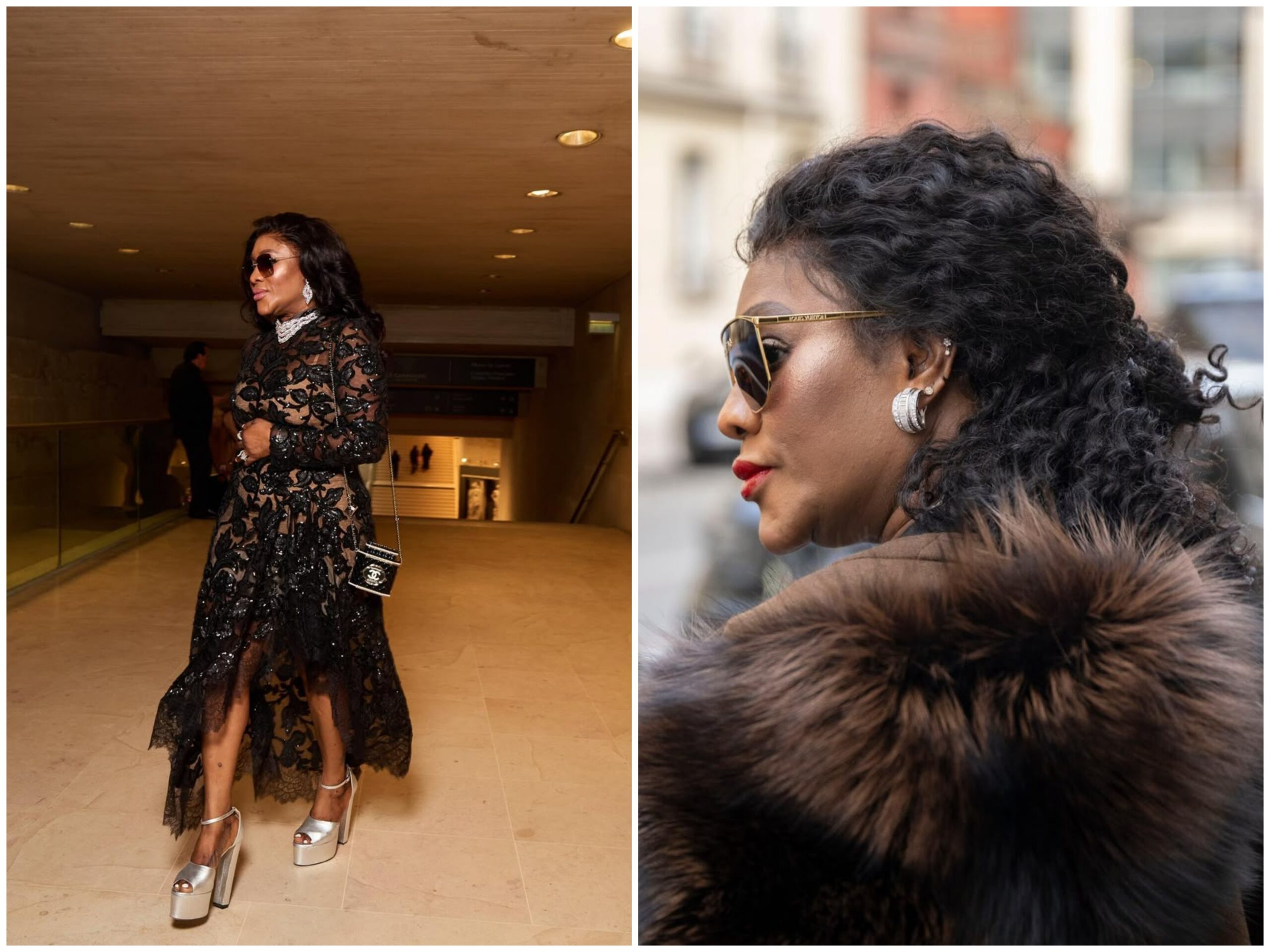
Paris has always had a way of making fashion feel less like clothing and more like theatre. And when the world’s style aristocracy gathered for the Spring/Summer 2027 season, Nigerian high flying businesswoman, Aisha Achimugu, arrived with the kind of polished glamour that commands attention without demanding it.

Against the timeless backdrop of the French capital, Achimugu stepped into the world of Paris Fashion Week in a look that married sophistication with modern femininity. Her ensemble was defined by a refined silhouette, impeccable tailoring and the kind of carefully considered styling in which every detail appeared deliberate. The proportions were elegant, the finish luxurious, while her accessories added just the right measure of sparkle and personality.

Her beauty look complemented rather than competed with the outfit. Immaculately styled hair, luminous makeup and a poised, confident bearing completed the picture, allowing the clothes to retain their quiet authority. It was a lesson in restraint: nothing appeared excessive, yet every element, from the jewellery to the finishing touches, contributed to the overall effect.

See also  Panic as Nigerian, Indian students clash in Gurgaon university (VIDEO)

The real strength of Achimugu’s Paris appearance, however, was in the details. The interplay of texture and silhouette gave the look dimension, while the accessories provided those subtle flashes of glamour associated with the best society dressing. There was an understanding of proportion, balance and occasion, a recognition that at Paris Fashion Week, being noticed is not necessarily about wearing the loudest look in the room.

For Achimugu, fashion has never seemed like an afterthought. It is part of the persona, the jewellery, the sculpted silhouettes, the luxurious textures, the immaculate finishing and that unmistakable confidence of a woman comfortable in her own skin.

Her Paris appearance offered yet another glimpse into the glamorous lifestyle of the Felak Concept Group boss, whose public persona has over the years straddled business, philanthropy, high society and fashion.

In the city, amid the fashion houses and international style elite, Achimugu appeared more than as a spectator but as a Nigerian woman confidently occupying a global fashion space. Her look spoke in the sophisticated language of Parisian dressing, polished, assured and intentionally glamorous, while retaining the unmistakable confidence of a woman bringing her own sense of style to the occasion.

See also  Abduction of students from schools: Nigeria’s future under threat, UN tells FG

And as the lights of Paris dimmed on another fashionable season, her appearance left behind the unmistakable impression of a woman who understands that fashion, at its most powerful, is as much about presence as it is about clothes.

Continue Reading

Lifestyle

70-year-old ex-Kogi senator Ocheja marries best friend’s granddaughter

Published

on

By

A video from the wedding of former Kogi East Senator Emmanuel Dangana Ocheja and his new wife has surfaced online.

According to a report by Punch Online, the white wedding was held in Abuja on September 19, 2026

Ocheja, 70, is said to have held his traditional wedding with his new wife, identified simply as Winifred, on September 13.

The traditional ceremony was followed by their white wedding on September 19.

Ocheja is seen in the video dressed in matching colours with Winifred as they danced together.

The former senator appeared cheerful as the couple shared an intimate moment while guests watched and celebrated with them.

A photo from their white wedding has also surfaced online, showing Ocheja dressed in a white suit and black bow tie.

Winifred, said to be the granddaughter of Ocheja’s best friend, wore a sparkly wedding gown and held a bouquet as she posed beside her husband.

See also  Bariga youths, students won’t be protesting, says Kolad Alabi

Ocheja is a Law graduate from Ahmadu Bello University (ABU), Zaria. He ventured into politics in the early 2000s.

He represented Kogi east senatorial district in the national assembly between 2011 and 2015 under the People’s Democratic Party (PDP).

Ocheja later resigned from the PDP and announced that he had joined the All Progressives Congress (APC).

Continue Reading

Lifestyle

How I manage Davido’s finances, spending habits — Sharon Adeleke

Published

on

By

Sharon Ademefun Adeleke, the elder sister of Afrobeats superstar, Davido, has revealed how she manages her brother’s finances and her unconventional approach to marriage.

Sharon disclosed this while appearing on the Morayo Show, adding that she regularly discusses Davido’s finances with him, particularly his spending on cars and jewellery.

“One of the major things I’m always getting on my brother is jewellery and cars. My God!” she said.

“Me and him will sit down. We will have a finance meeting every week because I think it is important for him to know how his money is being spent.

“And I will now say, ‘David, please, no more cars, no more jewellery.’ Twenty-four hours later, you will start seeing it on the blogs that he bought another car.”

Sharon, a mother of three, also spoke about her marriage, saying she made it clear to her husband from the outset that she did not intend to follow a traditional approach.

See also  Students behind robbery attack on Rivers varsity hostel, says Fubara

“When I met my husband, I explained to him that there isn’t going to be a traditional kind of marriage,” she said.

“I remember, I think in the first few months of us dating, I cooked and all the things. When he was eating, I was like, ‘Oh babe, are you enjoying the food?’ He said yes.

“And I said, ‘Good. Now you know I know how to cook, but I don’t like cooking, and I hope that’s not going to be a problem.”

The entrepreneur revealed how she built her wig-making business. She said she learnt to make wigs out of frustration with the difficulty of securing skilled hairstylists and wig makers, who were often fully booked.

“I learnt how to make wigs because I was frustrated because really good hairstylists and wig makers are always busy. Even if you drop your things with them, every week they will still be busy,” she said.

“So, one day I said, ‘What is this wig making? Let me just try.’ At that time, there was maybe one video or two compared to now, when if you go on YouTube, you can find thousands of videos about wig making.

See also  How football liberated my family from poverty - Ademola Lookman

“I was heavily pregnant and very bored, so my husband took me to the beauty shop, and I bought all the pieces. I just started trying, and then I started doing it more and more. Then my friends started asking me to make wigs for them.”

Sharon said she believes people sometimes discover their businesses unexpectedly rather than through careful planning.

“I’m a big believer that when God gives you a business, you kind of fall into it sometimes. It is not something that you planned,’ she said.

“When I started going into it, I started going for training all over the world.”

Continue Reading

Trending News