Connect with us

News

2023 Presidency: 95m voters to determine next president – INEC

Published

on


The Independent National Electoral Commission (INEC) has said that ninety-five million voters are expected to determine President Muhammadu Buhari’s successor in office in the 2023 poll.

INEC Chairman, Mahmood Yakubu, disclosed this at a function organised by the National Endowment for Democracy (NED) and the International Foundation for Electoral Systems (IFES) in Washington DC, U.S.

Yakubu said this in a keynote address titled “Nigeria 2023: Ensuring credible, peaceful and inclusive elections”.

He described the 2023 general elections as significant to Nigeria.

“The election is significant because the incumbent president is not eligible to run, this being his second and final term.

“There are 18 political parties in the race to produce the next president to be elected by 95 million voters. We had over 84 million registered voters in 2019.

“But with last Continuous Voter Registration (CVR), we are going to add at least 10 million Nigerians and that will take the Register of Voters to 95 million,” Mr Yakubu said.

He said the election was significant as 95 million Nigerians were expected to vote in 176, 846 polling units.

“Each time Nigeria goes to the poll, it is like the whole of West Africa voting.

“In West Africa, there are 15 countries including Nigeria. But the total number of registered voters in the 14 countries combined is 73 million.

“In Nigeria, it’s going to be 95 million. So, there will be 22 million more voters in Nigeria than the whole of West Africa put together,” Mr Yakubu said.

The chairman said that INEC has learnt a lot of lessons from the 2015 and 2019 general elections as well as 103 off-cycle elections and bye-elections conducted after the 2019 general elections.

He added that a lot of innovations have been introduced to increase transparency and ensure the credibility of the country’s electoral process.

“The new Electoral Act with its many progressive provisions has provided legal backing to the innovations.

See also  Muslim-Muslim ticket is best strategy for APC to win election — Adamu

“These innovations are now provided for and protected by law, especially those leveraging on technology to improve voter registration, voter accreditation, result management and the promotion of inclusivity for marginalised persons such as women, youths and persons with disability,” he said.

The INEC chairman said the introduction of online voter registration was part of the innovations, saying it was very helpful during the COVID-19 pandemic.

He said the online registration was done alongside physical registration from June 2021 to June 2022 when that option lasted and 12, 298, 944 voters completed their registration.

“This is more than the entire voter population in the Republic of Gambia, Guinea-Bissau, Liberia, Sierra Leone and Cape Verde. We are such a huge country of great potential,” he said.

Yakubu said that INEC has completed the cleaning up of the data of newly registered voters using the Automated Biometric Identification System (ABIS) that combine the fingerprint and facial authentication of registered voters.

He said those who registered twice and those who were underage or have no reason to register as provided by law have been weeded out.

“The exercise was completed a few days ago. We have not even shared the information with Nigerians, but we have 2.7 million invalid registrants and they have been weeded out.

“We will continue to take steps necessary to protect the integrity of the Register of Voters because it is fundamental to the conduct of elections. There can’t be credible elections without a credible register of voters,” he said.

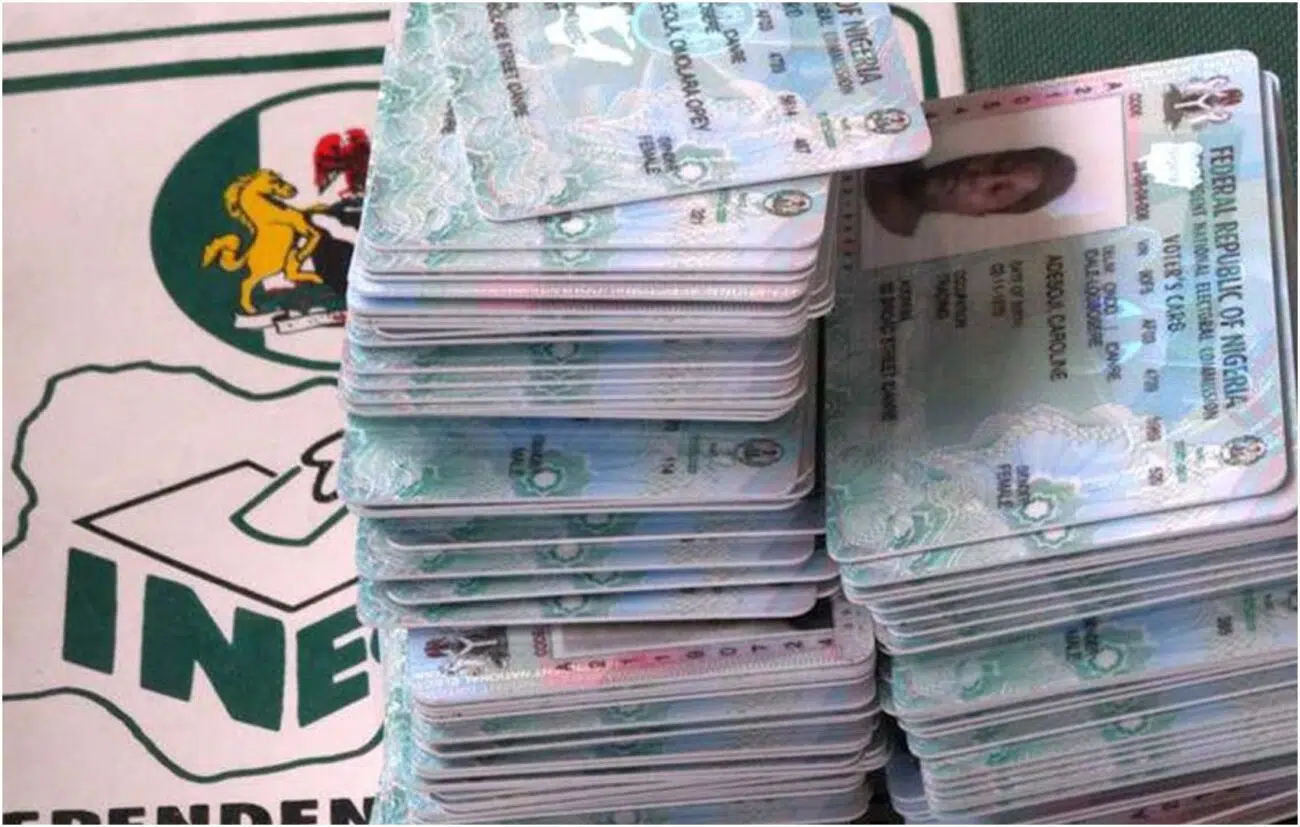
Yakubu said that Permanent Voters’ Cards (PVC) would be available for new registrants by November.

“We are looking at early to the middle of the month to make the cards available.

“We have already printed over 50 per cent of the cards but we haven’t delivered them to the states yet.

“As we clean the data, we also print the cards. Nigerians who have registered should be rest assured that they will have their cards ahead of the general election.

See also  Bandits kill Usmanu Dan Fodiyo varsity deputy VC

“We also need to do so in good time because the law now requires us to publish the number of cards collected per polling unit,” he said.

Mr Yakubu added that INEC also introduced other portals for things like accreditation of observers, media organisations, nomination of candidates by political parties and nomination of polling agents by parties.

According to him, the innovations have also been helpful in reducing the level of litigation arising from the conduct of political parties.

“This is because now it’s an interaction between the party agents and the machines and anytime you logged in and out, there is a time stamp, so you can’t argue.

“If you argue, we’ll produce the evidence of what happened. And at 6 p.m. on a fixed date, the portal automatically shuts down. If any party has any problem, it’s not the Commission,” he said.

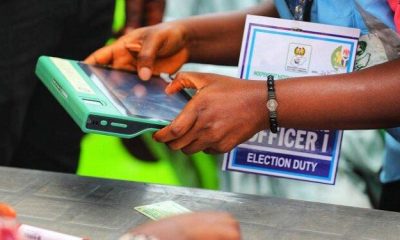
On BVAS innovation, Yakubu said the use of the technology in Nigeria’s electoral system has come to stay and there was no going back.

Voters on queue waiting to vote

He said the technology had helped to eliminate multiple accreditations that were observed in previous elections, increased public confidence in the outcome of elections and eliminated the use of the Incident Form.

“Another innovation that we introduced is the INEC Result Viewing (IReV) portal. We are perhaps one of the few countries in the world that transmits polling unit-level results in real time on election day.

“Proudly, I can say we are the first to introduce it in Africa,” he said.

Yakubu said that IReV has increased transparency in result management and helped to eliminate the falsification of results from the polling unit level to the collation centres.

“We have deployed the IReV in 105 off-cycle and bye-elections.

“We believe that the system is robust and we are taking additional measures to safeguard and fortify our web resources generally against threats of attack,” he said.

See also  Petrol, naira scarcity:  Elections will hold as planned, says INEC chairman

On inclusivity, Yakubu said INEC has created a new Department for Gender and Inclusivity in the commission.

He added that within the limits of available resources, INEC has also provided assistive devices for Persons with Disabilities, such as a braille ballot guide and magnifying glasses for the visually impaired and those living with Albinism.

Yakubu said going into the 2023 general election, the first concern was the insecurity in different parts of the country, compounded by thuggery during elections organised by some of the political actors.

“Elections are conducted by human beings. We worry about the security of our officials, voters and the materials to be deployed.

“Without them, we cannot conduct elections. We have spoken to the security agencies; they have assured us that the situation will improve before the elections. So, fingers crossed.

“Those who are supposed to secure the environment have assured us that they will secure the environment for us to conduct elections. Our responsibility is to conduct elections,” he said.

He added that INEC was concerned about the issue of fake news, but as a commission did not support censorship, saying that it was deepening transparency and harmonising available opportunities to address fake news which has an impact on elections.

“We believe that the antidote to fake news is greater transparency and openness and we have been demonstrating greater transparency and openness.

“The social media plays a very important role in voter education and deepening democracy.

“But it also has the potential of skewing the narrative with the wrong information that impugns the integrity of officials or seeks to delegitimise the commission and the process before, during or after the elections.

“Publication of fake election results is a potential trigger for violence. What we have done is to continue to deepen our cooperation and relationship, particularly with the organised social media,” Mr Yakubu said.
News

Oyo school abductions: Makinde signs executive order, restricts Okada 

Published

on

By

Governor Seyi Makinde of Oyo state
has signed Executive Order No. 002 of 2026, aimed at strengthening security, enforcing vehicle registration regulations and improving traffic management across the state.

The governor also announced restrictions on the operations of commercial motorcycle operators, popularly known as “Okada” riders.

The development follows growing concerns over security challenges in parts of the state, particularly the continued captivity of teachers and pupils abducted in Oriire Local Government Area more than 20 days ago.

Speaking during the signing ceremony in his Office on Friday, Makinde said the executive order was designed to ensure strict compliance with existing laws governing vehicle registration and traffic regulations.

He noted that unregistered vehicles, motorcycles, and tricycles have increasingly been used to perpetrate criminal activities within the state.

According to the governor, security agencies often encounter difficulties tracking and investigating crimes involving unregistered vehicles because of the absence of identifiable registration details.

Governor Makinde explained that the executive order would provide a legal framework for the strict enforcement of vehicle registration requirements and other traffic regulations, including measures against driving against traffic and related offences.

According to him, designated enforcement authorities have been empowered to arrest offenders and impound vehicles, motorcycles, or tricycles found violating the provisions of the order.

See also  SHOWER OF SORROW: Four die, 6 vehicles swept away in Abuja flood

The governor said offenders apprehended under the executive order would be prosecuted in accordance with the law, while seized assets and properties would be handled through established legal procedures.

The governor linked the latest security measures to lessons learnt from recent security breaches, especially the abduction of schoolchildren and teachers in Oriire Local Government Area.

“We are living through very trying times; for over 20 days, our teachers and pupils have remained in captivity in the hands of terrorists. Our thoughts and prayers remain with them and with their families who continue to endure unimaginable pain and uncertainty,” He said. 

He assured residents that his administration remained fully committed to securing the safe return of all abducted victims and was working relentlessly with relevant security agencies to achieve that objective.

“As a government, we share in their anxiety and their hope, and we remain committed to doing everything within our power to secure the safe return of every one of them,” Makinde said.

The governor acknowledged the pain being experienced by the affected families and communities, stressing that the abducted teachers and pupils had neither been forgotten nor abandoned.

See also  Onochie’s rejection as INEC commissioner good for democracy

While declining to disclose operational details for security reasons, Makinde maintained that extensive efforts were ongoing behind the scenes and urged residents not to mistake the government’s silence for inaction.

One of the major highlights of the executive order is the restriction placed on commercial motorcycle operations across Oyo State.

Makinde announced that commercial motorcycle operators would no longer be permitted to operate between 10:30 p.m. and 5:30 a.m. statewide, describing the measure as part of additional efforts to improve security and public safety.

The governor said the restriction became necessary as part of broader strategies to curb criminal activities and strengthen surveillance across communities.

He appealed to residents to actively support security agencies by providing timely information on suspicious movements and activities.

According to him, security remains a collective responsibility that requires the cooperation of all citizens.

“If you see something, say something, and authorities will do something,” he said, while reminding residents of the state’s toll-free emergency number, 615, for reporting security threats and emergencies.

Makinde also urged residents to remain vigilant, united and resilient despite the current security challenges, warning against allowing fear to undermine communal harmony and confidence.

See also  INEC rejects PDP’s NEC meeting notice, says signature requirement not met

He commended security agencies and members of the state’s security outfit, Amotekun Corps, for their dedication, sacrifices and professionalism in responding to security threats across Oyo State.

The governor expressed optimism that with sustained collaboration among security agencies, community stakeholders, and residents, the abducted teachers and pupils would be rescued safely and security across the state would be further strengthened.

In his address at the event, the Attorney General of the state and Commissioner for Justice, Abiodun Aikomo, stated that the implementation of the order would be carried out by relevant agencies, including the Oyo State Road Traffic Management Authority (OYRTMA), the Nigeria Police Force and other law enforcement bodies, which would be required to submit periodic reports on enforcement activities to the state government.

To ensure transparency and accountability, Aikomo stated that the Office of the Director of Public Prosecutions would provide oversight on prosecutions arising from the enforcement exercise, while members of the public would be encouraged to report any misconduct by officials involved in implementing the order.

Continue Reading

News

Nigeria set to repatriate over 1,000 nationals from South Africa as violence continues

Published

on

By

The Federal government has kick-started plans to bring back home more than 1,000 Nigerians from South Africa as concerns grow over rising anti-immigrant sentiments and renewed xenophobic tensions in the southern African nation.

According to reports, Nigeria’s Ministry of Foreign Affairs confirmed on Friday that screening for a voluntary repatriation programme began on Thursday, with authorities expecting over 1,000 Nigerians to participate.

Foreign ministry spokesperson Kimiebi Ebienfa told AFP that the final number of those seeking to return home had not yet been determined but noted that the figure was expected to exceed 1,000.

“Total figure not out yet,” he said. “We are expecting over 1,000 persons.”

The move follows a similar action by Ghana, which recently repatriated hundreds of its nationals from South Africa amid increasing fears over protests and violence directed at foreign nationals.

In a statement dated Tuesday, Nigeria’s High Commission in Pretoria said it had “negotiated waivers with host authorities” so that those with “immigration-related offences” would be allowed to leave on the eventual repatriation flights rather than be detained.

See also  Why NCC shutdown telecommunications services in Zamfara

South Africa, until recently the continent’s most industrialised economy, has long attracted workers from across the region.

But saddled with an unemployment rate of over 30 per cent, it has seen repeated spurts of xenophobic protests — including renewed violence in recent weeks.

The latest tensions have revived uncomfortable debates across Africa about xenophobia, migration and the gap between pan-African rhetoric and realities facing migration on the continent.

An ultimatum by one citizen-led group for illegal migrants to be expelled by June 30 has raised fears of violence after bouts of anti-immigrant unrest in the past that claimed dozens of lives.

Last month, Ghana repatriated some 300 people, the first batch of what authorities said was expected to be a total of about 800 Ghanaian nationals.

The South African government has said it is stepping up enforcement against undocumented immigrants but urged citizens not to take matters into their own hands.

See also  Court orders DSS to freeze 20 bank accounts linked to suspected female terrorist

There are more than three million foreigners living in South Africa, or 5.1 per cent of the population, according to the statistics agency.

More than 63 per cent come from countries in the 16-member Southern African Development Community (SADC) bloc.

Continue Reading

News

Again, WAEC candidates write exams with Torchlight

Published

on

By

The 2026 West African Senior School Certificate Examination (WASSCE) got off to a dark start on Thursday across several centres in Oyo, Lagos, Ogun and Osun states.

Due to the late arrival of examination materials, several candidates were forced to sit for papers late into the evening.

On Monday, candidates reportedly waited several hours before writing the Physics Essay and Objective papers, which were scheduled for 2pm and 3:30pm respectively.

The delays persisted on Wednesday, with the General Mathematics Objective paper starting at 6:30pm in some centres and as late as 8:30pm in others, leaving candidates to finish the examination after 10pm.

The situation was said to be particularly severe in some centres in Ibadan, the Oyo state capital.

The first batch of the Agricultural Science practical examination was slated for 2pm, while the second batch was scheduled for 3:30pm.

However, as of 8pm, some centres in the state had yet to commence the examination.

See also  Why IReV failed during presidential poll, INEC finally opens up on IReV failure

Due to the delay, candidates reportedly sat the examination under poor lighting conditions.

In a viral video, several students could be seen writing the examination with torchlights, mobile phone flashlights and solar-powered lamps.

The incident has since triggered widespread outrage on social media.

Mariam Kehinde, an X user, said that as of past 8pm on Thursday, her sister was yet to return home from the examination centre.

“What exactly is happening in this country sef? My sister left for her WAEC exam since morning and still hadn’t returned home,” she wrote.

“She called around 6pm saying their exam paper had just arrived at that time nitori olorun. She was still at the exam centre, and my mum even had to wait.”

Adedeji Adeyinka, another user, described Thursday’s conduct of the examination as “particularly disturbing”.

“Candidates writing Government completed the Theory paper and were instructed to wait for the Objective paper, only for the question paper to arrive more than FOUR HOURS later,” he posted.

See also  INEC begins distribution of electoral materials for Gov, state assembly polls (PHOTOS)

“How is this acceptable in a national examination? Even more shocking was the situation faced by students writing Agricultural Science Practical. An examination scheduled for 2:00 p.m. did not commence until about 9:00 p.m. in many parts of Oyo State.

“A seven-hour delay is not a minor inconvenience. It is a systemic failure.”

Another X user identified as Mum Ire also lamented the shortage of question papers during Wednesday’s Mathematics examination.

“Out of 75 candidates, only 35 Mathematics question papers were brought to the examination centre for the entire exam yesterday,” she wrote on Thursday.

“When did WAEC start operating like this?

“Now we are being told that the Agriculture Science practical questions are on the way at 8:10 pm.”

Joel Abodunrin also decried the shortage of question papers.

“WAEC’s been doing well until today,” he wrote on Wednesday.

“An examination hall of about 250 candidates and having Mathematics question papers for only 120.

See also  Petrol, naira scarcity:  Elections will hold as planned, says INEC chairman

“Getting to tear the questions into pieces so that all could have something to do.”

Hakeem Olaoye, another user, said candidates were being made to write examinations at unreasonable hours.

“WAEC exam being conducted late in the evening.

“The Agric practical exam that was supposed to be held by 2pm just commenced some minutes after 7pm,” he wrote.

“Very disheartening indeed. Likewise for Mathematics. A school with 130 students was given 16 question booklets to share among.”

The development has raised concerns about the safety of candidates amid the country’s growing security challenges.

Continue Reading

Trending News