Connect with us

News

Again, Nigeria will borrow to fund N6.2tr budget deficit – Finance Minister

Published

on

FEDERAL GOVERNMENT BORROWING


Despite the anger being expressed by Nigerians over the growing debt profile of the country, the Federal Government has disclosed that it will borrow to fund the N6.258 trillion deficit in the 2022 Budget.

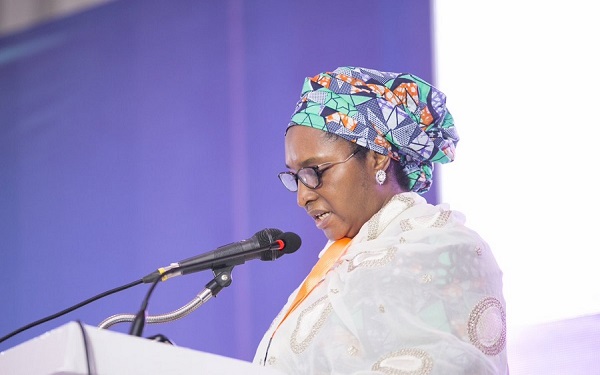
The Minister of Finance, Budget and National Planning Mrs. Zainab Ahmed, made the disclosure on Wednesday.

“The resultant deficit of N6.258 trillion will be financed by new borrowings of N5.012 trillion (of which domestic – N2.506 trillion and foreign – N2.506 trillion); drawdowns on Project-tied Multilateral/Bilateral loans – N1.156 trillion; and Privatisation Proceeds of N90.73 billion,” she explained.

The minister allayed fears over government’s “excessive borrowing” complaints, saying “as at July, the total borrowing is 23 per cent of Gross Domestic Product (GDP) limits.”

Mrs Ahmed spoke on the final full budget to be implemented by President Muhammadu Buhari Administration before its exit in 2023, after the Federal Executive Council (FEC) meeting.

Before giving its final approval, FEC reduced the total budget from N16.45 trillion to N16.39 trillion. The total revenue projected to N10.11 trillion bringing down the deficit to N6.2trillion.

The financial estimates will be presented to the joint sitting of the National Assembly today by the President.

The minister said: “If we just depend on the revenues that we get, even though our revenues have increased, the operational expenditure of government, including salaries and other overheads, is barely covered or swallowed up by the revenue.

“So, we need to borrow to be able to build these projects that will ensure that we’re able to develop on a sustainable basis.

“Nigeria’s borrowing has been of great concern and has elicited a lot of discussions, but if you look at the total size of the borrowing, it is still within healthy and sustainable limits. As at July 2021, the total borrowing is 23% of GDP.

“When you compare our borrowing to other countries, we’re the lowest within the region, lowest compared to Egypt, South Africa, Brazil, Mexico, the very lowest, and Angola.

See also  FG enlists Dangote, Otedola, Elumelu as members of council to eliminate malaria

”We have a problem of revenue. Our revenues have been increasing. We just reported to Council that our revenues from non-oil sector has performed, as July, at the rate of 111%, which means outperforming the prorated budget.

“But our expenditure, especially staff emoluments have been increasing at a very fast rate making it difficult to cope with funding of government.

”So, what we have to do is a combination of cutting down our cost, as well as increasing revenue to be able to cope with all that is required for government to do, including salaries, pensions debt service, as well as capital expenditure”, she explained.”

She added that that President Buhari is resolved to complete his legacy projects.

“Currently, agriculture sector contributes 23% of the GDP. We have record of expanding the agricultural value chain; we’ve had very little or no processing in agriculture until this administration.

“We now have a very large number of fertiliser blending plants, about 42, that are operating at full capacity. We also have a large number of rice mills that didn’t exist before.

”We have a lot of Nigerians that have taken up agriculture as a business, but apart from agriculture, the President is also rolling out rail lines, some of which had been started several years ago, have been completed.

“The Lagos/Ibadan rail line is now put to use. We all know about the Abuja/Kaduna and also the Itakpe/Warri rail line has been completed. Work has kicked off on the Kano to Kaduna end of the Lagos/Kano/Ibadan rail line.

“So, Mr. President wants to leave these rail lines. Rail is very important because it is a major means of moving goods across the country. When the rail lines are completed, it will provide much needed relief in terms of movement of goods that our roads now suffer by use of trucks.

”We are also investing in deployment of major roads. Some of them are completed, some are at various levels of completion. There’s also the 2nd Niger Bridge that is also going to be completed during the tenure of this administration.

See also  State police solution to insecurity, PDP govs tell FG

”The major projects that I just mentioned are fully provided for in the budget. The Federal Ministry of Works and Housing has a provision of N388 billion; the Power sector has about N377 billion; the Ministry of Agriculture has N98 billion; the Transportation Ministry has N189 billion.

“All the major projects are provided for. The target is to make sure that we have some of these key projects completed and commissioned during Mr. President’s tenure.”

On the difference between the price of crude oil and the $57 benchmark for the 2022 Budget, Mrs. Ahmed said “you know that the crude oil price in the international capital market is not stable, it goes up and it comes down.

”Our assessment is that $57 per barrel is a safe zone to be in and we did this after extensive consultations with CBN, we checked the research work of the World Bank and other institutions, whose concern is investigating and researching on crude oil prices. But you know, the revenue in the budget for oil and gas is a function of the level of production as well as the price.

”We suffered some setbacks in terms of level of production, occasioned by the limits that the OPEC set. But thankfully, OPEC has changed our quota and that will also soon ramp up.

”In the event that revenues from oil and gas outperform the budget, there is always the safeguard that the excess goes into the Excess Crude Account. If that happens, we have not witnessed that in the past one and a half years because the revenues have been very cyclical”, she said.

On the approved 2022 Appropriation Bill for an aggregate expenditure of N16.39 trillion for 2022, she gave the components as the adjustments to the Medium-Term Fiscal Framework 2022-2024; Statutory Transfers of N768.28 billion and Debt Service of N3.61 trillion and Sinking Fund for Maturing Debts of N292.71 billion Naira.

See also  BREAKING: Senate passes N28.7tn 2024 appropriation bill

Other are Recurrent Expenditure (Non-Debt) of N6.83 trillion, inclusive of N350.0 billion for the recurrent component of Social Investment Programme; and Aggregate Capital Expenditure of N5.35 trillion, inclusive of GOEs’ capital expenditure, multilateral/bilateral loan funded projects, Capital Supplementation and Grants/Aid funded projects.

She also said that FEC noted the changes in the 2022-2024 fiscal projections based on implementation of the Petroleum Industry Act 2021 and other necessary expenditures that should be accommodated in the 2022 Budget.

She listed key assumptions and targets underlying the budget provisions as follows:

Oil price – $57 per barrel; Oil production – 1.88 mbpd; Exchange rate – N410.15/US$; Oil Revenue – N3.15 trillion and Non-Oil Revenue – N2.13 trillion.

Others she gave are Federal Government’s Independent Revenue of N1.82 trillion; Total Projected Federal Government Revenue of N10.13 trillion; Debt Service of N3.61 trillion; Statutory Transfers of N768.28 billion (including N462.53 billion capital component) and

Personnel costs and Pensions of N4.69 trillion; (inclusive of N617.72 billion for the 63 GOEs).

The rest are Overhead costs of N792.39 billion (inclusive of N451.0 billion for the 63 GOEs); and Capital expenditure (inclusive of capital component of Social Investment Programme, capital in Statutory Transfers, capital of 63 GOEs, Capital Supplementation as well as Grants and Donor funding) of N5.35 trillion(inclusive of N647.08 billion for the 63 GOEs).

National Assembly passes revised fiscal framework
The Senate and the House of Representatives approved the revised MTEF/FSP.

Buhari’s request for the revision of the MTEF was received by the Senate on Tuesday and referred to the Committee on Finance after suspension of relevant rules of the upper chamber.

The Senate approved the N16.39trillion as projected aggregate expenditure for 2022 as recommended by the committee.

The Senate also approved the retained revenue of the Federal Government of N10.3 trillion; and an additional N635.4 billion fiscal deficit, bringing the total fiscal deficit for 2022 to N7.91 trillion.

News

Insecurity: Eliminate terrorists within 90 days or resign, Adeboye tells service chiefs

Published

on

By

The general overseer of the Redeemed Christian Church of God (RCCG), Pastor Enoch Adeboye, has asked Nigeria’s security chiefs to eliminate terrorists within 90 days or step down.

In a video posted on the church’s X handle on Tuesday, Adeboye urged the Federal Government to act swiftly in addressing the country’s security challenges.

“If I were asked to make suggestions, I would say quietly to our government, move fast. And tell our security chiefs, get rid of these terrorists within 90 days, or resign,” Adeboye said.

The cleric noted that religious leaders can only offer advice to political authorities, and that the final responsibility rests with the commander-in-chief.

Adeboye said he advised late President Muhammadu Buhari who gave security chiefs a similar deadline to tackle Boko Haram, but that the directive was not fully achieved within the timeframe.

In 2021, Buhari ordered the then service chiefs to “take out” bandits, kidnappers, and their sponsors.

See also  FG commences price enforcement in Abuja, targets Lagos, others

The late president said the armed forces should be more proactive rather than reactionary.

Adeboye said the former president acted on the advice by issuing the directive to security chiefs, but failed to enforce it after the deadline elapsed.

“He ran with that advice, but he didn’t follow it through. Because he gave the order as the commander-in-chief of the armed forces.The three months went, and the work was not done,” he said.

The RCCG general overseer said he later questioned the former president over his decision not to act after the deadline passed, but declined to give details of their conversations.

He called on the current government to ensure that any directive given to security chiefs goes beyond neutralising terrorists to also targeting those who finance and support them.

“When giving orders to the service chiefs this time around, we should make it clear to them that they are not only to eliminate the terrorists, they should eliminate their sponsors, no matter how influential they may be,” Adeboye added.

See also  BREAKING: Nigeria’s unemployment rate dropped to 4.1% in Q1 2023, says NBS

His comments come amid renewed concerns over insecurity across the country, following a series of kidnappings, attacks on communities and abductions of students in recent months.

On May 15, some gunmen attacked two schools in Ogbomoso, Oyo state abducting dozens of pupils and teachers. One of the teacher would later be beheaded in a viral video circulating online.

Following the abduction, President Bola Tinubu directed the deployment of a “specialised security unit with advanced rescue capabilities” to intensify efforts to secure the release pupils and teachers.

The abduction adds to a string of similar incidents recorded across the country in recent months.

Continue Reading

News

Bandit leader Kachallah contacts abducted army General’s family, seeks release of gang members

Published

on

By


A notorious bandit leader, Kachallah Muhammad, has reportedly established communication with relatives of the abducted retired senior military officer, Major General Rabe Abubakar Batsari.

According to reports by Daily Trust, the bandit kingpin, who operates in parts of Katsina State, opened a line of communication with the family of the retired General on Monday morning.

The retired Major General and his wife were reportedly abducted on Saturday in Katsina State.

Their vehicle was ambushed along the Marabar Musawa–Kafinsoli Road in Matazu Local Government Area by gunmen, who, according to witnesses, emerged from hiding, blocked the road and opened fire on the vehicle, forcing it to a halt before abducting the retired officer and his wife into a nearby forest.

The road, according to residents of the area, is unsafe due to repeated bandit attacks.

A senior local government official in Batsari, who spoke on condition of anonymity due to security concerns, confirmed to our correspondent that he personally spoke with the abducted officer during the conversation facilitated by the bandit leader.

See also  FG denies hiking petrol price

“I spoke with Major General Rabe through Kachallah Muhammad. He told us that he is hale and hearty and that his wife is also fine,” the official said.

According to the source, the retired general assured his family and associates that they are being adequately taken care of by their captors, a development that has somewhat eased anxiety among relatives and residents of the area.

The official further disclosed that during the interaction, Kachallah Muhammad made his demands clear, insisting on the release of his relatives, allegedly being held by Nigerian security authorities.

“He said what he wants is the immediate release of his relatives in government custody,” the official added.

The bandit leader, the source said, also expressed willingness to return to negotiations, indicating openness to dialogue aimed at restoring peace in Matazu and other areas under his influence.

“He said he is ready to go back to the negotiation table to achieve peace in Matazu and neighbouring communities,” the official said.

See also  Ughelli Killings: Eight suspects nabbed over gruesome murder of six policemen

Continue Reading

News

FG cancels three-month pre-retirement leave for civil servants

Published

on

By


The Federal Government has directed ministries, departments, and agencies (MDAs) to stop placing civil servants on a mandatory three-month pre-retirement leave.

According to reports, the directive is contained in a circular titled ‘Correct Interpretation of Public Service Rule 120243 on Pre-Retirement Activities’, issued by Didi Walson-Jack, head of the civil service of the federation.

The circular, addressed to ministers, permanent secretaries, service chiefs, heads of agencies, and other senior public officials, said the Public Service Rules (PSR) do not provide for a compulsory three-month leave before retirement.

Walson-Jack said several MDAs had misconstrued the three-month retirement notice period as an automatic leave entitlement, resulting in officers being withdrawn from service before their official retirement dates.

According to her, Rule 120243 only requires officers approaching retirement to give three months’ notice, attend a one-month pre-retirement workshop or seminar, and use the remaining period to reconcile service records and complete pension documentation.

See also  FG proposes N62k as minimum wage for workers, labour demands N250k

“The so-called mandatory three-month pre-retirement leave has no basis in the Public Service Rules,” the circular reads.

“A retiring officer must give three months’ notice before the effective date of retirement. This is a notice requirement, not a leave entitlement.”

Walson-Jack noted that officers remain in active service throughout the notice period and are expected to continue performing their official duties unless they are attending an approved pre-retirement programme or are absent under existing leave provisions.

“PSR 120243 does not exempt retiring officers from official duties during the notice period, except where they are attending an approved pre-retirement workshop or seminar, or are otherwise authorised to be absent under extant leave rules,” Walson-Jack was quoted in the circular as saying.

She directed all MDAs to stop compelling retiring officers to vacate their positions before their official retirement dates.

Under the new directive, retiring officers are to continue discharging their responsibilities while participating in approved retirement programmes and completing all documentation required for pension processing.

See also  2024 budget: We’re relying on revenue than borrowing, says Wale Edun

The head of service said the move is aimed at ensuring uniform implementation of the Public Service Rules across government institutions and preventing the loss of experienced personnel through premature disengagement.

The circular also directed permanent secretaries, directors-general, executive secretaries, chairpersons of statutory agencies, and chief executives of government organisations to ensure strict compliance.

The federal civil service retirement framework, governed by the Public Service Rules and the Pension Reform Act, requires officers to retire after 35 years of service or upon attaining the age of 60 years, whichever comes first.

The government said the clarification would help improve service delivery by allowing retiring officers to continue contributing their expertise until their official exit dates while completing the administrative processes required for retirement benefits.

Continue Reading

Trending News