Connect with us

News

FG, NLC kick against planned hike in electricity tariff

Published

on

ELECTRICITY TARIFF


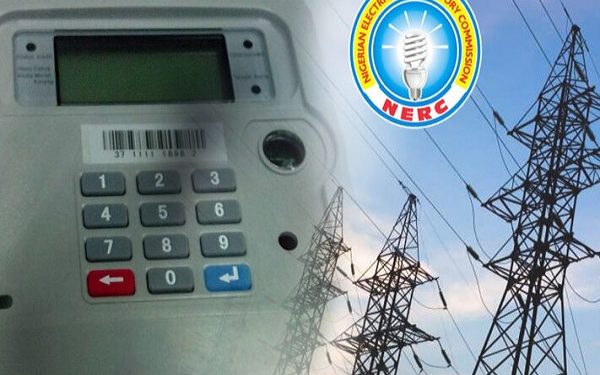
The Federal Government and the Nigeria Labour Congress (NLC) on Sunday kicked against the nod given to electricity Distribution Companies (DisCos) by the Nigerian Electricity Regulatory Commission (NERC) to hike tariffs, starting from Wednesday.

According to them, the go-ahead is against the recommendations of the technical committee on electricity tariffs.

Minister of State for Labour and Employment, Festus Keyamo said the technical committee which he heads was not contacted by NERC.

The NLC Deputy President Joe Ajaero urged Nigerians to rise against another tariff hike by the DisCos.

The committee had recommended the sustainability of subsidy on electricity tariffs till December. It also called on NERC to avoid phased changes in tariffs.

There was a report at the weekend that the NERC has directed the 11 DisCos to raise their tariff from Wednesday.

The commission in a letter titled: “Tariff increase notification” gave the energy distributors the leverage to charge a service-based tariff.

See also  ‘Jubril of Sudan’: Buhari's clone claim ridiculous – Femi Adesina

A statement credited to the Eko Electricity Distribution Company (EKEDC) said the increase will be reflected on the energy bill for October. The bill will cover energy consumption for September,” it stated.

But, hours later, the EKEDC in a statement by its Managing Director, Mr. Adeoye Fadeyibi, described the earlier release as unsubstantiated. He urged customers to disregard all such reports.

Keyamo said yesterday: “We have not been officially communicated to by NERC. If and when they do, we will take it from there. We will look at it when they communicate to us.”

Ajaero, who is also the general secretary, National Union of Electricity Employees (NUEE), said the NERC and the DisCos already had a blueprint prepared by the technical committee on power tariff hikes.

Describing the power market as dictatorial, the NLC deputy president added that it will take the collective resolve of Nigerians to change the blueprint adopted by NERC and the DisCos.

See also  Three oil marketers to commence petrol importation from July - NMDPRA

He said: “There was no issue of increase in electricity tariffs in the committee discussion? Even forming the committee was like a regret to them (government)

“What we found out during the committee’s work was that NERC already had a blueprint with the DisCos which they are implementing with or without anybody. It will take the collective resolve of Nigerians to change it.

“Before now, it was like we were opposing it and we were labeled when we said that the privatisation of the electricity sector would lead to an increase in tariffs. That is what we are seeing; that is what is happening.

“It (planned increment) is not the job of the committee (on electricity tariffs). This is the job of NERC. They believe that nobody can stop them and that whatever they want, they will do. It is an unfair market. The normal market will involve the buyers and sellers haggling and negotiating on a price.

See also  FG hands over 64 CNG buses to labour unions

“This market is so dictatorial. The earlier Nigerians decided on what to do. It is either they accept the market as it is presently composed or constituted or insist that it should be properly constituted where the buyer is a king and seller should also be a king.

“This one (increment) requires everybody to be involved; everybody must say something. All the while, it has been the issue of the workers in the sector and the employers. They always tell us that if the sector is not making enough money it will affect jobs. We are at the centre of this.

“There is a need for a third force which has to do with Nigerians and nobody will tell them that they don’t have the right to decide what they should pay or the services they should receive. They (Nigerians) can’t keep quiet or abdicate their responsibilities to the representatives of workers.”

News

Insecurity: Eliminate terrorists within 90 days or resign, Adeboye tells service chiefs

Published

on

By

The general overseer of the Redeemed Christian Church of God (RCCG), Pastor Enoch Adeboye, has asked Nigeria’s security chiefs to eliminate terrorists within 90 days or step down.

In a video posted on the church’s X handle on Tuesday, Adeboye urged the Federal Government to act swiftly in addressing the country’s security challenges.

“If I were asked to make suggestions, I would say quietly to our government, move fast. And tell our security chiefs, get rid of these terrorists within 90 days, or resign,” Adeboye said.

The cleric noted that religious leaders can only offer advice to political authorities, and that the final responsibility rests with the commander-in-chief.

Adeboye said he advised late President Muhammadu Buhari who gave security chiefs a similar deadline to tackle Boko Haram, but that the directive was not fully achieved within the timeframe.

In 2021, Buhari ordered the then service chiefs to “take out” bandits, kidnappers, and their sponsors.

See also  FG hands over 64 CNG buses to labour unions

The late president said the armed forces should be more proactive rather than reactionary.

Adeboye said the former president acted on the advice by issuing the directive to security chiefs, but failed to enforce it after the deadline elapsed.

“He ran with that advice, but he didn’t follow it through. Because he gave the order as the commander-in-chief of the armed forces.The three months went, and the work was not done,” he said.

The RCCG general overseer said he later questioned the former president over his decision not to act after the deadline passed, but declined to give details of their conversations.

He called on the current government to ensure that any directive given to security chiefs goes beyond neutralising terrorists to also targeting those who finance and support them.

“When giving orders to the service chiefs this time around, we should make it clear to them that they are not only to eliminate the terrorists, they should eliminate their sponsors, no matter how influential they may be,” Adeboye added.

See also  FAAC shares N786bn to FG, states, LGs

His comments come amid renewed concerns over insecurity across the country, following a series of kidnappings, attacks on communities and abductions of students in recent months.

On May 15, some gunmen attacked two schools in Ogbomoso, Oyo state abducting dozens of pupils and teachers. One of the teacher would later be beheaded in a viral video circulating online.

Following the abduction, President Bola Tinubu directed the deployment of a “specialised security unit with advanced rescue capabilities” to intensify efforts to secure the release pupils and teachers.

The abduction adds to a string of similar incidents recorded across the country in recent months.

Continue Reading

News

Bandit leader Kachallah contacts abducted army General’s family, seeks release of gang members

Published

on

By


A notorious bandit leader, Kachallah Muhammad, has reportedly established communication with relatives of the abducted retired senior military officer, Major General Rabe Abubakar Batsari.

According to reports by Daily Trust, the bandit kingpin, who operates in parts of Katsina State, opened a line of communication with the family of the retired General on Monday morning.

The retired Major General and his wife were reportedly abducted on Saturday in Katsina State.

Their vehicle was ambushed along the Marabar Musawa–Kafinsoli Road in Matazu Local Government Area by gunmen, who, according to witnesses, emerged from hiding, blocked the road and opened fire on the vehicle, forcing it to a halt before abducting the retired officer and his wife into a nearby forest.

The road, according to residents of the area, is unsafe due to repeated bandit attacks.

A senior local government official in Batsari, who spoke on condition of anonymity due to security concerns, confirmed to our correspondent that he personally spoke with the abducted officer during the conversation facilitated by the bandit leader.

See also  FG detects 1,618 civil servants with fake employment letters

“I spoke with Major General Rabe through Kachallah Muhammad. He told us that he is hale and hearty and that his wife is also fine,” the official said.

According to the source, the retired general assured his family and associates that they are being adequately taken care of by their captors, a development that has somewhat eased anxiety among relatives and residents of the area.

The official further disclosed that during the interaction, Kachallah Muhammad made his demands clear, insisting on the release of his relatives, allegedly being held by Nigerian security authorities.

“He said what he wants is the immediate release of his relatives in government custody,” the official added.

The bandit leader, the source said, also expressed willingness to return to negotiations, indicating openness to dialogue aimed at restoring peace in Matazu and other areas under his influence.

“He said he is ready to go back to the negotiation table to achieve peace in Matazu and neighbouring communities,” the official said.

See also  We can go on strike any moment — ASUU

Continue Reading

News

FG cancels three-month pre-retirement leave for civil servants

Published

on

By


The Federal Government has directed ministries, departments, and agencies (MDAs) to stop placing civil servants on a mandatory three-month pre-retirement leave.

According to reports, the directive is contained in a circular titled ‘Correct Interpretation of Public Service Rule 120243 on Pre-Retirement Activities’, issued by Didi Walson-Jack, head of the civil service of the federation.

The circular, addressed to ministers, permanent secretaries, service chiefs, heads of agencies, and other senior public officials, said the Public Service Rules (PSR) do not provide for a compulsory three-month leave before retirement.

Walson-Jack said several MDAs had misconstrued the three-month retirement notice period as an automatic leave entitlement, resulting in officers being withdrawn from service before their official retirement dates.

According to her, Rule 120243 only requires officers approaching retirement to give three months’ notice, attend a one-month pre-retirement workshop or seminar, and use the remaining period to reconcile service records and complete pension documentation.

See also  FAAC shares N786bn to FG, states, LGs

“The so-called mandatory three-month pre-retirement leave has no basis in the Public Service Rules,” the circular reads.

“A retiring officer must give three months’ notice before the effective date of retirement. This is a notice requirement, not a leave entitlement.”

Walson-Jack noted that officers remain in active service throughout the notice period and are expected to continue performing their official duties unless they are attending an approved pre-retirement programme or are absent under existing leave provisions.

“PSR 120243 does not exempt retiring officers from official duties during the notice period, except where they are attending an approved pre-retirement workshop or seminar, or are otherwise authorised to be absent under extant leave rules,” Walson-Jack was quoted in the circular as saying.

She directed all MDAs to stop compelling retiring officers to vacate their positions before their official retirement dates.

Under the new directive, retiring officers are to continue discharging their responsibilities while participating in approved retirement programmes and completing all documentation required for pension processing.

See also  58 OAU students released from EFCC custody

The head of service said the move is aimed at ensuring uniform implementation of the Public Service Rules across government institutions and preventing the loss of experienced personnel through premature disengagement.

The circular also directed permanent secretaries, directors-general, executive secretaries, chairpersons of statutory agencies, and chief executives of government organisations to ensure strict compliance.

The federal civil service retirement framework, governed by the Public Service Rules and the Pension Reform Act, requires officers to retire after 35 years of service or upon attaining the age of 60 years, whichever comes first.

The government said the clarification would help improve service delivery by allowing retiring officers to continue contributing their expertise until their official exit dates while completing the administrative processes required for retirement benefits.

Continue Reading

Trending News