Connect with us

News

FG may cut salaries to reduce governance cost, says minister

Published

on


Faced with a dwindling enonomy, the Federal Government has proposed salary cuts for workers as a way of reducing the high cost of governance in the country.

The Minister of Finance, Zainab Ahmed, said the FG was working to reduce the high cost of governance by doing away with unnecessary expenditures.

Disclosing this at the policy dialogue on corruption and cost of governance in Nigeria organised by the Independent Corrupt Practices and Other Related Offences Commission in Abuja on Tuesday, she said the President, Major-General Muhammadu Buhari (retd.), has directed the National Salaries, Incomes and Wages Commission to review the salaries of civil servants as well as the number of federal agencies.

Ahmed urged all government agencies to come together to trim the cost amid the country’s dwindling revenue.

She said the government also intends to remove some superfluous items from the budget in order to cut the cost of governance in the country.

She stated, “We still see government expenditure increase to a terrain twice higher than our revenue. The nation’s budgets are filled every year with projects that are recycled over and over again and are also not necessary.

See also  Account for N94tr unremitted funds, Falana tells NNPC

“Mr President has directed that the salaries committee that I chair, work together with the Head of Service and other members of the committee to review the government payrolls in terms of stepping down on cost.’’

The minister said that government will also review the number of government agencies in terms of their mandates, adding that the government will consider merging two agencies with the same mandate.

The Director-General of the Budget Office, Ben Akabueze disclosed that the cost of governance under the President Muhammadu Buhari regime has risen sharply from N3.61 trillion in 2015 to N5.26trn in 2018 and N7.91trn in 2020.

This, he noted, excluded the costs of government enterprises and transfers to the National Assembly, National Assembly, and the National Judicial Council.

Akabueze stated that recurrent spending accounted for more than 75 per cent of actual Ministries, Departments and Agencies’ expenditure between 2011 and 2020.

Personnel costs, he added, accounted for 40 per cent of recurrent spending in 2020 while overhead was just three per cent.

See also  Powerful Lagos, powerless Osun State

The DG stated, “There have been persistent calls for reduction of governance cost in Nigeria in view of the impact on governmental fiscal situation. The current system is clearly unsustainable; hence this national dialogue on corruption and the cost of governance in Nigeria is very timely.

‘’Cost of governance has generally been on the rise; actual MDA recurrent spending rose sharply from N3.61trn in 2015 to N5.26trn in 2018 and N7.91trn in 2020. This excludes the costs of government-owned enterprises and transfers to the National Assembly, National Assembly and the National Judicial Council.

“Recurrent spending accounted for more than 75 per cent of actual MDA expenditures between 2011 and 2020. Personnel costs accounted for 40 per cent of actual recurrent spending in 2020 while overhead is just three per cent.’’

Speaking further, the DG said in 2016, personnel cost was N1.88trn but it is now over N3trn, accounting for 31 per cent and 63 per cent of total spending and retained revenue, respectively in 2020.

See also  US court sentences Hushpuppi to 11 years, three-month imprisonment

He compared the United States federal budget where he said general administration cost, including personnel and overhead, was less than 10 per cent of the budget.

The economist identified drivers of high governance cost to include corrupt budget practices, cabinet size, the multiplicity of MDAS, election cost, number of political office holders and the bloated civil service.

In his remarks, the ICPC Chairman, Prof Bolaji Owasanoye, SAN, identified payroll padding and the phenomenon of ghost workers and abuse of recruitment as areas of concern in governance cost, noting that the ICPC findings from health and medical institutions indicate that many agencies still engage in unapproved recruitment without obtaining the consent of all relevant organs of government.

News

EFCC uncovers illegal oil refinery in Ogun

Published

on

By

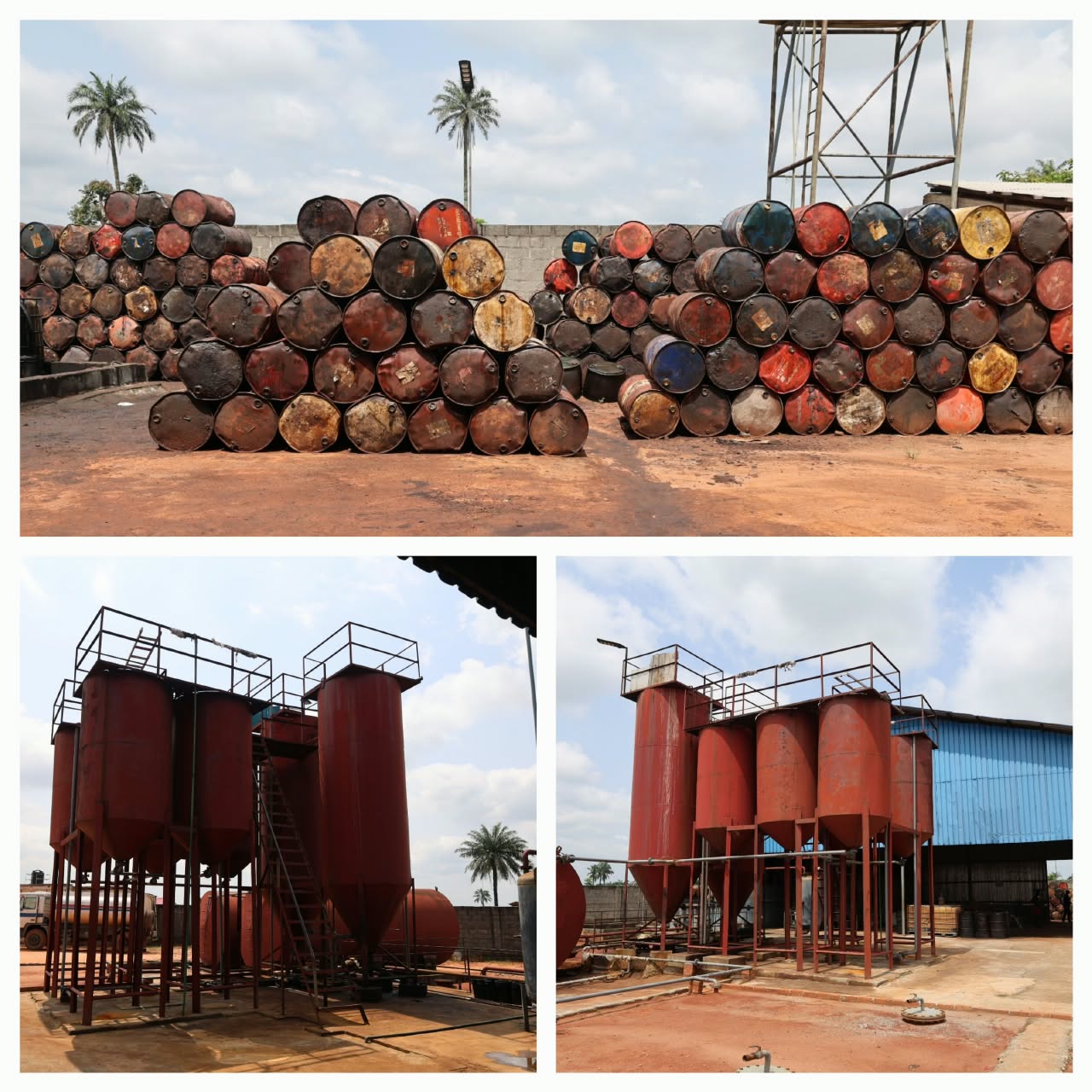
The Economic and Financial Crimes Commission (EFCC) says its operatives have uncovered an illegal oil refinery operated by Chinese nationals in the Ogere area of Ogun State.

According to a statement issued on Tuesday by the EFCC’s spokesperson, Dele Oyewale, the facility was discovered on Saturday, October 31, 2026, by operatives of its Lagos Zonal Directorate 2 following intelligence gathering and surveillance of the activities of illegal sludge oil refiners.

Oyewale said the facility was deserted when operatives stormed the premises, following an earlier crackdown on four illegal lithium processing plants in the area.

The operatives discovered waste products from the refining process and underground tanks suspected to have been used for heating and processing sludge oil.

According to the statement, “The Economic and Financial Crimes Commission uncovered an illegal oil refinery operated by Chinese in the Ogere area of Ogun State.

“The operation, conducted on Saturday, October 31, 2026, by operatives of the Lagos Zonal Directorate 2 of the EFCC, followed credible intelligence and surveillance by the Commission on the activities of the illegal sludge oil refiners.

See also  UPDATED: Nine killed, 15 injured in Oyo accident

“The refinery was found deserted when EFCC operatives stormed the premises, following the Commission’s earlier clampdown on four illegal lithium processing plants in the area. However, waste products from the refining process were discovered at the location.”

Oyewale said operatives also discovered underground tanks believed to have been used for heating and processing sludge oil.

“Two of the underground tanks inspected contained substances suspected to be Automotive Gas Oil (AGO), otherwise known as diesel.

“Preliminary investigations revealed that the operators sourced sludge oil, also known as black sludge, from Warri, Delta State, and Port Harcourt, Rivers State, and transported it to the illegal facility in Ogere for processing,” Oyewale added.

He said the operators subjected the sludge oil to intense heat, allowing lighter petroleum components to pass through chambers and filters in a process believed to produce diesel for sale in the Nigerian market.

“Personnel at the facility told EFCC operatives that the Chinese operators never disclosed their identities nor the name of the company behind the facility.

See also  Declare Miyetti Allah, bandits terrorists, leave Yoruba Nation agitators alone, OPU tells FG

“Consequently, operatives of the Lagos Zonal Directorate 2 of the EFCC have since taken over the premises as investigations continue to establish the identities of the operators, the ownership of the facility and the full extent of the suspected illegal activities and economic sabotage,” he added.

Continue Reading

News

Police bust high-tech indoor Cannabis farm in Lagos, arrest two suspects

Published

on

By

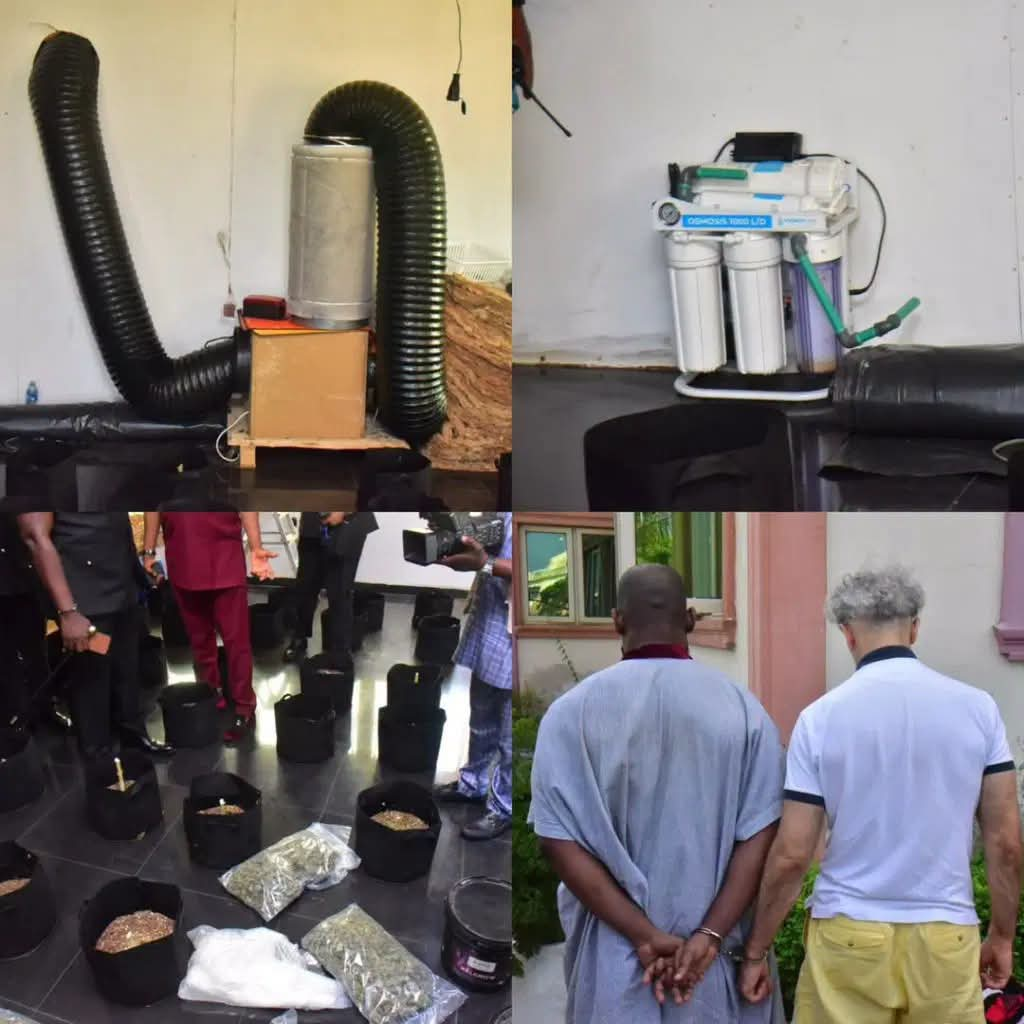
The Lagos State Police Command says its operatives have uncovered a suspected high-tech indoor cannabis farm at a residential property in the  Apapa,l area of the state.

The suspects are a 49-year-old Polish national and a 36-year-old Nigerian.

According to the police, the suspects are Thomas Razvickas and James Chisome, both of whom reportedly reside at the property where the facility was discovered.

The operation was carried out on November 2 at about 8:15 a.m., following credible intelligence received by police operatives, according to a statement issued on Tuesday by the Command’s Police Public Relations Officer, SP Abimbola Adebisi.

A search of the premises led to the discovery of a sophisticated indoor farming facility reportedly equipped for the cultivation, harvesting and processing of substances suspected to be cannabis.

The police said the two suspects had been taken into custody, adding that they had made confessional statements and were providing useful information to assist ongoing investigations.

See also  Powerful Lagos, powerless Osun State

The Commissioner of Police in Lagos State, CP Tijani Fatai, visited the scene to inspect the facility, assess the scale of the operation and receive a briefing on the investigation.

Fatai commended the operatives for their vigilance and intelligence-led policing, while reaffirming the Command’s commitment to tackling drug-related offences and dismantling criminal networks in the state.

He also appreciated members of the public for providing credible information and urged residents to sustain their cooperation with the police.

Continue Reading

News

Troops kill ISWAP commanders, two Arab fighters in Borno

Published

on

By


The gallant troops of the Nigerian Army have killed Abu Hajara, a high-profile member of the Islamic State West Africa Province (ISWAP) Shura Council, and Abul Walid, a prominent commander and close associate of Ba Shuwa, the group’s overall Wali (leader).

In astatement issued on Sunday, the acting media information officer of Operation Hadin Kai, Mohammed Goni, said that two other high-ranking Arab fighters were also killed during the engagement in Kukawa LGA of Borno state on October 31.

Goni said the attack came three days after troops killed 55 terrorists, including three key commanders.

“Combined troops of Joint Task Force deployed in Kukawa defeated massive ISWAP terrorists attack on their locations and troops utilised both ground and air assets from the air component,” the statement reads.

“Following the engagement, troops recovered scores of arms, ammunition and communication devices.

“The successful engagement further demonstrates the combat readiness, vigilance and superior firepower of Operation HADIN KAI troops in sustaining pressure on terrorist elements across the theatre.

See also  Major News Headlines In The Papers Today: Reverse your decision to stop Lagos-Calabar rail – Reps tell FG

“The attack on troops location at Kukawa comes barely 3 days after Buni Yadi attack where as at date 55 terrorists were neutralised including key commanders such as Ali Mandara Abba Gajiri (Munzir), Habu Ikkima Nakif Yana Faruk and Commander Gogore.”

Goni described the killing of the ISWAP fighters as a “significant blow to the leadership and operational capability” of the group.

Continue Reading

Trending News