Connect with us

News

National Assembly to translate laws into Yoruba, Igbo, Hausa

Published

on

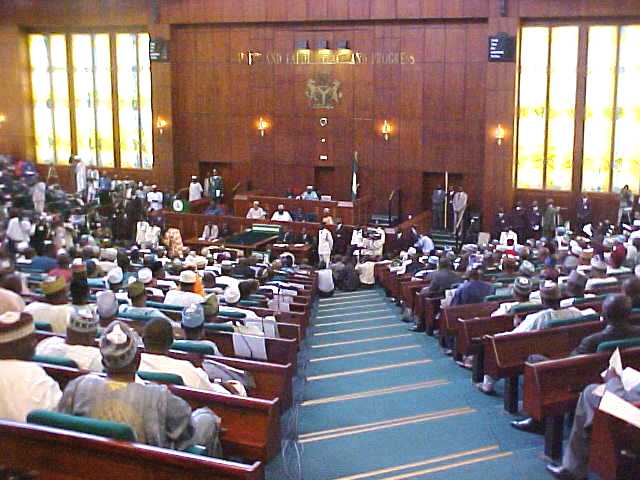
As part of plans to deepen the digitisation of parliamentary records, the National Assembly has concluded plans to translate Nigerian laws into Igbo, Hausa, Yoruba and other local languages to expand public access to legislative information.

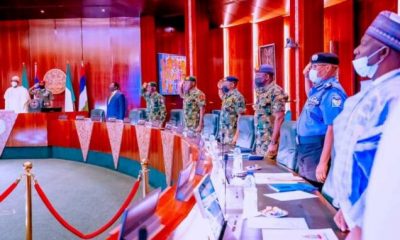
Executive Secretary, National Assembly Library Trust Fund, Mr Henry Nwawuba, disclosed this while declaring open the 2026 National Assembly Library Week in Abuja on Monday.

At the event was themed, “Parliamentary Memory: Connecting Records, Legislation and the People”, Nwawuba said the three-day programme was designed as an annual platform to promote legislative research, access to information and effective utilisation of the resources of the National Assembly Library.

He described the library as more than a collection of books, saying “it serves as the knowledge infrastructure of the legislature and a repository of parliamentary records.”

He said the library was working to ensure that lawmakers, legislative aides, researchers and other stakeholders had access to authoritative parliamentary records, including Order Papers, Votes and Proceedings, committee reports and Acts passed by the National Assembly.

Nwawuba said the Trust Fund was investing in electronic repositories and upgrading its e-library, while developing a National Assembly Library mobile application to make legislative information more accessible to lawmakers, staff members, researchers and members of the public.

He also announced plans for a Bills Tracker, which would enable users to follow bills and monitor their progress through the legislative process.

See also  Wife kills husband with hot water in Ogun

According to him, the library is developing infographics, audiovisual materials and video explainers to simplify bills, Acts and legislative procedures for Nigerians.

He said the planned translation of laws into local languages would broaden access to legislative information and enable more citizens to understand laws that affect their daily lives.

Nwawuba said the library would also organise public policy dialogues to deepen citizens’ participation in public hearings and create more opportunities for interaction among legislators, citizens, researchers and other stakeholders.

He added that the initiatives were aimed at addressing inconsistencies in official parliamentary documents and the circulation of fake or unauthorised copies of National Assembly records.

Senate President, Godswill Akpabio, urged lawmakers to make greater use of the library, particularly in an era of increasing misinformation, disinformation and the rapid development of artificial intelligence.

Akpabio, represented by Sen. Osita Ngwu, described the library as a critical link between evidence, knowledge and legislative decision-making and called for continued support for its development.

The Speaker of the House of Representatives, Abbas Tajudeen, represented by the House Leader, Prof. Julius Ihonvbere, said legislative records were essential to understanding Nigeria’s legislative history and strengthening democratic governance.

Tajudeen said the strength of a legislature should be measured not only by the laws it enacted, but also by how effectively it documented its activities, preserved institutional knowledge and made such information available to future generations.

See also  Military airstrikes neutralise 49 Boko Haram fighters in three camps in Sambisa

He said technology and artificial intelligence could improve legislative research, records preservation and access to information, but cautioned that their adoption must be guided by accuracy, security and professional judgment.

The Clerk to the National Assembly, Kamoru Ogunlana, said the National Assembly could not be truly independent if it lacked the capacity to generate, preserve, retrieve and authenticate its institutional knowledge and records.

Ogunlana said the library had an important role as a bridge between parliamentary records, legislation and the people, stressing that Parliament could not be fully transparent if its records could not be found, understood and trusted.

He identified the Order Paper, Votes and Proceedings and Hansard as key components of Nigeria’s democratic memory, explaining that the Order Paper provides the agenda for legislative business.

The Clerk warned against the circulation of incomplete, outdated, altered or unauthorised bills, Acts and other parliamentary documents, saying digital technology had made it possible for documents to be manipulated and circulated.

He stressed that the integrity of an Act depended not merely on the existence of a document, but on the ability to establish which version was authentic, which was authoritative and the legal process through which it emerged.

He noted that the continued widespread use of the Laws of the Federation of Nigeria, LFN 2004, highlighted the challenges of maintaining a current and authoritative consolidated body of federal legislation.

See also  Good morning! Here Are Some Major News Headlines In The Newspapers Today: 177 terrorists killed,233 arrested in one week – DHQ

He explained that the LFN 2004 reflected the laws covered by that revision exercise and was not automatically updated whenever a new Act was enacted.

Ogunlana said the National Assembly must also strengthen cybersecurity, digital preservation, secure authentication, access controls, backup systems and staff members’ training as parliamentary records became increasingly digitised.

He warned that while digitisation would make parliamentary information easier to access, search and disseminate, it could also expose records to cyberattacks, manipulation and impersonation of official sources.

The Clerk said digital platforms must therefore be accessible and secure, while electronic records must be available, authentic and traceable.

He said the National Assembly Library should evolve beyond being a repository where documents were kept to becoming an institution where parliamentary knowledge was preserved, authenticated and made accessible to lawmakers, researchers, journalists, civil society organisations, students and the wider public.

The President of the Nigerian Library Association, Dr Lawal Umar, called for sustained investment in libraries and modern information technology to improve access to legislative information, while urging stronger collaboration between the National Assembly and state Houses of Assembly.

The Secretary-General, Conference of Speakers of African Legislatures, Amb. Debo Oyewale, said African legislatures had much to learn from one another in building institutions capable of preserving legislative memory.

News

State police receives constitutional approval as 24 states’ houses of assembly approve bill

Published

on

By

The state police bill has met the constitutional requirements with approvals by 24 State Houses of Assembly.

The approvals have paved the way for the constitutional amendment, meeting the two-thirds threshold required for constitutional change and bringing the country closer to a dual policing system. 

This development clears a major constitutional hurdle in the Federal Government’s efforts to decentralise policing and establish state-controlled police formations alongside the existing federal police structure.

The Presidential Working Group on the National Policing Bill announced the development on Friday, describing the approval as a significant milestone in reforming Nigeria’s policing architecture.

In a statement signed by its Chairman and Chief of Staff to the President, Femi Gbajabiamila, the group said the Constitution (Sixth Alteration) Bill, 2026, had received the endorsement of 24 of the country’s 36 State Houses of Assembly, meeting the constitutional requirement for passage.

The group commended the state legislatures for supporting the reform, while also acknowledging the National Assembly for securing the passage of the amendment in both the Senate and House of Representatives.

See also  Updated: National Assembly passes N28.777 trillion 2024 budget

According to the statement, the successful ratification by the required number of state assemblies means the constitutional amendment can now be returned to the National Assembly for onward transmission to President Bola Ahmed Tinubu for assent.

“In line with Section 9 of the Constitution, the amendment can now be returned to the National Assembly for transmission to Mr President for assent”, the statement said.

The working group explained that, once the constitutional process is complete, the amendment would provide the legal foundation for the dual policing arrangement envisaged under the proposed National Policing Bill, 2026.

It noted that the constitutional breakthrough would strengthen efforts to establish a policing framework under which federal and state police institutions would operate within clearly defined constitutional and legal boundaries.

The group also said work on the accompanying legislation was progressing on schedule, with the draft National Policing Bill and related legislative proposals currently undergoing review and validation at the Federal Ministry of Justice.

See also  Good morning! Here Are Some Major News Headlines In Nigerian Newspapers Today: Tinubu not N’Assembly rejected me as ministerial nominee — El-Rufai

It said the Ministry was expected to conclude the exercise and return the draft bills to the working group on or before Friday, October 30, 2026.

Following the review, the group would give the proposed legislation final consideration before formally presenting the package to President Tinubu for further action.

“The Working Group’s efforts remain on track. The Federal Ministry of Justice is currently reviewing and validating the draft Bills and is expected to return them on or before Friday, 30th October 2026.

“Thereafter, the Group will give them final consideration before presenting them to Mr President”, the statement added.

The group called on  political leaders, security institutions, and other stakeholders to support the implementation process, stressing the importance of an orderly transition to a policing arrangement that can address the country’s security challenges more effectively.

“The Working Group urges all stakeholders to support a smooth transition to a dual policing system that makes Nigerians safer”, it stated.

See also  TB JOSHUA: Miracles will continue in Synagogue because his spirit remains here – Worshippers

The development marks a major step in President Tinubu’s push to establish state police as part of broader measures to strengthen internal security, improve local intelligence gathering, and bring law enforcement closer to communities.

The Presidential Working Group, chaired by Gbajabiamila, was constituted to develop the legislative framework for the proposed reform, including the National Policing Bill and consequential amendments required to accommodate the new policing structure.

The group had earlier submitted the draft National Policing Bill and 29 consequential bills to the Attorney-General of the Federation and Minister of Justice, Lateef Fagbemi, for legal review and validation.

Continue Reading

News

Fasoranti’s family announces burial date for late Afenifere leader

Published

on

By


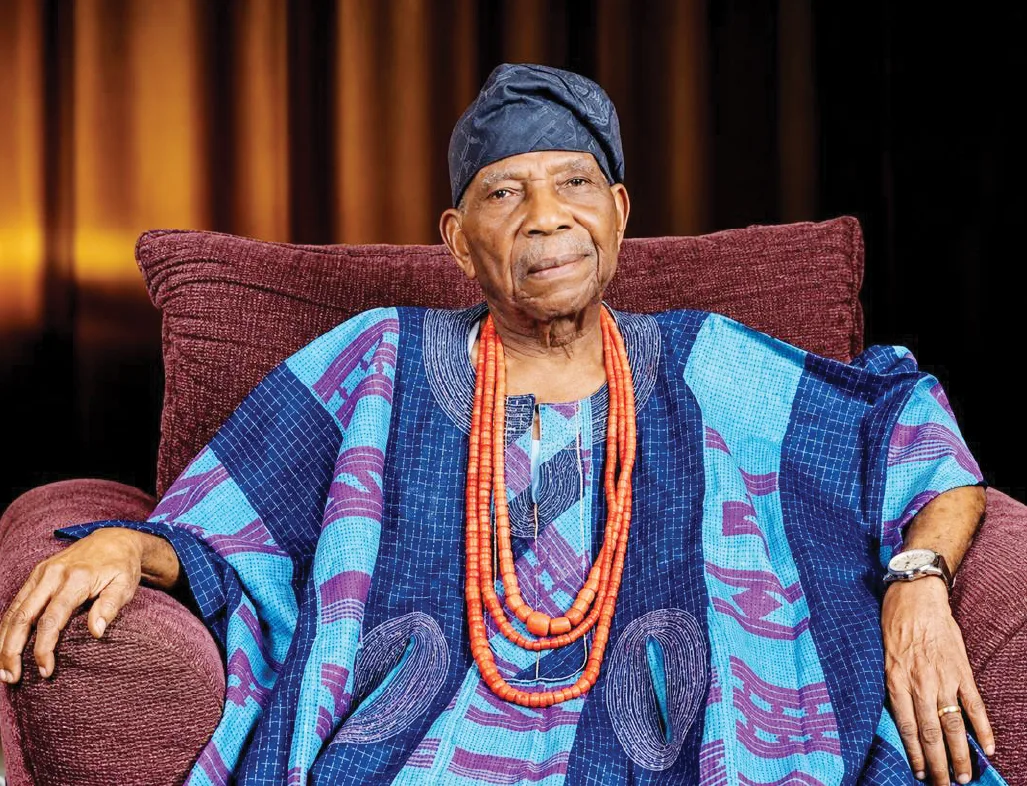
The family of Pa Reuben Famuyide Fasoranti, the late leader of the pan-Yoruba socio-political organisation, Afenifere,  has announced December 17, 2026, for the burial of the elder statesman, who died at the age of 100.

The burial arrangements were announced in a statement issued by Dr Taiwo Fasoranti on behalf of the family.

The family said the burial programme would begin with a Christian wake-keeping service on Wednesday, December 16, at the deceased’s residence in Akure, the Ondo State capital.

The funeral service and interment are scheduled for Thursday, December 17, at St. David’s Cathedral, Ijomu, Akure.

Fasoranti, a prominent Yoruba leader, nationalist and elder statesman, died at his residence in Akure on Tuesday.

His death has continued to draw tributes from  political leaders, associates and other Nigerians who acknowledged his contributions to the Yoruba nation and the country. 

According to the statement, the wake-keeping service will take place at the late patriarch’s residence within the Omolere Nursery and Primary School Compound, Akure.

See also  Good morning! Here Are Some Major News Headlines In The Newspapers Today: Tinubu may return Monday as race for National Assembly seats hots up

The statement said the funeral service would hold at St. David’s Cathedral, Ijomu, on Thursday, December 17, after which the remains of the deceased would be interred at the church cemetery.

It added that guests would be entertained at his residence immediately after the interment.

The family further announced that an outing and thanksgiving service would be held on Sunday, December 20, at St. David’s Cathedral, Ijomu, Akure, to conclude the burial programme.

Describing the deceased as a beloved patriarch, a foremost nationalist and a distinguished leader of Afenifere, the family said the burial arrangements were intended to honour his memory and celebrate his life of service.

The statement read, “The family of late Pa Reuben Famuyide Fasoranti, CFR, is pleased to announce the burial arrangements of our beloved patriarch, leader of Afenifere and foremost nationalist, who passed away at the age of 100 years.”

The family appealed to friends, associates, well-wishers and members of the public to support it with prayers and attend the funeral ceremonies in honour of the late elder statesman.

See also  Military airstrikes neutralise 49 Boko Haram fighters in three camps in Sambisa

“We request your prayers and presence as we honour the memory of a distinguished elder and patriot,” the statement added.

Continue Reading

News

NAFDAC uncovers suspected fake alcoholic  drinks storage facility in Lagos

Published

on

By

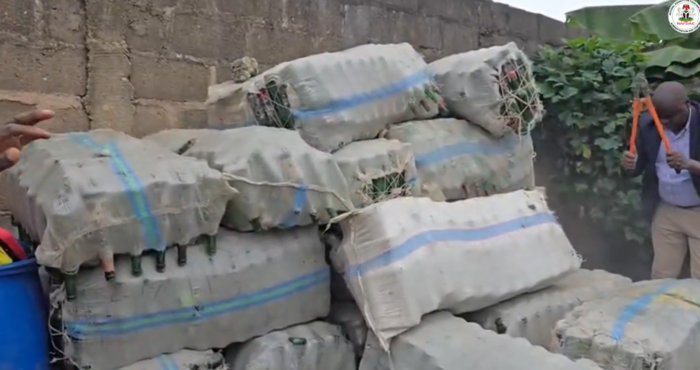
The National Agency for Food and Drug Administration and Control (NAFDAC) says its operatives have uncovered a facility used to store and distribute alcoholic drinks suspected to be intended for counterfeit production in the Agbado area of Lagos State.

Kunle Ojo, assistant director in the agency’s investigation and enforcement directorate, disclosed this in a video recorded during an enforcement operation at 322B Meiran Road, Agbado.

Ojo said the operation followed credible intelligence about suspected illicit activities at the location, which he described as a secluded residential area.

He said officials found different brands and sizes of alcoholic beverages, including products bearing the names of Royal Circle premium whisky, Action Bitters and Smirnoff, among others.

According to him, the products were allegedly being supplied to suspected counterfeiters for use in further production.
 

“We have credible intelligence that in this particular area, a very secluded area, where a lot of nefarious activities is taking place here. And that is why we are here this afternoon,” Ojo said, adding that the discovery of the products in a residential neighbourhood raised concerns about the activities taking place at the facility.

See also  Updated: National Assembly passes N28.777 trillion 2024 budget

“And like I said at the other side, this is residential area. And this is not acceptable to government, and we are here to safeguard the health of the nation,” he said.

The NAFDAC official urged Nigerians to report suspected cases of counterfeit products and other illicit activities to the agency’s offices.

“We are calling on all men and all women in Nigeria, please, when you see something taking place at your area, kindly notify the nearest NAFDAC office so that we can stop this menace, so that we can save our country from all these counterfeiters,” Ojo said.

Continue Reading

Trending News