Connect with us

News

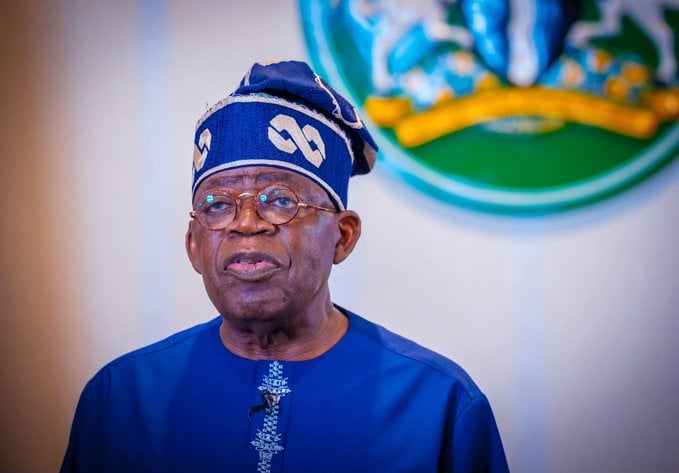
Xenophobic attacks: Tinubu refuses to meet with S’African special delegation, directs team to foreign affairs minister

Published

on

In the wake of the violent attacks on Nigerians and their businesses in South Africa, President Bola Tinubu has reportedly declined to receive a special delegation from South African President, Cyril Ramaphosa, instead directing the visiting team to meet with the Minister of State for Foreign Affairs, Ambassador Sola Enikanolaiye.

According to a report by PUNCH Online,
multiple credible Presidency sources with knowledge of the development confirmed that the delegation, led by South Africa’s Minister of International Relations and Cooperation, Ronald Lamola, had sought an audience with the President after arriving in Abuja on Friday.

Instead, Tinubu instructed them to engage with Enikanolaiye, who was appointed Minister of State for Foreign Affairs in June 2026 after Ambassador Bianca Odumegwu-Ojukwu was elevated to the substantive ministerial position following the exit of Yusuf Tuggar.

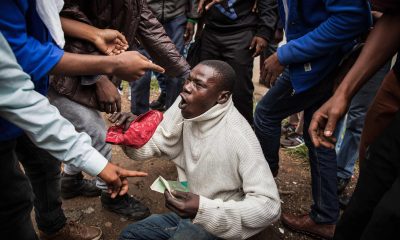
This is coming following a diplomatic row between both countries over renewed xenophobic attacks targeting Nigerians and other African nationals in South Africa, which forced the evacuation of nearly 600 Nigerians back home.

Punch quoted Presidency source as saying, “They actually came here on Friday wanting to see the President. But there was no prior notice.

“And we said we can’t just allow you to see the President without first asking him if he is available. So we asked, and the President said they could come on Monday.

“But when Monday came, he simply said they should go and meet the Minister of State for Foreign Affairs, Ambassador Enikanolaiye, and whatever they discuss, the Minister would come and brief him.”

A second source confirmed the President’s decision, saying, “I just confirmed it. He is not seeing them. The meeting is not happening.”

See also  Nigeria set to repatriate over 1,000 nationals from South Africa as violence continues

A third Presidency official added, “We don’t have that on the schedule today.”

The South African delegation reportedly remained in Abuja throughout the weekend after arriving on July 24, carrying a message from Ramaphosa.

Sources further disclosed that the Minister of Foreign Affairs, Ambassador Bianca Odumegwu-Ojukwu, who is attending official engagements in Addis Ababa, had advised that it was not an appropriate time for the President to personally receive the South African delegation while attacks on Nigerians and their businesses were still ongoing.

Receiving the South African delegation in Abuja, Enikanolaiye said Tinubu directed him to engage the envoys on resolving the crisis, stressing that the longstanding relationship between Nigeria and South Africa should not be undermined by attacks on African migrants.

“It is with profound pleasure that I welcome our brothers from South Africa. President Bola Ahmed Tinubu had actually asked us to meet with you and exchange views and perspectives on how to address and resolve the ongoing Afrophobic attacks in South Africa, of which Nigerians, and other citizens of Africa, have been victims,” he said.

The minister lamented the recurring attacks on Nigerians, recalling that such incidents had persisted for decades.

“We have seen a pattern emerge as early as 1995, 1998, 2006, 2015, 2016, 2019, 2021, 2024 and 2026. It is on record that from 2022 alone, 98 Nigerians have died in mob actions, in hate-related actions that we have called Afrophobia, because we found that the preponderant victims of this ugly situation are Africans and Nigerians in particular,” he said.

Enikanolaiye recalled Nigeria’s role in supporting South Africa’s liberation from apartheid and said the violence was inconsistent with the relationship both countries had built over the years.

See also  Troops neutralise 45 terrorists, releases 45 kidnapped victims in two weeks in North-west, North-central – DHQ

The minister stressed that while Nigeria does not support criminality, anyone accused of committing offences should face due process rather than mob violence.

“If someone is, quote-unquote, a criminal for drug trafficking, there are rules, there are regulations for when they are arrested, prosecuted, and jailed. The Nigerian government will not support drug peddlers, but please, what we’re saying is that treat them in accordance with your constitution, in accordance with international human rights instruments, in accordance with the minimum requirement of humanity.

“But what we have found is that this xenophobic act has gone beyond the attack on criminals. We have records of Nigerians who have a legitimate purpose to remain in South Africa, yet they have been attacked.

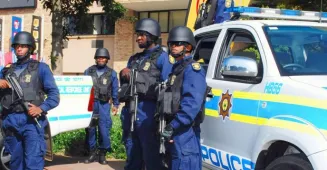
“We could see some mob actions, where we saw the police watching, as if they are helpless to address this situation, which to us raises issues of state responsibility. It raises issues of complicity. If the state authorities are not able or unwilling to tackle these challenges,” he said.

He described the humanitarian impact of the attacks as devastating, recalling the evacuation of nearly 1,500 Nigerians from South Africa.

“The last batch of evacuees we moved from there, we had almost 1,500 of our nationals. It was not a pleasant experience. I shed tears in the plane when I saw children, women, the elderly returning home almost with nothing. Some of them, their properties have been looted. Some of them have been destroyed,” he said.

See also  Presidency slams Ortom over claim FG asked troops to spare criminal herders

Responding, Lamola said Ramaphosa had sent him as a special envoy to deliver a message to Tinubu and reaffirm South Africa’s opposition to xenophobia and other forms of intolerance.

“We have been outspoken against any intolerance, including xenophobia, racism, homophobia, violence, discrimination directed at individuals within our borders,” Lamola said.

He, however, maintained that South Africa would continue enforcing its immigration laws and addressing criminal activities.

“President Ramaphosa has also been very firm on South Africa’s sovereign right to enforce immigration laws, including to deal decisively with irregular migration, undocumented immigrants, including acts of criminality that is sometimes committed within our borders,” he said.

Lamola added that migration remained a continental challenge requiring joint solutions.

“We believe that Nigeria and South Africa have a shared responsibility to respond to these challenges within the African continent of migration. Across the continent, migration remains a huge challenge that all of us have to work together to address,” he said.

He expressed optimism that the Abuja meeting would strengthen bilateral engagement and help both countries resolve the crisis through sustained dialogue.

Relations between Nigeria and South Africa have deteriorated in recent weeks following a wave of xenophobic violence that erupted in April 2026 across several South African provinces.

The crisis prompted Tinubu to approve five Air Peace evacuation flights after more than 1,000 Nigerians registered for voluntary repatriation. Nigeria also warned that retaliatory diplomatic measures remained an option, while the House of Representatives recommended the suspension of business permits for South African companies operating in Nigeria and the Senate dispatched a delegation to Pretoria to register the country’s displeasure.

News

EFCC says it froze Osun account over ‘fraudulent handling’ of N11bn ecological, intervention funds

Published

on

By

The Economic and Financial Crimes Commission (EFCC) has explained that it froze the bank account of the Osun state government over alleged fraudulent handling of N11 billion ecological and intervention funds.

The anti-graft agency, in a statement on Wednesday, said it has been investigating the Osun state government since March regarding the alleged mishandling of the funds.

According to the agency, some officials of the state government, including the accountant-general of the state, had been interviewed by EFCC investigators.

The agency said amid the probe, it observed that huge transfers of funds were being made from the account into different corporate entities since August 2.

“These ongoing investigations of the state government would not have warranted any placement of Post No Debit order on its account but for the precipitate and unwarranted movement of funds from the accounts to different suspicious accounts since August 2, 2026,” the statement reads.

See also  Some Prophets see nothing, by Femi Adesina

“The Commission noticed huge transfers of funds into different corporate entities and had to swiftly halt the trend by freezing the accounts from which such heavy funds are being moved.

“The EFCC’s preventive mandate is a public-inclined framework of safeguarding public funds, assets and resources.

“The Commission cannot watch idly while a state government’s account is being pillaged.”

The anti-graft agency said it is aware of the forthcoming Osun governorship election, adding that it is “uncharitable” to overlook the huge transfers of funds over the “excuse of an upcoming election”.

“The Osun State government account was frozen to save public funds from being looted,” the agency said.

In a letter dated August 5, 2026, and signed by Adenike Babalola, assistant commander of the EFCC on behalf of the director of investigation, the anti-graft agency directed First Bank not to allow withdrawals from the Osun state government’s statutory allocation account as part of an ongoing investigation.

See also  Troops neutralise 45 terrorists, releases 45 kidnapped victims in two weeks in North-west, North-central – DHQ

The agency instructed the bank to place a post-no-debit restriction on the account pending the conclusion of the probe.

Reacting to the development, Ademola Adeleke, Osun governor, said the state government will not accept a situation in which federal government agencies trample upon the rights of subnational governments.

Adeleke said the Osun government has been witnessing numerous sponsored attacks, including the harassment of Accord party members and the move to stall the operations of LGAs in the state.

Adeleke said he has directed the attorney-general of the state to challenge the “illegality”.

Continue Reading

News

Osun threatens lawsuit as EFCC freezes govt account 10 days to election

Published

on

By

Less than 24 hours after Governor Ademola Adeleke alleged that the Economic and Financial Crimes Commission (EFCC) was planning to freeze the state government account domiciled with First Bank, the anti-graft agency has reportedly freezed the account, according to Vanguard.

The account, reportedly used for the payment of workers’ salaries, was placed on “Post No Debit” status by the anti-graft agency.

The development came hours after Governor Ademola Adeleke raised the alarm that the EFCC was planning to freeze the state government’s accounts and those of top government officials ahead of the August 15 governorship election.

In a statement issued earlier on Wednesday by the Commissioner for Information and Public Enlightenment, Kolapo Alimi, Adeleke described the alleged move as an attempt to cripple government activities before the poll.

The governor had insisted that there was no legal basis for freezing the accounts of a state government, arguing that the EFCC lacked the statutory powers to take such action.

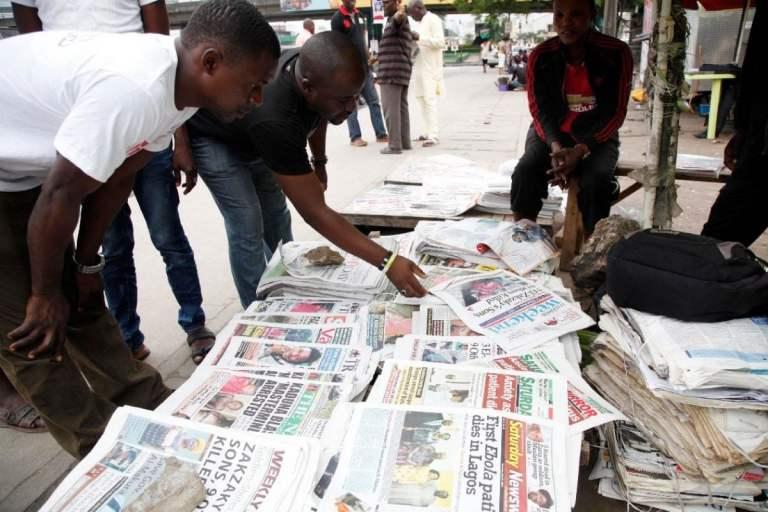
See also  Good morning! Nigerian Newspapers Headlines: S’Africa: FG demands protection after two Nigerians killed

However, a source reportedly told Vanguard that the account had already been restricted.

“I can confirm that the state government account has been frozen by the EFCC. It is no longer an allegation. The governor will address the press shortly to update the public on the situation,” the source reportedly told Vanguard.

The reason for the restriction was not immediately known as of the time of filing this report.

The EFCC had yet to issue an official statement on the development.

The development comes as Osun prepares for its August 15 governorship election, with the account restriction expected to generate political reactions ahead of the poll.

Meanwhile, the state’s Attorney General and Commissioner for Justice, Oluwole Jimi-Bada, had said he has the mandate of the governor to sue the Economic and Financial Crimes Commission for freezing the government accounts.

Jimi-Bada said a ‘Post no debit’ letter from the EFCC was forwarded to the management of the First Bank where Osun government accounts were domiciled on Wednesday.

See also  More than 60, including children killed in South Africa building fire

The commissioner, who expressed readiness to proceed to court, said the move by the anti-graft agency may hamper government’s business, noted that Governor Ademola Adeleke was not using state funds to run its campaign for reelection.

“I have the mandate of the governor to proceed to the Federal High Court to challenge this move. EFCC can investigate the accounts but it can’t freeze the accounts without order of court.

Continue Reading

News

WAEC releases 2026 WASSCE results, withholds 167,486 candidate’s results over malpractice 

Published

on

By

The West African Examinations Council says it is withholding the results of 167,486 candidates, representing 8.59 per cent of those who sat the 2026 Computer-Based West African Senior School Certificate Examination for School candidates, over alleged examination malpractice.

This was disclosed by the Head of WAEC Nigeria National Office, Dr Amos Dangut, who announced the release of the results in Lagos on Wednesday.

The number of withheld reults, however, represents a decline from the 9.7 per cent recorded in 2025.

Dangut said the council withheld the affected results due to various infractions, including the increasing use of mobile phones in examination halls despite the existing ban and organised cheating in some schools.

“The increasing use of cell phones in the examination hall, in spite of the existing ban, and organised cheating in some schools, are other nagging issues,” Dangut said.

He added that some supervisors and invigilators found assisting candidates in malpractice had been arrested and would face disciplinary action through the relevant state ministries of education.

See also  Good morning! Nigerian Newspapers Headlines This Thursday morning: Abduction crisis: Tinubu declares emergency as NASS rejects bandit negotiations

A total of 1,959,668 candidates from 24,207 schools registered for the examination across Nigeria, Benin Republic, Côte d’Ivoire and Equatorial Guinea, while 1,950,726 candidates eventually sat for the examination.

1,200,514 candidates (61.54 per cent) obtained credits and above in at least five subjects, including English Language and Mathematics.

1,687,378 candidates (86.50 per cent) secured credits and above in a minimum of five subjects, with or without English Language and Mathematics.

The number of candidates who obtained credits in five subjects including English and Mathematics dropped by 1.42 percentage points compared with the 2025 examination.

Of the 1.2 million candidates who achieved credits in English and Mathematics:

558,883 (28.65 per cent) were male.

641,631 (32.89 per cent) were female.

Overall, 997,267 females (51.12 per cent) and 953,459 males (48.88 per cent) participated in the examination.

WAEC said 1,834,695 candidates, representing 94.05 per cent, had their results fully processed and released, while the results of 116,031 candidates (5.95 per cent) were still being processed.

See also  Some Prophets see nothing, by Femi Adesina

The council also disclosed that 1,213 candidates with special needs participated in the examination. They included:

137 visually impaired candidates;

491 candidates with hearing impairment;

55 spastic and mentally challenged candidates; and

41 physically challenged candidates.

The 2026 examination marked the second edition of the Computer-Based WASSCE for School Candidates, following the introduction of the format by WAEC.

Dangut said the council introduced several innovations, including the Digital Examiner Mark System to improve the speed of processing results, serialisation of question papers to curb malpractice, and a new portal that allows candidates to generate e-PINs directly for checking their results.

The examination was conducted between April 24 and June 19, 2026, with 102,708 examiners involved in marking across 88 marking venues.

Dangut, who described the briefing as his third and final engagement as WAEC Nigeria National Office head, said candidates sponsored by states indebted to the council would not have their results released until the outstanding payments were cleared.

See also  "I run fast' — Adeboye says no amount of anointing can fight sexual temptation

Continue Reading

Trending News