1. The leadership of the Nigeria Democratic Congress (NDC) has distanced itself from the 59-member presidential campaign council constituted by OK Movement, a support group for Peter Obi, presidential candidate of the party, and his running mate, Rabiu Musa Kwankwaso.
In a statement on Saturday, Cleopas Moses, NDC national chairman, said the list did not emanate from the party and should be disregarded.
2. Former Senior Special Assistant Media and Publicity to the late President Muhammadu Buhari, Mallam Garba Shehu, said yesterday that the litigation instituted against Nigeria by Sunrise Power and Transmission Company at the International Chamber of Commerce (ICC) tribunal in Paris was doomed from the outset.
Garba, who personally attended the January 15, 2025 sitting of the tribunal in the French capital, said it was clear from day one that Sunrise and its promoter Leno Adesanya “would lose this case following the failure of all the witnesses they invited, including, of course, a beautiful lady from Senegal allegedly providing comfort to one of their government contacts.
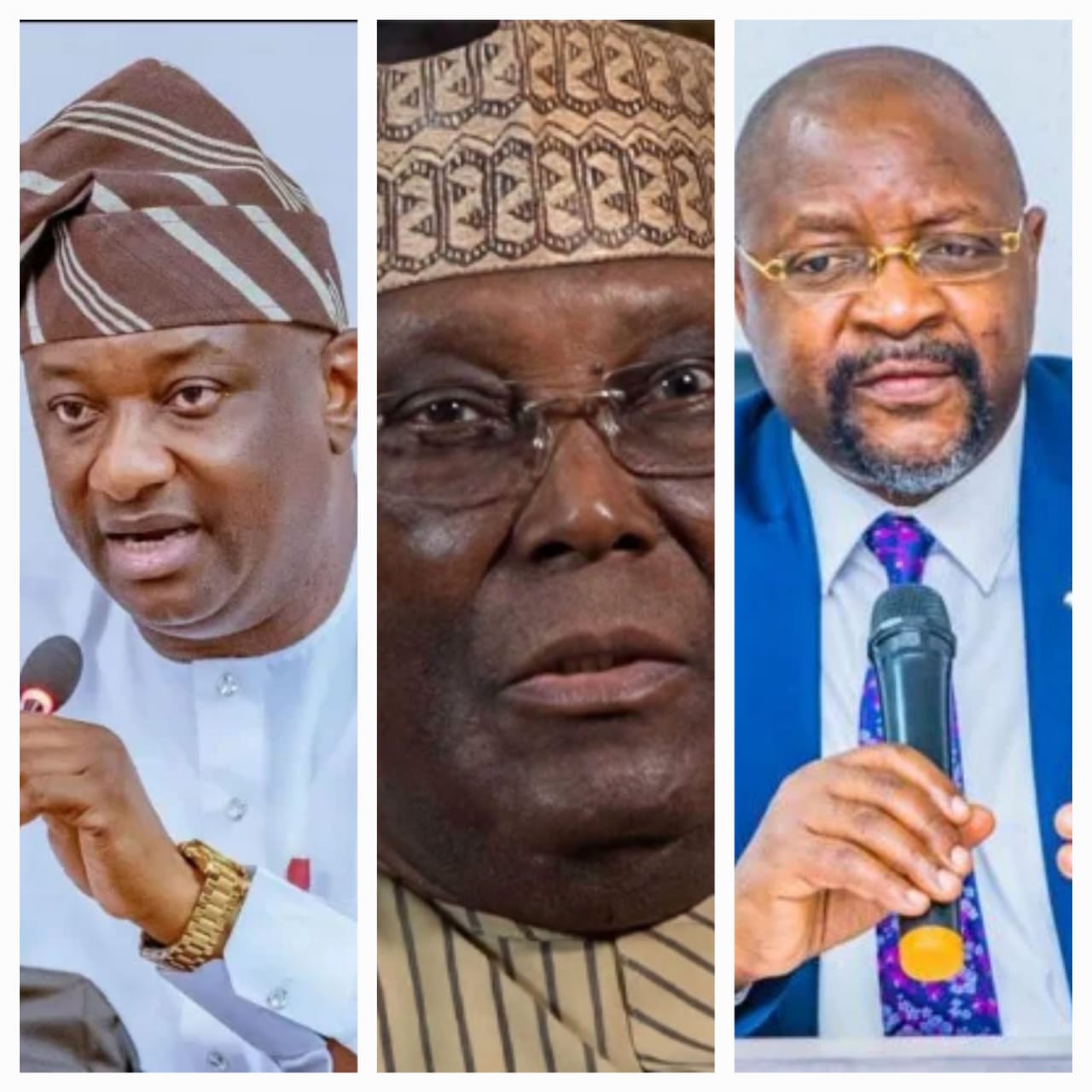
3. The Presidency yesterday knocked back economic proposals by the presidential candidate of the African Democratic Congress (ADC), Alhaji Atiku Abubakar. It asked him to take the proposals to Nigerians on his campaign trail rather than seeking to dictate how President Bola Tinubu should govern the country.
4. The Nigeria Hydrological Services Agency (NIHSA) has forecast a high risk of riverine flooding across 15 states between September 19 to 25.
In its national flood advisory issued on Friday, the agency said rising river levels could trigger flooding in communities located on floodplains during the seven-day period.
The affected states are Imo, Cross River, Ebonyi, Benue, Anambra, Akwa Ibom, Lagos, Rivers, Edo, Kogi, Taraba, Delta, Bayelsa, Enugu and Abia.
5. Delta State Police Command has arrested a suspect after its personnel intercepted a vehicle conveying military camouflage uniforms, boots and hats, as well as cartons of suspected Tramadol and other illicit drugs. The vehicle, a green Toyota Sienna with registration number KP 527 AAA, was intercepted by operatives of the command’s Anti-Cult Unit, Asaba, along the Onitsha-Ondo route on Friday.
6. Police in Rivers State have begun an investigation into the killing of a father of four, Kamadioye Krama, by gunmen in Emulation community, Abua/Odual Local Government Area. The spokesperson for the State Police Command, Blessing Agabe, confirmed the incident, stating that an investigation was ongoing to apprehend the culprits and bring them to book.
7. President Bola Tinubu has said that, from October 1, commuters across Nigeria must begin to see measurable reductions in transportation fares, as he has directed all 36 states to accelerate the National Affordable CNG Transit Programme. In a statement personally signed and released on Saturday, September 19, Tinubu said the push followed his August 27 meeting with state governors.
8. The Nigeria Security and Civil Defence Corps, NSCDC, has deployed Abdulhamid Kabara as the new commandant of its Niger State Command following the deaths of 37 suspected illegal miners in custody. Kabara replaces Suberu Aniviye, who was suspended as Niger NSCDC commandant after the 37 suspects died in Minna, the state capital, on Thursday.
9. The Northern Senators Forum on Saturday called for an immediate, transparent and independent investigation into the deaths of 37 young Nigerians in the custody of the Nigeria Security and Civil Defence Corps, NSCDC, in Minna, Niger State. It described the circumstances surrounding the occurrence as “deeply disturbing and unacceptable.”
10. The Minister of Interior, Olubunmi Tunji-Ojo, has suspended the Niger State Commandant of the Nigeria Security and Civil Defence Corps (NSCDC), Suberu Aniviye, and 20 other officers following the deaths of 37 suspected illegal miners in the Corps’ custody. The officers were suspended pending the outcome of an independent investigation into the deaths, which occurred on Thursday, September 17, 2026. The Ministry of Interior announced the development in a statement signed by Tunji-Ojo on Saturday








 News4 years ago
 Privacy5 years ago
 News5 years ago

 News5 years ago
 Opinion5 years ago
 News5 years ago
 Sports5 years ago