Connect with us

News

Third anniversary: Reforms yielding fruits, says Tinubu

Published

on

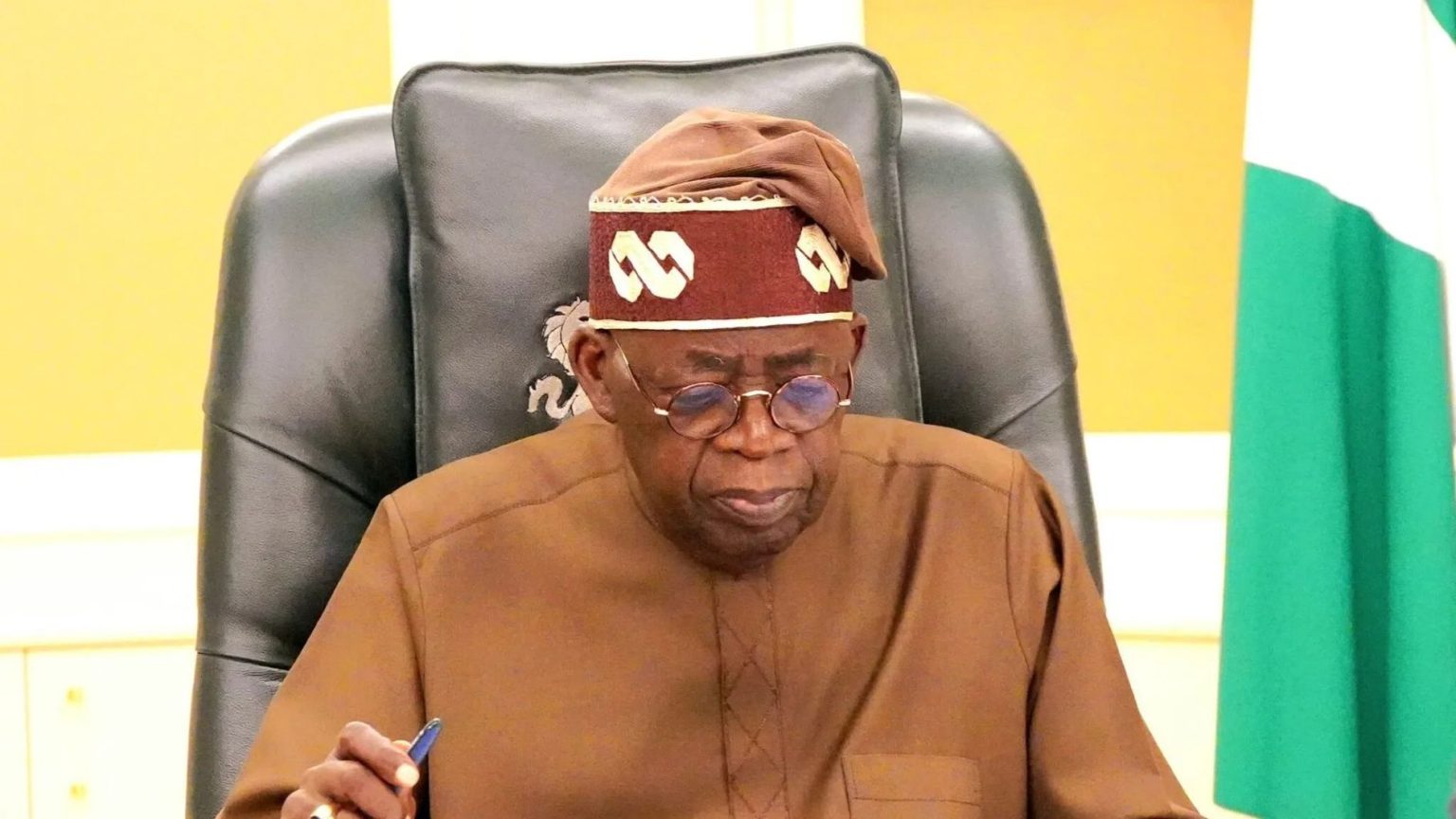
President Bola Tinubu has appraised his three-year administration, saying that Nigeria has stabilised economically and is “moving forward again.”

Presenting his administration’s three-year scorecard, the President, while admitting taking over leadership at one of the most difficult periods in the nation’s history, said the tough economic reforms undertaken since 2023 were necessary to prevent fiscal collapse, worsening poverty and economic uncertainty.

Tinubu said that when his administration came into office on May 29, 2023, Nigeria faced mounting fiscal pressures, unsustainable fuel subsidy payments, declining revenues, exchange-rate distortions, rising debt-servicing obligations, insecurity and declining public confidence in institutions.

The President said: “At the height of the subsidy regime, Nigeria was spending as much as N18.4 billion daily to sustain petrol subsidies – over N4 trillion in 2022 alone – resources that could have been invested in roads, healthcare, education, housing and critical infrastructure.”

The President added that the multiple exchange-rate windows inherited by his administration created distortions that cost Nigeria more than N8 trillion in three years through speculative and rent-seeking practices.

He noted that the situation required “urgent and courageous action,” stressing that his administration chose “reform over ruin and decisiveness over hesitation.”

“The easy choices would have been politically convenient. But leadership demands courage, especially when the right decisions are difficult,” he said.

See also  Good morning! Here Are Some Major News Headlines In The Newspapers Today: Tinubu sacks FCCPC, BPE chief executives

Tinubu acknowledged the hardship that followed the reforms, particularly rising living costs, pressure on households and businesses, and growing unemployment concerns among youths.

“I remain deeply conscious of those sacrifices, and I assure you: your sacrifice has not been in vain,” he told Nigerians.

The President, however, maintained that the reforms had begun yielding positive results across key sectors of the economy.

“Our economy is now more competitive and better positioned for sustainable growth than it was in 2023.

“Public finances are improving. States and local governments have greater resources to invest in their people. Investor confidence is growing,” he said.

He said the Nigerian stock market had witnessed unprecedented growth, with the All Share Index rising from 53,000 in 2023 to 250,000 in 2026, while market capitalisation increased from N30 trillion to N160 trillion.

“Companies are declaring record profits and dividends,” the President added.

Highlighting ongoing infrastructure projects across the country, Tinubu said more than 2,700 kilometres of highways and major roads were under construction, reconstruction or rehabilitation.

He listed some of the projects as the Lagos-Calabar Coastal Highway, Sokoto-Badagry Super Highway, Abuja-Kaduna-Zaria-Kano Road, East-West Road and several rural access roads.

According to him, many sections of the projects are nearing completion and are already improving transportation, reducing travel time, enhancing regional trade and creating jobs.

See also  Defamation: Court orders Natasha to pay Yahaya Bello N1bn

He further said the ongoing nationwide rail modernisation projects would improve connectivity, logistics and economic integration.

In the oil and gas sector, Tinubu said reforms introduced by his administration had restored investor confidence and attracted billions of dollars in fresh investments from international oil companies.

He hinted that the $5 billion NLNG Train 7 project was nearing completion and would boost Nigeria’s LNG production capacity, exports and earnings.

According to the President, Nigeria’s local refining capacity had improved considerably through large-scale and modular refineries, reducing dependence on imported petroleum products and conserving foreign exchange.

On power, Tinubu admitted that the sector had suffered years of debt, underinvestment and uncertainty, but assured Nigerians that his administration was confronting the challenges directly.

He said the government was clearing legacy obligations, expanding transmission infrastructure, investing in renewable energy and strengthening the national grid.

“No modern economy can grow in darkness. When power improves, businesses expand, industries grow, jobs are created, and families prosper,” he said.

The President reiterated his administration’s commitment to industrial growth and economic expansion through improved energy supply.

Tinubu also outlined his administration’s interventions in agriculture, education, housing and healthcare aimed at improving citizens’ welfare.

See also  FG bans Individuals with honorary degree from using ‘Dr’ title

He explained that millions of farmers had benefited from improved seedlings, fertilisers, mechanisation, irrigation support and expanded access to finance and markets.

“We are opening new agricultural corridors to create jobs, strengthen supply chains and reduce pressure on household incomes,” he said.

On education, Tinubu explained that the Nigerian Education Loan Fund (NELFUND) had provided over 1.5 million students access to higher education, disbursing more than N282 billion to beneficiaries.

The President said the Renewed Hope Housing Programme and projects by the Federal Housing Authority were delivering over 10,000 housing units across 14 states and the Federal Capital Territory.

The projects, he noted, had created more than 300,000 jobs, while major Renewed Hope Cities in Abuja, Lagos and Kano were progressing steadily.

He also said the consumer credit initiative, CREDICORP, was opening new economic frontiers for workers and families.

In the healthcare sector, Tinubu stated that thousands of primary healthcare centres were being revitalised while health insurance coverage was being expanded for vulnerable Nigerians.

The President further explained that his administration had taken decisive steps to stabilise the telecommunications sector, describing digital infrastructure as critical to national productivity and competitiveness.

News

Insecurity: Eliminate terrorists within 90 days or resign, Adeboye tells service chiefs

Published

on

By

The general overseer of the Redeemed Christian Church of God (RCCG), Pastor Enoch Adeboye, has asked Nigeria’s security chiefs to eliminate terrorists within 90 days or step down.

In a video posted on the church’s X handle on Tuesday, Adeboye urged the Federal Government to act swiftly in addressing the country’s security challenges.

“If I were asked to make suggestions, I would say quietly to our government, move fast. And tell our security chiefs, get rid of these terrorists within 90 days, or resign,” Adeboye said.

The cleric noted that religious leaders can only offer advice to political authorities, and that the final responsibility rests with the commander-in-chief.

Adeboye said he advised late President Muhammadu Buhari who gave security chiefs a similar deadline to tackle Boko Haram, but that the directive was not fully achieved within the timeframe.

In 2021, Buhari ordered the then service chiefs to “take out” bandits, kidnappers, and their sponsors.

See also  NUC approves more postgraduate programmes for Atiba varsity

The late president said the armed forces should be more proactive rather than reactionary.

Adeboye said the former president acted on the advice by issuing the directive to security chiefs, but failed to enforce it after the deadline elapsed.

“He ran with that advice, but he didn’t follow it through. Because he gave the order as the commander-in-chief of the armed forces.The three months went, and the work was not done,” he said.

The RCCG general overseer said he later questioned the former president over his decision not to act after the deadline passed, but declined to give details of their conversations.

He called on the current government to ensure that any directive given to security chiefs goes beyond neutralising terrorists to also targeting those who finance and support them.

“When giving orders to the service chiefs this time around, we should make it clear to them that they are not only to eliminate the terrorists, they should eliminate their sponsors, no matter how influential they may be,” Adeboye added.

See also  Abductions: Gbajabiamila, Ribadu lead presidential delegation to Ogbomoso as Tinubu deploys ‘specialised security unit’ to rescue victims

His comments come amid renewed concerns over insecurity across the country, following a series of kidnappings, attacks on communities and abductions of students in recent months.

On May 15, some gunmen attacked two schools in Ogbomoso, Oyo state abducting dozens of pupils and teachers. One of the teacher would later be beheaded in a viral video circulating online.

Following the abduction, President Bola Tinubu directed the deployment of a “specialised security unit with advanced rescue capabilities” to intensify efforts to secure the release pupils and teachers.

The abduction adds to a string of similar incidents recorded across the country in recent months.

Continue Reading

News

Bandit leader Kachallah contacts abducted army General’s family, seeks release of gang members

Published

on

By


A notorious bandit leader, Kachallah Muhammad, has reportedly established communication with relatives of the abducted retired senior military officer, Major General Rabe Abubakar Batsari.

According to reports by Daily Trust, the bandit kingpin, who operates in parts of Katsina State, opened a line of communication with the family of the retired General on Monday morning.

The retired Major General and his wife were reportedly abducted on Saturday in Katsina State.

Their vehicle was ambushed along the Marabar Musawa–Kafinsoli Road in Matazu Local Government Area by gunmen, who, according to witnesses, emerged from hiding, blocked the road and opened fire on the vehicle, forcing it to a halt before abducting the retired officer and his wife into a nearby forest.

The road, according to residents of the area, is unsafe due to repeated bandit attacks.

A senior local government official in Batsari, who spoke on condition of anonymity due to security concerns, confirmed to our correspondent that he personally spoke with the abducted officer during the conversation facilitated by the bandit leader.

See also  Nigerian convicted for armed robbery, illicit drug trade in US faces deportation

“I spoke with Major General Rabe through Kachallah Muhammad. He told us that he is hale and hearty and that his wife is also fine,” the official said.

According to the source, the retired general assured his family and associates that they are being adequately taken care of by their captors, a development that has somewhat eased anxiety among relatives and residents of the area.

The official further disclosed that during the interaction, Kachallah Muhammad made his demands clear, insisting on the release of his relatives, allegedly being held by Nigerian security authorities.

“He said what he wants is the immediate release of his relatives in government custody,” the official added.

The bandit leader, the source said, also expressed willingness to return to negotiations, indicating openness to dialogue aimed at restoring peace in Matazu and other areas under his influence.

“He said he is ready to go back to the negotiation table to achieve peace in Matazu and neighbouring communities,” the official said.

See also  Falling diesel prices can help bring inflation down - Dangote

Continue Reading

News

FG cancels three-month pre-retirement leave for civil servants

Published

on

By


The Federal Government has directed ministries, departments, and agencies (MDAs) to stop placing civil servants on a mandatory three-month pre-retirement leave.

According to reports, the directive is contained in a circular titled ‘Correct Interpretation of Public Service Rule 120243 on Pre-Retirement Activities’, issued by Didi Walson-Jack, head of the civil service of the federation.

The circular, addressed to ministers, permanent secretaries, service chiefs, heads of agencies, and other senior public officials, said the Public Service Rules (PSR) do not provide for a compulsory three-month leave before retirement.

Walson-Jack said several MDAs had misconstrued the three-month retirement notice period as an automatic leave entitlement, resulting in officers being withdrawn from service before their official retirement dates.

According to her, Rule 120243 only requires officers approaching retirement to give three months’ notice, attend a one-month pre-retirement workshop or seminar, and use the remaining period to reconcile service records and complete pension documentation.

See also  JAILED FOR LIFE: Infamous billionaire kidnapper, Evans guilty, sentenced to life imprisonment

“The so-called mandatory three-month pre-retirement leave has no basis in the Public Service Rules,” the circular reads.

“A retiring officer must give three months’ notice before the effective date of retirement. This is a notice requirement, not a leave entitlement.”

Walson-Jack noted that officers remain in active service throughout the notice period and are expected to continue performing their official duties unless they are attending an approved pre-retirement programme or are absent under existing leave provisions.

“PSR 120243 does not exempt retiring officers from official duties during the notice period, except where they are attending an approved pre-retirement workshop or seminar, or are otherwise authorised to be absent under extant leave rules,” Walson-Jack was quoted in the circular as saying.

She directed all MDAs to stop compelling retiring officers to vacate their positions before their official retirement dates.

Under the new directive, retiring officers are to continue discharging their responsibilities while participating in approved retirement programmes and completing all documentation required for pension processing.

See also  National Convention: APC govs insist on February, pass confidence vote on Buni

The head of service said the move is aimed at ensuring uniform implementation of the Public Service Rules across government institutions and preventing the loss of experienced personnel through premature disengagement.

The circular also directed permanent secretaries, directors-general, executive secretaries, chairpersons of statutory agencies, and chief executives of government organisations to ensure strict compliance.

The federal civil service retirement framework, governed by the Public Service Rules and the Pension Reform Act, requires officers to retire after 35 years of service or upon attaining the age of 60 years, whichever comes first.

The government said the clarification would help improve service delivery by allowing retiring officers to continue contributing their expertise until their official exit dates while completing the administrative processes required for retirement benefits.

Continue Reading

Trending News