Connect with us

Uncategorized

North believed Ojukwu knew about 1966 coup, says Gowon in memoir

Published

on

Yakubu Gowon, former military head of state, has revealed in his memoir that
Northern military officers believed Chukwuemeka Ojukwu was involved in the January 1966 coup d’etat and wanted to move against him.

Gowon, who ruled Nigeria from July 1966 to July 1975, will present his memoir, ‘My Life of Duty and Allegiance’, in Abuja today.

In the January 1966 coup executed by officers mostly of Igbo origin, key northern leaders and military officers were killed.

Abubakar Tafawa Balewa, the prime minister; Ahmadu Bello, premier of the Northern region; Ladoke Akintola, premier of the Western region who was their political ally; and Festus Okotie-Eboh, minister of finance, were all killed.

Zakariya Maimalari, a brigadier and the most senior military officer from the north, was also killed alongside many other northerners in the military.

The coup failed and Johnson Aguiyi-Ironsi, a major general and the army chief, became the head of state.

The reverberations from the failed coup led to the counter coup of July 1966 in which Aguiyi-Ironsi was killed.

See also  Beneficiaries Laud US-Based Don’s Loan Scheme at First Anniversary Celebration

Gowon, then a lieutenant colonel and army chief, was made the head of state after the countercoup led by northern officers.

Ojukwu, a colonel who was then the governor of the now defunct Eastern region, refused to accept Gowon’s leadership, insisting that the most senior army officer, Babafemi Ogundipe, a brigadier, should have been appointed to the position.

Ojukwu declared the secession of Biafra from Nigeria in May 1967, leading to a 30-month civil war

Gowon was a lieutenant colonel — two ranks below Ogundipe — when he assumed office as head of state.

Joseph Wey, a commodore, and Adeyinka Adebayo, a colonel, were also senior to Gowon, and he was promoted to major-general and later full-star general within one year.

According to TheCable, an advance copy of the book, published by the Havilah Group, Lagos, states “The case of Brigadier Babafemi Ogundipe was, however, not as straight forward because the course of the coup had made it obvious that he could no longer function effectively in the command-and-control structure of the Nigerian Army and the Armed Forces. With the concurrence of the UK government, he was appointed Nigeria’s High Commissioner to the UK,” Gowon wrote.

See also  Good morning! Here Are Some Major News Headlines In The Newspapers Today: No going back on N250,000 minimum wage, TUC insists

“Ojukwu refused my offer of friendship. By extension, he wilfully refused to recognise my leadership. He felt that the ‘normal’ protocol of seniority in service should have been upheld in selecting General Ironsi’s successor under the new administration, regardless of the circumstances by which I assumed power. Admiral Wey effectively persuaded former Supreme Military Council members to take cognisance of the situation and support my leadership, highlighting my ability to command respect from junior officers and my willingness to lead during a difficult time.”

Gowon did not believe Ojukwu was supporting Ogundipe or defending the army hierarchy for altruistic reasons.

He wrote: “Left unsaid at the time was Ojukwu’s strong view that I was junior to him in the hierarchy. He failed to appreciate that he had been under serious threat because the young Northern officers believed he was complicit in the January 15, 1966 coup. I pre-empted any attempt to move against him, in part, because of my respect for all the Regional Governors and, more importantly, because I saw him primarily as a colleague and officer with whom I thought I had worked to restore normalcy in those early days of uncertainty. I believed that, together, we could rebuild the army and allow the country to continue its course in history.”

See also  Senate alleges secret employment going on in federal civil service

Despite his reservations, he went ahead and retained Ojukwu as the governor of the East.

“My decision to retain Ojukwu in office was altogether altruistic though subsequent events made it seem a huge mistake. But with the situation at hand, it did not matter whether he agreed or not with the fact that change had occurred. Even if he did not agree with my new role, the soldier in him never said he would leave the Army. I let him be,” Gowon wrote.

Ojukwu subsequently declared the secession of Biafra in May 1967 over the reprisal killing of Igbos in the north after the January 1966 putsch.

This led to a 30-month civil war which came to an end in January 1970 with the surrender of Biafra.

Continue Reading
Click to comment

Leave a Reply

Your email address will not be published. Required fields are marked *

Uncategorized

They didn’t call me fake when I campaigned for Obi, Archbishop hits back at critics over Tinubu endorsement

Published

on

By

The president-general of the Charismatic Bishops Conference of Nigeria (CBCN), Archbishop Leonard Kawas, has hit back at his critics by defending his support for President Bola Tinubu’s re-election bid, saying his involvement in Nigerian politics predates the current administration.

The Archbishop’s defence follows criticism of the group’s endorsement of Tinubu, with some Nigerians questioning his credentials as a bishop.

But speaking during an interview on Arise TV, Archbishop Kawas said he had spent 25 years in the clergy and supported political leaders in the past, including Olusegun Obasanjo, Goodluck Jonathan, Atiku Abubakar and Peter Obi, without being labelled a fake bishop.

“I travelled around this country with Doyin Okupe. I travelled around this country at 2 am with John Dara and others. We were campaigning from church to church, and nobody called me a fake bishop,” he said. 

“I campaigned for my leader, reverend Jolly Nyame, and he became governor of my state, Taraba state. He appointed me chairman of the Christian Welfare Board, and nobody called me fake then.

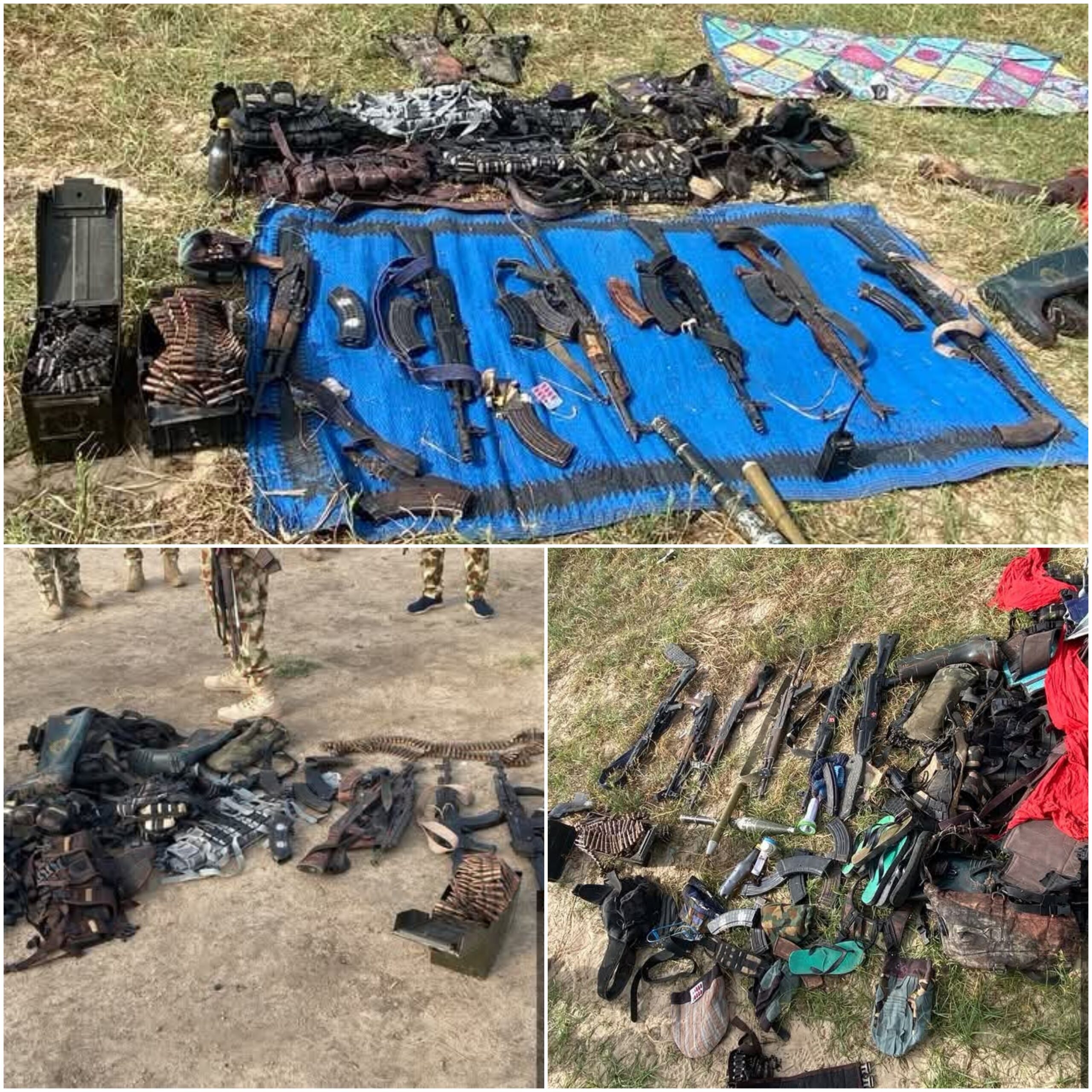
See also  Joint security operation intercepts large cache of arms in Kogi

“I supported Peter Obi at the initial stage of his presidential ambition. I went with him everywhere in Nigeria. And he never gave me one dollar, one naira.

 “Neither did he even ever ask me one day how I came to the campaign. He will just see me at the campaign, and we will pray for him. I paid for the transportation of six clergymen. And nobody called me fake. We were on television everywhere.”

Kawas said he supported Jonathan since his time as deputy governor of Bayelsa state and later joined in his presidential campaign.

“I was one of the people who prophesied that we would see him in Abuja. And he came to Abuja, and he became vice-president and then president from the doctrine of necessity,” Kawas said.

“And then he won the election. I was on his presidential campaign council. I was the only bishop in Goodluck Jonathan’s presidential campaign council, and I took the campaign everywhere. Nobody called me fake.

See also  Bobrisky: FG inaugurates 5-member probe panel

“Is it now, because I have prayed and God has led me to support Bola Tinubu, that I suddenly become fake? he asked.

Continue Reading

News

NAF airstrikes kill over 18 high-profile terrorists, destroy logistics centres in Borno

Published

on

By

More than 18 terrorists have been neutralised in strikes by the Nigerian Air Force (NAF), while several logistics hubs at Tumbunma Baba in the Tumbuns general area of Borno State were destroyed.

According to a statement by the military on Friday, the operation, conducted by the Air Component of Operation Hadin Kai (OPHK), in coordination with ground troops of Sector 1, followed weeks of intelligence gathering and surveillance,

The Military Information Officer of OPHK, Capt. Mohammed Goni, said intelligence had indicated the presence of high-profile terrorist elements using the islands as meeting points and logistics nodes.

He said further surveillance and confirmatory Intelligence, Surveillance and Reconnaissance (ISR) operations conducted from Wednesday, September 9, pinpointed several terrorist structures and logistics hubs in the area.

According to him, the intelligence-led operation culminated in kinetic strikes in the early hours of Friday, September 11, after the targets were positively identified.

See also  2023 presidency: Ogun gov declares support for Osinbajo’s presidential bid

“Following positive identification of the targets, the air platforms acquired and engaged the designated locations with precision munitions, with ground troops occupying all likely escape routes for further direct fire engagements,” he said.

Goni said the strikes destroyed the targeted structures and “neutralised over 18 terrorist elements”, disrupting terrorist activities and degrading their ability to use the enclave as a gathering and support base.

He said post-strike assessment indicated an estimated 85 per cent success in achieving the intended operational objectives.

The operation, he said, underscored the effectiveness of intelligence-led operations, timely ISR confirmation and the coordinated employment of air assets in synergy with ground troops.

Goni said OPHK would continue to work with other security agencies and stakeholders to deny terrorists the freedom to operate, regroup or establish logistics and support infrastructure across the North East.

“Working in concert with all security agencies and stakeholders, OPHK will continue to conduct intelligence-driven operations to deny terrorist elements the freedom to operate, regroup or establish logistics and support infrastructure across the Theatre,” he said.

See also  Beneficiaries Laud US-Based Don’s Loan Scheme at First Anniversary Celebration

Continue Reading

Uncategorized

Nepal flood death toll crosses 1,000 as victims buried in mass graves

Published

on

By

No fewer than 1,050 people have died and nearly 4,000 people are still missing following last week’s devastating flooding in Nepal.

The death toll is reported to have risen to 1,050, while about 4,000 people remain missing, including 583 foreign nationals.

Also, specialised rescue teams from China, India and Nepal have reportedly built temporary bridges to reach remote areas in desperate efforts to rescue nearly 300 workers trapped inside tunnels.

Nepal’s disaster management authority ​said on Tuesday that no fewer than 639 people remain stranded in devastated hydropower stations that have become the focus of rescue efforts.

The disaster left at least ⁠2.2 million tons of debris, according to a preliminary estimate by the United Nations Development Programme (UNDP), including parts of buildings, rocks, and sediment.

“The amount of debris shows the scale ​of the destruction and the challenge communities face as they clear homes, roads and public spaces and begin to rebuild,” it said.

See also  Senate alleges secret employment going on in federal civil service

In a social media post on Monday, Prime Minister Balendra Shah said
more than 11,000 people have been rescued, and power ​and communication lines were restored in some areas,

“We did not have the time to grab anything before fleeing,” said a survivor from the hard-hit Rasuwa district, who had walked to Nuwakot with scores of other survivors. “What we were wearing is the only pair of clothes we have. And even they are wet from rain.”

On Tuesday, the Nepali Army, in a social media post, said it rescued 119 people by air, including a British national.

“So far, the Nepal Army has rescued a total of 3,891 people by air, including 273 foreign nationals,” the army said.

Meanwhile, Nepal has begun burying victims of the flood in mass graves after taking DNA samples.

According to Nepalese authorities, 1,003 bodies had been recovered, with 3,916 people still unaccounted for.

Continue Reading

Trending News