Connect with us

Politics

FULL LIST: Mass defections as 27 Reps members defect to new parties Tuesday

Published

on

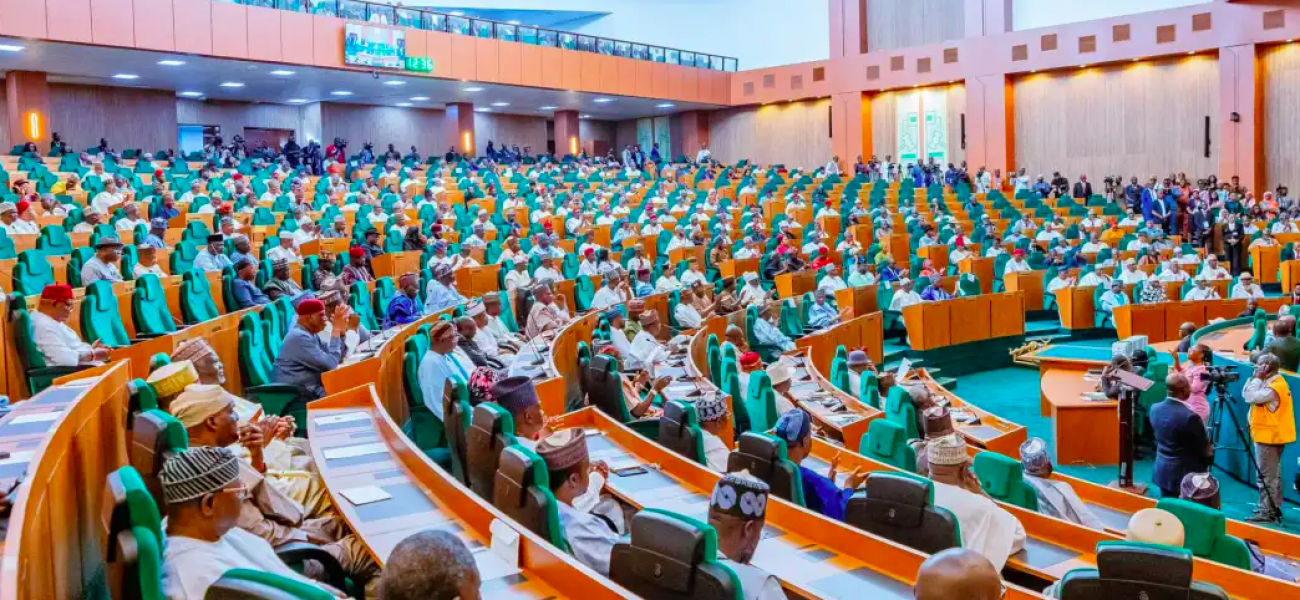
The political realignments ahead of the 2027 general elections continued Tuesday as a total of 27 members of the House of Representatives defected from their parties, marking one of the biggest waves of political realignments in the Green Chamber ahead of the 2027 general elections.

The Speaker of the House, Tajudeen Abbas, read the notices of defection during plenary.

The defections saw the African Democratic Congress gain eight new lawmakers, comprising five from the Peoples Democratic Party, two from the Labour Party, and one from the All Progressives Congress.

APC recorded the most gains with fourteen joiners, including eight from Kano State who were previously members of the New Nigeria Peoples Party.

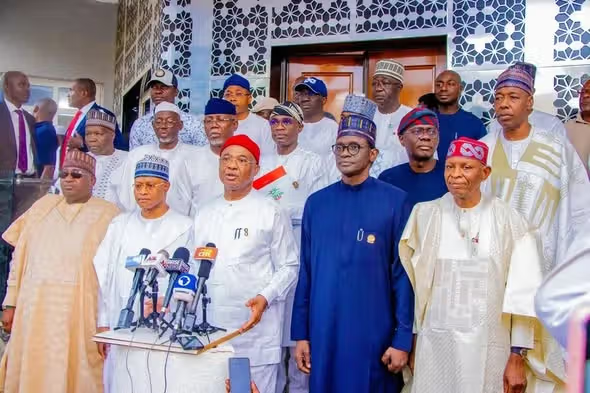
The development was witnessed by Kano State Governor Abba Yusuf, Deputy Senate President Barau Jibrin, and former Kano State Governor Abdullahi Ganduje, among others.

The defections strengthened the ruling party’s position in the House, bringing its membership to about 280 out of 360 lawmakers.

See also  Reps attack NLC, TUC for circulating fake lawmakers’ pay

The Action Peoples Party gained two members, one each from the PDP and LP, while the Accord Party added two lawmakers, both from the PDP.

The lawmakers cited internal crises in their former parties as the reason for their defections.

Full list of defecting lawmakers, former parties, and new political platforms:

Aliu Madaki (Deputy Minority Leader) — NNPP to APC — Dala (Kano)

George Ozodinobi (Deputy Minority Whip) — LP to ADC — Njikoka/Anaocha/Dunukofia (Anambra)

Philip Agbese — APC to LP — Ado/Okpokwu/Ogbadibo (Benue)

Ugochinyere Michael Ikeagwuonu — PDP to APP — Ideato (Imo)

Abdussamad Dasuki — PDP to ADC — Kebbe/Tambuwal (Sokoto)

Tijjani Abdulkadir Jobe — NNPP to APC — Tofa/Dawakin-Tofa/Rimingado (Kano)

Seyi Sowunmi — LP to ADC — Ojo (Lagos)

Mohammed Bassi — PDP to APC — Mayo Belwa/Ganye/Jada/Toungo (Adamawa)

Ghali Tijjani Mustapha — NNPP to APC — Ajingi/Albasu/Gaya (Kano)

Shehu Bello — NNPP to APC — Fagge (Kano)

See also  Reps speaker Abbas names chairmen of 134 standing committees

Dankawu Idris — NNPP to APC — Kumbotso (Kano)

Hussain Hassan Shehu — NNPP to APC — Nassarawa (Kano)

Rabiu Yusuf — NNPP to APC — Sumaila/Takai (Kano)

Garba Mohammed Chiroma — NNPP to APC — Gezawa/Gabasawa (Kano)

Ibrahim Mohammed (Kano) — NNPP to APC — Gwale (Kano)

Jaafaru Yakubu — PDP to APC — Bali/Gassol (Taraba)

Sadiq Abbas Tafida — PDP to APC — Jalingo/Yorro/Zing (Taraba)

Ibrahim Mohammed (Kebbi) — PDP to APC — Birnin-Kebbi/Kalgo/Bunza (Kebbi)

Bello Shinkafi — PDP to APC — Shinkafi/Zurmi (Zamfara)

Harris Okonkwo — LP to ADC — Idemili North/South (Anambra)

Yaya Bauchi Tongo — PDP to ADC — Gombe/Kwami/Funakaye (Gombe)

Mustapha Abdullahi — APC to ADC — Ikara/Kubau (Kaduna)

Mani Maishinko Katami — PDP to ADC — Binji/Silame (Sokoto)

Umar Yusuf Yabo — PDP to ADC — Yabo/Shagari (Sokoto)

Nwogu Mathew — LP to APP — Aboh Mbaise/Ngor Okpala (Imo)

Akanni Clement Ademola — PDP to Accord — Boluwaduro/Ifedayo/Ila (Osun)

See also  Osun Election: It's total war against vote-buyers - Police

Oladebo Lanre Olomololaye — PDP to Accord — Ayedaade/Irewole/Isokan (Osun)

Continue Reading
Click to comment

Leave a Reply

Your email address will not be published. Required fields are marked *

News

Court orders INEC to deregister ADC, four other political parties

Published

on

By

A federal high court in Abuja, the federal capital territory (FCT) has ordered the Independent National Electoral Commission (INEC) to deregister the African Democratic Congress (ADC) and four other political parties.

The other political parties are the Action Peoples Party (APP), Action Alliance (AA), Accord Party (AP), and Zenith Labour Party (ZLP).

The plaintiff had asked the court to determine whether INEC is constitutionally required to deregister political parties that fail to satisfy the performance thresholds stipulated in section 225A of the 1999 Constitution, as amended.

The group argued that the five parties had consistently failed to meet the conditions for retaining their registration, including securing at least 25 percent of votes in a state during a presidential election or winning elective positions at the national, state, or local government levels.

According to the plaintiff, the parties failed to achieve the required electoral performance in the 2023 general election and subsequent by-elections conducted by INEC.

See also  Explain N1.19bn unapproved spending, Reps tell NIPC

The former lawmakers contended that allowing the parties to remain registered despite their poor electoral showing was contrary to constitutional provisions and detrimental to the integrity of the electoral process.

They prayed the court to compel INEC to deregister the parties before preparations for the 2027 general election gather momentum.

The plaintiffs also sought orders restraining the affected parties from participating in elections, conducting primaries, organising rallies, or carrying out other political activities pending compliance with constitutional requirements.

In his judgment, Peter Lifu, the presiding judge, upheld the arguments of the plaintiff and ordered INEC to deregister the five political parties.

Continue Reading

Politics

‘Learn from LP crisis’ — Abure warns Seriake Dickson to beware of Obi and his supporters

Published

on

By

The factional national chairman of the Labour Party (LP), Julius Abure, has warned Seriake Dickson, national leader of the Nigeria Democratic Congress (NDC), to be cautious in his alliance with Peter Obi and his supporters.

Obi, the presidential candidate of the labour party in the 2023 general election, is the presidential candidate of the NDC. He secured the party’s ticket on May 30 after he was ratified at its national convention held in Abuja.

Speaking in a statement he personally signed, Abure said Dickson appeared to have learnt from the recent crisis in the LP, describing the NDC leader’s alleged refusal to concede all elective positions in the party to Obi’s supporters as commendable.

The LP factional chairman, alleged that Obi and Alex Otti, governor of Abia, and many of their supporters who won elections on the platform of the LP in 2023 have since turned against the party’s leadership.

He stated: “They say, history usually repeats itself. Senator Dickson and Co have seen their trajectory and learnt from what happened to us, that a lot of them after they have won and now in government turned round and were struggling with the leadership of the party,” the statement reads.

See also  Osun Election: It's total war against vote-buyers - Police

“I want to say that Obi and his followers are ingrates who will never remember the sacrifices you made for them. It is even dangerous for the leadership of the NDC to wholly hand over the elective positions to Obi and his followers.

“We did it in 2022/23, immediately they saw that Obi was interested in the leadership of the party, all those elected under the platform of the party simply followed Obi, forgetting all the sacrifices and suffering we made for them.”

Abure claimed that the crisis in the LP worsened when the Independent National Electoral Commission (INEC) obeyed a court ruling which said the tenure of the party’s leadership had lapsed, giving rise to the Nenadi Usman-led interim national committee.

“They fell into the trap of INEC, when the commission deceived them to say that the tenure of the executive has expired. We had expected them to reject that position,” Abure said.

See also  Reps speaker Abbas names chairmen of 134 standing committees

He noted in the light of what transpired in the LP, “it is strategically” important for Dickson to retain some control within the NDC by ensuring that his own supporters occupied positions in the party.

“He needed to bring his own people so that when the chips are down, he will also have people that will speak and defend him,” Abure said.

Abure further claimed that Obi’s supporters joined the NDC to dominate the party’s structure as they allegedly did in the LP.

“They trooped into NDC with Obi hoping to occupy every space like they did in the Labour Party. No leader of any political party seeing what Obi did to the Labour Party, along with his followers will make that mistake again,” he said.

He noted that his comments were prompted by questions about how the LP managed Obi and his supporters during the 2022/2023 election cycle.

According to him, the party made significant sacrifices to accommodate Obi’s interests, including granting many tickets to his supporters free of charge.

See also  Reps attack NLC, TUC for circulating fake lawmakers’ pay

“We ensured that Obi’s interests were adequately taken care of. We only looked at his body language, and we obliged most of his supporters’ tickets,” he said.

“Most of the tickets were for free believing that we were investing in those persons in line with the philosophy of the party, expecting that when they win, they will bring along necessary support that will help in the growth of the party.

“But ironically, when they came into power, they went after the leadership of the party.”

Abure also accused Obi and Otti of attempting to take over the party’s leadership following disputes over the tenure of its executives.

“The leaders, particularly, Peter Obi and Alex Otti decided to take over the leadership of the party,” he said.

He added that elected officials who emerged on the party’s platform failed to support it financially, urging the NDC to learn from the LP’s experience.

Continue Reading

Politics

What supreme court judgement means for David Mark, ADC

Published

on

By

By Bolanle Olabimtan

The supreme court judgement on the leadership crisis in the African Democratic Congress (ADC) has generated mixed interpretations and confusion about who is in charge of the party.

However, rather than settle the dispute, the apex court’s decision focused on a procedural misstep and sent the case back to where it began.

To understand the case in its entirety and what the supreme court judgement means, it is important to start from the beginning.

FEDERAL HIGH COURT

On September 2, 2025, Nafiu Bala, former vice chairman of the ADC, approached a federal high court in Abuja (Suit No. FHC/ABJ/CS/1819/2025), seeking to stop David Mark, former senate president, and his faction from parading themselves as leaders of the party.

Bala listed the ADC, Mark, Rauf Aregbesola (national secretary), the Independent National Electoral Commission (INEC), and Ralph Nwosu, the party’s founder and former national chairman, as defendants.

He also sought an order to restrain INEC from recognising them and to compel recognition of himself as acting national chairman.

He further filed motions seeking to stop the party from holding meetings, congresses, or conventions pending the determination of the suit.

The motion ex parte was heard on September 4, 2025, and Emeka Nwite, the trial judge, directed that the respondents, including INEC, be put on notice to show cause why the motion ex parte should not be granted.

This means the motion ex parte was neither granted nor refused.

COURT OF APPEAL

Dissatisfied with the interim ruling, Mark filed an appeal challenging the jurisdiction of the federal high court to continue to hear Bala’s suit.

However, on March 12, 2026, the court of appeal dismissed Mark’s case in its entirety, holding that it was incompetent and unmeritorious.

See also  Reps attack NLC, TUC for circulating fake lawmakers’ pay

A three-member panel of the appellate court, led by Uchechukwu Onyemenam, found that there was no substantive ruling by the federal high court on the ex parte application, as the trial judge merely ordered that parties be put on notice.

As such, there was no valid decision upon which an appeal could properly be anchored.

The court further faulted Mark for relying on an enrolled order rather than the actual proceedings and ruling of the trial court, noting that only the judge’s pronouncement constitutes the authentic record of the court.

The court also held that the appeal arose from an interlocutory ruling, for which Mark failed to obtain the required leave before approaching the appellate court.

On the issue of jurisdiction, the court of appeal noted that the question was still pending before the federal high court and could not be determined at the appellate level at that stage, describing the appeal as premature.

Having dismissed the appeal, the court issued preservatory orders to safeguard the subject matter of the dispute.

The court directed the parties to maintain the status quo ante bellum and to refrain from any action that could undermine the proceedings before the trial court.

On April 1, INEC announced that it would no longer recognise the factions of the ADC led by Mark or Bala, following its review of the court of appeal judgement.

SUPREME COURT

On further appeal to the apex court, Mark, among other things, argued that he had a lawful right to proceed with the appeal without seeking leave of the trial court.

See also  Kaduna gov, Uba Sani calls for ‘aggressive’ military operations against bandits

He also raised the issue of jurisdiction, arguing that the trial court lacks the jurisdiction to entertain Bala’s suit.

In a unanimous judgement delivered on Thursday, a five-member panel of the supreme court held that the appeal fails in part and succeeds in part.

In the first part, the apex court agreed with the court of appeal’s verdict that the appellant (Mark) ought to have sought leave of the trial court before filing an appeal, since the substantive issues before the trial court had not yet been heard and determined.

“I find the court below to be right that the appellant, in whose favour the order of the federal high court was made, ought to have sought the leave of the court before appeal…” the supreme court held.

Mohammed Garba, who read the lead judgment, held that since the appellant failed to meet the condition precedent for filing the appeal, it robbed the appellate court and, by extension, the supreme court of jurisdiction to entertain the suit.

The lead justice also held that the issue opposing jurisdiction of the trial court cannot be determined by the supreme court since it is already the subject of a pending preliminary objection, which has not yet been determined at the high court.

“I therefore endorse the decision by the court below upholding the first respondent’s preliminary objection to the competence of the appellant’s appeal and an order striking it out on that ground,” Garba said.

Consequently, the court ordered the parties to go back and continue with the suit pending at the federal high court.

On the second issue, which succeeded, the supreme court said the court of appeal overstepped its boundaries by asking parties to maintain the status quo.

See also  Purge yourself of petty politics, Onanuga tells Atiku

“Status quo ante bellum”, in legal terms, refers to restoring the condition of the position of things as they were before the dispute arose.

The court reasoned that once the appeal was dismissed, the court of appeal had become functus officio — meaning it had exhausted its authority in the case and could not make further substantive orders.

The supreme court consequently set aside the status quo order, describing it as “unnecessary, unwarranted and improper”.

“The court was wrong to have made a purported preservatory order suo moto in respect of a proceeding pending before the lower court, as that power belongs to that trial court, which shall be in control of proceedings in the matter when it is returned to it by the appellate court either for continuation, hearing or retrial as the case may be,” the court ruled.

DOES THIS MEAN DAVID MARK’S FACTION HAS WON?

The verdict of the supreme court does not mean victory for the Mark-led faction or even any faction.

While the removal of the status quo order may give the Mark-led faction some breathing room, the supreme court did not affirm any leadership.

The most important question of who legitimately controls the ADC remains unresolved.

The outcome will now depend on the decision of the trial court after full proceedings.

After the matter is resolved at the trial court, the losing faction would likely appeal the verdict back up to the supreme court.

Meanwhile, INEC has updated its website, listing Mark as the national chairman of the ADC and Aregbesola as national secretary

Culled from TheCable

Continue Reading

Trending News