Connect with us

Uncategorized

Christian genocide claims: US military draws up strike plans on Nigeria

Published

on

The United States military has reportedly drawn up air and ground strike plans on Nigeria according to defence officials.

Trump recently redesignated Nigeria as a “country of particular concern” in response to allegations of a Christian genocide in the country.

He has also warned that the US would enter Nigeria “guns-a-blazing” to protect the Christian population.

The US leader had ordered the Pentagon to prepare to intervene militarily in Nigeria to protect Christians from attack by Islamic militants.

According to the New York Times, military officials said US forces are unlikely to end insurgency in Nigeria unless they resort to an Iraq or Afghanistan-style campaign

Current and former military officials reportedly said any major operation by the United States in Nigeria would likely fail.

“It would be a fiasco,” said Paul Eaton, a retired army veteran of the war in Iraq.

Eaton likened any potential effort by Trump to direct the military to target Nigerian insurgents through air strikes to “pounding a pillow”.

See also  Kaduna killings: Death toll rises to 25

According to the report, military officials said there were several measures available to American military strategists that could have a limited effect on the militants.

They said the Air Force could carry out strikes on the few identified compounds in northern Nigeria that are occupied by militant groups, with American drones such as the MQ-9 Reaper and MQ-1 Predator targeting a few vehicles and even some convoys.

Additionally, American forces could collaborate with Nigerian troops to raid villages in order to eliminate insurgents who have taken shelter in rural areas of the country’s northern region.

These options were reportedly part of the plans that officials from the United States Africa Command (AFRICOM) developed this week to present to the joint staff at the Pentagon.

AFRICOM staffers revisited their strategies for the Sahel and forwarded same to Washington.

According to three defence officials, the plans developed by the command presented three levels of options: light, medium, and heavy — all designed to be escalatory.

See also  Recruited from the church: The story of Ngogbike Nkechi arrested for ingesting 184 wraps of cocaine

The light option, as described by the officials, involved what the military termed partner-enabled operations.

In this scenario, the US military and the state department would assist Nigerian governmental forces in targeting Boko Haram and other Islamic militants responsible for attacks, kidnappings, and murder of civilians, predominantly in northern Nigeria, where sectarian and ethnic conflicts have persisted for nearly two decades.

The medium option involves drone strikes on militant camps, bases, convoys, and vehicles situated in northern Nigeria.

The heavy option would entail deploying an aircraft carrier group into the Gulf of Guinea and sending in fighter jets and possibly long-range bombers to carry out strikes deep within northern Nigeria.

Continue Reading
Click to comment

Leave a Reply

Your email address will not be published. Required fields are marked *

Uncategorized

They didn’t call me fake when I campaigned for Obi, Archbishop hits back at critics over Tinubu endorsement

Published

on

By

The president-general of the Charismatic Bishops Conference of Nigeria (CBCN), Archbishop Leonard Kawas, has hit back at his critics by defending his support for President Bola Tinubu’s re-election bid, saying his involvement in Nigerian politics predates the current administration.

The Archbishop’s defence follows criticism of the group’s endorsement of Tinubu, with some Nigerians questioning his credentials as a bishop.

But speaking during an interview on Arise TV, Archbishop Kawas said he had spent 25 years in the clergy and supported political leaders in the past, including Olusegun Obasanjo, Goodluck Jonathan, Atiku Abubakar and Peter Obi, without being labelled a fake bishop.

“I travelled around this country with Doyin Okupe. I travelled around this country at 2 am with John Dara and others. We were campaigning from church to church, and nobody called me a fake bishop,” he said. 

“I campaigned for my leader, reverend Jolly Nyame, and he became governor of my state, Taraba state. He appointed me chairman of the Christian Welfare Board, and nobody called me fake then.

See also  Ojulari praises Dangote refinery over stability in Nigeria's energy system

“I supported Peter Obi at the initial stage of his presidential ambition. I went with him everywhere in Nigeria. And he never gave me one dollar, one naira.

 “Neither did he even ever ask me one day how I came to the campaign. He will just see me at the campaign, and we will pray for him. I paid for the transportation of six clergymen. And nobody called me fake. We were on television everywhere.”

Kawas said he supported Jonathan since his time as deputy governor of Bayelsa state and later joined in his presidential campaign.

“I was one of the people who prophesied that we would see him in Abuja. And he came to Abuja, and he became vice-president and then president from the doctrine of necessity,” Kawas said.

“And then he won the election. I was on his presidential campaign council. I was the only bishop in Goodluck Jonathan’s presidential campaign council, and I took the campaign everywhere. Nobody called me fake.

See also  Many feared dead in multiple petrol tanker explosions in Rivers

“Is it now, because I have prayed and God has led me to support Bola Tinubu, that I suddenly become fake? he asked.

Continue Reading

News

NAF airstrikes kill over 18 high-profile terrorists, destroy logistics centres in Borno

Published

on

By

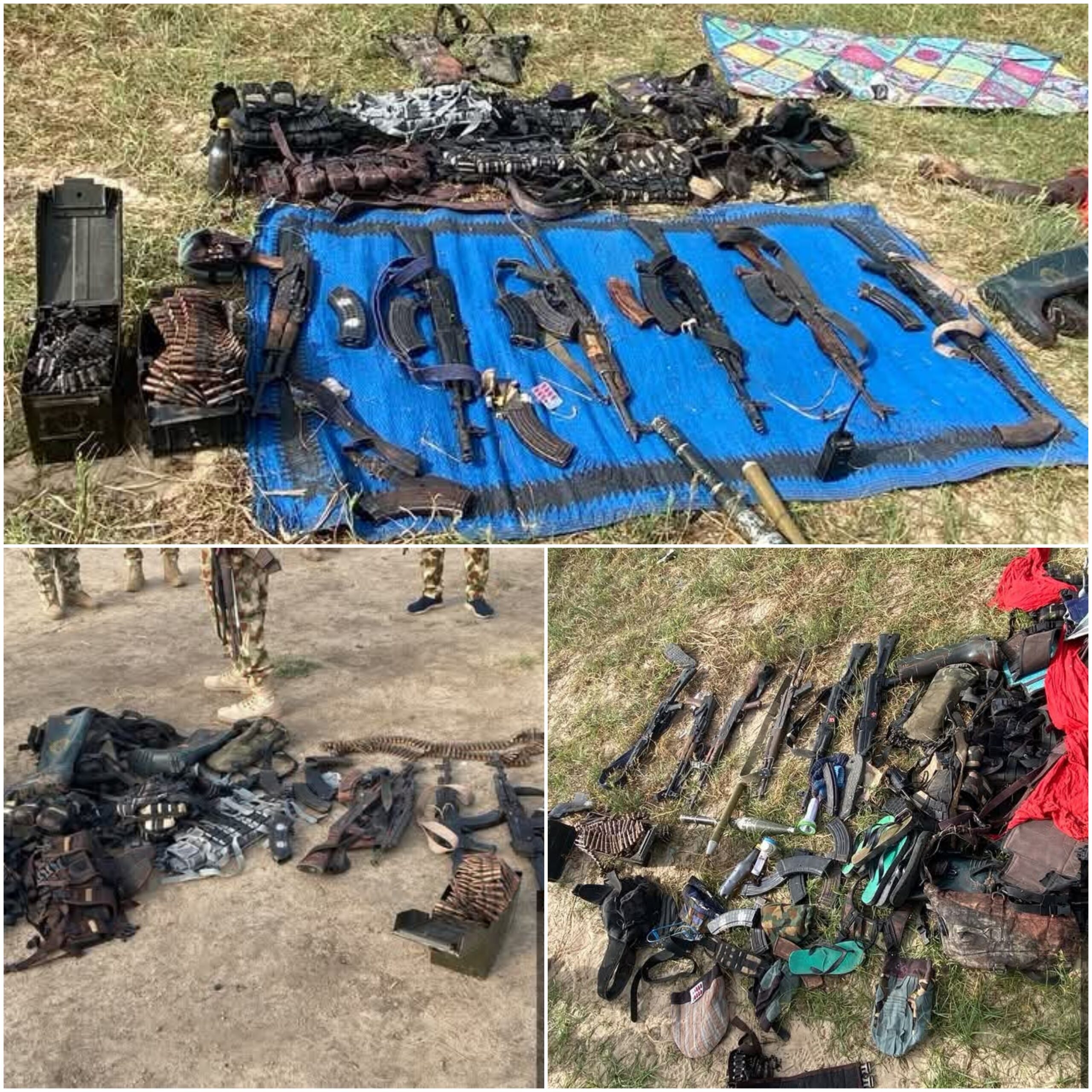
More than 18 terrorists have been neutralised in strikes by the Nigerian Air Force (NAF), while several logistics hubs at Tumbunma Baba in the Tumbuns general area of Borno State were destroyed.

According to a statement by the military on Friday, the operation, conducted by the Air Component of Operation Hadin Kai (OPHK), in coordination with ground troops of Sector 1, followed weeks of intelligence gathering and surveillance,

The Military Information Officer of OPHK, Capt. Mohammed Goni, said intelligence had indicated the presence of high-profile terrorist elements using the islands as meeting points and logistics nodes.

He said further surveillance and confirmatory Intelligence, Surveillance and Reconnaissance (ISR) operations conducted from Wednesday, September 9, pinpointed several terrorist structures and logistics hubs in the area.

According to him, the intelligence-led operation culminated in kinetic strikes in the early hours of Friday, September 11, after the targets were positively identified.

See also  Ojulari praises Dangote refinery over stability in Nigeria's energy system

“Following positive identification of the targets, the air platforms acquired and engaged the designated locations with precision munitions, with ground troops occupying all likely escape routes for further direct fire engagements,” he said.

Goni said the strikes destroyed the targeted structures and “neutralised over 18 terrorist elements”, disrupting terrorist activities and degrading their ability to use the enclave as a gathering and support base.

He said post-strike assessment indicated an estimated 85 per cent success in achieving the intended operational objectives.

The operation, he said, underscored the effectiveness of intelligence-led operations, timely ISR confirmation and the coordinated employment of air assets in synergy with ground troops.

Goni said OPHK would continue to work with other security agencies and stakeholders to deny terrorists the freedom to operate, regroup or establish logistics and support infrastructure across the North East.

“Working in concert with all security agencies and stakeholders, OPHK will continue to conduct intelligence-driven operations to deny terrorist elements the freedom to operate, regroup or establish logistics and support infrastructure across the Theatre,” he said.

See also  Recruited from the church: The story of Ngogbike Nkechi arrested for ingesting 184 wraps of cocaine

Continue Reading

Uncategorized

Nepal flood death toll crosses 1,000 as victims buried in mass graves

Published

on

By

No fewer than 1,050 people have died and nearly 4,000 people are still missing following last week’s devastating flooding in Nepal.

The death toll is reported to have risen to 1,050, while about 4,000 people remain missing, including 583 foreign nationals.

Also, specialised rescue teams from China, India and Nepal have reportedly built temporary bridges to reach remote areas in desperate efforts to rescue nearly 300 workers trapped inside tunnels.

Nepal’s disaster management authority ​said on Tuesday that no fewer than 639 people remain stranded in devastated hydropower stations that have become the focus of rescue efforts.

The disaster left at least ⁠2.2 million tons of debris, according to a preliminary estimate by the United Nations Development Programme (UNDP), including parts of buildings, rocks, and sediment.

“The amount of debris shows the scale ​of the destruction and the challenge communities face as they clear homes, roads and public spaces and begin to rebuild,” it said.

See also  World-wide Introductions Latina Marriage Organization

In a social media post on Monday, Prime Minister Balendra Shah said
more than 11,000 people have been rescued, and power ​and communication lines were restored in some areas,

“We did not have the time to grab anything before fleeing,” said a survivor from the hard-hit Rasuwa district, who had walked to Nuwakot with scores of other survivors. “What we were wearing is the only pair of clothes we have. And even they are wet from rain.”

On Tuesday, the Nepali Army, in a social media post, said it rescued 119 people by air, including a British national.

“So far, the Nepal Army has rescued a total of 3,891 people by air, including 273 foreign nationals,” the army said.

Meanwhile, Nepal has begun burying victims of the flood in mass graves after taking DNA samples.

According to Nepalese authorities, 1,003 bodies had been recovered, with 3,916 people still unaccounted for.

Continue Reading

Trending News