Connect with us

Opinion

Yusuf Tuggar: Resilient, focused diplomat amid foreign backed false persecution

Published

on


By Adebayo Adeoye

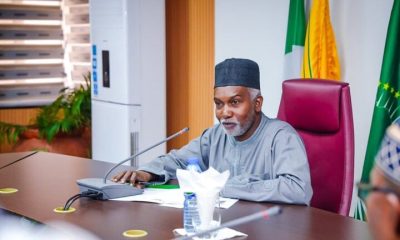
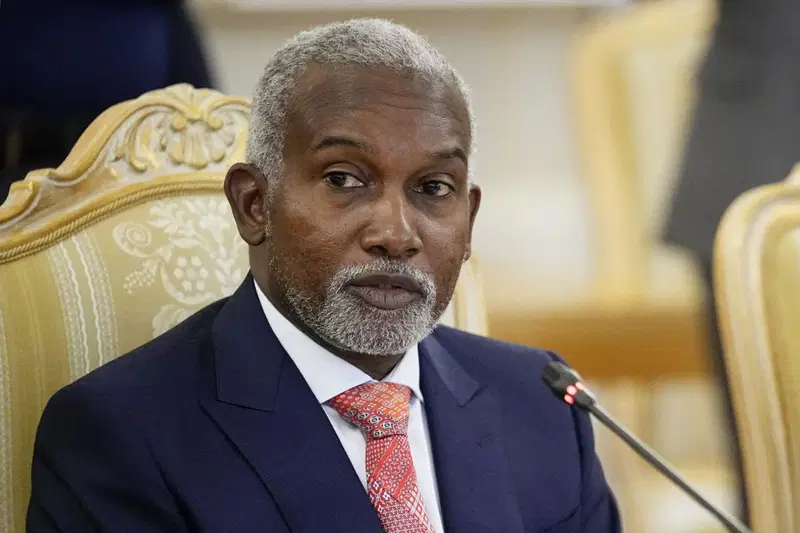
Yusuf Tuggar, Nigeria’s Minister of Foreign Affairs, has pushed back firmly against the growing tide of misinformation portraying the country as a hostile environment for Christians, warning that such narratives distort a far more complex national tragedy and threaten international cooperation.


In recent months, global commentary has been dominated by claims that Christians in Nigeria face state-backed persecution.


These allegations, amplified by lobby groups and foreign lawmakers, have gained momentum with the proposed “Nigeria Religious Freedom Accountability Act of 2025” introduced by United States Senator Ted Cruz.


The Bill, which seeks punitive measures against Abuja, paints Africa’s largest democracy as a country complicit in religious oppression.


Tuggar’s response, both in tone and substance, challenges that caricature.


He insists that Nigeria’s religious crisis is not a tale of government persecution but a humanitarian catastrophe driven by terrorism, banditry, and the collapse of rural economies.


“The reality is more complex than Western headlines admit,” he said in a recent statement.


“Terrorist groups target Christians and Muslims alike. Violence in Nigeria is not a war of religion but a war on humanity.”


His words carry weight because the numbers are devastating. According to the International Society for Civil Liberties and Rule of Law (Intersociety), thousands of Christians were killed and abducted across Nigeria between January and July 2025.


Yet these grim figures, often cited abroad as evidence of targeted Christian persecution, tell only part of the story. Thousands of Muslims have been slaughtered in similar attacks, their deaths rarely making Western headlines.


The U.S. Commission on International Religious Freedom itself acknowledges that Boko Haram and the Islamic State in West Africa Province (ISWAP) routinely murder Muslim clerics who reject extremist doctrine.


In Zamfara, Katsina, and Niger States, Muslim farmers are raided and kidnapped by the same gunmen who attack Christian villages in Benue and Plateau. The violence spares no faith, and the victims share the same grief.

See also  Foreign affairs minister Tuggar meets US ambassador to discuss bilateral cooperation


By any credible measure, this is a humanitarian disaster.


In the past four years, nearly 56,000 Nigerians have been killed in violent conflicts. Millions more have been displaced. Communities have been erased from maps. Churches and mosques have been burnt, schools closed, and children orphaned on both sides of the faith divide.


Yet abroad, Nigeria’s agony is repeatedly reduced to a one-sided script: Christians are under siege, Muslims are aggressors, and the state is indifferent.


For Tuggar, this reductionism is not only lazy but dangerous.


It feeds polarisation, emboldens extremists, and risks derailing the quiet diplomatic work being done to stabilise communities.


“Nigeria’s tragedy is being weaponised for foreign politics,” he said. “We cannot afford selective empathy.”


The Foreign Minister’s frustration is understandable.


He has spent the past year re-engineering Nigeria’s global engagement around what he calls economic diplomacy. His agenda seeks to rebuild trust, attract trade, and reposition Nigeria as a cooperative but assertive player on the world stage.


Since taking office, Tuggar has represented the country at high-level forums from Addis Ababa to Abu Dhabi, where he has argued for fairer trade rules, more responsible media framing, and respect for African sovereignty.


At the Reuters NEXT Gulf Summit in October, he warned that “Africa must stop being the raw material of global pity” and instead become the architect of its own recovery.


That line, equal parts defiance and dignity, summed up his foreign policy philosophy. It is not anti-Western but anti-condescension. Tuggar’s Nigeria seeks partners, not patrons.


Behind the scenes, he has quietly reopened channels with Washington and Brussels, engaging on migration, digital trade, and counterterrorism.


His approach is diplomatic rather than dramatic. But in an age where foreign advocacy thrives on outrage, quiet effectiveness can be mistaken for invisibility.

See also  Monday Lines 1| Ibadan Is Oyo | Lasisi Olagunju


Critics at home have occasionally described him as too restrained, too understated, perhaps even absent from the public glare. Yet the evidence suggests otherwise.


Policy continuity has returned to the Ministry of Foreign Affairs after years of drift. Nigeria’s envoys are better coordinated, its missions more engaged, and its foreign statements less reactive.


Tuggar’s refusal to perform outrage for the cameras is not weakness but strategy.


“When foreign actors make false claims, the right response is evidence, not emotion,” said a senior diplomat familiar with his thinking.


“He believes Nigeria must correct lies with facts, not fury.”


Facts are on his side.

Nigeria’s Constitution explicitly prohibits any state religion under Section 10, while Section 38 guarantees freedom of thought, conscience, and religion.


Section 42 forbids discrimination based on faith. These provisions are not ornamental; they are tested daily in courts and public life.


Where Sharia law operates in parts of the north, it applies only to Muslims and within constitutional limits. There is no federal offence called blasphemy.


Churches and mosques operate freely across the federation. Christian organisations own schools, hospitals, and media houses. The Federal Executive Council includes both Christians and Muslims.


Nigeria’s religious diversity, for all its tensions, remains one of the most open in Africa. But this reality rarely fits Western scripts that crave villains and victims.


What complicates the narrative further is that the perpetrators of Nigeria’s bloodshed are not representatives of any faith community but fragmented non-state actors.


Boko Haram, ISWAP, armed herdsmen, and criminal gangs exploit poverty and impunity, not theology. They attack whoever stands in their way.


The Nigerian military continues to battle these groups across several regions. Thousands of insurgents have surrendered or been captured, and hundreds of communities have been liberated.

See also  Powerful Lagos, powerless Osun State


In 2025 alone, joint operations rescued over 2,000 hostages from terrorist camps. None of this aligns with the picture of a government complicit in persecution.


This is why Tuggar finds the Ted Cruz Bill so troubling.


Labeling Nigeria as a “Country of Particular Concern” would not only misrepresent the situation but also harm the very victims the Bill claims to defend.


Such a designation could restrict military aid, disrupt humanitarian funding, and embolden extremists who thrive on the illusion that religion divides Nigerians.


“The tragedy of selective advocacy is that it punishes those already suffering,” Tuggar observed recently. “If the world wishes to help, it must start by listening.”


That plea for nuance echoes through Nigerian civil society, where faith leaders from both sides have condemned the foreign caricature.


The Catholic Bishop of Sokoto, Matthew Kukah, and the Sultan of Sokoto, Sa’ad Abubakar III, have repeatedly issued joint appeals for unity and justice. Their cooperation, though largely ignored abroad, is the truest reflection of Nigeria’s moral resilience.


Ultimately, the story of Nigeria’s crisis is not one of religion but of governance, inequality, and survival.


And the task before the nation’s diplomats is to ensure that the world stops misreading its pain.


For Tuggar, defending Nigeria’s record is not about pride. It is about accuracy.


“We owe it to our citizens to tell their stories honestly,” he said. “No one should use our suffering as campaign material.”


His message to the international community is clear: Nigeria’s problem is not silence but distortion.


The country bleeds across faiths, across regions, across history. What it needs is empathy grounded in truth, not advocacy built on fiction.


To those who insist otherwise, perhaps a pause for fact-checking would serve the cause of justice better than another round of righteous noise.

Continue Reading
Click to comment

Leave a Reply

Your email address will not be published. Required fields are marked *

Opinion

Monday Lines 1| Ibadan Is Oyo | Lasisi Olagunju

Published

on

By

On Monday, 25 March, 1946, Chief I. B. Akinyele, Chief James Ladejo Ogunsola, Messrs D. T. Akinbiyi and E. A. Sanda, the very cream of the Ibadan educated elite, met behind closed doors with Oyo town delegates at the secretariat in Ibadan. One of them got home that day and wrote in his diary that they “could reach no agreement because we (Ibadan) flatly refused to pay one penny towards the Alaafin’s salary.”

Yet, some 84 years earlier (1862), the same Ibadan went to war against friends, family, and acquaintances in support of Alaafin. Ibadan destroyed Ijaiye because its ruler, Kurunmi, was rude and unruly to the Alaafin. He had to die because he refused to recognise the king whose father made him Aare, and who made Oluyole Basorun of Ibadan.

Ibadan of 1862 served Oyo and its Alaafin; that of 1946 damned them. Between the first stance and the second, what changed or what caused the change? The tongue. The body. Disposition. Reciprocal respect. My Christian friend pointed at a verse in the Bible: “And the king answered the people roughly. In a blustering manner, gave them hard words and severe menaces…” Then it was “To your tent, O Israel!”

On Sunday, 3 February, 2008, twelve out of the then seventeen members of Oyo State Council of Obas and Chiefs visited the Alaafin in Oyo. They said they were there “to solidarise and pay traditional respect to our permanent chairman.” From that visit came a ten-point resolution which was published as an advertorial on page 27 of the Nigerian Tribune of 5 February, 2008. The title of that advert is: ‘Oyo obas back Alaafin for permanent chairmanship of Council of Obas and Chiefs.’ The fifth of the resolutions is the shortest and most categorical: The obas declared that in Oyo State, “remove the Alaafin, and all other obas are equal.”

The obas who signed that statement were the Eleruwa of Eruwa, Olugbon of Orile Igbon, Okere of Saki, Aseyin of Iseyin, Iba of Kisi, Onpetu of Ijeru, Onjo of Okeho, Sabi Ganna of Iganna, Aresaadu of Iresaadu, Onilalupon of Lalupon, Onijaye of Ijaye and Olu of Igboora.

Now, read that list again – and this is where I am going: In the Saturday Tribune of January 17, 2026 (two days ago), an advert celebrating the reconstitution of the obas’ council with the Olubadan as rotational chairman was signed by six of those who signed the 2008 advert which celebrated Alaafin’s permanent chairmanship. These are: Eleruwa of Eruwa, Olu of Igboora, Olugbon of Orile-Igbon, Onpetu of Ijeru, Okere of Saki and Aseyin of Iseyin.

Yesterday’s “permanence” becomes today’s “rotation,” each wrapped in the rhetoric of unity, justice, and tradition. We see obas who were with Oyo in 2008 shifting allegiance to Ibadan in 2026. What this suggests is not moral collapse but the old, unembarrassed truth about power: it obeys seasons. Our obas, like politicians, have read too much of Geoffrey Chaucer. They move in steps that suggest that time, when it shifts, rearranges loyalties as effortlessly as it rearranges hierarchies.

See also  Married junior staff accuses foreign affairs ministry’s perm sec of sexual harassment

Friendship and politics define statuses and hierarchies. Governor Rashidi Ladoja in 2004 decentralised the council of obas into zones and directed each paramount oba to preside over their area. His decision was based on the fact and logic that there was no throne of Oyo State for the kings to fight over. I agree with that reasoning, and, in fact I do not think any council anywhere is necessary as conclave of obas. However, last week, Oba Rashidi Ladoja assumed office as chairman of an undecentralised council of obas. What has changed?

Ladoja’s successor, Governor Adebayo Alao-Akala in 2007, made Alaafin permanent chairman. The Olubadan and Soun of Ogbomoso kicked and would have nothing to do with that arrangement. The governor ignored them. He said he was following the law. But the same Alao-Akala, on his way out of government in May 2011, used the House of Assembly to reverse that decision. Because his friendship with the Alaafin had expired, he made the position rotational in the following order: 1. Olubadan; 2. Soun of Ogbomoso; 3. Alaafin of Oyo. Check the Nigerian Tribune of 3 May, 2011, page 4.

Were all these about history, or about that fluid thing called change? What was obviously at play there was (and is) politics; and in politics, nothing is constant; not truth, not friendship. What exists is interest. “There is no fellowship inviolate, No faith is kept, when kingship is concerned,” says Second Century BC Roman poet, Ennius. Obas, institutions and palaces that took a position in 2008, are this year taking a directly opposing stand. What changed? Is it about the person of the last Alaafin and the persona of the incumbent?

In his caustic response to last week’s inauguration of Oyo State Council of Obas, Alaafin Akeem Owoade referred to himself as “superior head of Yorubaland.” Did he have to write that? And, what does it mean? Whatever that claim was meant to achieve has attracted negative vibes from every corner of Yorubaland. I read resentment and resistance even when its author knows it is a plastic claim. In the old understanding of the world, the ancients spoke of two ruling forces: Love, which binds; and Strife, which sunders. The palace, no less than the cosmos, is governed by this uneasy pair. The oba in Yorubaland reigns within the contradiction. The crown draws devotion even as it breeds resentment. It commands reverence when it is humble and just in its royalty; it invites resistance when haughty and proud.

Shakespeare, in Richard III, speaks about kings’ “outward honour” and “inward toil.” In Hamlet, he says “The king is a thing…Of nothing.” In Henry V, he says the “king is but a man, as I am” and therefore prone to errors courtiers make. No two kings are the same; no two reigns score the same marks. There are definitely differences in engagement between the last Alaafin and this new one. Alaafin Adeyemi III went out to make quality friends and read good books; his successor, so far, appears distant and aloof. I am interested in who, among obas and commoners, are his friends. I am eager to know the books he reads. His handlers should help him to succeed by telling him to look more forward than backwards. A lot of 19th century data which he romanticises are no longer valid. For instance, Ibadan of the past saw itself as part of Oyo; today’s Ibadan sees Oyo as part of its inheritance. Read Professor Bolanle Awe in her ‘The Ajele System: A Study of Ibadan Imperialism in the Nineteenth Century’ (1964). Mama reminds everyone who argues with history that “the direct heirs of the Old Oyo empire…regrouped themselves in three main centres at Oyo, Ijaye and Ibadan.” So, Ibadan is Oyo while today’s Oyo is not necessarily Ibadan.

See also  Desperate Aiyedatiwa bares fangs inside Govt House chapel

People who understand the dynamics of power and history would insist that Ibadan’s defiance in 1946 and its earlier zeal in 1862 are not contradictions so much as timestamps. We see and feel Ibadan challenging Oyo, even feeling insulted by suggestions of being subjects of Alaafin. Authority once defended as sacred becomes, under a new alignment of interests, negotiable. This Oyo has everything a father has, except age. It has a history of leadership. But has Oyo provided the right leadership in the last one year? You remember what King Sunny Ade sings should be done to Egungun that dances for twenty years and remains in poverty? You throw away its mask and costume and promote Gelede. That is why institutions today act selectively; and actors remember the past strategically. What appears as amnesia or inconsistency is cold calculation. The past is not denied; it is merely edited.

Every Alaafin since 1830 has had to contend with the Ibadan factor. Ibadan is pro-Oyo but it won’t accept suggestions of Alaafin and Oyo overlordship. And that is because the founders of Ibadan were shareholders of Oyo, both the old and the new. In particular, they see in Oyo and its monarchy partners, not lords. Indeed, Ibadan never believed/believes there was (is) a king anywhere for them to worship. Professors I. A. Akinjogbin and E. A. Ayandele say the early Ibadan “prided themselves as a group who had nothing but contempt for the crowns.” Indeed, in July 1936 when the city wanted its Baale to become known and called ‘Olubadan’, its leaders made it clear that what they wanted was the change in title; they did not want an oba who would rob them of their republican freedom. Is that not the reason for its very unique lack of royal or ruling houses? Read Toyin Falola’s ‘Ibadan’, pages 681 and 682.

See also  Open Letter to Governor Seyi Makinde: Oyo State Deserves Better Healthcare

The new Alaafin has no excuse for making cheap and expensive mistakes. His heritage is goodly and his court is not lacking in quality men and women. When he was made oba a year ago (January 2025), Professor Toyin Falola, easily Africa’s preeminent historian and Yoruba patriot, wrote a long piece of advice for the man chosen as our Alaafin. The title of that piece is: ‘Alaafin Owoade and Yorùbá Renaissance.’ It was primarily written for the new king to read. If he read it, I am not sure many of today’s challenges would spring and hang on his nascent reign. Every paragraph of the essay is gold, every line golden. If he read it last year, he should read it again and make it his operations manual. Take these: “He must learn history. I can reveal to the new Alaafin that his immediate predecessor took time to understand history. Alaafin Adeyemi’s power of retentive memory was second to none. He had a memory arsenal covering almost 500 years…

“Alaafin Owoade must know history…The new Alaafin must not engage in historical revisionism as his counterparts now do. Rewriting history is dangerous, as in saying the Benin Empire owes little to Ile-Ife and Oranmiyan. Conflating Ugbo with Igbo is a wrong-footed interpretation of the past. He needs not to dabble into issues of superiority around who the superior king was in the past. Oyo and Ile-Ife are constant in the people’s history because they represented the seats of economic and political power and the spiritual rallying point of the Yorùbá people. Let him explore the consensus around historical prestige: the foundation of prominent Yorùbá ancestors and the creation of a glorious history.”

So far, it would appear that Alaafin Owoade has not benefited from the nuggets in the Falola advice. He should go back to it. He should also go out to make quality friends among his brother obas. He needs them. If there are people he needs to beg, he should beg them. Nothing is damaged (yet) beyond repairs. Like flights of planes, every reign has tough beginnings. In tension and turbulence, the expertise of the pilot makes a lot of difference. If the Alaafin refuses to spread his eyes first, no guest will sit on the mat he spreads, no matter how beautiful.

He also needs to know (or remember) that power attracts, but it also repels. This is why allegiance cannot be ordered into existence; it must be patiently won. It is also why sovereignty carries its own burden, captured in the timeless lament of the dramatist: uneasy lies the head that wears a crown. For the Alaafin to remain tall, he must woo Ibadan and other Yoruba towns with friendship; he cannot summon their loyalty by proclamation.

(Published in the Nigerian Tribune on Monday, 19 January, 2026

Continue Reading

Opinion

PDP and the Ekiti Question: A Party at the Crossroads

Published

on

By


The judgment of the Federal High Court nullifying the last PDP governorship primary in Ekiti should be more than a legal setback. it should serve as a loud warning.


The PDP is on the edge of losing Ekiti, not because it lacks popular support, but because it has failed, repeatedly, to build and deploy an effective internal crisis-resolution mechanism.


For a party that prides itself on experience and structure, it is troubling that internal disagreements are allowed to fester until they are settled by the courts. This is not strength; it is institutional weakness.


If this trend continues, history will not be kind to those currently entrusted with leadership of the party in the South West. They will be remembered, not for rebuilding the PDP, but for presiding over avoidable damage to its fortunes.


The reality is simple. If a fresh primary is conducted and Dr Wole Oluyede emerges again, there is no guarantee that supporters of Funsho Ayeni will fully mobilise for him. The reverse is also true. A divided PDP cannot win a governorship election in Ekiti, no matter how unpopular the ruling party may be.

See also  Oando Plc: Oil Giant Ensuring Gender Parity


This is why the party must think beyond ego and faction. PDP leaders should urgently explore a consensus option that prioritises unity, stability, and electability.


The party must resolve to embrace a candidate that has displayed clear examples of restraint, loyalty, and a willingness to sacrifice personal ambition for the survival of the party. The PDP needs a natural unifying force at a time when the PDP needs healing, not further strain.


Ekiti is too important to be lost on the altar of unresolved internal conflicts. The PDP must choose unity now, or risk collective regret tomorrow.

Continue Reading

Opinion

OGUN WEST AND THE POLITICS OF 2027: TIME FOR A COLLECTIVE RESET

Published

on

By


As a long-standing stakeholder in Ogun State’s political evolution, actively involved since the second-term bid of Otunba Gbenga Daniel in 2005–2006 and deeply committed to the Ogun West struggle since 2011, I find it necessary, even urgent, to lend my voice to the ongoing political conversation shaping our collective future.


To my fellow advocates of the Ogun West agenda, I pose a sincere question: Can we confidently say that our current approach is yielding the results we desire? If we are candid with ourselves, the answer forces a sober reflection.


We must pause and interrogate our journey with clear, unblinking honesty:


• Why has our collective aspiration remained elusive?
• Has our struggle been reduced unfairly to the size of one’s pocket?
• How do we restrategize to give our dream a stronger footing?
• Is our present approach the finest representation of our capacity?
• How do we unify our political actors without silencing legitimate voices?
• While aiming for the governorship, are we also grooming our best minds for national leadership; Senate President, Deputy Senate President, Speaker of the House?
• Why do we remain divided when unity remains our strongest tool?


Our struggle must remain free from personal gain. The moment personal interests take control, the core of our agitation becomes compromised. Our political leaders and traditional institutions owe us the fairness to create a level playing field for every son and daughter with capacity. Thankfully, most of these actors remain under one political umbrella, a situation that makes harmony easily achievable.

See also  Ringing endorsement for the Asue/Ogie ticket


Fragmentation weakens us. Disunity destroys the leverage we need at critical political moments. To be taken seriously, we must present a solid, unbroken front free from internal sabotage, petty rivalries, and external manipulation.


I recall the Ijebu Agenda toward the 2019 election. It grew as a movement driven by collective purpose. Ogun Easterners rallied behind it with remarkable cohesion irrespective of their political party affiliation. When Prince Dapo Abiodun emerged as the APC candidate, stakeholders including traditional institutions aligned with ease. A premature endorsement of any aspirant would have created avoidable resistance.


This remains a crucial lesson for Ogun West: the movement must take prominence over individuals.


Our struggle cannot shrink to the ambition of one person. The Ogun West cause carries a weight that requires broad-based support, deliberate strategy, and inclusive leadership. Any attempt to center the entire project on a single individual limits our options and weakens our bargaining strength. We must also not forget that most of our political actors have sizeable support base beyond our senatorial district. How do we take advantage of that?


Our focus should remain on strengthening institutions, deepening alliances, and articulating a vision that outlives personalities. Our power grows when unity leads the process.


If Ogun West truly seeks the support of Governor Dapo Abiodun, CON, ahead of 2027, our posture must reflect strategic engagement. Recent actions by a few supporters give the impression of confrontation before the race even begins. This approach creates unnecessary tension and offers no advantage.


We need a thoughtful, collaborative, politically grounded strategy, one that demonstrates maturity and commitment to the progress of Ogun State.

See also  Ondo 2024: Aiyedatiwa gets desperate, dangles Port Ondo contract before prominent Yoruba monarch for presidency support


Our advocacy should rise on the strength of ideas, research, and clarity. Instead of inflamed rhetoric, we should:


• Present research-driven proposals.
• Engage in dialogue that elevates understanding.
• Contribute development blueprints aligned with the founding vision of Ogun State.


This positions Ogun West as a partner in progress and strengthens our image in the political landscape.


The All Progressives Congress (APC) has been fair to Ogun West. Recognition is necessary. From impactful bills and motions, to federal empowerment schemes and infrastructural strides, our region has benefited from purposeful representation at the federal level both at the legislative and executive arms of government.


We express sincere appreciation to Mr. President, His Excellency Asiwaju Bola Ahmed Tinubu, GCFR, whose support has amplified these developmental gains.


The competition among our federal lawmakers remains encouraging. A few individuals may attempt to sow discord, yet the wider picture shows lawmakers committed to employment facilitation, youth empowerment, and community upliftment. This form of competition drives progress and lifts communities.


To sustain this rise, collaboration must lead the way. Passion from one person cannot match the force of collective strategy. Unity, shared purpose, and mutual respect carry greater weight.


Let us build bridges that hold firm.
Let us elevate our collective voice through cooperation.
Ogun West is rising, and our actions will determine the strength and longevity of that rise.


Political support grows through trust, consistency, and loyalty. By cultivating respectful relationships with key stakeholders, especially Governor Abiodun, the leader of the party in the state, we create the foundation for long-term synergy and shared achievements.

See also  Kayode Ajulo: A brilliant, selfless lawyer earns a well-deserved honour


Supporters have the right to canvass for their aspirants, provided such efforts do not silence others. Democracy grows through open dialogue.


Today, Ogun West boasts some of the most effective federal lawmakers in the country, from our Senator to our House of Representatives members supported during the 2023 elections by our amiable Governor, Prince Dapo Abiodun, CON. We also have an elegant and capable Deputy Governor whose poise and maturity uplift our region’s image.


Yet we must confront a critical question:
How do we bring all these leaders together without pushing one aside to lift another?


Governor Abiodun has demonstrated a style of leadership anchored on peace, development, and inclusive governance. If Ogun West intends to remain part of that vision, our strategy must align with his temperament and priorities. His support carries weight because of his role as party leader and his influence in the electoral process.


The future of the Ogun West project rests on strategic partnership. When we embrace this path, we strengthen our chances of winning support, deepening unity, and contributing meaningfully to the broader future of Ogun State.


Ogun 2027 presents a moment that demands wisdom, calm strategy, and shared purpose.

Thank you.

God Bless Ogun State.
God Bless the Federal Republic of Nigeria.

Lateef Olusoji
Emilandu Compound, Imeko
Imeko Ward
Imeko Afon Local Government
Ogun State

Continue Reading

Trending News