Connect with us

Uncategorized

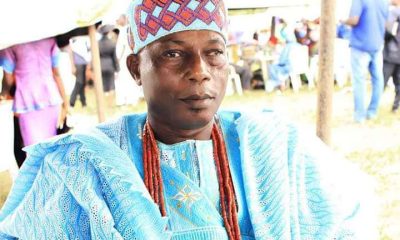
Osun monarch, Apetu of Ipetumodu, jailed four years in US for $4.2m COVID-19 fraud

Published

on

The Apetu of Ipetumodu in Osun State, Oba Joseph Oloyede, has been sentenced to more than four years in prison in the United States.

Oloyede, 62, who holds dual U.S. and Nigerian citizenship and resides in Medina, Ohio, was on August 26 handed 56 months in prison by U.S. District Judge Christopher A. Boyko.

According to the U.S. Attorney’s Office for the Northern District of Ohio in a statement on Tuesday, the monarch, was also ordered to “serve three years of supervised release after imprisonment and pay $4,408,543.38 in restitution.

“He also forfeited his Medina home on Foote Road, which he had acquired with proceeds of the scheme, and an additional $96,006.89 in fraud proceeds investigators had seized,” the statement read.

The U.S. Attorney’s Office said Oloyede led a conspiracy to exploit COVID-19 emergency loan programmes created for struggling businesses.

“From about April 2020 to February 2022, Oloyede and his co-conspirator, Edward Oluwasanmi, conspired to submit fraudulent applications for loans that were made available through the U.S. Small Business Association (SBA) under the Coronavirus Aid, Relief, and Economic Security (CARES) Act,” the statement read.

See also  Appeal Court reverses judgment stopping Rivers allocation

In April, the duo pleaded guilty to wire fraud and tax fraud charges linked to a pandemic relief scam that siphoned over $4.2m in federal stimulus funds.

The court was told that Oloyede, who also worked as a tax preparer, “operated five businesses and one nonprofit, while Oluwasanmi owned an additional three business entities.

“Both defendants used their businesses to submit loan applications using false information.

“They obtained approximately $1.2 million in SBA funds for Oluwasanmi’s entities and $1.7 million for Oloyede’s entities,” the statement added.

The elaborate fraud went even further.

According to investigators, “Oloyede submitted fraudulent PPP and EIDL applications in the names of some of his clients and their businesses.

“In exchange, Oloyede would receive 15-20% of their loans as the fee, or kickback, for obtaining the loans for them, without reporting this income to the IRS on his own tax returns.”

The funds were then used for personal gain, prosecutors said.

See also  Commonwealth Games: Tobi Amusan wins 100m hurdles gold

“Investigators learned that the defendant used funds obtained from these loans to acquire land and build a home and purchase a luxury vehicle,” the U.S. Attorney’s Office disclosed.

In all, Oloyede “caused the SBA to approve 38 fraudulent applications, amounting to $4,213,378 in disbursed loans and advances.”

His co-conspirator, Oluwasanmi, 62, of Willoughby, was earlier sentenced in July to 27 months in prison.

He was also ordered to pay more than $1.2 million in restitution, forfeit a commercial property purchased with fraud proceeds, and surrender more than $600,000 held in financial accounts.

The U.S. Attorney’s Office emphasized the significance of the conviction, noting that the case was jointly investigated by the Department of Transportation Office of the Inspector General, the FBI Cleveland Division, and IRS-Criminal Investigations as part of the Pandemic Response Accountability Committee Fraud Task Force.

“This case was prosecuted by Assistant United States Attorneys Edward D. Brydle and James L. Morford for the Northern District of Ohio,” the release concluded.

See also  Athahiru: Crash report ready in one week – AIB

Continue Reading
Click to comment

Leave a Reply

Your email address will not be published. Required fields are marked *

Uncategorized

Lebrant Fabrics boss, Damilola Adeola’s quiet fashion revolution in Ikeja

Published

on

By

Elegance, enterprise, and excellence converge seamlessly in the person of Damilola Ebunoluwa Adeola, the refined and industrious Chief Executive Officer of Lebrant Fabrics, located in the bustling commercial heart of Opebi, Ikeja, Lagos.

In a city where fashion and ambition constantly intersect, she has quietly but confidently carved a niche that speaks of taste, discipline, and an unrelenting pursuit of quality.

A woman of unmistakable style and discerning eye, Damilola has steadily elevated Lebrant Fabrics into a trusted destination for luxury textiles. Her brand is now synonymous with sophistication, attracting a growing clientele of fashion enthusiasts, designers, and style connoisseurs who value premium craftsmanship and timeless elegance.

Through consistency and a clear sense of direction, she has transformed what began as a business idea into a flourishing enterprise admired within Lagos’ competitive fashion and retail landscape.

Beyond her entrepreneurial drive, she is widely respected for her poise, warmth, and impeccable fashion sense. Damilola embodies a rare balance of beauty and intellect, effortlessly reflecting the very essence of the brand she represents.

See also  Nigerian pastor jailed by US court over $4.2m COVID-19 fraud

Whether she appears in graceful traditional attire or engages in the strategic growth of her business, she remains a picture of composure and quiet confidence.

In an industry where trends evolve rapidly and competition is intense, she continues to stand out not merely as a business owner, but as a curator of elegance and quality. Her journey is a testament to passion meeting purpose.

As Lebrant Fabrics continues to grow under her watchful eyes , the brainy woman is steadily weaving a legacy defined by style, success, and enduring excellence in Lagos’ vibrant fashion economy.

Continue Reading

Uncategorized

Bauchi APC in Crisis: How a Governorship Primary Became a Political Powder Keg

Published

on

By

By Adebayo Adeoye

All is clearly not well within the ranks of the All Progressives Congress in Bauchi State.

What should, ordinarily have been a defining moment for party unity and strategic positioning ahead of the 2027 elections, has instead deepened mistrust, widened internal divisions and exposed dangerous cracks within the party.

For an opposition party still struggling to regain political momentum in one of Nigeria’s most competitive states, the timing could hardly be worse. Rather than serving as a launchpad for renewed ambition, the governorship primary has become a stark reflection of the APC’s internal dysfunction — one that could shape its political fortunes long before voters head to the polls.

Last Friday’s governorship primary, which produced former Governor Mohammed Abubakar as candidate, was expected to rally party faithful around a credible challenger for 2027. Instead, it has triggered widespread controversy and bitter reactions across the party.

What ought to have strengthened internal cohesion has, in many quarters, been condemned as deeply flawed, opaque and lacking the transparency required to inspire confidence among party members. Allegations of backroom deals, imposed outcomes and the sidelining of longstanding stakeholders have rapidly evolved from whispers into open accusations the party leadership can no longer ignore.

The resulting credibility crisis is not merely reputational; it strikes at the institutional foundations necessary for any serious electoral campaign.

See also  Nigerian jailed six years for $5m COVID-19 fraud in US

For many observers and loyal party members, the exercise represented more than a routine internal contest. It was a test of the APC’s democratic credentials and its readiness to reposition itself after years of electoral setbacks in Bauchi.

The party had a rare opportunity to demonstrate discipline, inclusiveness and a genuine commitment to internal democracy. It had the chance to show voters that it had learned from past mistakes and was prepared to offer a coherent alternative to the ruling Peoples Democratic Party.

Instead, the primary has left many supporters frustrated, alienated and uncertain about the party’s direction. What should have united the APC has instead pushed it closer to fragmentation.

Concerns continue to grow over what critics describe as the complete absence of participatory democracy in favour of a forced consensus process.

These concerns were reinforced by comments attributed to the endorsed candidate, Mohammed Abubakar, and by the controversial declaration of results announced by retired AIG John Abang, which many party stakeholders insist reflected a predetermined outcome rather than a credible electoral exercise.

The grievances extend far beyond the immediate contestants and their campaign teams. Ward officials, delegates and grassroots mobilisers — the very backbone of electoral politics in Nigeria — feel sidelined and betrayed after investing time, loyalty and resources into a process they believe disregarded their voices.

These are the individuals who organise communities, mobilise voters and translate party messaging into electoral support. When such actors lose faith in the process, the consequences are rarely passive. In closely contested political environments like Bauchi, disillusionment at the grassroots can prove decisive.

See also  Appeal Court reverses judgment stopping Rivers allocation

The broader political context makes the crisis even more consequential. Bauchi has long been a battleground state where power has alternated between the APC and the PDP.

Governor Bala Mohammed has significantly consolidated the PDP’s political networks and influence across the state. Against that backdrop, the APC’s most realistic path to electoral competitiveness in 2027 depended on presenting a united front, a credible candidate and a compelling alternative vision.

The governorship primary was therefore not just an internal exercise; it was a strategic moment capable of defining the party’s electoral future. Instead, it has handed the ruling party an early political advantage.

More troubling still is the growing fear that unresolved grievances could trigger defections, weaken party cohesion and embolden rival political forces ahead of 2027.

Nigerian political history repeatedly shows that opposition parties rarely succeed when consumed by internal divisions and leadership disputes. In many cases, electoral defeats stem less from the popularity of opponents than from unresolved internal crises allowed to fester unchecked. Bauchi itself has witnessed this pattern before, and the APC now risks repeating it.

Indeed, the party faces one of its most consequential internal tests in recent years. Influential figures across the state are reportedly disenchanted with both the outcome of the primary and the manner in which it was conducted.

See also  Argentina beat Colombia to win Copa America

Quiet consultations outside official party structures have already begun — often an early sign of possible realignments. In several local governments, ward executives are said to be demoralised and uncertain about committing themselves to a process they no longer trust.

If left unresolved, the fallout could cripple grassroots mobilisation, weaken fundraising efforts and push influential stakeholders toward strategic defections, political abstention or alternative alliances.

For a party serious about reclaiming political relevance in Bauchi, unity cannot remain a slogan recited at press conferences while the conditions necessary for unity are undermined in practice.

Reconciliation, dialogue and genuine inclusion must now become urgent priorities. That requires more than symbolic appeals for calm. It demands credible engagement with aggrieved aspirants, delegates and grassroots structures. It requires transparent mechanisms for addressing grievances and accountability for actions that have left the party more divided than before the primary.

The 2027 election is approaching quickly, and time is not on the APC’s side. The window for reconciliation and political recovery remains open, but not indefinitely. The party must now make a clear choice: unity with all its difficult compromises, or division with all its predictable consequences.

Continue Reading

Uncategorized

Tinubu wins APC presidential primary in landslides victory

Published

on

By


President Bola Tinubu on Saturday recorded sweeping victories across several states as the All Progressives Congress (APC) held its 2026 presidential primary election.

The exercise, which gathered momentum in the afternoon in most states, was presided over by governors who were officially mandated by the party to serve as collation officers.

In many of the results already announced, the president defeated Stanley Osifo, his lone challenger, who recorded zero votes in several states.

In Rivers state, Tinubu polled 280,468 votes, while Osifo recorded zero votes across the 23 LGAs of the state, according to Siminalayi Fubara, governor of the state.

It was a similar outcome in Edo, where Tinubu secured 131,096 votes, while Osifo got just one vote during the exercise held across the 192 wards in the state on Saturday.

Monday Okpebholo, the governor and returning officer for the election, described the exercise as peaceful and transparent.

Muhammadu Yahaya, governor of Gombe, who announced the outcome of the exercise, also said the APC in the state delivered every vote to Tinubu during the presidential primary held across the 11 LGAs.

Yahaya said Tinubu polled 450,516 votes while Osifo recorded zero votes, noting that the state has 550,516 registered APC members.

See also  Athahiru: Crash report ready in one week – AIB

Osifo also recorded zero votes in Osun as Tinubu secured another landslide victory with 100,880 votes in the primary, which was described as peaceful by Adegboyega Oyetola, minister of marine and blue economy, who served as collation officer.

“This impressive turnout is not only historic but also a resounding affirmation of the confidence reposed by members of our party in the leadership, vision and Renewed Hope Agenda of His Excellency, President Bola Ahmed Tinubu, GCFR,” Oyetola said.

The president also recorded a clean sweep in Ebonyi, securing all 207,579 valid votes cast across the 13 LGAs, while his rival got zero votes.

Announcing the results in Abakaliki, Francis Nwifuru, governor of Ebonyi and collation officer for the state, said the exercise was held simultaneously across 171 wards and 13 LGAs, where the party has 215,490 members.

In Kwara, Tinubu also defeated Osifo, polling 310,990 votes while his lone challenger secured no votes.

Abdulrahman AbdulRazaq, who announced the results, said a total of 457,374 party members were registered for the exercise, while 310,990 members were accredited and participated in the voting process across the state.

The same scenario played out in Bayelsa as Tinubu garnered 277,192 votes to defeat Osifo, who polled five votes, according to Doriel Nduwi, the collation officer.

See also  US court jails Nigerian 11 years for $1.3m COVID-19 fraud

Similarly, in Zamfara, Tinubu secured 321,579 votes against the 42 votes recorded by Osifo.

Dauda Lawal, governor of the state, who announced the result, said a total of 322,435 accredited voters participated in the exercise.

“I therefore declare President Bola Ahmed Tinubu as the winner of the 2026 Zamfara State presidential primary,” Lawal said.

Meanwhile, the president received affirmations in some states whose results have not been announced.

Uba Sani, governor of Kaduna, who personally monitored the primary across 255 political wards in the 23 LGAs, said party members turned out massively for the exercise.

He described the development as a strong demonstration of unity, loyalty, and confidence in the leadership of the APC and Tinubu.

Tinubu also received a similar affirmation in Imo as thousands of party members trooped out to cast their votes for his candidacy.

Speaking after the exercise, Hope Uzodimma, governor of the state, said it is very obvious that “President Tinubu has done enough to deserve a second term”.

“Look at what has happened at the grassroots, how it has been stimulated, starting from the membership registration, which was done electronically, to the validation of members,” the governor said.

See also  Nigerian pastor jailed by US court over $4.2m COVID-19 fraud

“In just one ward, we had 35,000 people. It means that if only our party members vote for President Tinubu, he has already won the election.

“I want to thank President Tinubu for giving time to do politics the way it should be done. And I also want to thank our party members for coming out massively to vote for him as our candidate for the 2027 presidential election.”

In a post on X, Bayo Onanuga, Tinubu’s senior special adviser on information and strategy, said the president will be presented with a certificate of return and the party’s flag on Sunday.

“President Tinubu to be presented by APC with certificate of return, party’s flag as the 2027 presidential candidate,” he said.

“President Bola Ahmed Tinubu will on Sunday receive the certificate and flag of the All Progressives Congress (APC) as its presidential candidate for the 2027 elections.

“The Presidential Primary Elections Committee will present the certificate and flag at the Bola Ahmed Tinubu International Conference Centre in Abuja after nationwide collation of the primary election results.

“APC governors, members of the National Executive Committee, the National Working Committee, and the National Assembly, along with party stalwarts, will attend the event.”

Continue Reading

Trending News