Connect with us

Politics

Yar’Adua signed letter transmitting power to me — his aide kept it from n’assembly, says Jonathan

Published

on


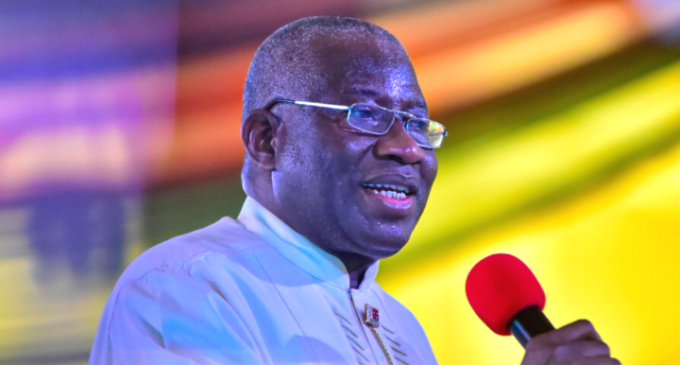
Former President Goodluck Jonathan has shed light on the controversies surrounding the period of the prolonged illness of  late President Umaru Musa Yar’Adua.

Jonathan said Yar’Adua did sign a letter empowering him to act in his absence during the period, but the document was never submitted to the national assembly.

At the time, Yar’Adua’s protracted absence from office, without formally transferring power, plunged Nigeria into a political vacuum.

Speaking in an interview with the Rainbow Book Club about his memoir My Transition Hours, Jonathan described the period as one of the most turbulent in Nigeria’s democratic history, marked by ethnic and religious tensions and a constitutional crisis.

He said the power struggle intensified after Yar’Adua, a northern Muslim, took over from Olusegun Obasanjo, a southern Christian, and there was a silent agreement for the north to retain power for eight years before it rotated again.

“But the health issue came up, and that was the problem. And that is why even to allow me to act was an issue,” he said.

See also  N’assembly should block off-cycle polls — elections should hold same day, says Jonathan

Jonathan, who was vice-president, found himself caught in a constitutional dilemma — unable to act fully as president or exercise the powers of commander-in-chief.

“That letter was written. But the person who the letter was handed over to — I will not mention the name — refused to submit it to the national assembly. Yar’Adua became so ill that he had no control of issues,” Jonathan said.

‘DOCTRINE OF NECESSITY SAVED NIGERIA’

Jonathan said although he could carry out certain executive duties as vice-president, he could not assume the role of commander-in-chief without a formal transfer of power.

“The president of Nigeria has two main responsibilities. First, you are the chief executive, like a prime minister — that the vice president can assume,” he said.

“But there was no commander-in-chief, and there’s nothing like acting commander-in-chief. You are either a commander-in-chief or not.”

Jonathan said the lack of a clear transfer of authority left Nigeria in a constitutional limbo, prompting the national assembly to invoke the doctrine of necessity to make him acting president.

See also  Four reps dump PDP, LP for APC, Accord

According to him, the country was on edge, and coup rumours became a daily concern.

“The country was tense. Under this north-south divide, Christian-Muslim divide, it was really tense. Every day I was hearing about coup,” he said.

‘BETTER TO DIE IN STATE HOUSE’

He said during that time, some friends urged him to vacate the presidential villa for his safety.

“I remember one day, I was still vice president — they had not even moved the doctrine of necessity — and some of my friends came and said, ‘No, you don’t have to sleep here. You have to come and sleep in my guest house,’” he said.

“I said, ‘No.’ I will stay in the state house. If anybody wants to kill me, it’s better you kill me in the state house so Nigerians will know that they assassinated me in the state house. They know I have not committed any offence.

“If I go and stay in your guest house and people kill me there, they will now say Indian girls brought apple to kill me. And I wouldn’t want that kind of story.”

See also  BREAKING: US adds Nigeria to list of countries on partial travel restrictions

Despite the pressure, Jonathan said he remained calm and unshaken.

“To me, I was not bothered. Really, I was not bothered. And I was very calm. But that was the scenario,” he said.

Continue Reading
Click to comment

Leave a Reply

Your email address will not be published. Required fields are marked *

Politics

2027: APC postpones presidential, governorship primaries

Published

on

By

The All Progressives Congress has postponed its presidential primary election, earlier slated for May 15 and 16, to May 23, 2026, while the governorship primaries will now hold on May 21, 2026, in line with a revised timetable for its 2027 general election activities.

The APC Deputy National Publicity Secretary, Duro Meseko, disclosed this at the end of the 186th National Working Committee meeting in Abuja on Thursday, announcing adjustments to the earlier schedule, including the postponement of key processes such as the screening of aspirants and the consideration of appeals.

Meseko also disclosed that the screening of aspirants, initially scheduled for May 6 to May 8, including the presidential screening set for May 9, has now been rescheduled.

Announcing the adjustment to the APC 2027 schedule of activities, the Deputy National Publicity Secretary stated, “We now have a new revised timetable in accordance with the Constitution of the Federal Republic of Nigeria, 1999, as amended, the Electoral Act 2026, and the Independent National Electoral Commission revised timetable and schedule of activities for the 2027 general elections.

“We hereby present the new revised timetable and schedule of activities for the conduct of the 2027 general elections to the press.

“Notice had already been given to state chapters on Monday, 20th April. Sales of forms will commence this Saturday, 25th April, to Saturday, 2nd May, 2026. The last day for submission of completed forms and accompanying documents is now Monday, 4th May, 2026. Screening of aspirants – House of Assembly, House of Representatives, Senate, Governorship, and Presidential—will hold as follows: Wednesday, 6th May to Friday, 8th May, 2026, for House of Assembly, House of Representatives, Senate, and Governorship screening respectively. Saturday, 9th May, 2026, is the screening for Presidential aspirants.

See also  Jonathan to submit APC forms today, as Emefiele ignores resignation calls

“Publication of screening results for State House of Assembly, House of Representatives, Senate, Governorship, and Presidential will hold on Monday, 11th May, 2026. Screening appeals will be handled by the appeal committees from Tuesday, 12th May to Wednesday, 13th May, 2026, for the State House of Assembly, House of Representatives, Senate, Governorship, and Presidential.

“Primary elections of the All Progressives Congress commence as follows: Friday, 15th May, 2026: House of Representatives primary elections. Monday, 18th May, 2026: Senate primary elections. Wednesday, 20th May, 2026: State House of Assembly primary elections. Thursday, 21st May, 2026: Governorship primary elections.
Saturday, 23rd May, 2026: Presidential primary elections.”

He announced that the post-primary appeal committees will sit on Monday, 18th May, 2026, for the House of Representatives; Wednesday, 20th May, 2026, for the Senate; Thursday, 21st May, 2026, for the State House of Assembly; Saturday, 23rd May, 2026, for the governorship; and Monday, 25th May, 2026, for the presidential.

See also  Newspaper Headlines Today: Terrorists pose threat to elections in 40 LGAs

He continued, “That is one of the resolutions today. The second is the schedule of activities and timetable for the 2026 ward, LGA, and state congresses in Zamfara State, beginning Tuesday, 28th April, 2026. The ward congresses, LGA congresses, and state congresses will commence on that date.

“Screening of aspirants for ward executive positions will follow on Wednesday, 29th April, 2026. Ward congresses will be held on Thursday, 30th April, 2026. Appeals from ward screening and ward congresses will be held on Friday, 1st May, 2026. Appeals arising from LGA congresses and screening of state executive members will also be held on the same day. Appeals arising from state congresses will be held on Sunday, 3rd May, 2026.
That is the timetable for the congresses in Zamfara State.”

He explained that the party has adopted the two modes of primary elections provided in the 2026 Electoral Act, direct primary and consensus, for selecting candidates for elective positions.

Meseko added, “In this 186th meeting of the National Working Committee of the All Progressives Congress, we adopted the mode of primaries as provided in the Electoral Act: direct and consensus mode, with a caveat that members are at liberty to pick.

See also  The troubled presidential yacht: Why Jonathan rejected navy's proposal to buy yacht in 2010

“That is, aspirants are free to decide their preference in accordance with the Electoral Act. Where consensus works, it stands, and where an aspirant does not agree to consensus, it automatically reverts to direct primaries.

“There was also a rumour that forms would be restricted or limited to certain individuals. I am here to inform all party faithful and aspirants that nomination forms for all aspirants seeking offices under the All Progressives Congress are available for all, not exclusively reserved for any individual.”

The Independent National Electoral Commission has fixed the Presidential and National Assembly elections for Saturday, January 16, 2027, while the Governorship and State Houses of Assembly elections will hold on Saturday, February 6, 2027.

The commission also stated that party primaries, including the resolution of disputes arising from them, are scheduled to take place between April 23, 2026 and May 30, 2026.

According to INEC, campaigns for the Presidential and National Assembly elections will commence on August 19, 2026, while campaigns for the Governorship and State Houses of Assembly elections will begin on September 9, 2026.

Continue Reading

Politics

ADC crisis: Presidential ticket tears Atiku, Obi, Kwankwaso apart

Published

on

By

The crisis threatening to tear apart the African Democratic Congress (ADC) may get worse as the party’s presidential ticket is tearing supporters of major aspirants apart ahead of the primary.

It would be recalled that the Independent National Electoral Commission (INEC) has refused to recognise any of the three camps laying claim to the party’s leadership.

This followed a Court of Appeal order in a suit challenging the recognition of David Mark, Rauf Aregbesola and others as officials of the National Working Committee (NWC).

Many state chapters remain polarised and unable to hold congresses. Yet, the party on Tuesday held its convention in Abuja without INEC monitoring, a move widely considered risky.

Ahead of the primary to pick the ticket for the presidential candidate, there is a widening gulf among the camps of former Vice President Atiku Abubakar, former Anambra State Governor Peter Obi and Kwankwasiyya Movement leader, Senator Rabiu Kwankwaso, all believed to be eyeing the ticket.

The trio are defectors from other parties who have converged on the ADC amid ongoing political realignments ahead of the 2027 general election.

While Atiku left the Peoples Democratic Party (PDP) last year to become the ADC arrowhead, Obi also quit the Labour Party (LP), on whose platform he contested the 2023 presidential election.

Kwankwaso, a former governor of Kano State and ex-Defence Minister, left the New Nigeria Peoples Party (NNPP) for the ADC last month.

Despite their stated commitment to building a formidable opposition platform to challenge the ruling All Progressives Congress (APC), the cracks became evident shortly after the convention.

See also  UPDATED: 2025 UTME crisis due to human error — not technical glitch, says reps panel

Atiku’s ally, Dele Momodu, said the former vice president’s camp favours an Atiku/Obi ticket.

However, Obi’s camp rejected the proposal, insisting that the ticket should be zoned to the South.

Momodu argued that pairing Obi with Atiku would give the ADC a significant electoral advantage, citing their previous collaboration in 2019.

The duo, however, lost the election to the late President Muhammadu Buhari.

Speaking on television on Tuesday night, Momodu said: “I’d pair him (Atiku) with Peter Obi because they worked together in 2019. So, they already share a similar temperament.

“Peter Obi came third in the last election. You don’t have to work too hard to maintain and attract the same group of people who love him.”

He maintained that the proposed Atiku/Obi alliance, if consummated, would strengthen the opposition’s chances of capturing federal power, especially amid ongoing political realignments.

But the Coordinator of the Obedient Movement – Obi’s caucus within the ADC – Tanko Yunusa, insisted that zoning the ticket to the South remains the only acceptable option.

He added that once zoned to the South, Obi should emerge as the sole beneficiary and be paired with Kwankwaso.

Yunusa, who also spoke on television, said Obi enjoys broad acceptability within the ADC.

According to him, the reception accorded Obi and Kwankwaso by delegates at Tuesday’s national convention reflected the preference of party members.

He warned that the ADC risks losing the election if its candidate does not emerge from the South.

See also  Burkina Faso military junta foils another coup plot

Yunusa described the former Anambra State governor as the best choice for the ticket, citing what he called his integrity and lack of political baggage.

He said: “You’ve never seen him (Obi) owning a debt. Neither have you seen him segregating. In all of that, he still mingles with his colleagues to fight for the soul of the country.”

He added that Obi has recognised the need to build alliances with the North, noting his increasing engagement with northern leaders across religious lines.

Yunusa said: “When he came to my state in Kano, you could see the synergy between him and Rabiu Musa Kwankwaso. The reception was overwhelming; we barely managed the mammoth crowd.

“It was shouts of Obi/Kwankwaso! Obi/Kwankwaso! The signage and the chorus showed a major shift from what it was in 2023 and 2026 towards 2027. I was elated.”

He dismissed the suggestion of an Atiku/Obi ticket as unworkable.

Yunusa said: “It’s a Southern presidency. To make it easier for the party to win, zone it to the South and give the candidacy to the region, and you are assured of victory.

“Anything short of that will only lead to defeat. Nigerians should conduct independent assessments.

“The level of enthusiasm and support shown for Peter Obi and Kwankwaso indicates that the people have spoken.

“If those two are paired – Peter Obi as presidential candidate and Kwankwaso as running mate – the election would effectively be decided early.

See also  The troubled presidential yacht: Why Jonathan rejected navy's proposal to buy yacht in 2010

“The momentum has grown, especially among young Nigerians seeking credible leadership and good governance.”

There is also a widespread belief that Atiku, 79, may have an edge over Obi in a competitive primary, given his long-standing experience in party contests dating back to 1991/1992.

This perception has fuelled calls by Obi’s supporters for the ticket to be zoned to the South, effectively limiting Atiku’s chances of contesting.

However, the ADC spokesman, Bolaji Abdullahi, has repeatedly assured that the party will provide a level playing field for all aspirants.

Last week, Obi reiterated that the process for selecting the party’s candidate must not be “transactional.”

He said in an interview: “In the PDP, I left for the LP because people were not playing by the rules.

“The presidential primary was transactional. I cannot be part of transactional primaries. I cannot pay people to serve them.

“I may not have spent a long time in politics, but even if I had to repeat the process 20 times, I would take the same decision – to leave. I cannot advocate change while participating in a flawed process.

“I am now in the ADC with some of the same people I left in the PDP and other parties.

“But if the same process is compromised again, I will speak out.

“I have never been involved in any form of election rigging – at the primary level, during the election, or afterwards.”

Continue Reading

Politics

FULL LIST: Mass defections as 27 Reps members defect to new parties Tuesday

Published

on

By

The political realignments ahead of the 2027 general elections continued Tuesday as a total of 27 members of the House of Representatives defected from their parties, marking one of the biggest waves of political realignments in the Green Chamber ahead of the 2027 general elections.

The Speaker of the House, Tajudeen Abbas, read the notices of defection during plenary.

The defections saw the African Democratic Congress gain eight new lawmakers, comprising five from the Peoples Democratic Party, two from the Labour Party, and one from the All Progressives Congress.

APC recorded the most gains with fourteen joiners, including eight from Kano State who were previously members of the New Nigeria Peoples Party.

The development was witnessed by Kano State Governor Abba Yusuf, Deputy Senate President Barau Jibrin, and former Kano State Governor Abdullahi Ganduje, among others.

The defections strengthened the ruling party’s position in the House, bringing its membership to about 280 out of 360 lawmakers.

See also  BREAKING: US adds Nigeria to list of countries on partial travel restrictions

The Action Peoples Party gained two members, one each from the PDP and LP, while the Accord Party added two lawmakers, both from the PDP.

The lawmakers cited internal crises in their former parties as the reason for their defections.

Full list of defecting lawmakers, former parties, and new political platforms:

Aliu Madaki (Deputy Minority Leader) — NNPP to APC — Dala (Kano)

George Ozodinobi (Deputy Minority Whip) — LP to ADC — Njikoka/Anaocha/Dunukofia (Anambra)

Philip Agbese — APC to LP — Ado/Okpokwu/Ogbadibo (Benue)

Ugochinyere Michael Ikeagwuonu — PDP to APP — Ideato (Imo)

Abdussamad Dasuki — PDP to ADC — Kebbe/Tambuwal (Sokoto)

Tijjani Abdulkadir Jobe — NNPP to APC — Tofa/Dawakin-Tofa/Rimingado (Kano)

Seyi Sowunmi — LP to ADC — Ojo (Lagos)

Mohammed Bassi — PDP to APC — Mayo Belwa/Ganye/Jada/Toungo (Adamawa)

Ghali Tijjani Mustapha — NNPP to APC — Ajingi/Albasu/Gaya (Kano)

Shehu Bello — NNPP to APC — Fagge (Kano)

See also  I'm not going back there—Patience Jonathan vows not to return to presidential villa

Dankawu Idris — NNPP to APC — Kumbotso (Kano)

Hussain Hassan Shehu — NNPP to APC — Nassarawa (Kano)

Rabiu Yusuf — NNPP to APC — Sumaila/Takai (Kano)

Garba Mohammed Chiroma — NNPP to APC — Gezawa/Gabasawa (Kano)

Ibrahim Mohammed (Kano) — NNPP to APC — Gwale (Kano)

Jaafaru Yakubu — PDP to APC — Bali/Gassol (Taraba)

Sadiq Abbas Tafida — PDP to APC — Jalingo/Yorro/Zing (Taraba)

Ibrahim Mohammed (Kebbi) — PDP to APC — Birnin-Kebbi/Kalgo/Bunza (Kebbi)

Bello Shinkafi — PDP to APC — Shinkafi/Zurmi (Zamfara)

Harris Okonkwo — LP to ADC — Idemili North/South (Anambra)

Yaya Bauchi Tongo — PDP to ADC — Gombe/Kwami/Funakaye (Gombe)

Mustapha Abdullahi — APC to ADC — Ikara/Kubau (Kaduna)

Mani Maishinko Katami — PDP to ADC — Binji/Silame (Sokoto)

Umar Yusuf Yabo — PDP to ADC — Yabo/Shagari (Sokoto)

Nwogu Mathew — LP to APP — Aboh Mbaise/Ngor Okpala (Imo)

Akanni Clement Ademola — PDP to Accord — Boluwaduro/Ifedayo/Ila (Osun)

See also  N’assembly should block off-cycle polls — elections should hold same day, says Jonathan

Oladebo Lanre Olomololaye — PDP to Accord — Ayedaade/Irewole/Isokan (Osun)

Continue Reading

Trending News