Connect with us

Politics

PDP crisis deepens as 11 NWC members reject Sam Anyanwu’s return as national secretary

Published

on

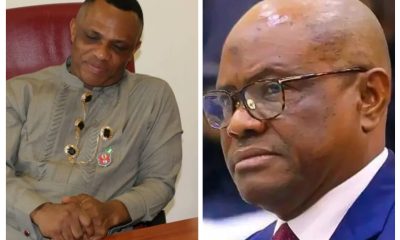
Eleven members of the national working committee (NWC) of the Peoples Democratic Party (PDP) have rejected the return of Samuel Anyanwu as national secretary.

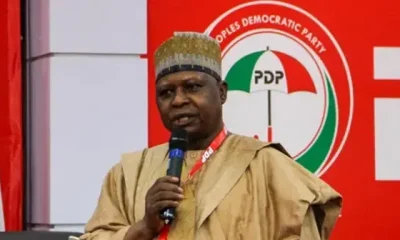
Speaking to journalists on Wednesday, Umar Damagum, acting national chairman of the PDP, said Anyanwu will resume as the party’s national secretary.

Bala Mohammed, governor of Bauchi and chairman of the PDP’s Governors’ Forum; Abba Moro, lawmaker representing Benue south and minority leader of the senate; and other party officials, were present during the press conference.

The acting chairman also said the planned national executive committee (NEC) meeting scheduled for June 30 will no longer hold.

Anyanwu, an ally of Nyesom Wike, minister of the federal capital territory (FCT), was affirmed after members of the PDP NWC and several governors met with Mahmood Yakubu, chairman of the Independent National Electoral Commission (INEC), and other senior officials.

In a joint statement, the 11 NWC members said Anyanwu was not reinstated as the party’s scribe and that the NEC meeting will be held on June 30.

“The pronouncements by the acting national chairman have no foundation as no organ of the party (including the NWC), individual or group has the power to cancel, overrule, veto or vary the resolution of the national executive committee (NEC) under the constitution of the PDP (as amended in 2017),” the statement reads.

See also  Justice served: EFCC returns property recovered from internet fraudster to American victim

“Furthermore, the claim by Amb. Damagum that sen. Samuel Anyanwu has been asked to resume office as the national secretary of the party is therefore misleading, being contrary to the resolution of NEC.

“In the light of the foregoing, the 100th NEC meeting as scheduled for Monday, 30th June, 2025 has not been cancelled or postponed.”

The NWC members are Taofeek Arapaja (deputy national chairman, south), Setonji Koshoedo (acting national secretary), Ahmed Mohammed (national treasurer), Okechukwu Daniel (national auditor) and Debo Ologunagba (national publicity secretary).

Others are Woyengikuro Daniel (national financial secretary), Ali Odefa (national vice chairman, south-east), Emmanuel Ogidi- (caretaker committee chairman, south-south), Amina Bryhm (national woman leader).

Hayatu Gwarzo (national vice chairman, north-west), and Ajisafe Toyese (national vice chairman, south-west) make up the list.

In May, the PDP wrote to the electoral body over its plan to hold the NEC meeting at its national secretariat in Abuja on June 30.

The notice, signed by Damagum, was in line with the electoral umpire’s 21-day notification requirement for political meetings of such magnitude.

However, in a letter dated June 13 and addressed to the party’s chairman, INEC said the notice of the meeting failed to comply with its regulations.

The commission said the notice of the proposed NEC meeting ought to have been jointly signed by the party’s national chairman and secretary.

See also  BREAKING: 14 die as bandits attack Benue police station

But Ologunagba said the party would go ahead with the NEC meeting, noting that INEC’s approval was not required for the PDP to hold the gathering.

THE TUSSLE 
Anyanwu, Sunday Udeh-Okoye, and Koshoedo have each laid claim to the PDP national secretary position.

In December 2024, the court of appeal ruled that Udeh-Okoye should replace Anyanwu as the PDP national secretary.

The south-east zonal executive committee of the party nominated Udeh-Okoye to replace Anyanwu after he became the PDP gubernatorial candidate in Imo state in 2023.

Anyanwu had obtained several court injunctions to prevent his removal from office.

However, in a verdict delivered on December 20, 2024, Ridwan Abdullahi, the appeal court judge, dismissed the judgment of the high court, which prevented Anyanwu’s removal, for “lacking in merit”.

Following the judgment, Udeh-Okoye said he is the national secretary of the party.

However, Anyanwu claimed he appealed the judgment and also filed for a stay of execution at the supreme court the same day the appeal court delivered the verdict in favour of Udeh-Okoye.

On January 31, governors elected on the PDP platform recognised Udeh-Okoye as the party’s scribe.

About a week later, the party’s board of trustees (BoT) aligned with the governors.

In March, the supreme court, in its verdict delivered by a five-member panel, held that the debate over the position is an internal affair not subject to adjudication.

See also  Wike, Uzodinma, Soludo funded Kanu’s extradition – IPOB

Delivering the lead judgment, Jamilu Tukur consequently struck out the ruling of the trial court delivered in October 2024 and also set aside the majority verdict of the court of appeal.

The court affirmed the minority judgment of the appellate court, which had nullified the judgment of the trial court over a “lack of jurisdiction”.

In April, the PDP governors recommended that Koshoedo, the deputy national secretary, should serve in an acting capacity until a substantive secretary is nominated from the south-east zone and ratified by the NEC.

On May 14, the south-east PDP members threatened to leave the party if Udeh-Okoye is not recognised as the national secretary.

In late May, the PDP NEC received the resolution of the south-east zonal executive on the national secretary position but resolved to consider it at its next meeting, scheduled for June 30.

In early June, PDP stakeholders, led by Wike asked the party to allow Anyanwu to serve as national secretary till his tenure ends in December.

Members of the group include three former governors — Ifeanyi Ugwuanyi of Enugu, Okezie Ikpeazu of Abia and Samuel Ortom of Benue.

Continue Reading
Click to comment

Leave a Reply

Your email address will not be published. Required fields are marked *

Politics

‘Learn from LP crisis’ — Abure warns Seriake Dickson to beware of Obi and his supporters

Published

on

By

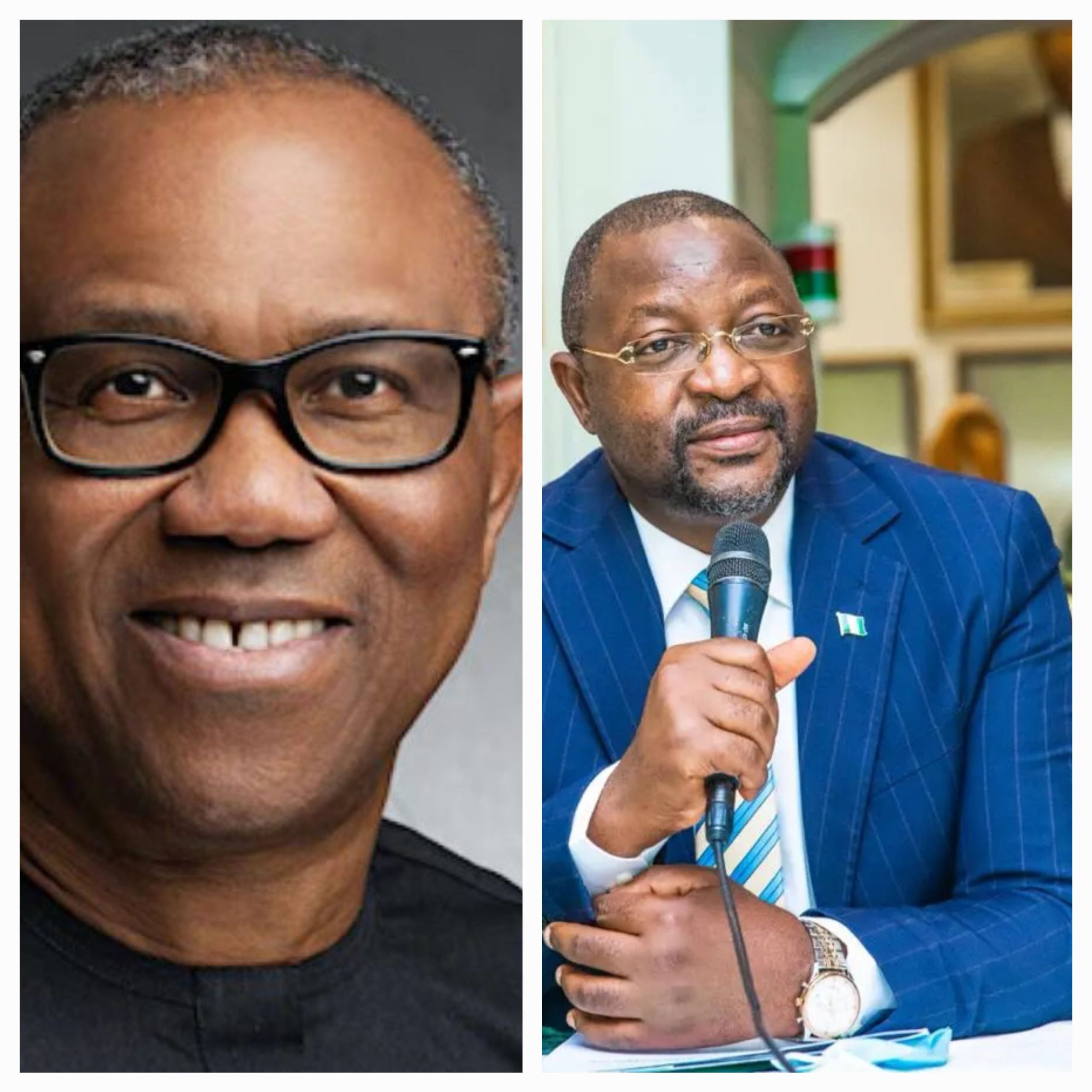
The factional national chairman of the Labour Party (LP), Julius Abure, has warned Seriake Dickson, national leader of the Nigeria Democratic Congress (NDC), to be cautious in his alliance with Peter Obi and his supporters.

Obi, the presidential candidate of the labour party in the 2023 general election, is the presidential candidate of the NDC. He secured the party’s ticket on May 30 after he was ratified at its national convention held in Abuja.

Speaking in a statement he personally signed, Abure said Dickson appeared to have learnt from the recent crisis in the LP, describing the NDC leader’s alleged refusal to concede all elective positions in the party to Obi’s supporters as commendable.

The LP factional chairman, alleged that Obi and Alex Otti, governor of Abia, and many of their supporters who won elections on the platform of the LP in 2023 have since turned against the party’s leadership.

He stated: “They say, history usually repeats itself. Senator Dickson and Co have seen their trajectory and learnt from what happened to us, that a lot of them after they have won and now in government turned round and were struggling with the leadership of the party,” the statement reads.

See also  PDP demands reversal of petrol price hike, says it’s a recipe for crisis

“I want to say that Obi and his followers are ingrates who will never remember the sacrifices you made for them. It is even dangerous for the leadership of the NDC to wholly hand over the elective positions to Obi and his followers.

“We did it in 2022/23, immediately they saw that Obi was interested in the leadership of the party, all those elected under the platform of the party simply followed Obi, forgetting all the sacrifices and suffering we made for them.”

Abure claimed that the crisis in the LP worsened when the Independent National Electoral Commission (INEC) obeyed a court ruling which said the tenure of the party’s leadership had lapsed, giving rise to the Nenadi Usman-led interim national committee.

“They fell into the trap of INEC, when the commission deceived them to say that the tenure of the executive has expired. We had expected them to reject that position,” Abure said.

See also  Reps ask FG to suspend NMDPRA CEO over ‘unguarded comments’ on Dangote refinery

He noted in the light of what transpired in the LP, “it is strategically” important for Dickson to retain some control within the NDC by ensuring that his own supporters occupied positions in the party.

“He needed to bring his own people so that when the chips are down, he will also have people that will speak and defend him,” Abure said.

Abure further claimed that Obi’s supporters joined the NDC to dominate the party’s structure as they allegedly did in the LP.

“They trooped into NDC with Obi hoping to occupy every space like they did in the Labour Party. No leader of any political party seeing what Obi did to the Labour Party, along with his followers will make that mistake again,” he said.

He noted that his comments were prompted by questions about how the LP managed Obi and his supporters during the 2022/2023 election cycle.

According to him, the party made significant sacrifices to accommodate Obi’s interests, including granting many tickets to his supporters free of charge.

See also  Justice served: EFCC returns property recovered from internet fraudster to American victim

“We ensured that Obi’s interests were adequately taken care of. We only looked at his body language, and we obliged most of his supporters’ tickets,” he said.

“Most of the tickets were for free believing that we were investing in those persons in line with the philosophy of the party, expecting that when they win, they will bring along necessary support that will help in the growth of the party.

“But ironically, when they came into power, they went after the leadership of the party.”

Abure also accused Obi and Otti of attempting to take over the party’s leadership following disputes over the tenure of its executives.

“The leaders, particularly, Peter Obi and Alex Otti decided to take over the leadership of the party,” he said.

He added that elected officials who emerged on the party’s platform failed to support it financially, urging the NDC to learn from the LP’s experience.

Continue Reading

Politics

What supreme court judgement means for David Mark, ADC

Published

on

By

By Bolanle Olabimtan

The supreme court judgement on the leadership crisis in the African Democratic Congress (ADC) has generated mixed interpretations and confusion about who is in charge of the party.

However, rather than settle the dispute, the apex court’s decision focused on a procedural misstep and sent the case back to where it began.

To understand the case in its entirety and what the supreme court judgement means, it is important to start from the beginning.

FEDERAL HIGH COURT

On September 2, 2025, Nafiu Bala, former vice chairman of the ADC, approached a federal high court in Abuja (Suit No. FHC/ABJ/CS/1819/2025), seeking to stop David Mark, former senate president, and his faction from parading themselves as leaders of the party.

Bala listed the ADC, Mark, Rauf Aregbesola (national secretary), the Independent National Electoral Commission (INEC), and Ralph Nwosu, the party’s founder and former national chairman, as defendants.

He also sought an order to restrain INEC from recognising them and to compel recognition of himself as acting national chairman.

He further filed motions seeking to stop the party from holding meetings, congresses, or conventions pending the determination of the suit.

The motion ex parte was heard on September 4, 2025, and Emeka Nwite, the trial judge, directed that the respondents, including INEC, be put on notice to show cause why the motion ex parte should not be granted.

This means the motion ex parte was neither granted nor refused.

COURT OF APPEAL

Dissatisfied with the interim ruling, Mark filed an appeal challenging the jurisdiction of the federal high court to continue to hear Bala’s suit.

However, on March 12, 2026, the court of appeal dismissed Mark’s case in its entirety, holding that it was incompetent and unmeritorious.

See also  BREAKING: 14 die as bandits attack Benue police station

A three-member panel of the appellate court, led by Uchechukwu Onyemenam, found that there was no substantive ruling by the federal high court on the ex parte application, as the trial judge merely ordered that parties be put on notice.

As such, there was no valid decision upon which an appeal could properly be anchored.

The court further faulted Mark for relying on an enrolled order rather than the actual proceedings and ruling of the trial court, noting that only the judge’s pronouncement constitutes the authentic record of the court.

The court also held that the appeal arose from an interlocutory ruling, for which Mark failed to obtain the required leave before approaching the appellate court.

On the issue of jurisdiction, the court of appeal noted that the question was still pending before the federal high court and could not be determined at the appellate level at that stage, describing the appeal as premature.

Having dismissed the appeal, the court issued preservatory orders to safeguard the subject matter of the dispute.

The court directed the parties to maintain the status quo ante bellum and to refrain from any action that could undermine the proceedings before the trial court.

On April 1, INEC announced that it would no longer recognise the factions of the ADC led by Mark or Bala, following its review of the court of appeal judgement.

SUPREME COURT

On further appeal to the apex court, Mark, among other things, argued that he had a lawful right to proceed with the appeal without seeking leave of the trial court.

See also  Team Nigeria shine at World Athletics Championship

He also raised the issue of jurisdiction, arguing that the trial court lacks the jurisdiction to entertain Bala’s suit.

In a unanimous judgement delivered on Thursday, a five-member panel of the supreme court held that the appeal fails in part and succeeds in part.

In the first part, the apex court agreed with the court of appeal’s verdict that the appellant (Mark) ought to have sought leave of the trial court before filing an appeal, since the substantive issues before the trial court had not yet been heard and determined.

“I find the court below to be right that the appellant, in whose favour the order of the federal high court was made, ought to have sought the leave of the court before appeal…” the supreme court held.

Mohammed Garba, who read the lead judgment, held that since the appellant failed to meet the condition precedent for filing the appeal, it robbed the appellate court and, by extension, the supreme court of jurisdiction to entertain the suit.

The lead justice also held that the issue opposing jurisdiction of the trial court cannot be determined by the supreme court since it is already the subject of a pending preliminary objection, which has not yet been determined at the high court.

“I therefore endorse the decision by the court below upholding the first respondent’s preliminary objection to the competence of the appellant’s appeal and an order striking it out on that ground,” Garba said.

Consequently, the court ordered the parties to go back and continue with the suit pending at the federal high court.

On the second issue, which succeeded, the supreme court said the court of appeal overstepped its boundaries by asking parties to maintain the status quo.

See also  Insecurity: Eliminate terrorists within 90 days or resign, Adeboye tells service chiefs

“Status quo ante bellum”, in legal terms, refers to restoring the condition of the position of things as they were before the dispute arose.

The court reasoned that once the appeal was dismissed, the court of appeal had become functus officio — meaning it had exhausted its authority in the case and could not make further substantive orders.

The supreme court consequently set aside the status quo order, describing it as “unnecessary, unwarranted and improper”.

“The court was wrong to have made a purported preservatory order suo moto in respect of a proceeding pending before the lower court, as that power belongs to that trial court, which shall be in control of proceedings in the matter when it is returned to it by the appellate court either for continuation, hearing or retrial as the case may be,” the court ruled.

DOES THIS MEAN DAVID MARK’S FACTION HAS WON?

The verdict of the supreme court does not mean victory for the Mark-led faction or even any faction.

While the removal of the status quo order may give the Mark-led faction some breathing room, the supreme court did not affirm any leadership.

The most important question of who legitimately controls the ADC remains unresolved.

The outcome will now depend on the decision of the trial court after full proceedings.

After the matter is resolved at the trial court, the losing faction would likely appeal the verdict back up to the supreme court.

Meanwhile, INEC has updated its website, listing Mark as the national chairman of the ADC and Aregbesola as national secretary

Culled from TheCable

Continue Reading

Politics

2027: APC postpones presidential, governorship primaries

Published

on

By

The All Progressives Congress has postponed its presidential primary election, earlier slated for May 15 and 16, to May 23, 2026, while the governorship primaries will now hold on May 21, 2026, in line with a revised timetable for its 2027 general election activities.

The APC Deputy National Publicity Secretary, Duro Meseko, disclosed this at the end of the 186th National Working Committee meeting in Abuja on Thursday, announcing adjustments to the earlier schedule, including the postponement of key processes such as the screening of aspirants and the consideration of appeals.

Meseko also disclosed that the screening of aspirants, initially scheduled for May 6 to May 8, including the presidential screening set for May 9, has now been rescheduled.

Announcing the adjustment to the APC 2027 schedule of activities, the Deputy National Publicity Secretary stated, “We now have a new revised timetable in accordance with the Constitution of the Federal Republic of Nigeria, 1999, as amended, the Electoral Act 2026, and the Independent National Electoral Commission revised timetable and schedule of activities for the 2027 general elections.

“We hereby present the new revised timetable and schedule of activities for the conduct of the 2027 general elections to the press.

“Notice had already been given to state chapters on Monday, 20th April. Sales of forms will commence this Saturday, 25th April, to Saturday, 2nd May, 2026. The last day for submission of completed forms and accompanying documents is now Monday, 4th May, 2026. Screening of aspirants – House of Assembly, House of Representatives, Senate, Governorship, and Presidential—will hold as follows: Wednesday, 6th May to Friday, 8th May, 2026, for House of Assembly, House of Representatives, Senate, and Governorship screening respectively. Saturday, 9th May, 2026, is the screening for Presidential aspirants.

See also  Wike throws another bomb: 'Ayu’s children will disown him if we reveal his secrets'

“Publication of screening results for State House of Assembly, House of Representatives, Senate, Governorship, and Presidential will hold on Monday, 11th May, 2026. Screening appeals will be handled by the appeal committees from Tuesday, 12th May to Wednesday, 13th May, 2026, for the State House of Assembly, House of Representatives, Senate, Governorship, and Presidential.

“Primary elections of the All Progressives Congress commence as follows: Friday, 15th May, 2026: House of Representatives primary elections. Monday, 18th May, 2026: Senate primary elections. Wednesday, 20th May, 2026: State House of Assembly primary elections. Thursday, 21st May, 2026: Governorship primary elections.
Saturday, 23rd May, 2026: Presidential primary elections.”

He announced that the post-primary appeal committees will sit on Monday, 18th May, 2026, for the House of Representatives; Wednesday, 20th May, 2026, for the Senate; Thursday, 21st May, 2026, for the State House of Assembly; Saturday, 23rd May, 2026, for the governorship; and Monday, 25th May, 2026, for the presidential.

See also  President is not a magician, says Remi Tinubu

He continued, “That is one of the resolutions today. The second is the schedule of activities and timetable for the 2026 ward, LGA, and state congresses in Zamfara State, beginning Tuesday, 28th April, 2026. The ward congresses, LGA congresses, and state congresses will commence on that date.

“Screening of aspirants for ward executive positions will follow on Wednesday, 29th April, 2026. Ward congresses will be held on Thursday, 30th April, 2026. Appeals from ward screening and ward congresses will be held on Friday, 1st May, 2026. Appeals arising from LGA congresses and screening of state executive members will also be held on the same day. Appeals arising from state congresses will be held on Sunday, 3rd May, 2026.
That is the timetable for the congresses in Zamfara State.”

He explained that the party has adopted the two modes of primary elections provided in the 2026 Electoral Act, direct primary and consensus, for selecting candidates for elective positions.

Meseko added, “In this 186th meeting of the National Working Committee of the All Progressives Congress, we adopted the mode of primaries as provided in the Electoral Act: direct and consensus mode, with a caveat that members are at liberty to pick.

See also  2023: Wike slams Atiku, says he's taking PDP for granted

“That is, aspirants are free to decide their preference in accordance with the Electoral Act. Where consensus works, it stands, and where an aspirant does not agree to consensus, it automatically reverts to direct primaries.

“There was also a rumour that forms would be restricted or limited to certain individuals. I am here to inform all party faithful and aspirants that nomination forms for all aspirants seeking offices under the All Progressives Congress are available for all, not exclusively reserved for any individual.”

The Independent National Electoral Commission has fixed the Presidential and National Assembly elections for Saturday, January 16, 2027, while the Governorship and State Houses of Assembly elections will hold on Saturday, February 6, 2027.

The commission also stated that party primaries, including the resolution of disputes arising from them, are scheduled to take place between April 23, 2026 and May 30, 2026.

According to INEC, campaigns for the Presidential and National Assembly elections will commence on August 19, 2026, while campaigns for the Governorship and State Houses of Assembly elections will begin on September 9, 2026.

Continue Reading

Trending News