Connect with us

Lifestyle

Why we planned coup against Buhari’s regime – IBB

Published

on


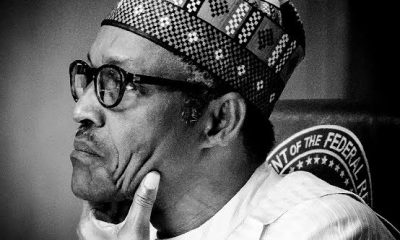
Ibrahim Badamasi Babangida (IBB), former maximum ruler, has said that the Muhammadu Buhari regime was overthrown because he was dissatisfied with the latter’s policies and leadership styles.

Babangida was chief of staff to Buhari who ousted Shehu Shagari’s civilian government in the December 31, 1983 coup.


In his autobiography, ‘A Journey In Service’, launched in Abuja on Thursday, IBB said the Buhari regime promulgated “draconian” decrees which led to the abuse of fundamental rights and freedoms of the citizens.

He said he believed the policies of Buhari and his deputy, Tunde Idiagbon, “were detrimental to the nation’s progress” and his dissatisfaction “eventually led to its ouster in 1985”.


“After the military coup that replaced the civilian government of Shehu Shagari with a military regime led by Major General Muhammadu Buhari, Ibrahim Babangida assumed the role of Chief of Army Staff. However, he became increasingly dissatisfied with the Buhari government’s policies and leadership style, which he believed were detrimental to the nation’s progress. This dissatisfaction eventually led to its ouster in 1985, and he took office as the military President,” the book reads.


Recalling how he journeyed from Minna to Lagos on August 27, 1985, to assume office, Babangida said tension had already began to build up since the start of the year and a change in leadership had become necessary.

See also  APC presidential aspirants need 370 statutory delegates to sign forms


The former Nigerian leader further said that the coup which brought Buhari into office, which he described as a “rescue mission”, had derailed with the military at the risk of splitting.

“On that day, it became my lot to step into the saddle of national leadership on behalf of the Nigerian armed forces. The change in leadership had become necessary as a response to the worsening mood of the nation and growing concern about our future as a people. All through the previous day, as we flew from Minna and drove through Lagos towards Bonny Camp, I was deeply reflecting on how we as a nation got to this point and how and why I found myself at this juncture of fate,” IBB said in his book.

“By the beginning of 1985, the citizenry had become apprehensive about the future of our country. The atmosphere was precarious and fraught with ominous signs of clear and present danger. It was clear to the more discerning leadership of the armed forces that our initial rescue mission of 1983 had largely miscarried. We now stood the risk of having the armed forces split down the line because our rescue mission had largely derailed. If the armed forces imploded, the nation would go with it, and the end was just too frightening to contemplate.

See also  Buhari signs 2022 amended Electoral Act, statutory delegates can now vote


“Divisions of opinion within the armed forces had come to replace the unanimity of purpose that informed the December 1983 change of government. In state affairs, the armed forces, as the only remaining institution of national cohesion, were becoming torn into factions; something needed to be done lest we lose the nation itself. My greatest fear was that division of opinion and views within the armed forces could lead to factionalisation in the military. If allowed to continue and gain root, grave dangers lay ahead.”

He claimed that Buhari and Idiagbon “posited a ‘holier than thou’ attitude”, separating themselves from what was meant to be a collective leadership.

He added that the duo caused the nation to become antagonistic towards the military.


“Fundamental rights and freedoms were being routinely infringed upon and abused. As a military administration, we were now presiding over a society that was primarily frightened of us,” he said.

“We were supposed to improve their lives and imbue the people with hope for a better future. Instead, we ruled the nation with a series of draconian decrees. An administration intended to reflect the collective will of the armed forces as a national institution came to be seen as the private personal autocracy of a stubborn few.

See also  Buhari not in charge of Nigeria, governance out of his hands – Babachir Lawal


“Draconian decrees led to the abuse and severe limitation of basic freedoms as people were clamped into indefinite detention, most times for minor infractions. Punishment for crimes against the state had led to the pursuit of mechanical legalistic justice against the dictates of natural justice. As the Chief of Army Staff, I was under undue pressure from the rank and file to seek ways of reconnecting the government to society lest we lose the nation itself.


“This tense atmosphere culminated in the unanimous decision of a broad spectrum of senior and middle-level officers to change the nation’s leadership. The processes associated with this change were completed without bloodshed by midnight on August 26, 1985.”

In his 1985 maiden address to the nation reproduced in the book, Babangida said Buhari was “too rigid and uncompromising in his attitudes to issues of national significance”.

He added that Idiagbon “was similarly inclined in that respect” and that “a combination of these characteristics in the two most important persons holding the nation’s vital offices became impossible to contend with”.


Babangida said an action had to be taken so as to rebuild the hopes of Nigerians, hence the ousting of the Buhari military regime.

Continue Reading
Click to comment

Leave a Reply

Your email address will not be published. Required fields are marked *

Lifestyle

Jubril Adewale Tinubu @59: Rich in Fortune, Richer in Humanity

Published

on

By

Adebayo Adeoye

There are men who announce their greatness with noise, and then there are those whose achievements speak so thunderously that fanfare becomes unnecessary. Jubril Adewale Tinubu — “Wale” to friends, family, and the many who hold him in deep admiration — belongs firmly in the latter category.

As he marks another year of a life lived with uncommon purpose and quiet distinction, it is only fitting that the world pauses, if only for a moment, to celebrate a man whose footprints are etched permanently on the landscape of Nigeria’s economic history.

Wale Tinubu’s journey reads like the kind of story that inspires a generation. Armed with a Bachelor of Laws degree from the University of Liverpool and a Master of Laws from the prestigious London School of Economics, where he specialised in International Finance and Shipping, he returned to Nigeria not merely to practise law, but to build an empire.

He began his career at the family law firm, K. O. Tinubu & Co., sharpening his instincts in corporate and petroleum law — skills that would later serve as the bedrock of something far bigger than anyone could have imagined.

See also  Tinubu, Shettima meet Buhari behind closed-door

In 1994, with vision as his compass and tenacity as his fuel, he founded Ocean and Oil Group — a modest oil trading and shipping outfit that he would, over the next three decades, transform into Oando PLC, Sub-Saharan Africa’s foremost integrated indigenous energy group. It is the kind of achievement that defies easy description.

Forbes Magazine captured it best in its 2011 edition, crowning him “The King of African Oil” — a title that, even years later, sits comfortably on his broad shoulders. In 2007, the World Economic Forum in Geneva named him a Global Young Leader, placing him in the exclusive company of the world’s most consequential minds under the age of 41.

Yet, what truly separates him from the ordinary captains of industry is the humanity he brings to his enterprise. His leadership of Oando has never been merely about barrels of oil or bottom lines. It has been about people — about building local capacity, championing indigenous talent, and proving, with every quarterly result and every community touched, that African businesses can compete and win on the global stage.

See also  Man, 61, remanded in prison custody for allegedly defiling minor

For the young Nigerian entrepreneur staring at a blank page and a bold dream, Wale Tinubu is living proof that it is possible.

Beyond the boardroom, his philanthropic instincts have left an indelible mark. Through the Oando Foundation, he has positively impacted over 500,000 Nigerian children through school adoption programmes, digital learning initiatives, and teacher training — a legacy that no balance sheet can fully capture.

In a world where success often breeds aloofness and privilege can create distance, Tinubu remains refreshingly accessible and profoundly humane. His interactions with people are marked by warmth, sincerity and a genuine interest in the welfare of others.

Whether dealing with friends, associates or even casual acquaintances, he has consistently demonstrated that true greatness lies not in the accumulation of material possessions but in the ability to uplift and inspire those around us.

Many who know him count themselves fortunate to have encountered him. Indeed, there is a recurring sentiment among those within his circle that destiny smiled kindly on them the day their paths crossed with his.

See also  Oluwo urges Yoruba monarchs, elders to meet Buhari on Igboho’s release

Such is the effect of a man whose benevolence transcends social and professional boundaries.

At 59, JAT as fondly called stands as a compelling reminder that a life of impact is measured not solely by personal accomplishments but also by the positive difference one makes in the lives of others. His journey thus far reflects purpose, compassion and an abiding commitment to humanity.

On this occasion of his birthday, the tributes are many and deserved. He is being celebrated as “one of the significant contributors to Africa’s economic growth and development.” But perhaps the greatest tribute comes not from statesmen or magazine covers, but from the young entrepreneurs across the continent who look at Tinubu and dare to dream bigger.

Continue Reading

Lifestyle

At 90, Chief Mrs. Alice Mobolaji Osomo Remains a Symbol of Purposeful Leadership – Ambassador Iji

Published

on

By

The Nigerian Ambassador to the Russian Federation, Ambassador Joseph Olusola Iji, has paid glowing tribute to Chief Mrs. Alice Mobolaji Osomo on the occasion of her 90th birthday, describing her as a distinguished elder stateswoman whose legacy of service continues to inspire generations within and beyond Nigeria.

In a congratulatory message issued from the Embassy of the Federal Republic of Nigeria in Moscow, Ambassador Iji celebrated the former minister’s remarkable contributions to national development, noting that her career remains a shining example of patriotism, dedication and unwavering professionalism.

According to the Ambassador, Chief Osomo’s public service journey is a masterclass in leadership and commitment to nation-building. He recalled her tenure as Commissioner for Trade, Industries and Cooperatives in Ondo State, where she played a pivotal role in laying the state’s industrial foundation through the establishment of key industries and enterprises that contributed significantly to economic growth and employment.

Ambassador Iji further highlighted her distinguished service at the national level, where she held strategic positions including Minister of Establishment and Management Services, Director of NICON Insurance, and Minister of Housing, Land and Urban Development.
“In every role she occupied, Chief Mrs. Osomo demonstrated selfless commitment to national progress and upheld the highest standards of excellence,” he noted.

See also  Insecurity: Nigeria on life support, says Wike

The Ambassador also expressed pride in Chief Osomo’s roots as a daughter of Apoi Land and a respected leader from Ondo State, emphasizing that her achievements have brought honour not only to her community but also to Nigeria as a whole.

He described her as a matriarch whose life embodies the values of integrity, resilience, and service, Ambassador Iji said her impact continues to transcend geographical boundaries and generations.

“As she marks this remarkable milestone, we celebrate not just her longevity but the enduring legacy she has built through decades of dedicated service to humanity and nationhood,” he stated.

He concluded by offering prayers for God’s continued blessings upon the nonagenarian, wishing her excellent health, abiding joy, peace and many more years of fulfilment.

Chief Mrs. Alice Mobolaji Osomo’s 90th birthday has attracted widespread goodwill messages from across Nigeria and the international community, reflecting the profound respect and admiration she has earned through a lifetime of exemplary public service and leadership.

See also  Tinubu, Shettima meet Buhari behind closed-door

Continue Reading

Lifestyle

The Other Side of Kayode Ajulo

Published

on

By

He is widely admired as one of the brightest legal minds of his generation, an exceptional advocate whose deep understanding of the law earned him the prestigious title of Senior Advocate of Nigeria (SAN).

Today, Dr. Kayode Ajulo, Officer of the Order of the Niger (OON) holds the influential office of Commissioner for Justice and Attorney General of Ondo State.

In both legal and political circles, Dr. Ajulo is seen as a force to be reckoned with and respected for his sharp intellect, fearless courage, and an unshakable commitment to justice.

But there’s a side of him that most people rarely get to see.

While the public encounters him in courtrooms, strategy rooms, and government corridors, Ajulo’s life is equally shaped by something quieter, deeper and undeniably spiritual.

Those who know him well often describe a man whose faith goes beyond public displays. He is not the kind of person who treats worship with casualness; rather, he is deeply devoted to the things of God, with a reverence that shows in how seriously he takes his spiritual responsibilities.

See also  Brothers, 24 others arrested for internet fraud in Ibadan

And then there’s another interesting detail: beyond the legal mind, Ajulo is also said to have a genuine love for hymn music, a softer, more reflective side that finds joy in worship, Christian fellowship, and hymn renditions. For him, faith is not a public performance; it is a life lived with devotion.

That lesser-known side of his personality was on full display last weekend when he honoured the Women Fellowship Day of the Cherubim and Seraphim Church, Abuja District Headquarters as Special Guest of Honour and Father of the Day.

Witnesses described the outing as touching and unforgettable. Ajulo reportedly delivered inspiring messages filled with conviction, sprinkled with soul-lifting songs that resonated strongly with the congregation.

His words moved the audience so deeply that many gave him a standing ovation, accompanied by thunderous applause.

In addition, the Ondo Attorney General further demonstrated his commitment to the work of the gospel through generous financial support for the church’s activities.

See also  Pastor remanded in prison custody for allegedly defiling 7-year-old girl

To Kayode Ajulo, life is clearly not defined by title alone, nor by legal brilliance or political influence. Behind the formidable advocate is a man driven by faith, service, and a steady devotion to God, proving that even with a tough legal mind, his heart still beats for humanity and for the work of the Kingdom.

Continue Reading

Trending News