Oil marketers and the Nigerian Midstream and Downstream Petroleum Regulatory Authority have said the prices of refined petroleum products are to drop further following the commencement of operations at the Warri Refining and Petrochemicals Company Limited.
Dealers in the downstream oil sector said competition in the space would now be stiffer, as domestic refiners would be forced to reduce prices to get buyers.
They stated this on Monday following the announcement by the Nigerian National Petroleum Company Limited that the 125,000 barrels per day WRPC in Delta State had commenced operations.
NNPCL also announced plans to begin the export of locally refined products to foreign countries in exchange for foreign currency.
The development comes barely a month after the commencement of operations at the 60,000 barrels per day-old Port Harcourt Refinery in Rivers State.
During an inspection tour of the facility on Monday, the NNPCL Group Chief Executive Officer, Mele Kyari, explained that the inspection aimed to show Nigerians the level of work completed so far.
Kyari, addressing a tour team, which included the Chief Executive Officer of NMDPRA, Farouk Ahmed, and the NNPC Board Chairman, Pius Akinyelure, noted that the repairs on the facility were not yet 100 per cent complete, but refining operations had commenced and would focus on producing straight-run kerosene, diesel, and naphtha.
However, President Bola Tinubu, in a statement celebrating the milestone, said the facility is operating at 60 per cent, representing 75,000 barrels per day capacity.
Kyari said, “We are taking you through our plant. This plant is running. Although it is not 100 per cent complete, we are still in the process. Many people think these things are not real. They think real things are not possible in this country. We want you to see that this is real.”
He stated that the restart of the Warri refinery will help the nation become a net exporter of petroleum products, as some of these products will be sent to the international market.
“Secondly, this plant had three stages; we have started plant one, which we call Area One. It’s able to produce AGO (diesel), kerosene, naphtha, and a blend of crude oil. These are high-grade quality products that are required in the country, and we may need to export them. So this will give us cash, this company will make money and the promise of Mr President that this country must be a net exporter of petroleum products is already happening. Some of these products will go into the international market.
“Most importantly, I must put on record that Mr President believes that we can get this to work and get them to start and gave us the charge that we must start all three refineries. It’s already happening; we have started the 60,000 barrels per day refinery, and Area One of the Warri refinery is already working. Other plants that would produce PMS are being streamed and they would also come alive.
“Lastly, the Kaduna refinery is also on stream. We are not going to give you a date, but we would surprise Nigerians as we did the other day, and Kaduna would start operations. We thank Mr President for supporting us all the way through. I must congratulate our team for their determination and extreme belief that this country can restart this plant. This has brought this result in collaboration with our contractors and our entire staff. I would like to thank them and appreciate them for making history and that it’s possible to start a plant that you deliberately shut down. It’s possible and we have proved it,” he added.
Marketers speak
The National Operations Controller of the Independent Petroleum Marketers Association of Nigeria, Mustapha Zarma, said the competition in the downstream oil sector is now going to intensify.
This, he said, is going to force down refined petroleum products’ prices.
He said, “Certainly, there is going to be a further drop in prices once the facility starts pumping out products in large volumes. This is because there is going to be a lot of competition and the market will be driven by market forces at the end of the day.
“We want to commend the efforts of the government and NNPC for making sure that the Warri refinery has started operating, and we encourage them to make sure all three refineries operate. Port Harcourt refinery earlier started operations, now Warri has started and we expect Kaduna to follow.
“With this development, we believe that the market will be driven by a lot of competition. And that competition at the end of the day will bring succour to the common man as a result of the further drop in fuel prices.”
Also, the NMDPRA Chief Executive, Ahmed Farouk, speaking at the tour of the plant, said the new refinery wiould drive down the price of petroleum products in Nigeria.
He added that investors were building modular refineries which would benefit Nigerians.
“We thank God Almighty for yet another milestone. It’s been a very pleasing year 2024. We have seen our plants coming up. Last month, we commissioned the Port Harcourt refinery. Before that, the Dangote refinery was producing. Now we are in Warri refinery Area One, which we understand is producing products like naphtha, fuel oil, and AGO. And by the time the second part of it comes on, it will start producing petrol. We can still blend naphtha for the gasoline but when the other plants come on, it will be producing gasoline directly.
“It is important to note that this achievement is being enjoyed by the Nigerian public. For the first time in more than two decades, we are having the Yuletide without fuel queues and fuel all over the country. This is due to the determination of President Bola Tinubu to push the regulator and NNPC to come onstream.
“Investors are also coming in. We now have modular refineries around the country, and they are producing gasoline and kerosene. We only have to consolidate all of these to reflect on the pricing, which we expect to still come down.
“The regulator intends that prices should come down with the abundance of products available across the country for the betterment of the consumer,” Farouk said.
The NMDPRA boss continued, “We can see what some people termed as a price war; it’s not a price war but a competition for the market share. Both refineries are coming on and the importation of fuel to supplement whatever we have locally. We would now have the barometer to measure the price, and we believe that the price will still come down. And this is due to the abundance and availability of the product all across the country.
“I must also commend the NNPCL for their determination to ensure that the plants are already on stream and they are already working on the Kaduna refinery. This is an achievement for our country and we should not take it lightly. Our energy security is improving and it would reflect on the economy.”
Also on his part, the Secretary of IPMAN, Abuja-Suleja, Mohammed Shuaibu, stated that aside from reducing the prices of refined products, the commencement of operations of the Warri refinery would cushion the dollar demand for fuel imports.
He said, “Nigerians are happy and we marketers are too, because I know that with this development, the prices of refined products in Nigeria will continue to go down. Remember the President directed that crude be sold to the Dangote refinery in naira, which was a good sign of hope for the common man.
“As it is now, the demand for dollars to import products will continue to drop and this will positively impact our foreign exchange reserves. So we are happy that the Warri refinery is now on stream, after the commencement of operations at Port Harcourt refinery. We pray that Kaduna will also begin operations soon.
“Once all the refineries begin operations, you can imagine the level of competition that will take place in the downstream oil sector. In a country with five refineries, one by Dangote and four by NNPC, the competition will be heavy and the prices of products will crash.”
WRPC rehabilitation
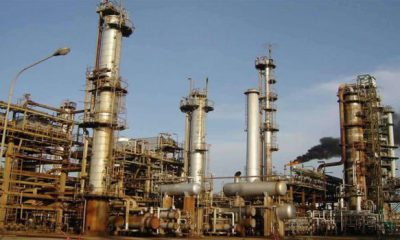
Warri refinery has been under rehabilitation since 2021 for $898m. Located in Ekpan, Uwvie, and Ubeji, Warri, the petrochemical plant produces 13,000 metric tonnes per annum of polypropylene and 18,000 MTA of carbon black.
Inaugurated in 1978 and managed by NNPCL, the WRPC was built to supply markets in the southern and southwestern regions of Nigeria.
The mechanical completion of the facility was initially scheduled for the first quarter of 2024, according to the NNPCL spokesperson, Olufemi Soneye.
“Warri should be done by Q1 (first quarter) 2024,” Soneye stated.
The WRPC is one of Nigeria’s four refineries, alongside the old and new Port Harcourt Refining Company in Rivers State and the Kaduna Refining and Petrochemical Company in Kaduna State.
The revamp offers a significant boost to a nation aiming to reduce its dependence on costly fuel imports.
Additional production from the Warri plant moves Africa’s top oil-producing nation closer to becoming self-sufficient in locally consumed refined products following the startup of the giant 650,000-barrels-a-day Dangote refinery in Lagos, which began operations earlier this year.
The coming onstream of the Dangote refinery dragged the price of petrol to N935 per litre after a consistent price surge by the national oil firm.
The development came after intense pricing competition in the nation’s downstream sector, which triggered what some observers tagged a price war between NNPCL and Dangote due to a reduction in the ex-depot price to N899 per litre.
Recently, the NNPCL, in a surprising development, slashed petrol prices by 12 per cent, to the delight of Nigerians and marketers.
While fuel importation has not completely stopped, ramping up domestic production could cut foreign exchange demand by at least 15 per cent, according to the Central Bank of Nigeria.
Speaking further at the tour on Monday, the NNPCL board chairman thanked the refinery staff for their efforts in achieving the milestone.
He also stated that the country would soon stop the importation of refined petroleum products.
He said, “Today is a very happy day for us at the NNPCL for witnessing those milestones where we have proven that we can produce AGO, naphtha, kerosene, and other products. I thank the refinery employees who have joined the management in Warri to get to this point.
“Nigerians are waiting for products that they need, and very soon imported refined petroleum products will be a thing of the past. We will start exporting. More refineries are coming up and they should be encouraged. The more we can build and export it will help the value of our naira. One more time I want to thank our regulatory authority for finding time to be here, the GCEO for his unrelenting efforts to make all our refineries work.”
Tinubu welcomes reopening
President Tinubu expressed his profound joy at the re-opening of the Warri Refining and Petrochemical Company by the NNPCL.
He described the development as “another remarkable achievement in 2024 that has strengthened Nigerians’ hope in his administration.” Tinubu’s Special Adviser on Information and Strategy, Bayo Onanuga, revealed this in a statement on Monday.
The statement was titled ‘President Tinubu commends NNPCL over the re-opening of Warri refinery.’
“Today, the Warri Refinery returned to operation weeks after NNPC Limited restarted the 60,000 barrels per day at the Port Harcourt Refinery in November.
“With Warri Refining and Petrochemical Company going into operation after several years of inactivity, President Tinubu has once again expressed his administration’s determination to ramp up local refining capacity and make Nigeria a hub for downstream industrial activities in Africa,” the statement read.
The All Progressives Congress-led administration of former President Muhammadu Buhari awarded the contract for the complete rehabilitation and overhaul of the four state-owned refineries.
President Tinubu noted with confidence that with the 125,000 bpd Warri refinery now operating at 60 per cent capacity, his administration’s comprehensive plan to ensure energy efficiency and security is entirely on course.
He praised the Mele Kyari-led management of the NNPCL for working hard to restore Nigeria’s glory and pride as a major oil-producing country.
“The restart of Warri Refinery today brings joy and gladness to me and Nigerians. This will further strengthen the hope and confidence of Nigerians for a greater and better future that we promised.
“This development is a remarkable way to end the year following the feat recorded earlier with the old Port Harcourt Refinery. I am equally happy that NNPC Limited is implementing my directive to restore all four refineries to good working condition.
“I congratulate Mele Kyari and his team at NNPCL for working hard to restore our national pride and make Nigeria a hub for crude oil refining in Africa,” President Tinubu said.
President Tinubu enjoined NNPCL to accelerate repair work on Kaduna Refinery and the 150,000 bpd second refinery in Port Harcourt to consolidate Nigeria’s position as a global energy provider.
WRPC will focus on producing and storing critical products, including Straight Run Kerosene, Automotive Gas Oil and heavy and light Naphtha.
The WRPC located in Warri, Delta State, Nigeria, was commissioned in 1978 as the nation’s first wholly owned refinery.
Originally designed to process 100,000 barrels of crude oil per day, it was later upgraded in 1987 to handle 125,000 barrels per day.











 News4 years ago
 Privacy5 years ago
 News5 years ago

 News5 years ago
 Opinion5 years ago
 News5 years ago
 Sports5 years ago