
Business
Kudos, commendations as Abuja Business and Investment Summit ends in grand fashion

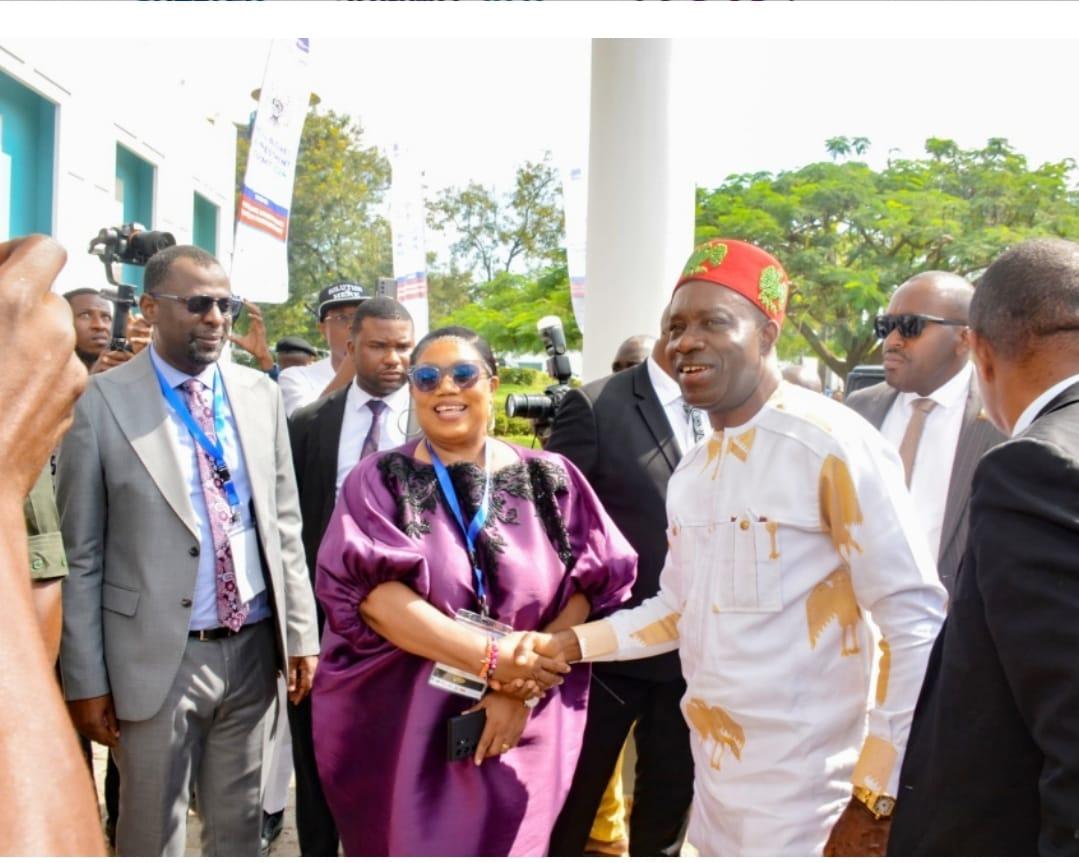
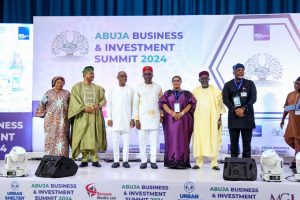
The inaugural Abuja Business and Investment Summit kicked off last Wednesday, October 16, 2024, at the Shehu Musa Yar’Adua Centre, Abuja, under the theme “Optimizing Investments through Partnership.”
The event gathered top government officials, captains of industries, Heads of Foreign Missions, development partners, business leaders as well and prospective investors. The summit is aimed at showcasing the vast investment potential within Nigeria’s Federal Capital Territory (FCT).
In his opening remarks, the minister for the Federal Capital Territory, Barr. Nyesom Wike, delivered a powerful address, calling for collaborative investments. He highlighted that Abuja presents significant opportunities across sectors, such as agriculture, healthcare, tourism, construction, mining, and renewable energy. He emphasized that his administration plans to launch nine major projects next week to enhance investment conditions in the FCT.
“Security is paramount in attracting investors. The safety of our investments is our top priority’,’ Barr. Wike said.
He also emphasised the ongoing security measures to foster a conducive business environment for residence and investors in the FCT.
Wike further outlined that the FCT is poised for investment due to its strategic location and developing population.
“Abuja is not just the political capital of Nigeria; it is a place of opportunities waiting to be harnessed.” He added.
He also encouraged both local and foreign investors to explore vast opportunities in real estate, technology, Agro-business, and more.
Former Central Bank of Nigeria, CBN and the incumbent governor of Anambra State, Prof Charles Soludo, in his keynote speech, raised concerns regarding Nigeria’s low Foreign Direct Investment (FDI) flows. He pointed out the need for Nigerians to support local products.
The Anambra state governor described foreign companies exiting Nigeria as “opportunistic” firms that jump from one country to another “the day they have itchy feet”.
“Dear friends, there is what we call the new mercantilism and pseudo-nationalism; it’s both a threat and an opportunity. In today’s world, in many countries, new nationalism is back. Economic nationalism is back, new mercantilism is back,”
“People are saying ‘America first’. We must be intentional. The agenda of ‘Nigeria first’ as a philosophy is something that we must mainstream. This will require us to intentionally nurture national champions for sustainability.
“If you see the companies that have pulled out of Nigeria, how many of them happen to be national companies? None. The day they have itchy feet, they jump to the next one (country), they are very opportunistic. Extremely opportunistic, with no emotions to it. So, for long-term sustainability, we must nurture the domestic capital and build them.” He said.
He expressed the hope that “both forex and price level will stabilise and the interest rate and monetary policy will loosen” for business owners to borrow at reasonable rates to have real return on investments
He also said lower interest rates would shore up domestic investment, even foreign investment.
Continuing, he maintained that the oil and gas sector would remain a game-changer for the Nigerian economy, he however encouraged the government of the day to shore up daily oil production to around three million barrels per day to boost forex.
“In the short to medium term, the oil and gas sector will remain the game changer for Nigeria. It is still going to be very critical,” he said, adding that addressing security challenges and fostering ease of doing business would help fast-track economic recovery.
In her remark, Amb. Maureen Tamuno, PhD, the Group Managing Director of the Abuja Investment Company Limited, AICL and the summit’s host, expressed confidence in the selected panelists, anticipating that their insights would pave the way for new economic growth.
“This summit is aimed at promoting investment opportunities in the Federal Capital Territory while facilitating networking among investors,” she stated.
In messages of support, Mr. Alade Akinremi, representing the Minister of Foreign Affairs, emphasized the importance of partnerships to maximize returns on investments. He reflected on the uniqueness of the FCT as a melting pot of Nigerian families, fostering an inclusive business environment.
Former First Lady of Benue State, Mrs. Yemisi Suswan, highlighted challenges in affordable housing, urging stakeholders to consider upgrading informal settlements in the FCT. Meanwhile, Hon. Shino Oyedeji from the House of Representatives praised the summit for aligning with President Ahmed Tinubu’s vision of a “New Nigeria.”
A series of panel discussions commenced, focusing on critical topics including infrastructure development and the establishment of Public-Private Partnerships (PPPs) as effective means for enhancing infrastructure and services in the territory.
The summit aims to forge necessary partnerships to amplify Nigeria’s potential for investment, drive growth, and enhance economic prosperity across various sectors.
The event climaxed on Day 2 with a series of insightful panel discussions:
The first panel, with the theme; Leveraging Technology for Economic Growth was moderated by Mrs. Kate Pam Semiek, CEO of Stalwart Group, who zeroed in on how Nigeria can utilize emerging technologies—such as artificial intelligence, blockchain, and the Internet of Things—to foster economic development.
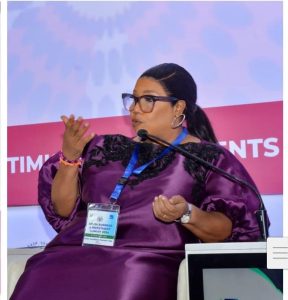
Panelist Precious Adah Ogbuehi, Regional Head for West Africa at Tepfx, emphasized the transformative power of technology in trading.
She stated that in the age of AI, trading has become effortless.
‘’You simply invest your money, and the AI manages the trades while you sleep,” she said.
She described technology as an “enabler,” integral to accelerating progress—no longer a luxury but a necessity.
On his own, Mr. Soyinka Shodunke, Chief Information Officer at MTN Nigeria, reinforced this idea by stating that he processes about 52 billion records daily thanks to technological capabilities. Meanwhile, Mr. Yusuf Shafeek Isah, Managing Director of Abuja Technology Village, highlighted Abuja’s strategic location as a beacon for potential investors.
The second panel discussion, moderated by Kimberly Nwanachukwu, focused on the investment opportunities within Nigeria’s thriving entertainment sector, which reportedly contributes over $7 billion annually to the economy.
Dr. Emeka Rollas of the Actors Guild of Nigeria, AGN, lamented that despite Nollywood’s potential, many producers struggle financially.
“Nollywood isn’t earning to its full potential, which results in a visible disparity among industry professionals,” he said.
Abiodun Akanbi, Chief Investment Officer at the AICL, noted that Abuja is poised to become a major entertainment hub, with plans for a dedicated Abuja Film Village.
Fidelis Duker, Chairman of FAD Media Group, called for government support in building infrastructure for the industry. “Just as stadiums aren’t built by footballers, the government should invest seriously in film,” he stated.
The founder of the Best of Nollywood Award, BON, Seun Oloketuyi on his own gave kudos to the organisers for this noble summit.
‘’I appreciate the organisers of the event for deeming it fit to include entertainment to the summit, this does not happen every time. People don’t always mix entertainment with business summits in this part of the world. He therefore encouraged AICL to boost the economy of Abuja by partnering with notable entertainers.
The third panel was moderated by Arise News correspondent Nissi Ochoche Gabriel. The speakers examined how streamlined government policies could bolster investment.
Mrs. Toyin Bashiru, a partner in a legal firm, discussed the impact of technology in simplifying regulatory processes and reducing the need for physical document stamping. Dr. Emomotimi John Agama from the Securities and Exchange Commission, SEC spoke on financial literacy, stressing its importance for small and medium-sized enterprises looking to attract investment.
“Transparency and effective processes build confidence, which is essential for achieving our investment goals” He encouraged. While also addressing the challenges of financial mismatches that hinder long-term business growth.
The day’s final panel, moderated by business development expert Jacklin Yawa, delved into the agriculture sector—a field facing a $35 billion funding gap despite its significant contribution to Nigeria’s GDP.
Akin Orebiyi, founder and CEO of Ewari Farms, projected that Africa’s agribusiness market would reach $1 trillion by 2030, stressing the need for investments in various facets of agriculture, from production to logistics. Mr. Oladele emphasized the importance of cluster farming to reduce operational costs through shared resources.
CEO of Mainstay Agro Allied Limited, Promise Amahah, highlighted that successful agriculture goes beyond just farming. He called attention to the need for extensive pre- and post-production planning to unlock untapped potential in the Federal Capital Territory.
Meanwhile, the summit’s goodwill message, delivered by Dayo Israel, commended Ambassador Tamuno for facilitating the event and reiterated the importance of creating a conducive environment for businesses to thrive.
“As we come together to explore investment opportunities, we must ensure Abuja and Nigeria are recognized as trustworthy partners for investors.
With these discussions, the Abuja Business and Investment Summit 2024 is set to generate critical insights and forge valuable partnerships aimed at enhancing Nigeria’s economic landscape’’ He added.
The summit concluded on a high note, emphasizing the critical role women play in driving Nigeria’s economic growth.
In her insightful opening remarks, the Special Guest of Honour, Dr. Mariya Mahmoud, the Minister of State for the Federal Capital Territory (FCT) outlined that empowering women entrepreneurs is not just a matter of equity; it is an economic imperative. While she also highlighted that women-owned businesses represent about 41% of Small and Medium Enterprises (SMEs) in Nigeria, and urged stakeholders to help overcome barriers such as limited access to financing and mentorship for women entrepreneurs.
Dr. Mahmoud underscored the dual impact of women in business: driving innovation and fostering social change.
“Women are breaking barriers in various sectors, including technology, agriculture, manufacturing, and services. Their contributions are as diverse as they are impactful,” she added.
The convener of the summit, Ambassador Maureen Tamuno, also echoed these sentiments in her welcome address. She called for leaders and change-makers to dismantle barriers that hinder women’s progress, fostering a business environment that promotes gender equity. Her remarks set the stage for two impactful panel discussions centred on women’s empowerment and impact investment.
The first panel discussion, titled ‘Women Development and Economic Empowerment’ explored strategies to fuel inclusive economic growth through investment in women-led enterprises. Moderator Hasatu Adegbite, a National Consultant with UN Women, guided a dialogue featuring prominent leaders, including Pamela Shodipo, Executive Director of Fidelity Bank, who discussed targeted financial products aimed at supporting women entrepreneurs.
Princess Layo Bakare Okeowo, CEO of FAE Limited, emphasized the importance of employing women, noting that “80% of her staff are women because they are detail-oriented. Bonaventure Okhaimo, COO of the Development Bank of Nigeria, highlighted the bank’s commitment to funding women-led Micro, Small, and Medium Enterprises (MSMEs) and offering capacity-building programs.
The second panel delved into “Impact Investment,” led by moderator Treasure Okuku. Panelists include Mrs. Kai Orgah, MD/CEO of ARM Investment Managers, Dr. Mrs Felicia Mogo, Fiaona Ahmed, Ahime, and Dr. Kayode Akinade, who discussed the significance of investments that not only generate financial returns but also yield positive social impact. Together, they illustrated how Nigeria can harness impact investing to stimulate development across vital sectors like healthcare, education, and agriculture.
Senator Binta Garba gave her success story, encouraging women not to give up no matter how tough the situation.
The summit also provided a platform for attendees to share inspiring success stories, fostering a culture of resilience and determination among women entrepreneurs.
In her closing remarks, Ambassador Tamuno expressed gratitude to all participants, attributing the summit’s success to their collective efforts. She reaffirmed her commitment to continuing the work of AICL in empowering women and driving economic growth in Nigeria.
The summit concluded with a renewed call for collaboration and partnership as essential tools for promoting innovation and creating lasting economic impact.


-

 News4 years ago
Insecurity: Buhari presides over National Security Council meeting (Photos)
-

 Privacy5 years ago
Self-imposed Oba vacates ‘palace’ after warnings by community
-

 News5 years ago
Nollywood Actress Nkechi Blessing speaks on plastic surgery, big butts
-
 Entertainment4 years ago
DJ Dimple Nipple dropped by longtime boyfriend after claiming D’Prince allegedly demanded sex for roles
-

 News5 years ago
Plus size rocks: Ghanaian plus size dancer who can’t travel by air because of her size
-

 Opinion5 years ago
Leave our community, Imobi orders self-imposed Oba
-

 News5 years ago
How CCTV ’caught’ Baba Ijesha molesting minor
-

 Sports5 years ago
Meet Ashleigh Plumptre, the ‘Oyinbo’ member of Nigeria Super Falcons [Video]