Connect with us

News

Petrol imports dropped by 3.58bn litres after subsidy removal – NBS

Published

on

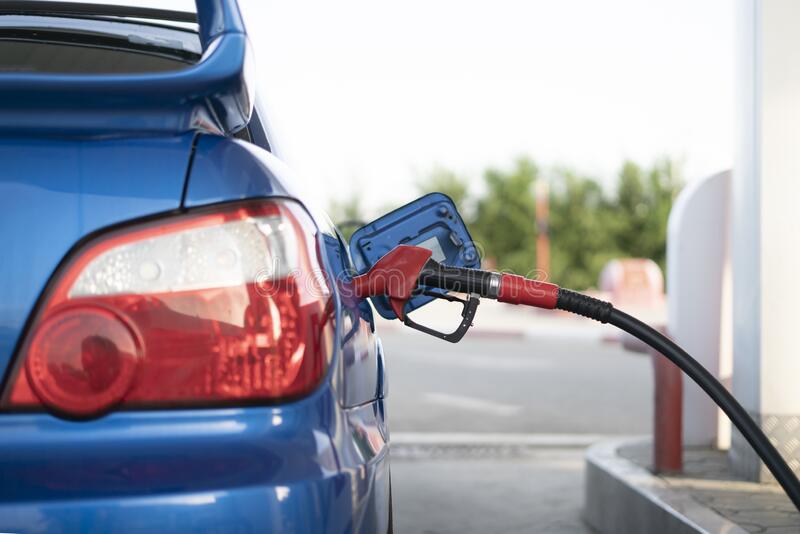
The National Bureau of Statistics has stated that Nigeria recorded a reduction in petrol importation following the removal of fuel subsidy by President Bola Tinubu in May 2023.

It also said the total of fuel imports reduced to 20.30 billion litres in 2023 from the 23.54 billion litres recorded in 2022, showing a decrease of 13.77 per cent year-on-year.

It disclosed this in the latest petroleum products distribution statistics released by the agency on Tuesday, as it noted that petrol imports dropped by 3.58 billion litres in the second half of 2023 compared to the year’s first half.

It said the country imported 8.36 billion litres of Premium Motor Spirit (petrol) in H2 (first half) of 2023, a significant decrease from the 11.94 billion litres imported in H1 2023, marking a 29.99 per cent reduction.

It said, “In 2023, PMS truck out stood at 20.22 billion litres, indicating a 16.96 per cent decrease relative to 24.35 billion litres recorded in 2022.

“In terms of imported products, 20.30 billion litres of Premium Motor Spirit were imported in 2023 relative to 23.54 billion litres in 2022, showing a decrease of 13.77 per cent. This downward trend is even more notable when compared to H2 2022.

See also  BREAKING: Tinubu decorates acting IGP Tunji Disu with new rank

“In the latter half of 2022, petrol imports stood at 11.98 billion litres, resulting in a 30.22 per cent drop when compared to H2 2023, equivalent to a reduction of 3.62 billion litres.”

A breakdown for the monthly volume of fuel imports in 2023 showed that 2.09 billion was brought in January, reduced to 1.99 billion in February, increased to 2.29 billion in March, 1.91 billion in April, and 2.01 billion in May.

It was 1.64 billion in June, 1.45 billion in July, 1.09 billion in August, 1.21 billion in September, 1.16 billion in October, 1.55 billion in November and 1.88 billion in December.

These figures highlight the impact of the subsidy removal on the volume of petrol imported into the country.

Similarly, the bureau stated that the volume of Automotive Gas Oil, also known as diesel imported into Nigeria, rose to 4.94 billion litres in 2023 from four billion litres in 2022.

The statistics also showed that 109.39 million litres of AGO was locally produced in 2023, representing a 6.76 per cent rise from 102.47 million litres produced in 2022.

“About 69.71 million litres of Household Kerosene were locally produced in 2023 compared to 44.68 million litres in 2022, indicating a growth rate of 56.02 per cent over the period.

See also  Fuel subsidy removal: NLC plans nationwide protests for Jan 27, Feb 1

“For Automotive Gas Oil, 109.39 million litres were locally produced in 2023, when compared to 102.47 million litres reported in 2022. This represents a 6.76 per cent growth rate.

“Also, 4.94 billion litres of Automotive Gas Oil were imported in 2023, indicating an increase of 23.66 per cent compared to four billion litres in the previous year,” It added.

Upon assumption of office on May 29, President Tinubu during his inauguration speech announced a total removal of subsidy on petrol price.

Shortly after, fuel prices soared across Nigeria, with some stations selling PMS at prices as high as N700 per litre.

According to the 2023 full-year foreign trade data, Nigeria’s spending on fuel import decreased by approximately 2.6 per cent, from N7.7tn in 2022 to N7.5tn in 2023.

In terms of semi-annual comparison, the country incurred N3.5tn in fuel importation costs in the second half of 2023, representing a 10.26 per cent decrease compared to the N3.9tn recorded in the first half of the year.

Also, in the first six months of 2024, the country’s petrol import bill stood at N5.8tn.

When compared to the same period of 2023, the country’s petrol import bill increased by 87.09 per cent from N3.1tn

See also  TB Joshua lived a life of God's generosity and philosophy – Gani Adams

The Minister of Information, Idris Mohammed, earlier said that Nigeria’s domestic consumption dropped by 50 per cent from two billion litres following the removal of fuel subsidy.

Mohammed said that the decline in importation suggests that these imports are being redirected to destinations other than Nigeria.

The subsidy removal has sparked significant controversy. While the government argues that it was necessary to allocate resources to essential sectors like healthcare, education, and infrastructure, economists contend that it unfairly impacts lower-income Nigerians.

Many have voiced concerns over the sharp increase in living costs due to rising fuel prices.

Additionally, there is ongoing debate about whether the subsidy has truly been abolished, as reports indicate that the Nigerian National Petroleum Company Limited may still be incurring costs related to fuel imports.

The situation escalated when it was revealed that the NNPC sought financial assistance from the federal government for fuel import costs, despite the subsidy removal.

This has raised doubts about the transparency of the government’s subsidy policy and the effectiveness of its implementation.
Continue Reading
Click to comment

Leave a Reply

Your email address will not be published. Required fields are marked *

News

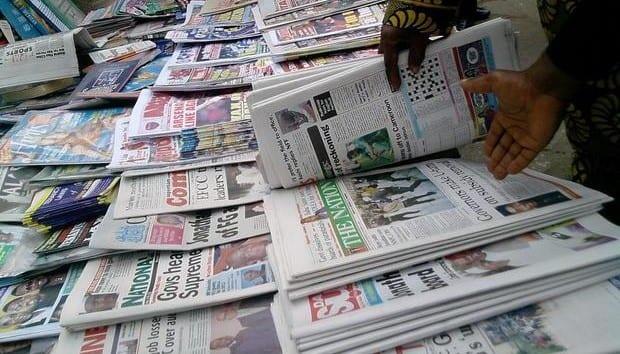
Good morning! Nigerian Newspapers Headlines: Obi campaign: OK Movement tackles NDC, Obidients

Published

on

By

1. A fresh disagreement has emerged within the political groups backing Peter Obi’s 2027 presidential ambition, as the United Kingdom Coordinator of the OK Movement, Adebayo Brown, accused leaders of the Nigeria Democratic Congress Presidential Campaign Council and the Obidient Movement of fuelling divisions among supporters.

The accusation followed a disagreement over claims that Obi, the NDC presidential candidate, and his running mate, Rabiu Kwankwaso, had dissociated themselves from the OK Movement.

2. Southwest All Progressives Congress (APC) leaders yesterday resolved to mobilise the six states to give an overwhelming number of votes to President Bola Ahmed Tinubu in the January 16  election. The leaders, who met in Lagos, decided to work assiduously to deliver votes that will surpass what the President got in the 2023 election i

3. The Economic and Financial Crimes Commission has uncovered an illegal oil refinery allegedly operated by Chinese nationals in the Ogere area of Ogun State. The commission said the facility was discovered on Saturday, October 31, 2026, by operatives of its Lagos Zonal Directorate 2 following intelligence and surveillance on the activities of illegal sludge oil refiners.

See also  APC Govs back FG on fuel subsidy removal

4. The National Youth Service Corps has identified four irregularities in a certificate linked to former Minister of Innovation, Science and Technology, Uche Nnaji, insisting that the document was not issued by the corps. An Assistant Director in the NYSC Department of Certification, Yusuf Jumare, disclosed this on Tuesday while testifying as the second prosecution witness in the alleged certificate forgery and money laundering case against Nnaji before the Federal High Court in Abuja.

5. The National Assembly is set to transmit the proposed State Police Bill to President Bola Tinubu for assent after completing the authentication of approvals secured from 28 state Houses of Assembly. The Clerk to the National Assembly, Kamoru Ogunlana, disclosed this in a statement on Tuesday, confirming that the number of state legislatures that had approved the proposed constitutional amendment exceeded the constitutionally required threshold of 24 states.

6. The Ondo State Police Command has uncovered a suspected counterfeit currency production site in Odigbo Local Government Area of the state, arresting one suspect and recovering three bags of suspected fake United States dollar notes. The command said the operation took place on October 29 at Kiniso Village, via Ajue, following investigations into a complaint by a man who allegedly received counterfeit dollars from two men during a currency exchange transaction.

See also  BREAKING: Tinubu decorates acting IGP Tunji Disu with new rank

7. The Department of State Services, DSS, has dismissed allegations by former Vice President and African Democratic Congress, ADC, presidential candidate, Atiku Abubakar, that it is organising protests to disrupt political activities in Sokoto State. The Service said its operatives had been providing security protection to political candidates across party lines, citing the evacuation of the ADC governorship candidate in Sokoto State, Mannir Daniya, during an attack on October 31, 2026.

8. The African Democratic Congress has kept the venue of its presidential campaign rally in Sokoto State secret ahead of Wednesday’s kickoff, citing security concerns amid allegations of attempts to disrupt the event. The party said it was taking precautionary measures to avoid being caught unawares, following reports of a possible plot to frustrate the rally scheduled for November 4.

9. The Lagos State Police Command has uncovered a suspected high-tech indoor cannabis farm at a residential property in Apapa, Lagos State, arresting a Polish national and a Nigerian in connection with the discovery. It was learnt that the suspects were identified as Thomas Razvickas, 49, a Polish national, and James Chisome, 36, a Nigerian. Both reportedly reside at the property where the facility was discovered.

See also  Subsidy Removal: Emulate Kwara and Edo, Falana urges LGs, state Govts to provide palliatives

10. The Director-General of the Department of State Services, DSS, Oluwatosin Adeola Ajayi has set free and approved an initial payment of N20 million to four suspects, out of which each suspect is to receive five million Naira as compensation after being cleared of alleged membership of the proscribed Indigenous People of Biafra, IPOB.

Continue Reading

News

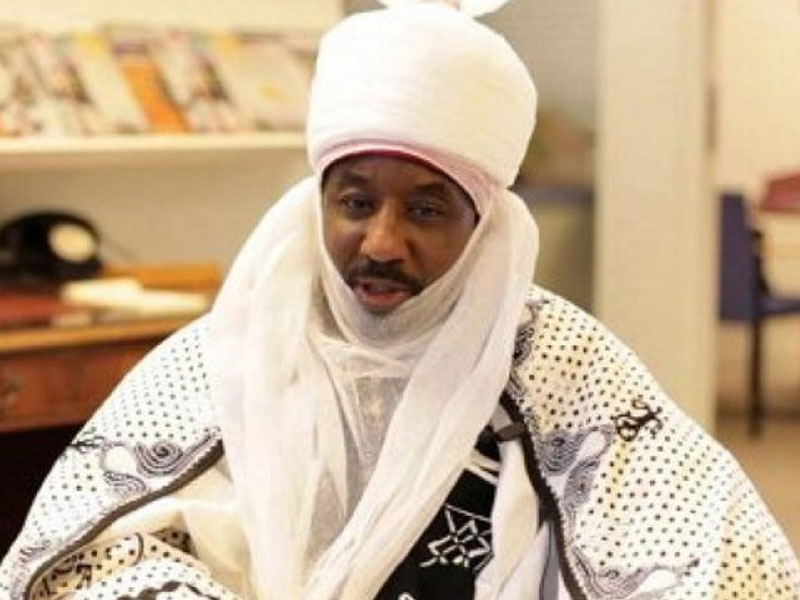
Tinubu deserves credit for bringing Nigeria back from the brink, says Emir Sanusi 

Published

on

By

The Emir of Kano, Muhammadu Sanusi II, has said that President Bola Tinubu deserves credit for bringing Nigeria’s economy back from the brink, citing improvements in economic growth, inflation, foreign reserves, and export diversification.

Emir Sanusi, who gave the commendation while speaking on Tuesday at the Oxford Global Think Tank conference convened by Arunma Oteh, said the country is beginning to lay the foundations for economic stability, although significant challenges remain.

“I’m not a fan of politicians, but we need to give credit to President Tinubu’s administration for bringing us back from the brink,” he said.

Sanusi, a former Central Bank of Nigeria (CBN) governor, said the economy grew by 4.48 percent in the second quarter (Q2) of 2026, describing the performance as progress compared with the average growth recorded during the administration of former President Muhammadu Buhari.

“GDP in Q2 2026 was at 4.48 percent. It’s not as high as it was under the Yar’Adua/Jonathan government, but during the Buhari years, the economy grew by 0.9 percent. Today it’s at 4.5 percent. That’s progress,” he said.

See also  Subsidy Removal: Emulate Kwara and Edo, Falana urges LGs, state Govts to provide palliatives

Sanusi also noted the decline in inflation from about 30 percent to 14.6 percent, adding that it was projected to fall to 12.5 percent by the end of the year.

He said Nigeria’s gross domestic product (GDP) per capita, measured in dollar terms, had increased by 47 percent since 2023.

According to the emir, “If we continue at this rate, by the end of next year, GDP per capita will be back to where it was in 2005”.

He also cited the country’s foreign reserves, which he put at $55 billion, but cautioned that a significant portion of the inflows was driven by foreign portfolio investments (FPI), which are volatile.

He attributed the continued inflows partly to high oil prices amid the war in the Strait of Hormuz and the attractive returns available to investors in Nigeria.

“Our reserves are at $55 billion, and yes, a lot of it is driven by portfolio flows, which are volatile,” he said.

See also  TB Joshua lived a life of God's generosity and philosophy – Gani Adams

He said high oil prices and returns on Nigerian investments have encouraged foreign investors to maintain their exposure to the country.

On diversification, Sanusi said “20 percent of Nigeria’s exports were coming from the Dangote refinery”, describing the development as evidence of progress beyond the country’s traditional export sources.

“There are clearly foundations being laid for stability. It’s not the end, but the first step towards stability,” he said.

The emir, however, criticised the Tinubu administration’s communication of its economic policies, saying the government appeared to interpret criticism and suggestions as attacks.

“This government doesn’t express itself properly. It sees every suggestion and contribution it does not like as an attack, and it doesn’t have good spokespersons,” he said.

Despite his reservations about the government’s communication, Sanusi said the administration deserved recognition for the economic gains recorded so far.

Continue Reading

News

EFCC uncovers illegal oil refinery in Ogun

Published

on

By

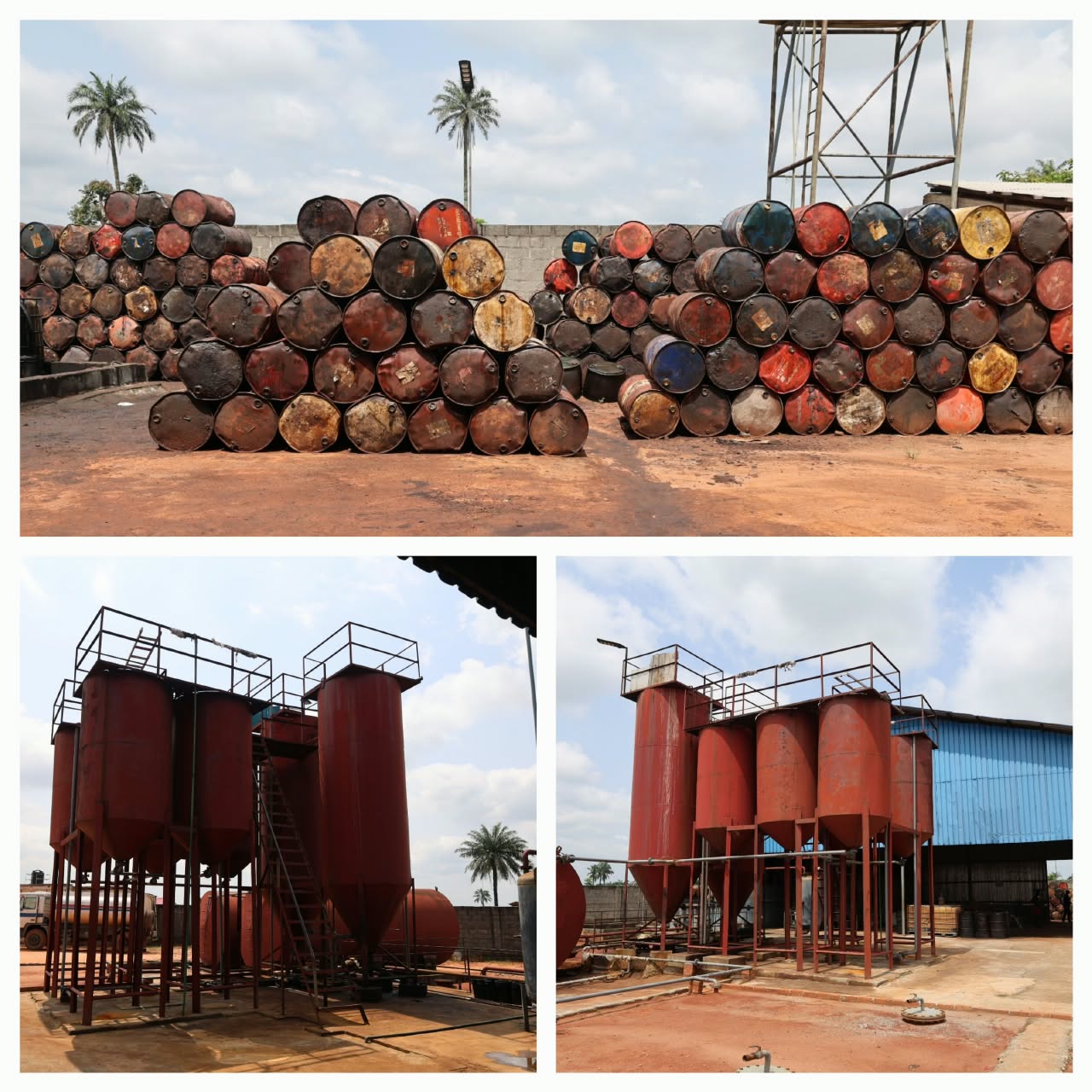
The Economic and Financial Crimes Commission (EFCC) says its operatives have uncovered an illegal oil refinery operated by Chinese nationals in the Ogere area of Ogun State.

According to a statement issued on Tuesday by the EFCC’s spokesperson, Dele Oyewale, the facility was discovered on Saturday, October 31, 2026, by operatives of its Lagos Zonal Directorate 2 following intelligence gathering and surveillance of the activities of illegal sludge oil refiners.

Oyewale said the facility was deserted when operatives stormed the premises, following an earlier crackdown on four illegal lithium processing plants in the area.

The operatives discovered waste products from the refining process and underground tanks suspected to have been used for heating and processing sludge oil.

According to the statement, “The Economic and Financial Crimes Commission uncovered an illegal oil refinery operated by Chinese in the Ogere area of Ogun State.

“The operation, conducted on Saturday, October 31, 2026, by operatives of the Lagos Zonal Directorate 2 of the EFCC, followed credible intelligence and surveillance by the Commission on the activities of the illegal sludge oil refiners.

See also  Edo guber: Election materials inspection to begin Thursday

“The refinery was found deserted when EFCC operatives stormed the premises, following the Commission’s earlier clampdown on four illegal lithium processing plants in the area. However, waste products from the refining process were discovered at the location.”

Oyewale said operatives also discovered underground tanks believed to have been used for heating and processing sludge oil.

“Two of the underground tanks inspected contained substances suspected to be Automotive Gas Oil (AGO), otherwise known as diesel.

“Preliminary investigations revealed that the operators sourced sludge oil, also known as black sludge, from Warri, Delta State, and Port Harcourt, Rivers State, and transported it to the illegal facility in Ogere for processing,” Oyewale added.

He said the operators subjected the sludge oil to intense heat, allowing lighter petroleum components to pass through chambers and filters in a process believed to produce diesel for sale in the Nigerian market.

“Personnel at the facility told EFCC operatives that the Chinese operators never disclosed their identities nor the name of the company behind the facility.

See also  TB Joshua lived a life of God's generosity and philosophy – Gani Adams

“Consequently, operatives of the Lagos Zonal Directorate 2 of the EFCC have since taken over the premises as investigations continue to establish the identities of the operators, the ownership of the facility and the full extent of the suspected illegal activities and economic sabotage,” he added.

Continue Reading

Trending News