Connect with us

News

Hundreds of dollars laundered out of Nigeria every hour — Interpol

Published

on


The International Police Organisation’s investigation has shown that every hour, hundreds of thousands of dollars are being laundered out of Nigeria across the world.


This disclosure was made in Abuja on Monday by the Interpol Vice President for Africa, Garba Umar, while declaring open a four-day training workshop for Nigerian law enforcement agencies at the Economic and Financial Crimes Commission (EFCC) Academy, Abuja.


According to Umar, money laundering across Africa and the entire world has assumed a monstrous dimension and Interpol has designed Silver Notices to combat the menace.


“Evidence has shown that every hour, hundreds of thousands of dollars are flowing out of Nigeria to the region and across the world, laundered before it reaches the pockets of criminals to enjoy the profits of their crimes, while the hardworking and honest Nigerians pay the price of crime”


“With every successful laundering of criminal money, our country becomes more prone to crime. More drugs, more fraud, more corruption and more violence. Every time criminal money is successfully laundered, our financial institutions take an additional blow,” he said.


He stressed that hard times awaited money launderers as the Silver Notices would make illicit funds more difficult to launder in any part of the world.


Speaking on the theme of the Workshop: Strengthening Capacity and Coordination against Financial Crimes, Umar pointed out that financial crimes had become transnational and law enforcement agencies needed regular training for their workforce to be ahead of fraudsters.


He urged participants at the workshop to make it a duty to discuss and learn about transnational crimes affecting their regions, identify possible solutions through a review of policing capabilities to support the country, and facilitate direct and in-person interaction amongst law enforcement networks across the country.

See also  N42bn fraud: Obiano spends first weekend after eight years as governor in EFCC cell


“In essence, this Workshop will allow us to re-examine the challenges of fighting transnational crimes in the country, reassess our strategies, and reaffirm our determination and unity as a country to provide security to our citizens and by extension the global community,” he said.


Umar charged all participants at the workshop to take collaboration with other law enforcement agencies seriously, to advance their investigations and ensure that criminals do not get to enjoy the fruits of their labour.


“The only way we can move forward as a country is by working together and identifying common problems, jointly devising solutions, and taking coordinated and cohesive action. And now is the time that we need to go far, by going together, he said.


Executive Chairman of the EFCC, Ola Olukoyede in his goodwill message, also harped on the need for enhanced collaboration in tackling financial crimes.


He particularly stressed that the complex nature of corruption across the world could only be broken by the might of collaborative actions by every stakeholder. “The daunting nature of the fight against corruption in Nigeria and the world at large deserve serious collaboration among organizations saddled with the responsibility of fighting corruption”, he said.


Olukoyede, who spoke through the Director, Fraud Risk Assessment and Control, FRAC, of the EFCC, Francis Usani, appraised the pivotal role of the EFCC in tackling corrupt practices, especially its impressive records of convictions and recoveries, and expressed optimism that with the new emphasis on preventive framework in tackling financial crimes by the commission, greater progress would be made.

See also  Obasanjo, Saraki, Ejindu, others, call for smoother trade ties between Nigeria and Angola


“Our records of convictions and recoveries stand us out, but we will not rest on our oars, we are committed to doing more and in this commitment, the EFCC is re-strategising its operations with a focus on prevention knowing that it is easier and cheaper to prevent corruption from happening than investigating and prosecuting corruption,” he said.


In his remark, Ambassador Extraordinary and Plenipotentiary of Japan to Nigeria, Kazuyoshi Matsunaga, described the workshop as an important joint initiative between Japan and Nigeria to combat financial crimes.


He explained that in the contemporary globalised world, financial crimes transcended borders and required international cooperation among law enforcement agencies to combat them.


“I am delighted that INTERPOL and the Japanese National Police Agency are an integral part of this project, contributing their expertise. A remarkable collaboration took place three years ago when Japanese and Nigerian law enforcement agencies successfully returned a fund to a Japanese fraud victim, earning immense gratitude. Strengthening our partnership through this project will benefit not only Nigerians but people around the world, including the Japanese,” he said.


Director General and Chief Executive Officer, Nigerian Financial Intelligence Unit, NFIU, Hafsat Bakare, spoke about the imperative of strengthening capacity and coordination against financial crimes, pointing out that “ financial intelligence and financial analysis techniques are key to tackling economic crimes”.


“The NFIU, she said, was sensitive to the interconnected nature of the criminal justice system, the threat of organised crime and cybercrimes being fought by law enforcement agencies.

See also  Colleague kills Inspector Samuel Ugor during hot argument in Abia


She expressed optimism that the training law enforcement officers would receive at the Workshop would “ sustain efforts being made to ensure that Nigeria exit the Grey List of the Financial Action Task Force possibly by mid-2025.”


Director, Interpol Financial Crime and Anti-Corruption Centre (IFCACC), Isaac Oginni, said the only way to disrupt organised crimes was by denying fraudsters the financial profit behind their criminal enterprise. Besides, financial intelligence could also be utilised well when investigators recognise its value and use it to build a financial profile around suspects.


He challenged participants and stakeholders at the workshop to collectively work together and fight money laundering.


“Each agency represents a different shape of the puzzle with our different strengths and mandates. Each piece of the puzzle forms part of the bigger picture, and even one missing piece will prevent the whole picture from being developed,” he said.


“Today, we will commence the first phase of the Interpol/JICA workshop, a capacity-building project that aims to strengthen Nigeria’s safety through enhancing law enforcement’s capacity to combat financial crime, as well as through increased national cross-agency collaboration and cooperation,” he said.


The four-day workshop, the first of its kind and hosted by the EFCC was organised by INTERPOL and the Japan International Cooperation Agency, JICA. It drew participants from the Police, EFCC, NFIU, Nigeria Immigration Service and the Nigeria Customs Service.

News

EFCC says it froze Osun account over ‘fraudulent handling’ of N11bn ecological, intervention funds

Published

on

By

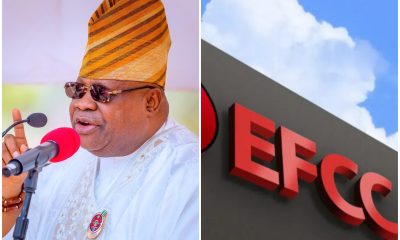
The Economic and Financial Crimes Commission (EFCC) has explained that it froze the bank account of the Osun state government over alleged fraudulent handling of N11 billion ecological and intervention funds.

The anti-graft agency, in a statement on Wednesday, said it has been investigating the Osun state government since March regarding the alleged mishandling of the funds.

According to the agency, some officials of the state government, including the accountant-general of the state, had been interviewed by EFCC investigators.

The agency said amid the probe, it observed that huge transfers of funds were being made from the account into different corporate entities since August 2.

“These ongoing investigations of the state government would not have warranted any placement of Post No Debit order on its account but for the precipitate and unwarranted movement of funds from the accounts to different suspicious accounts since August 2, 2026,” the statement reads.

See also  BREAKING: Gunmen kidnap Imo monarch

“The Commission noticed huge transfers of funds into different corporate entities and had to swiftly halt the trend by freezing the accounts from which such heavy funds are being moved.

“The EFCC’s preventive mandate is a public-inclined framework of safeguarding public funds, assets and resources.

“The Commission cannot watch idly while a state government’s account is being pillaged.”

The anti-graft agency said it is aware of the forthcoming Osun governorship election, adding that it is “uncharitable” to overlook the huge transfers of funds over the “excuse of an upcoming election”.

“The Osun State government account was frozen to save public funds from being looted,” the agency said.

In a letter dated August 5, 2026, and signed by Adenike Babalola, assistant commander of the EFCC on behalf of the director of investigation, the anti-graft agency directed First Bank not to allow withdrawals from the Osun state government’s statutory allocation account as part of an ongoing investigation.

See also  Five burnt to death, 10 injured in Abeokuta-Lagos road crash

The agency instructed the bank to place a post-no-debit restriction on the account pending the conclusion of the probe.

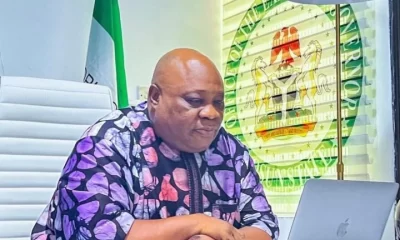
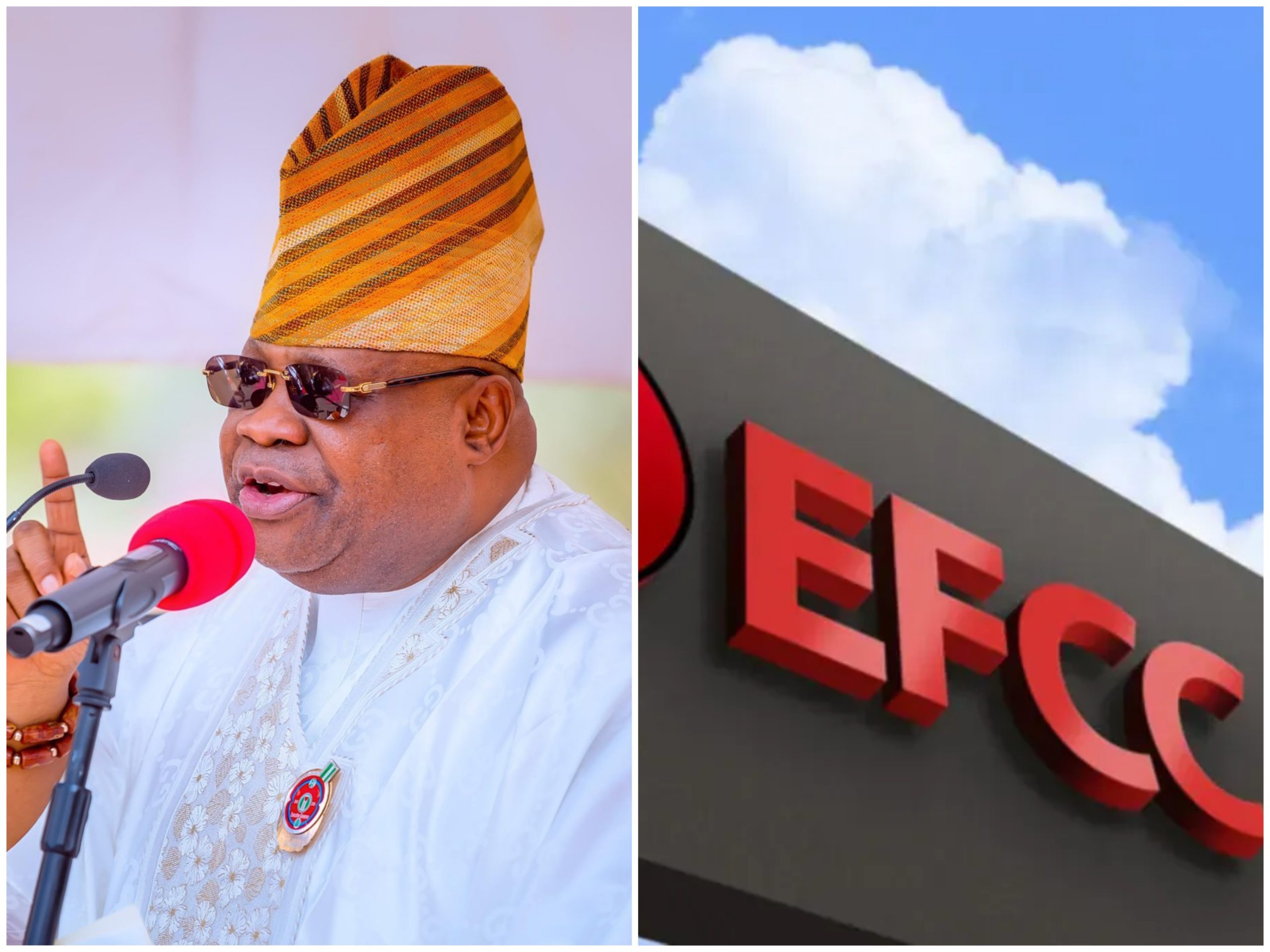
Reacting to the development, Ademola Adeleke, Osun governor, said the state government will not accept a situation in which federal government agencies trample upon the rights of subnational governments.

Adeleke said the Osun government has been witnessing numerous sponsored attacks, including the harassment of Accord party members and the move to stall the operations of LGAs in the state.

Adeleke said he has directed the attorney-general of the state to challenge the “illegality”.

Continue Reading

News

Osun threatens lawsuit as EFCC freezes govt account 10 days to election

Published

on

By

Less than 24 hours after Governor Ademola Adeleke alleged that the Economic and Financial Crimes Commission (EFCC) was planning to freeze the state government account domiciled with First Bank, the anti-graft agency has reportedly freezed the account, according to Vanguard.

The account, reportedly used for the payment of workers’ salaries, was placed on “Post No Debit” status by the anti-graft agency.

The development came hours after Governor Ademola Adeleke raised the alarm that the EFCC was planning to freeze the state government’s accounts and those of top government officials ahead of the August 15 governorship election.

In a statement issued earlier on Wednesday by the Commissioner for Information and Public Enlightenment, Kolapo Alimi, Adeleke described the alleged move as an attempt to cripple government activities before the poll.

The governor had insisted that there was no legal basis for freezing the accounts of a state government, arguing that the EFCC lacked the statutory powers to take such action.

See also  Obasanjo, Saraki, Ejindu, others, call for smoother trade ties between Nigeria and Angola

However, a source reportedly told Vanguard that the account had already been restricted.

“I can confirm that the state government account has been frozen by the EFCC. It is no longer an allegation. The governor will address the press shortly to update the public on the situation,” the source reportedly told Vanguard.

The reason for the restriction was not immediately known as of the time of filing this report.

The EFCC had yet to issue an official statement on the development.

The development comes as Osun prepares for its August 15 governorship election, with the account restriction expected to generate political reactions ahead of the poll.

Meanwhile, the state’s Attorney General and Commissioner for Justice, Oluwole Jimi-Bada, had said he has the mandate of the governor to sue the Economic and Financial Crimes Commission for freezing the government accounts.

Jimi-Bada said a ‘Post no debit’ letter from the EFCC was forwarded to the management of the First Bank where Osun government accounts were domiciled on Wednesday.

See also  DJ Cuppy, Anthony Joshua couple outing sets tongues wagging

The commissioner, who expressed readiness to proceed to court, said the move by the anti-graft agency may hamper government’s business, noted that Governor Ademola Adeleke was not using state funds to run its campaign for reelection.

“I have the mandate of the governor to proceed to the Federal High Court to challenge this move. EFCC can investigate the accounts but it can’t freeze the accounts without order of court.

Continue Reading

News

WAEC releases 2026 WASSCE results, withholds 167,486 candidate’s results over malpractice 

Published

on

By

The West African Examinations Council says it is withholding the results of 167,486 candidates, representing 8.59 per cent of those who sat the 2026 Computer-Based West African Senior School Certificate Examination for School candidates, over alleged examination malpractice.

This was disclosed by the Head of WAEC Nigeria National Office, Dr Amos Dangut, who announced the release of the results in Lagos on Wednesday.

The number of withheld reults, however, represents a decline from the 9.7 per cent recorded in 2025.

Dangut said the council withheld the affected results due to various infractions, including the increasing use of mobile phones in examination halls despite the existing ban and organised cheating in some schools.

“The increasing use of cell phones in the examination hall, in spite of the existing ban, and organised cheating in some schools, are other nagging issues,” Dangut said.

He added that some supervisors and invigilators found assisting candidates in malpractice had been arrested and would face disciplinary action through the relevant state ministries of education.

See also  Obasanjo, Saraki, Ejindu, others, call for smoother trade ties between Nigeria and Angola

A total of 1,959,668 candidates from 24,207 schools registered for the examination across Nigeria, Benin Republic, Côte d’Ivoire and Equatorial Guinea, while 1,950,726 candidates eventually sat for the examination.

1,200,514 candidates (61.54 per cent) obtained credits and above in at least five subjects, including English Language and Mathematics.

1,687,378 candidates (86.50 per cent) secured credits and above in a minimum of five subjects, with or without English Language and Mathematics.

The number of candidates who obtained credits in five subjects including English and Mathematics dropped by 1.42 percentage points compared with the 2025 examination.

Of the 1.2 million candidates who achieved credits in English and Mathematics:

558,883 (28.65 per cent) were male.

641,631 (32.89 per cent) were female.

Overall, 997,267 females (51.12 per cent) and 953,459 males (48.88 per cent) participated in the examination.

WAEC said 1,834,695 candidates, representing 94.05 per cent, had their results fully processed and released, while the results of 116,031 candidates (5.95 per cent) were still being processed.

See also  Nigeria denies conspiring with France to destabilise Niger Republic

The council also disclosed that 1,213 candidates with special needs participated in the examination. They included:

137 visually impaired candidates;

491 candidates with hearing impairment;

55 spastic and mentally challenged candidates; and

41 physically challenged candidates.

The 2026 examination marked the second edition of the Computer-Based WASSCE for School Candidates, following the introduction of the format by WAEC.

Dangut said the council introduced several innovations, including the Digital Examiner Mark System to improve the speed of processing results, serialisation of question papers to curb malpractice, and a new portal that allows candidates to generate e-PINs directly for checking their results.

The examination was conducted between April 24 and June 19, 2026, with 102,708 examiners involved in marking across 88 marking venues.

Dangut, who described the briefing as his third and final engagement as WAEC Nigeria National Office head, said candidates sponsored by states indebted to the council would not have their results released until the outstanding payments were cleared.

See also  BREAKING: ICPC re-arrests ex-JAMB registrar, Dibu Ojerinde

Continue Reading

Trending News