Connect with us

News

Inflation pushing Nigerians into various categories of poverty – Cardoso

Published

on


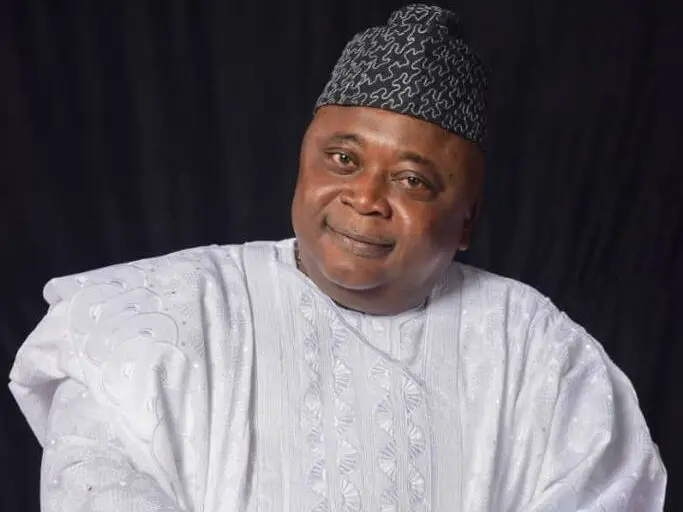
Olayemi Cardoso, governor of the Central Bank of Nigeria (CBN), says inflation is pushing Nigerians into different categories of poverty.


Cardoso said controlling inflation is in the best interest of Nigerians.


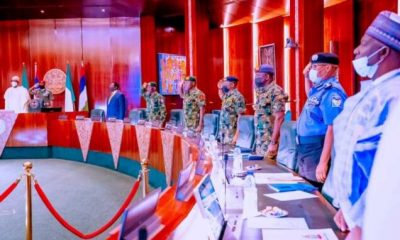
He spoke on Tuesday during a press briefing at the end of the monetary policy committee (MPC) meeting in Abuja.


The governor highlighted the significant impact of inflation on the economy, saying purchasing power has diminished and poverty levels have increased.


Cardoso stressed the importance of taming inflation for the average individual and the organised private sector, which faces its own consequences.


He also acknowledged the need for economic growth and the challenges posed by high interest rates imposed to control inflation and ensure the economy’s long-term stability.


“I think I will just say one or two things and these are some of the things that we discuss with the organised private sector that inflation really and truly is having a major impact on our economy,” Cardoso said.

See also  Anambra Guber Poll: INEC assures on  e-transmission of results from 5,634 polling units


Purchasing power is getting eroded, people are being pushed into different categories of poverty, and it is in their own interest that we are able to tame the scourge of inflation. If not, the ramifications will also be for them.


“It is not on the average man alone, it will also be for them and we understand the need for growth and we also understand that it is relatively challenging when you have high interest rates.


“My belief is that it is so fundamental to the long-term future and stability of our economy, that inflation should be brought under control.”


According to Cardoso, these short-term pains will eventually benefit the economy and the manufacturing sector.


Speaking on the current economic situation, the CBN governor said the influx of liquidity into the system over a short period played a significant role.


He said the consequences of printing money through ways and means advances are being felt, leading to an out-of-control money supply trajectory.

See also  Three UK-based Nigerians defraud Vodafone, other firms of £429,304


Cardoso said in response to this, interest rates are being raised to manage the money supply and prevent further spikes.


On Tuesday, MPC raised the monetary policy rate (MPR), which benchmarks interest rates, to 26.75 percent — from 26.25 percent.


Last week, Nigeria’s inflation rate rose to 34.19 percent amid the surge in food prices.


Speaking further, Cardoso said MPC voted to hike the rate by 50 basis points to 26.75 percent, adjust the asymmetric corridor to +500 and -100 basis points around the MPR.


The committee retained the cash reserve ratio (CRR) at 45 percent, and liquidity ratio at 30 percent.


News

Oyo school abductions: Makinde signs executive order, restricts Okada 

Published

on

By

Governor Seyi Makinde of Oyo state
has signed Executive Order No. 002 of 2026, aimed at strengthening security, enforcing vehicle registration regulations and improving traffic management across the state.

The governor also announced restrictions on the operations of commercial motorcycle operators, popularly known as “Okada” riders.

The development follows growing concerns over security challenges in parts of the state, particularly the continued captivity of teachers and pupils abducted in Oriire Local Government Area more than 20 days ago.

Speaking during the signing ceremony in his Office on Friday, Makinde said the executive order was designed to ensure strict compliance with existing laws governing vehicle registration and traffic regulations.

He noted that unregistered vehicles, motorcycles, and tricycles have increasingly been used to perpetrate criminal activities within the state.

According to the governor, security agencies often encounter difficulties tracking and investigating crimes involving unregistered vehicles because of the absence of identifiable registration details.

Governor Makinde explained that the executive order would provide a legal framework for the strict enforcement of vehicle registration requirements and other traffic regulations, including measures against driving against traffic and related offences.

According to him, designated enforcement authorities have been empowered to arrest offenders and impound vehicles, motorcycles, or tricycles found violating the provisions of the order.

See also  Military plane crash: COAS’s wife Fati Attahiru alive

The governor said offenders apprehended under the executive order would be prosecuted in accordance with the law, while seized assets and properties would be handled through established legal procedures.

The governor linked the latest security measures to lessons learnt from recent security breaches, especially the abduction of schoolchildren and teachers in Oriire Local Government Area.

“We are living through very trying times; for over 20 days, our teachers and pupils have remained in captivity in the hands of terrorists. Our thoughts and prayers remain with them and with their families who continue to endure unimaginable pain and uncertainty,” He said. 

He assured residents that his administration remained fully committed to securing the safe return of all abducted victims and was working relentlessly with relevant security agencies to achieve that objective.

“As a government, we share in their anxiety and their hope, and we remain committed to doing everything within our power to secure the safe return of every one of them,” Makinde said.

The governor acknowledged the pain being experienced by the affected families and communities, stressing that the abducted teachers and pupils had neither been forgotten nor abandoned.

See also  Good morning! Here Are Some Major News Headlines In The Newspapers Today: Nigerians troop out to elect a new president today

While declining to disclose operational details for security reasons, Makinde maintained that extensive efforts were ongoing behind the scenes and urged residents not to mistake the government’s silence for inaction.

One of the major highlights of the executive order is the restriction placed on commercial motorcycle operations across Oyo State.

Makinde announced that commercial motorcycle operators would no longer be permitted to operate between 10:30 p.m. and 5:30 a.m. statewide, describing the measure as part of additional efforts to improve security and public safety.

The governor said the restriction became necessary as part of broader strategies to curb criminal activities and strengthen surveillance across communities.

He appealed to residents to actively support security agencies by providing timely information on suspicious movements and activities.

According to him, security remains a collective responsibility that requires the cooperation of all citizens.

“If you see something, say something, and authorities will do something,” he said, while reminding residents of the state’s toll-free emergency number, 615, for reporting security threats and emergencies.

Makinde also urged residents to remain vigilant, united and resilient despite the current security challenges, warning against allowing fear to undermine communal harmony and confidence.

See also  2023: Obi promises to end insecurity, poverty

He commended security agencies and members of the state’s security outfit, Amotekun Corps, for their dedication, sacrifices and professionalism in responding to security threats across Oyo State.

The governor expressed optimism that with sustained collaboration among security agencies, community stakeholders, and residents, the abducted teachers and pupils would be rescued safely and security across the state would be further strengthened.

In his address at the event, the Attorney General of the state and Commissioner for Justice, Abiodun Aikomo, stated that the implementation of the order would be carried out by relevant agencies, including the Oyo State Road Traffic Management Authority (OYRTMA), the Nigeria Police Force and other law enforcement bodies, which would be required to submit periodic reports on enforcement activities to the state government.

To ensure transparency and accountability, Aikomo stated that the Office of the Director of Public Prosecutions would provide oversight on prosecutions arising from the enforcement exercise, while members of the public would be encouraged to report any misconduct by officials involved in implementing the order.

Continue Reading

News

Nigeria set to repatriate over 1,000 nationals from South Africa as violence continues

Published

on

By

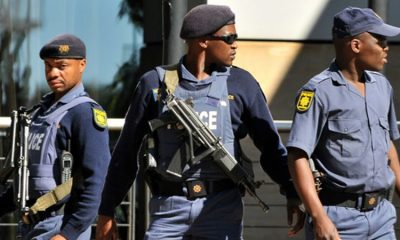
The Federal government has kick-started plans to bring back home more than 1,000 Nigerians from South Africa as concerns grow over rising anti-immigrant sentiments and renewed xenophobic tensions in the southern African nation.

According to reports, Nigeria’s Ministry of Foreign Affairs confirmed on Friday that screening for a voluntary repatriation programme began on Thursday, with authorities expecting over 1,000 Nigerians to participate.

Foreign ministry spokesperson Kimiebi Ebienfa told AFP that the final number of those seeking to return home had not yet been determined but noted that the figure was expected to exceed 1,000.

“Total figure not out yet,” he said. “We are expecting over 1,000 persons.”

The move follows a similar action by Ghana, which recently repatriated hundreds of its nationals from South Africa amid increasing fears over protests and violence directed at foreign nationals.

In a statement dated Tuesday, Nigeria’s High Commission in Pretoria said it had “negotiated waivers with host authorities” so that those with “immigration-related offences” would be allowed to leave on the eventual repatriation flights rather than be detained.

See also  Military plane crash: COAS’s wife Fati Attahiru alive

South Africa, until recently the continent’s most industrialised economy, has long attracted workers from across the region.

But saddled with an unemployment rate of over 30 per cent, it has seen repeated spurts of xenophobic protests — including renewed violence in recent weeks.

The latest tensions have revived uncomfortable debates across Africa about xenophobia, migration and the gap between pan-African rhetoric and realities facing migration on the continent.

An ultimatum by one citizen-led group for illegal migrants to be expelled by June 30 has raised fears of violence after bouts of anti-immigrant unrest in the past that claimed dozens of lives.

Last month, Ghana repatriated some 300 people, the first batch of what authorities said was expected to be a total of about 800 Ghanaian nationals.

The South African government has said it is stepping up enforcement against undocumented immigrants but urged citizens not to take matters into their own hands.

See also  19-year-old student killed by Canadian policemen

There are more than three million foreigners living in South Africa, or 5.1 per cent of the population, according to the statistics agency.

More than 63 per cent come from countries in the 16-member Southern African Development Community (SADC) bloc.

Continue Reading

News

Again, WAEC candidates write exams with Torchlight

Published

on

By

The 2026 West African Senior School Certificate Examination (WASSCE) got off to a dark start on Thursday across several centres in Oyo, Lagos, Ogun and Osun states.

Due to the late arrival of examination materials, several candidates were forced to sit for papers late into the evening.

On Monday, candidates reportedly waited several hours before writing the Physics Essay and Objective papers, which were scheduled for 2pm and 3:30pm respectively.

The delays persisted on Wednesday, with the General Mathematics Objective paper starting at 6:30pm in some centres and as late as 8:30pm in others, leaving candidates to finish the examination after 10pm.

The situation was said to be particularly severe in some centres in Ibadan, the Oyo state capital.

The first batch of the Agricultural Science practical examination was slated for 2pm, while the second batch was scheduled for 3:30pm.

However, as of 8pm, some centres in the state had yet to commence the examination.

See also  BREAKING: Asue Ighodalo wins Edo PDP guber primary

Due to the delay, candidates reportedly sat the examination under poor lighting conditions.

In a viral video, several students could be seen writing the examination with torchlights, mobile phone flashlights and solar-powered lamps.

The incident has since triggered widespread outrage on social media.

Mariam Kehinde, an X user, said that as of past 8pm on Thursday, her sister was yet to return home from the examination centre.

“What exactly is happening in this country sef? My sister left for her WAEC exam since morning and still hadn’t returned home,” she wrote.

“She called around 6pm saying their exam paper had just arrived at that time nitori olorun. She was still at the exam centre, and my mum even had to wait.”

Adedeji Adeyinka, another user, described Thursday’s conduct of the examination as “particularly disturbing”.

“Candidates writing Government completed the Theory paper and were instructed to wait for the Objective paper, only for the question paper to arrive more than FOUR HOURS later,” he posted.

See also  Enugu man with 59 wives, 300 children dies at 74

“How is this acceptable in a national examination? Even more shocking was the situation faced by students writing Agricultural Science Practical. An examination scheduled for 2:00 p.m. did not commence until about 9:00 p.m. in many parts of Oyo State.

“A seven-hour delay is not a minor inconvenience. It is a systemic failure.”

Another X user identified as Mum Ire also lamented the shortage of question papers during Wednesday’s Mathematics examination.

“Out of 75 candidates, only 35 Mathematics question papers were brought to the examination centre for the entire exam yesterday,” she wrote on Thursday.

“When did WAEC start operating like this?

“Now we are being told that the Agriculture Science practical questions are on the way at 8:10 pm.”

Joel Abodunrin also decried the shortage of question papers.

“WAEC’s been doing well until today,” he wrote on Wednesday.

“An examination hall of about 250 candidates and having Mathematics question papers for only 120.

See also  Again, Abuja court retrains PDP from holding national convention

“Getting to tear the questions into pieces so that all could have something to do.”

Hakeem Olaoye, another user, said candidates were being made to write examinations at unreasonable hours.

“WAEC exam being conducted late in the evening.

“The Agric practical exam that was supposed to be held by 2pm just commenced some minutes after 7pm,” he wrote.

“Very disheartening indeed. Likewise for Mathematics. A school with 130 students was given 16 question booklets to share among.”

The development has raised concerns about the safety of candidates amid the country’s growing security challenges.

Continue Reading

Trending News