Connect with us

Uncategorized

Good morning! Here Are Some Major News Headlines In The Newspapers Today: No going back on N250,000 minimum wage, TUC insists

Published

on


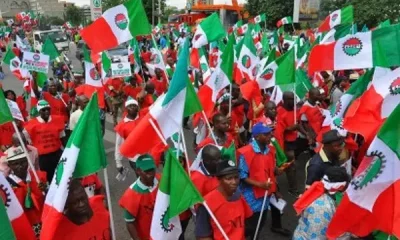
1. President of the Trade Union Congress, TUC, Festus Osifo, has written off criticisms that the struggle for a new national minimum wage may have waned. Osifo said the Federal Government is still having conversations with all relevant stakeholders cutting across the Nigerian Governors Forum, Local Government Administrators, as well as the Organised Private Sector and Labour Unions.


2. As part of his administration’s determination to end the internecine farmers-herders conflict, as well as restructure livestock farming, President Bola Ahmed Tinubu has created the Federal Ministry of Livestock Development. Tinubu also inaugurated the Renewed Hope Livestock Reform Implementation Committee.


3. Justice Kehinde Ogundare of the Federal High Court in Lagos has ordered the final forfeiture of $16.5 million and N127 million fraudulently diverted from the Nigerian Maritime Administration and Safety Agency (NIMASA) to the Federal Government. Justice Ogundare gave the judgment on Tuesday while granting an application for such orders filed and moved by the Economic and Financial Crimes Commission, EFCC.

See also  Bauchi APC in Crisis: How a Governorship Primary Became a Political Powder Keg


4. The Minister of Power, Chief Adebayo Adelabu, on Tuesday, called on governors in the North to fight against electricity assets vandalisation. This is coming on the heels of the recurring vandalisation of transmission towers in the North East.


5. The Vice-Chancellor, Federal University, Dutsinma, FUDMA, Katsina State, Prof. Armaya’u Bichi, has alleged that some of the university’s staff are serving as informants to bandits. Briefing newsmen on Tuesday, Bichi said the contacts of suspected staff had been given to a security agency for further investigation.


6. The House of Representatives on Tuesday asked the federal government to suspend implementation of the Samoa Agreement which has sparked arguments in the last few days. The House also resolved to scrutinise the agreement signed by the federal government on June 28, 2024, to ascertain if there are contentious clauses therein.


7. As part of efforts to address the food crisis in the country, the Federal Government is sending 60 trucks of fertiliser to each of the states of the federation. Each of the 109 senators will also receive two trucks of fertiliser for distribution to farmers in their constituents, while the 360 members of the House of Representatives will get one truck each to distribute in their constituencies.

See also  'Why Buhari sacked two ministers'


8. A drug baron on the wanted list of the National Drug Law Enforcement Agency, identified as Joachin Mbonu, has been arrested. Mbonu was arrested by operatives of the NDLEA in his village mansion in Imo State on July 5. A statement on Tuesday by the agency’s spokesperson, Femi Babafemi, said Mbonu was arrested along with his associate.


9. Six yet-to-be-identified persons have been killed in a multiple fatal road crash that occurred by Green Energy Oil and Gas Station by Eke Awgbu, along the Agulu-Awgbu Road in Anaocha Local Government Area of Anambra State. It was gathered that the crash, which occurred at about 10 am on Tuesday, involved about 11 persons and three vehicles, including a motorcycle.


10. The Senior Staff Association of Nigerian Universities, SSANU, and the Non-Academic Staff Union of Universities, NASU, at the Abubakar Tafawa Balewa University, Bauchi, staged a protest on Tuesday, calling for the immediate dismissal of the Ministers of Education and Labour and Productivity. They accused the ministers of failing to address their grievances despite multiple promises.

See also  Best VPN Intended for China

Uncategorized

Lebrant Fabrics boss, Damilola Adeola’s quiet fashion revolution in Ikeja

Published

on

By

Elegance, enterprise, and excellence converge seamlessly in the person of Damilola Ebunoluwa Adeola, the refined and industrious Chief Executive Officer of Lebrant Fabrics, located in the bustling commercial heart of Opebi, Ikeja, Lagos.

In a city where fashion and ambition constantly intersect, she has quietly but confidently carved a niche that speaks of taste, discipline, and an unrelenting pursuit of quality.

A woman of unmistakable style and discerning eye, Damilola has steadily elevated Lebrant Fabrics into a trusted destination for luxury textiles. Her brand is now synonymous with sophistication, attracting a growing clientele of fashion enthusiasts, designers, and style connoisseurs who value premium craftsmanship and timeless elegance.

Through consistency and a clear sense of direction, she has transformed what began as a business idea into a flourishing enterprise admired within Lagos’ competitive fashion and retail landscape.

Beyond her entrepreneurial drive, she is widely respected for her poise, warmth, and impeccable fashion sense. Damilola embodies a rare balance of beauty and intellect, effortlessly reflecting the very essence of the brand she represents.

See also  Minimum wage: Labour, states hold last-minute talks ahead Monday strike

Whether she appears in graceful traditional attire or engages in the strategic growth of her business, she remains a picture of composure and quiet confidence.

In an industry where trends evolve rapidly and competition is intense, she continues to stand out not merely as a business owner, but as a curator of elegance and quality. Her journey is a testament to passion meeting purpose.

As Lebrant Fabrics continues to grow under her watchful eyes , the brainy woman is steadily weaving a legacy defined by style, success, and enduring excellence in Lagos’ vibrant fashion economy.

Continue Reading

Uncategorized

Bauchi APC in Crisis: How a Governorship Primary Became a Political Powder Keg

Published

on

By

By Adebayo Adeoye

All is clearly not well within the ranks of the All Progressives Congress in Bauchi State.

What should, ordinarily have been a defining moment for party unity and strategic positioning ahead of the 2027 elections, has instead deepened mistrust, widened internal divisions and exposed dangerous cracks within the party.

For an opposition party still struggling to regain political momentum in one of Nigeria’s most competitive states, the timing could hardly be worse. Rather than serving as a launchpad for renewed ambition, the governorship primary has become a stark reflection of the APC’s internal dysfunction — one that could shape its political fortunes long before voters head to the polls.

Last Friday’s governorship primary, which produced former Governor Mohammed Abubakar as candidate, was expected to rally party faithful around a credible challenger for 2027. Instead, it has triggered widespread controversy and bitter reactions across the party.

What ought to have strengthened internal cohesion has, in many quarters, been condemned as deeply flawed, opaque and lacking the transparency required to inspire confidence among party members. Allegations of backroom deals, imposed outcomes and the sidelining of longstanding stakeholders have rapidly evolved from whispers into open accusations the party leadership can no longer ignore.

The resulting credibility crisis is not merely reputational; it strikes at the institutional foundations necessary for any serious electoral campaign.

See also  PHOTOS: Local airport, schools, offices shut as labour enforces strike in Lagos

For many observers and loyal party members, the exercise represented more than a routine internal contest. It was a test of the APC’s democratic credentials and its readiness to reposition itself after years of electoral setbacks in Bauchi.

The party had a rare opportunity to demonstrate discipline, inclusiveness and a genuine commitment to internal democracy. It had the chance to show voters that it had learned from past mistakes and was prepared to offer a coherent alternative to the ruling Peoples Democratic Party.

Instead, the primary has left many supporters frustrated, alienated and uncertain about the party’s direction. What should have united the APC has instead pushed it closer to fragmentation.

Concerns continue to grow over what critics describe as the complete absence of participatory democracy in favour of a forced consensus process.

These concerns were reinforced by comments attributed to the endorsed candidate, Mohammed Abubakar, and by the controversial declaration of results announced by retired AIG John Abang, which many party stakeholders insist reflected a predetermined outcome rather than a credible electoral exercise.

The grievances extend far beyond the immediate contestants and their campaign teams. Ward officials, delegates and grassroots mobilisers — the very backbone of electoral politics in Nigeria — feel sidelined and betrayed after investing time, loyalty and resources into a process they believe disregarded their voices.

These are the individuals who organise communities, mobilise voters and translate party messaging into electoral support. When such actors lose faith in the process, the consequences are rarely passive. In closely contested political environments like Bauchi, disillusionment at the grassroots can prove decisive.

See also  'Why Buhari sacked two ministers'

The broader political context makes the crisis even more consequential. Bauchi has long been a battleground state where power has alternated between the APC and the PDP.

Governor Bala Mohammed has significantly consolidated the PDP’s political networks and influence across the state. Against that backdrop, the APC’s most realistic path to electoral competitiveness in 2027 depended on presenting a united front, a credible candidate and a compelling alternative vision.

The governorship primary was therefore not just an internal exercise; it was a strategic moment capable of defining the party’s electoral future. Instead, it has handed the ruling party an early political advantage.

More troubling still is the growing fear that unresolved grievances could trigger defections, weaken party cohesion and embolden rival political forces ahead of 2027.

Nigerian political history repeatedly shows that opposition parties rarely succeed when consumed by internal divisions and leadership disputes. In many cases, electoral defeats stem less from the popularity of opponents than from unresolved internal crises allowed to fester unchecked. Bauchi itself has witnessed this pattern before, and the APC now risks repeating it.

Indeed, the party faces one of its most consequential internal tests in recent years. Influential figures across the state are reportedly disenchanted with both the outcome of the primary and the manner in which it was conducted.

See also  Flight disruptions imminent as aviation unions join labour strike

Quiet consultations outside official party structures have already begun — often an early sign of possible realignments. In several local governments, ward executives are said to be demoralised and uncertain about committing themselves to a process they no longer trust.

If left unresolved, the fallout could cripple grassroots mobilisation, weaken fundraising efforts and push influential stakeholders toward strategic defections, political abstention or alternative alliances.

For a party serious about reclaiming political relevance in Bauchi, unity cannot remain a slogan recited at press conferences while the conditions necessary for unity are undermined in practice.

Reconciliation, dialogue and genuine inclusion must now become urgent priorities. That requires more than symbolic appeals for calm. It demands credible engagement with aggrieved aspirants, delegates and grassroots structures. It requires transparent mechanisms for addressing grievances and accountability for actions that have left the party more divided than before the primary.

The 2027 election is approaching quickly, and time is not on the APC’s side. The window for reconciliation and political recovery remains open, but not indefinitely. The party must now make a clear choice: unity with all its difficult compromises, or division with all its predictable consequences.

Continue Reading

Uncategorized

Tinubu wins APC presidential primary in landslides victory

Published

on

By


President Bola Tinubu on Saturday recorded sweeping victories across several states as the All Progressives Congress (APC) held its 2026 presidential primary election.

The exercise, which gathered momentum in the afternoon in most states, was presided over by governors who were officially mandated by the party to serve as collation officers.

In many of the results already announced, the president defeated Stanley Osifo, his lone challenger, who recorded zero votes in several states.

In Rivers state, Tinubu polled 280,468 votes, while Osifo recorded zero votes across the 23 LGAs of the state, according to Siminalayi Fubara, governor of the state.

It was a similar outcome in Edo, where Tinubu secured 131,096 votes, while Osifo got just one vote during the exercise held across the 192 wards in the state on Saturday.

Monday Okpebholo, the governor and returning officer for the election, described the exercise as peaceful and transparent.

Muhammadu Yahaya, governor of Gombe, who announced the outcome of the exercise, also said the APC in the state delivered every vote to Tinubu during the presidential primary held across the 11 LGAs.

Yahaya said Tinubu polled 450,516 votes while Osifo recorded zero votes, noting that the state has 550,516 registered APC members.

See also  'Why Buhari sacked two ministers'

Osifo also recorded zero votes in Osun as Tinubu secured another landslide victory with 100,880 votes in the primary, which was described as peaceful by Adegboyega Oyetola, minister of marine and blue economy, who served as collation officer.

“This impressive turnout is not only historic but also a resounding affirmation of the confidence reposed by members of our party in the leadership, vision and Renewed Hope Agenda of His Excellency, President Bola Ahmed Tinubu, GCFR,” Oyetola said.

The president also recorded a clean sweep in Ebonyi, securing all 207,579 valid votes cast across the 13 LGAs, while his rival got zero votes.

Announcing the results in Abakaliki, Francis Nwifuru, governor of Ebonyi and collation officer for the state, said the exercise was held simultaneously across 171 wards and 13 LGAs, where the party has 215,490 members.

In Kwara, Tinubu also defeated Osifo, polling 310,990 votes while his lone challenger secured no votes.

Abdulrahman AbdulRazaq, who announced the results, said a total of 457,374 party members were registered for the exercise, while 310,990 members were accredited and participated in the voting process across the state.

The same scenario played out in Bayelsa as Tinubu garnered 277,192 votes to defeat Osifo, who polled five votes, according to Doriel Nduwi, the collation officer.

See also  Ekiti APC governorship primary holds January 27

Similarly, in Zamfara, Tinubu secured 321,579 votes against the 42 votes recorded by Osifo.

Dauda Lawal, governor of the state, who announced the result, said a total of 322,435 accredited voters participated in the exercise.

“I therefore declare President Bola Ahmed Tinubu as the winner of the 2026 Zamfara State presidential primary,” Lawal said.

Meanwhile, the president received affirmations in some states whose results have not been announced.

Uba Sani, governor of Kaduna, who personally monitored the primary across 255 political wards in the 23 LGAs, said party members turned out massively for the exercise.

He described the development as a strong demonstration of unity, loyalty, and confidence in the leadership of the APC and Tinubu.

Tinubu also received a similar affirmation in Imo as thousands of party members trooped out to cast their votes for his candidacy.

Speaking after the exercise, Hope Uzodimma, governor of the state, said it is very obvious that “President Tinubu has done enough to deserve a second term”.

“Look at what has happened at the grassroots, how it has been stimulated, starting from the membership registration, which was done electronically, to the validation of members,” the governor said.

See also  Full text of Peter Obi’s speech on Supreme Court verdict

“In just one ward, we had 35,000 people. It means that if only our party members vote for President Tinubu, he has already won the election.

“I want to thank President Tinubu for giving time to do politics the way it should be done. And I also want to thank our party members for coming out massively to vote for him as our candidate for the 2027 presidential election.”

In a post on X, Bayo Onanuga, Tinubu’s senior special adviser on information and strategy, said the president will be presented with a certificate of return and the party’s flag on Sunday.

“President Tinubu to be presented by APC with certificate of return, party’s flag as the 2027 presidential candidate,” he said.

“President Bola Ahmed Tinubu will on Sunday receive the certificate and flag of the All Progressives Congress (APC) as its presidential candidate for the 2027 elections.

“The Presidential Primary Elections Committee will present the certificate and flag at the Bola Ahmed Tinubu International Conference Centre in Abuja after nationwide collation of the primary election results.

“APC governors, members of the National Executive Committee, the National Working Committee, and the National Assembly, along with party stalwarts, will attend the event.”

Continue Reading

Trending News