Connect with us

Politics

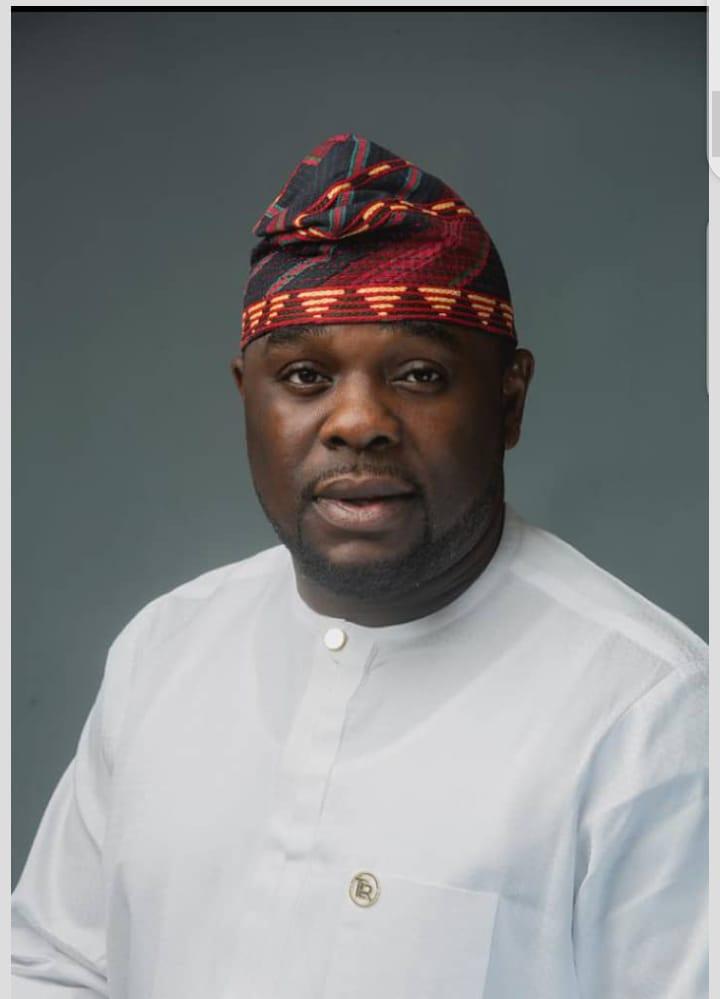
Mayor Dele Oshinowo: Making a difference with sure-footed programs in Agboyi Ketu LCDA

Published

on


Public service must be more than doing a job efficiently and honestly. It must be a complete dedication to the people and to the nation – Margaret Chase Smith


If you are not intimidated by his profile you would definitely be browbeaten with his unparalleled sense of responsibility. For Mayor Dele Oshinowo, executive chairman, Agboyi Ketu Local Community Development Authority (LCDA), there is no greater challenge and there is no greater honor than to be in public service.

Oshinowo is not just a politician that has impacted others, he has motivated many others, especially youths and several other residents of Agboyi Ketu LCDA who have benefited immensely from his dedication and commitment to service to humanity.
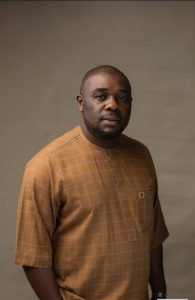
Hardworking Dele Oshinowo is known for working wonders wherever fate had placed him in the public service in the past years. And by all measures, as executive chairman of Agboyi Ketu LCDA, he is no doubt an accomplished man.


His status and achievements make him the envy of many as he towers far and above many of his contemporaries. Without doubt, this formidable man is full of ingenuity and creativity. This sure explains the reason he always stands tall wherever he finds himself.


On Monday, June 3, 2024, the Mayor, as he is fondly called by his admirers, will again roll out another set of goodies for the people with his WeLift Community Empowerment Innitiative. The programme is just of the many intervention programmes that his administration has put together to deliver the dividence of good governance to his people.

See also  Buy a house for me, Nkechi Blessing begs her 2.1 million Instagram fans

The programme, which aims to lift the less privileged out of poverty, organises training and skill acquisition programs for youths and adults as part of other several plans to make them independent and employable.


The youths receive sound training in vocations like Hairdressin, Shoemaking, Tailoring and Information Technology among several other vocations. At the end of the training programs, each trainee is set up with starter packs to enable them begin their own independent business.


Under his watch, Agboyi-Ketu Local Council Development Area (LCDA) has become synonymous with infrastructural development with special focus on mass housing and sure-footed developmental and impactful projects.


In a recent interview, Mayor Oshinowo spoke on some of his legacy projects, the Greenwich Gardens phase one, Sterling Height and Raymond estates.


According to him, the houses are affordable and built to address the housing problem of the people. “These are affordable housing, we have actually structured the payment to be spread across the construction period, I can tell you that about 80% of it has been sold out because it is flexible in terms of payment, people like the environment, people could not recognize the environment again. This is an estate where you have electricity supply, pipe borne water, green areas, they are well managed estates. This has actually afforded us to say that we have been part of the housing development in Nigeria.”

See also  Battle for Gbajabiamila’s Reps seat hots up in Lagos


Oshinowo said that in all, the LCDA has been able to do 271 housing units in all. “If you put it together, 170 units, and 101 units, that is about 271 units in total and there are other ones coming by next month.


The Greenwich Garden Phase one for instance has 81 apartments, 66 units of two bedroom flats; 14 units of semi-detached 3 bedroom duplexes; and one four bedroom detached duplex with Boys Quarters (BQ).


His performance in the last seven years of dedicated and impactful leadership at the helm of affairs in the Agboyi Ketu has helped to place the LCDA as one of the Poster Boys of the numerous achivements of Governor Babajide Sanwo-Olu.


Some of the legacy successes recorded by Oshinowo within the period include:


INFRASTRUCTURE

Adebayo Street
ALH, Usman Onowuna Street
Ajayi Street
Alhaji Owolabi Street
Fasanya Street
Ibefun Street
Ogunjobi Oriwu Street
Oriola Street
Philip Onashile Street
Okugbadejo Street (*pi)
Thomas Laniyan Street (*pi)
Abeokuta / Yinka Dipe Street (*upg)
Ondo Street (*pi)
Ibadan Street (*pi)
Holy Cross Street (*pi)
Agboyi Road (ongoing)
Ajibola Street
Adisa Balogun Street
Olasupo Street (*pi)
Sunmola Bako Street (*pi)
Chief Edward Street (*pi)
Anibaba Street (*pi)
Adeyemi Ajayi Street (*pi)
Prince Moyosore Street (*pi)
Bola Kazeem / Gerald Esogwa Street
(*pi)
Nathaniel Osagie Street (*pi)
Oja Omo / Oyemomi Street (*pi)
Novel Drugs / Adebayo Hassan Street
(*pi)
Adepitan Street
Oterubi Ogidan Street
Igboho Street
Sanuaje Street
23
Adepitan Street
Adisa Balogun Street
Elebiju Street
Ogunsheinde Street
Fadiya Street
Ogunbanwo Street
Ajibola Cresent
Julius Elebiju Street
Ezobi Street
Alhaji Oluwatoyin Street
Kazeem Street
Adebayo Street (*pi)
Alhaji Lawal Street
Ajayi Street
Ogunbanwo Street
Adisa Akintoye Street
Philip Onashile Street
Fasanya Street
Olalusi Street (*pi)
Salvation Street (*pi)
Owolabi Street
Lawal Street
Ogunjirin Street
Adeyemi Street
(*pi) = Palliative Intervention
• Alhaji Usman Onowuma Avenue Agboyi Estate, Al

See also  UPDATED: Appeal Court affirms Amaewhule as Speaker, voids Rivers 2024 budget


EDUCATION
Recognizing the power of knowledge, the LCDA has
launched initiatives to bridge educational gaps. This
spans from constructing and renovating schools
and enhancing teacher training programmes to
introducing progressive curricula.

HEALTH

Various health initiatives, including deworming,
vaccination campaigns, and upgrading health
centres. Additionally, during COVID-19, special
measures were implemented, and in collaboration
with LASHMA, 3,000 residents received free health insurance

ENVIROMENT
Commitment towards yearly dredging of canals,
annual tree planting initiatives, provision of
potable water and special funds for interventions,
showcasing an all-rounded approach towards
environmental preservation.

 

AGRICULTURE
Agriculture has seen modernization with the
introduction of innovative farming techniques and
tools, aiming at increased yields and sustainable
practices.

SOCIAL DEVELOPMENT

By facilitating communal interactions, supporting
cultural activities and promoting inclusiveness, we
aim to elevate the socio-cultural fabric of our LCDA.
Commitment towards yearly dredging of canals,
annual tree planting initiatives, provision of
potable water and special funds for interventions,
showcasing an all-rounded approach towards
environmental preservation.
 

Continue Reading
Click to comment

Leave a Reply

Your email address will not be published. Required fields are marked *

Politics

What supreme court judgement means for David Mark, ADC

Published

on

By

By Bolanle Olabimtan

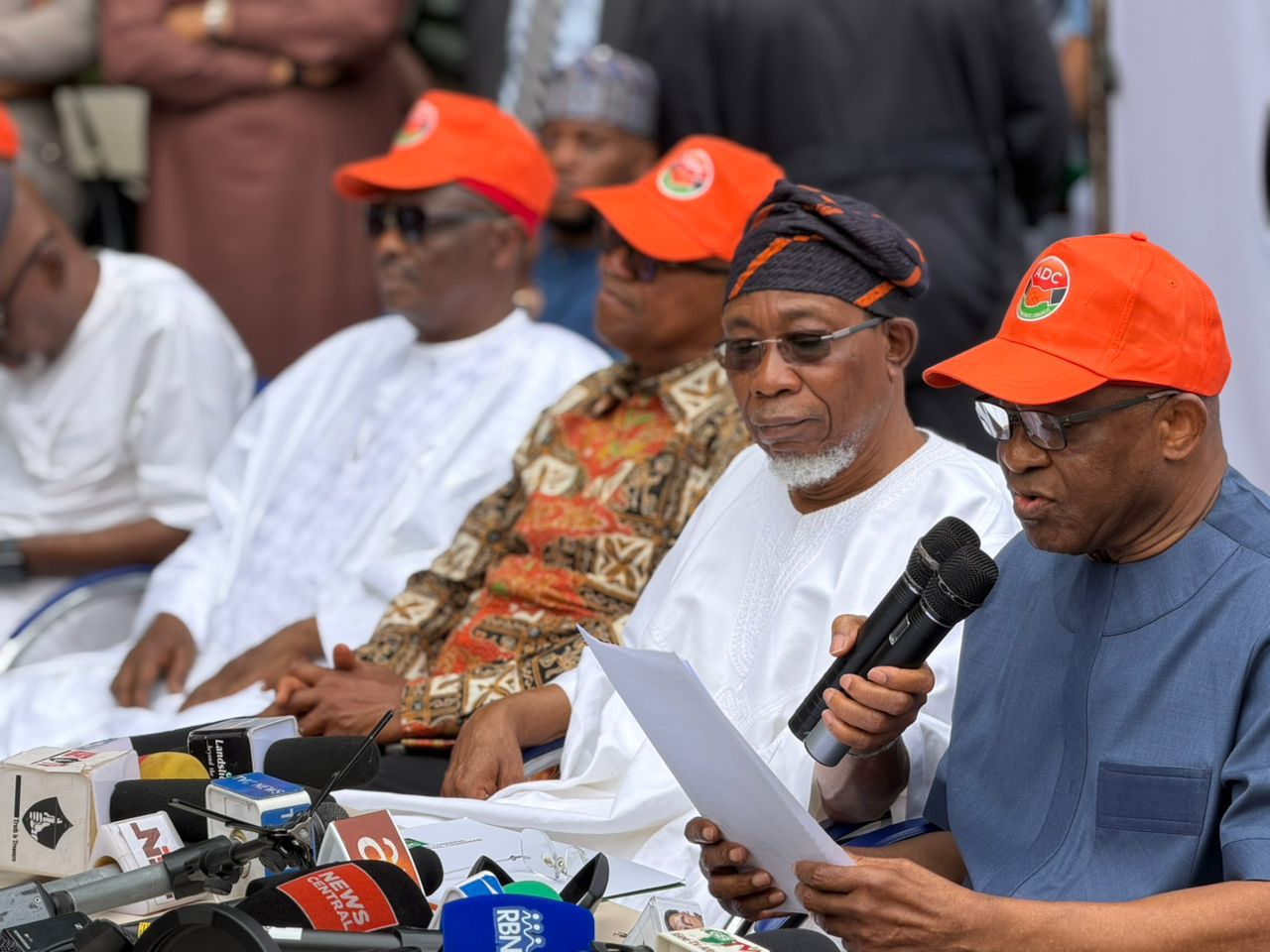
The supreme court judgement on the leadership crisis in the African Democratic Congress (ADC) has generated mixed interpretations and confusion about who is in charge of the party.

However, rather than settle the dispute, the apex court’s decision focused on a procedural misstep and sent the case back to where it began.

To understand the case in its entirety and what the supreme court judgement means, it is important to start from the beginning.

FEDERAL HIGH COURT

On September 2, 2025, Nafiu Bala, former vice chairman of the ADC, approached a federal high court in Abuja (Suit No. FHC/ABJ/CS/1819/2025), seeking to stop David Mark, former senate president, and his faction from parading themselves as leaders of the party.

Bala listed the ADC, Mark, Rauf Aregbesola (national secretary), the Independent National Electoral Commission (INEC), and Ralph Nwosu, the party’s founder and former national chairman, as defendants.

He also sought an order to restrain INEC from recognising them and to compel recognition of himself as acting national chairman.

He further filed motions seeking to stop the party from holding meetings, congresses, or conventions pending the determination of the suit.

The motion ex parte was heard on September 4, 2025, and Emeka Nwite, the trial judge, directed that the respondents, including INEC, be put on notice to show cause why the motion ex parte should not be granted.

This means the motion ex parte was neither granted nor refused.

COURT OF APPEAL

Dissatisfied with the interim ruling, Mark filed an appeal challenging the jurisdiction of the federal high court to continue to hear Bala’s suit.

However, on March 12, 2026, the court of appeal dismissed Mark’s case in its entirety, holding that it was incompetent and unmeritorious.

See also  Breaking: Ogun Speaker Oluomo impeached

A three-member panel of the appellate court, led by Uchechukwu Onyemenam, found that there was no substantive ruling by the federal high court on the ex parte application, as the trial judge merely ordered that parties be put on notice.

As such, there was no valid decision upon which an appeal could properly be anchored.

The court further faulted Mark for relying on an enrolled order rather than the actual proceedings and ruling of the trial court, noting that only the judge’s pronouncement constitutes the authentic record of the court.

The court also held that the appeal arose from an interlocutory ruling, for which Mark failed to obtain the required leave before approaching the appellate court.

On the issue of jurisdiction, the court of appeal noted that the question was still pending before the federal high court and could not be determined at the appellate level at that stage, describing the appeal as premature.

Having dismissed the appeal, the court issued preservatory orders to safeguard the subject matter of the dispute.

The court directed the parties to maintain the status quo ante bellum and to refrain from any action that could undermine the proceedings before the trial court.

On April 1, INEC announced that it would no longer recognise the factions of the ADC led by Mark or Bala, following its review of the court of appeal judgement.

SUPREME COURT

On further appeal to the apex court, Mark, among other things, argued that he had a lawful right to proceed with the appeal without seeking leave of the trial court.

See also  Subsidy removal: Mayor Dele Oshinowo flags off We-Lift Food Bank Initiative in Agboyi-Ketu LCDA

He also raised the issue of jurisdiction, arguing that the trial court lacks the jurisdiction to entertain Bala’s suit.

In a unanimous judgement delivered on Thursday, a five-member panel of the supreme court held that the appeal fails in part and succeeds in part.

In the first part, the apex court agreed with the court of appeal’s verdict that the appellant (Mark) ought to have sought leave of the trial court before filing an appeal, since the substantive issues before the trial court had not yet been heard and determined.

“I find the court below to be right that the appellant, in whose favour the order of the federal high court was made, ought to have sought the leave of the court before appeal…” the supreme court held.

Mohammed Garba, who read the lead judgment, held that since the appellant failed to meet the condition precedent for filing the appeal, it robbed the appellate court and, by extension, the supreme court of jurisdiction to entertain the suit.

The lead justice also held that the issue opposing jurisdiction of the trial court cannot be determined by the supreme court since it is already the subject of a pending preliminary objection, which has not yet been determined at the high court.

“I therefore endorse the decision by the court below upholding the first respondent’s preliminary objection to the competence of the appellant’s appeal and an order striking it out on that ground,” Garba said.

Consequently, the court ordered the parties to go back and continue with the suit pending at the federal high court.

On the second issue, which succeeded, the supreme court said the court of appeal overstepped its boundaries by asking parties to maintain the status quo.

See also  Battle for Gbajabiamila’s Reps seat hots up in Lagos

“Status quo ante bellum”, in legal terms, refers to restoring the condition of the position of things as they were before the dispute arose.

The court reasoned that once the appeal was dismissed, the court of appeal had become functus officio — meaning it had exhausted its authority in the case and could not make further substantive orders.

The supreme court consequently set aside the status quo order, describing it as “unnecessary, unwarranted and improper”.

“The court was wrong to have made a purported preservatory order suo moto in respect of a proceeding pending before the lower court, as that power belongs to that trial court, which shall be in control of proceedings in the matter when it is returned to it by the appellate court either for continuation, hearing or retrial as the case may be,” the court ruled.

DOES THIS MEAN DAVID MARK’S FACTION HAS WON?

The verdict of the supreme court does not mean victory for the Mark-led faction or even any faction.

While the removal of the status quo order may give the Mark-led faction some breathing room, the supreme court did not affirm any leadership.

The most important question of who legitimately controls the ADC remains unresolved.

The outcome will now depend on the decision of the trial court after full proceedings.

After the matter is resolved at the trial court, the losing faction would likely appeal the verdict back up to the supreme court.

Meanwhile, INEC has updated its website, listing Mark as the national chairman of the ADC and Aregbesola as national secretary

Culled from TheCable

Continue Reading

Politics

2027: APC postpones presidential, governorship primaries

Published

on

By

The All Progressives Congress has postponed its presidential primary election, earlier slated for May 15 and 16, to May 23, 2026, while the governorship primaries will now hold on May 21, 2026, in line with a revised timetable for its 2027 general election activities.

The APC Deputy National Publicity Secretary, Duro Meseko, disclosed this at the end of the 186th National Working Committee meeting in Abuja on Thursday, announcing adjustments to the earlier schedule, including the postponement of key processes such as the screening of aspirants and the consideration of appeals.

Meseko also disclosed that the screening of aspirants, initially scheduled for May 6 to May 8, including the presidential screening set for May 9, has now been rescheduled.

Announcing the adjustment to the APC 2027 schedule of activities, the Deputy National Publicity Secretary stated, “We now have a new revised timetable in accordance with the Constitution of the Federal Republic of Nigeria, 1999, as amended, the Electoral Act 2026, and the Independent National Electoral Commission revised timetable and schedule of activities for the 2027 general elections.

“We hereby present the new revised timetable and schedule of activities for the conduct of the 2027 general elections to the press.

“Notice had already been given to state chapters on Monday, 20th April. Sales of forms will commence this Saturday, 25th April, to Saturday, 2nd May, 2026. The last day for submission of completed forms and accompanying documents is now Monday, 4th May, 2026. Screening of aspirants – House of Assembly, House of Representatives, Senate, Governorship, and Presidential—will hold as follows: Wednesday, 6th May to Friday, 8th May, 2026, for House of Assembly, House of Representatives, Senate, and Governorship screening respectively. Saturday, 9th May, 2026, is the screening for Presidential aspirants.

See also  Breaking: Ogun Speaker Oluomo impeached

“Publication of screening results for State House of Assembly, House of Representatives, Senate, Governorship, and Presidential will hold on Monday, 11th May, 2026. Screening appeals will be handled by the appeal committees from Tuesday, 12th May to Wednesday, 13th May, 2026, for the State House of Assembly, House of Representatives, Senate, Governorship, and Presidential.

“Primary elections of the All Progressives Congress commence as follows: Friday, 15th May, 2026: House of Representatives primary elections. Monday, 18th May, 2026: Senate primary elections. Wednesday, 20th May, 2026: State House of Assembly primary elections. Thursday, 21st May, 2026: Governorship primary elections.
Saturday, 23rd May, 2026: Presidential primary elections.”

He announced that the post-primary appeal committees will sit on Monday, 18th May, 2026, for the House of Representatives; Wednesday, 20th May, 2026, for the Senate; Thursday, 21st May, 2026, for the State House of Assembly; Saturday, 23rd May, 2026, for the governorship; and Monday, 25th May, 2026, for the presidential.

See also  Subsidy removal: Mayor Dele Oshinowo flags off We-Lift Food Bank Initiative in Agboyi-Ketu LCDA

He continued, “That is one of the resolutions today. The second is the schedule of activities and timetable for the 2026 ward, LGA, and state congresses in Zamfara State, beginning Tuesday, 28th April, 2026. The ward congresses, LGA congresses, and state congresses will commence on that date.

“Screening of aspirants for ward executive positions will follow on Wednesday, 29th April, 2026. Ward congresses will be held on Thursday, 30th April, 2026. Appeals from ward screening and ward congresses will be held on Friday, 1st May, 2026. Appeals arising from LGA congresses and screening of state executive members will also be held on the same day. Appeals arising from state congresses will be held on Sunday, 3rd May, 2026.
That is the timetable for the congresses in Zamfara State.”

He explained that the party has adopted the two modes of primary elections provided in the 2026 Electoral Act, direct primary and consensus, for selecting candidates for elective positions.

Meseko added, “In this 186th meeting of the National Working Committee of the All Progressives Congress, we adopted the mode of primaries as provided in the Electoral Act: direct and consensus mode, with a caveat that members are at liberty to pick.

See also  BREAKING: Iniubong Umoren: Rapist Uduak Akpan to die by hanging for killing job-seeker

“That is, aspirants are free to decide their preference in accordance with the Electoral Act. Where consensus works, it stands, and where an aspirant does not agree to consensus, it automatically reverts to direct primaries.

“There was also a rumour that forms would be restricted or limited to certain individuals. I am here to inform all party faithful and aspirants that nomination forms for all aspirants seeking offices under the All Progressives Congress are available for all, not exclusively reserved for any individual.”

The Independent National Electoral Commission has fixed the Presidential and National Assembly elections for Saturday, January 16, 2027, while the Governorship and State Houses of Assembly elections will hold on Saturday, February 6, 2027.

The commission also stated that party primaries, including the resolution of disputes arising from them, are scheduled to take place between April 23, 2026 and May 30, 2026.

According to INEC, campaigns for the Presidential and National Assembly elections will commence on August 19, 2026, while campaigns for the Governorship and State Houses of Assembly elections will begin on September 9, 2026.

Continue Reading

Politics

ADC crisis: Presidential ticket tears Atiku, Obi, Kwankwaso apart

Published

on

By

The crisis threatening to tear apart the African Democratic Congress (ADC) may get worse as the party’s presidential ticket is tearing supporters of major aspirants apart ahead of the primary.

It would be recalled that the Independent National Electoral Commission (INEC) has refused to recognise any of the three camps laying claim to the party’s leadership.

This followed a Court of Appeal order in a suit challenging the recognition of David Mark, Rauf Aregbesola and others as officials of the National Working Committee (NWC).

Many state chapters remain polarised and unable to hold congresses. Yet, the party on Tuesday held its convention in Abuja without INEC monitoring, a move widely considered risky.

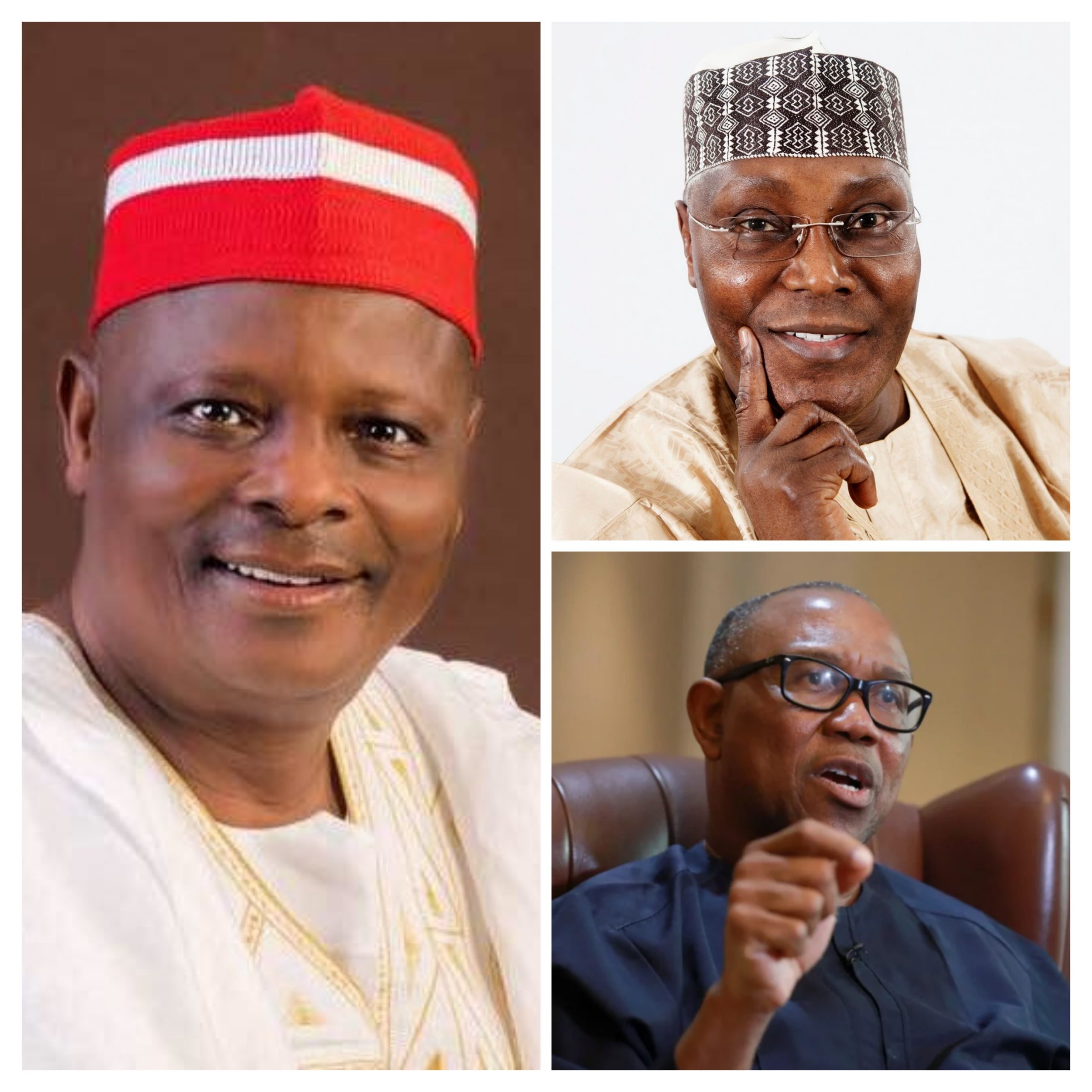
Ahead of the primary to pick the ticket for the presidential candidate, there is a widening gulf among the camps of former Vice President Atiku Abubakar, former Anambra State Governor Peter Obi and Kwankwasiyya Movement leader, Senator Rabiu Kwankwaso, all believed to be eyeing the ticket.

The trio are defectors from other parties who have converged on the ADC amid ongoing political realignments ahead of the 2027 general election.

While Atiku left the Peoples Democratic Party (PDP) last year to become the ADC arrowhead, Obi also quit the Labour Party (LP), on whose platform he contested the 2023 presidential election.

Kwankwaso, a former governor of Kano State and ex-Defence Minister, left the New Nigeria Peoples Party (NNPP) for the ADC last month.

Despite their stated commitment to building a formidable opposition platform to challenge the ruling All Progressives Congress (APC), the cracks became evident shortly after the convention.

See also  El-Rufai knocks Atiku over 'wicked' views on cash swap, says he hates poor Nigerians

Atiku’s ally, Dele Momodu, said the former vice president’s camp favours an Atiku/Obi ticket.

However, Obi’s camp rejected the proposal, insisting that the ticket should be zoned to the South.

Momodu argued that pairing Obi with Atiku would give the ADC a significant electoral advantage, citing their previous collaboration in 2019.

The duo, however, lost the election to the late President Muhammadu Buhari.

Speaking on television on Tuesday night, Momodu said: “I’d pair him (Atiku) with Peter Obi because they worked together in 2019. So, they already share a similar temperament.

“Peter Obi came third in the last election. You don’t have to work too hard to maintain and attract the same group of people who love him.”

He maintained that the proposed Atiku/Obi alliance, if consummated, would strengthen the opposition’s chances of capturing federal power, especially amid ongoing political realignments.

But the Coordinator of the Obedient Movement – Obi’s caucus within the ADC – Tanko Yunusa, insisted that zoning the ticket to the South remains the only acceptable option.

He added that once zoned to the South, Obi should emerge as the sole beneficiary and be paired with Kwankwaso.

Yunusa, who also spoke on television, said Obi enjoys broad acceptability within the ADC.

According to him, the reception accorded Obi and Kwankwaso by delegates at Tuesday’s national convention reflected the preference of party members.

He warned that the ADC risks losing the election if its candidate does not emerge from the South.

See also  BREAKING: Iniubong Umoren: Rapist Uduak Akpan to die by hanging for killing job-seeker

Yunusa described the former Anambra State governor as the best choice for the ticket, citing what he called his integrity and lack of political baggage.

He said: “You’ve never seen him (Obi) owning a debt. Neither have you seen him segregating. In all of that, he still mingles with his colleagues to fight for the soul of the country.”

He added that Obi has recognised the need to build alliances with the North, noting his increasing engagement with northern leaders across religious lines.

Yunusa said: “When he came to my state in Kano, you could see the synergy between him and Rabiu Musa Kwankwaso. The reception was overwhelming; we barely managed the mammoth crowd.

“It was shouts of Obi/Kwankwaso! Obi/Kwankwaso! The signage and the chorus showed a major shift from what it was in 2023 and 2026 towards 2027. I was elated.”

He dismissed the suggestion of an Atiku/Obi ticket as unworkable.

Yunusa said: “It’s a Southern presidency. To make it easier for the party to win, zone it to the South and give the candidacy to the region, and you are assured of victory.

“Anything short of that will only lead to defeat. Nigerians should conduct independent assessments.

“The level of enthusiasm and support shown for Peter Obi and Kwankwaso indicates that the people have spoken.

“If those two are paired – Peter Obi as presidential candidate and Kwankwaso as running mate – the election would effectively be decided early.

See also  Subsidy removal: Mayor Dele Oshinowo flags off We-Lift Food Bank Initiative in Agboyi-Ketu LCDA

“The momentum has grown, especially among young Nigerians seeking credible leadership and good governance.”

There is also a widespread belief that Atiku, 79, may have an edge over Obi in a competitive primary, given his long-standing experience in party contests dating back to 1991/1992.

This perception has fuelled calls by Obi’s supporters for the ticket to be zoned to the South, effectively limiting Atiku’s chances of contesting.

However, the ADC spokesman, Bolaji Abdullahi, has repeatedly assured that the party will provide a level playing field for all aspirants.

Last week, Obi reiterated that the process for selecting the party’s candidate must not be “transactional.”

He said in an interview: “In the PDP, I left for the LP because people were not playing by the rules.

“The presidential primary was transactional. I cannot be part of transactional primaries. I cannot pay people to serve them.

“I may not have spent a long time in politics, but even if I had to repeat the process 20 times, I would take the same decision – to leave. I cannot advocate change while participating in a flawed process.

“I am now in the ADC with some of the same people I left in the PDP and other parties.

“But if the same process is compromised again, I will speak out.

“I have never been involved in any form of election rigging – at the primary level, during the election, or afterwards.”

Continue Reading

Trending News