Connect with us

Business

UK economy falls into recession

Published

on


The economy of the United Kingdom (UK) has fallen into recession.

It fell into recession during the final three months of last year, official figures show, after the economy shrank by more than expected.

Gross domestic product (GDP) – a key measure of economic activity – dropped by 0.3% between October and December.

That follows a fall between July and September. The UK is considered to be in recession if GDP falls for two successive three-month periods.

The figure will be a blow Prime Minister Rishi Sunak. Growing the economy was one of five pledges he made in January 2023. Meanwhile, Chancellor Jeremy Hunt is less than three weeks away from unveiling his latest Budget.

Shadow chancellor Rachel Reeves said the data showed that Mr Sunak’s pledge to grow the economy was “in tatters”.

The government can use growing GDP as evidence that it is doing a good job of managing the economy. Likewise, if GDP falls, opposition politicians say the government is running it badly.

See also  UK-based Nigerian student to be deported after serving 10-year jail term for raping teenager


If GDP is going up steadily, people pay more in tax because they’re earning and spending more. This means more money for the government that it can choose to spend on public services, such as schools, police and hospitals.


Governments also like to keep an eye on how much they are borrowing in relation to the size of the economy.


Treasury sources have confirmed to BBC News that the chancellor is looking at a larger pencilled-in squeeze on public spending as a way to deliver tax cuts in the Budget on 6 March.


Forecasts for the public finances have materially deteriorated in recent weeks as interest costs on UK government borrowing has increased. Final decisions have not been made.


Commenting on GDP, Mr Hunt said: “While interest rates are high – so the Bank of England can bring inflation down – low growth is not a surprise.”


He added that there were “signs the British economy is turning a corner”.

See also  Meet flamboyant Nigerian pastor, Tobi Adegboyega, facing deportation from UK over ‘£1.87m fraud’


But Mr Reeves said: “This is Rishi Sunak’s recession and the news will be deeply worrying for families and business across Britain.”


Figures from the Office for National Statistics showed that during the final three months of last year, there was a slowdown in all the main sectors it measures to determine the health of the economy, including construction and manufacturing.


The figure for the final three months of last year was worse than a 0.1% fall widely forecast by financial markets and economists.

GDP for the third quarter, between July and September fell by 0.1%.


Ruth Gregory, deputy chief UK economist at Capital Economics, said the latest economic figures “might nudge the Bank of England a little closer to cutting interest rates”.


“But we doubt the Bank will be too worried about what is likely to be a mild and short recession,” she added.


Recent figures showed that inflation – which measures the pace of price rises – remained at 4% in January.

See also  Abiodun won 2019 gov poll through rigging, he must be removed – Amosu


The Bank of England had been lifting interest rates to put the brakes on inflation but has kept them at 5.25% since August last year.

For the year as a whole, the economy grew by 0.1%.


“While it has now shrunk for two consecutive quarters, across 2023 as a whole the economy has been broadly flat,” said Liz McKeown, director of economic statistics at the ONS.


Nevertheless, excluding the Covid years, annual growth last year was the weakest since 2009 when the UK and major economies were reeling from the global financial crisis.

Continue Reading
Click to comment

Leave a Reply

Your email address will not be published. Required fields are marked *

Business

Wema Bank wins Euromoney’s Nigeria’s best digital bank for consumers 2026 award

Published

on

By

Recognition affirms bank’s leadership in digital innovation and customer-centric banking

Wema Bank, Nigeria’s oldest indigenous bank and pioneer of Africa’s first fully digital bank, ALAT, recently added another feather to its already heavily-studded cap after it was named Nigeria’s Best Digital Bank for Consumers 2026 by Euromoney, one of the world’s most respected authorities on financial services and banking excellence.

The prestigious recognition affirms the Bank’s sustained leadership in digital innovation, customer experience and financial inclusion, reinforcing its position as one of Nigeria’s leading technology-driven financial institutions.

Presented annually, the Euromoney Awards for Excellence celebrate banks that are redefining financial services through innovation, measurable impact and outstanding customer value.

In selecting Wema Bank for the award, Euromoney recognised the Bank’s successful digital transformation journey, its continuous innovation through ALAT, Africa’s first fully digital bank, and its unwavering commitment to delivering simpler, smarter and more accessible banking experiences for customers.

See also  UK announces stricter visa measures to cut migration by 300,000 per year

Commenting on the recognition, the Managing Director/Chief Executive Officer of Wema Bank, Moruf Oseni, said: “This award is a strong validation of the deliberate investments we have made over the years to build a truly digital bank that puts customers at the centre of everything we do. Innovation for us has never been about technology for its own sake. It has always been about creating solutions that make banking easier, faster, safer and more rewarding for every customer.

“From pioneering Africa’s first fully digital bank with ALAT to continuously evolving our digital capabilities, we have remained focused on anticipating customer needs and building experiences that create real value. We are honoured by this recognition from Euromoney and inspired to continue pushing the boundaries of innovation as we shape the future of banking in Nigeria.”

A key milestone in Wema Bank’s digital transformation has been the evolution and upgraded version of ALAT, which introduced next-generation capabilities including voice banking, tap-to-pay functionality, personalised financial services and integrated investment opportunities through strategic partnerships.

See also  Davido in first public outing at Uncle Adeleke’s inauguration after son’s death

Together with faster digital onboarding, AI-powered fraud monitoring, intelligent customer personalisation and an expanding agency banking network, these innovations continue to enhance customer experience while extending financial services to more Nigerians.

Euromoney also recognised Wema Bank’s ability to leverage technology to build deeper customer relationships through data-driven personalisation, enabling customers to receive tailored recommendations across savings, investments and credit products based on their financial needs and behaviour.

For over eight decades, Wema Bank has remained at the forefront of innovation in Nigeria’s financial services industry. As the pioneer of Africa’s first fully digital bank, the Bank continues to redefine banking by combining technology, customer insight and innovation to deliver seamless, secure and inclusive financial solutions for individuals, businesses and communities.

The Euromoney recognition further reinforces Wema Bank’s commitment to building the future of banking through continuous innovation, operational excellence and customer-centric solutions that create lasting value.

Continue Reading

Business

CBN revokes licences of 46 microfinance banks

Published

on

By

The Central Bank of Nigeria (CBN) has revoked the operating licences of 46 microfinance banks (MFBs).

The apex bank cited the failure of the banks to meet regulatory requirements for continued operation.

In a statement issued on Wednesday by Hakama Sidi-Ali, acting director of corporate communications, the apex bank said the revocation took effect from July 1, 2026, in line with Sections 12 and 13 of the Banks and Other Financial Institutions Act (BOFIA), 2020.

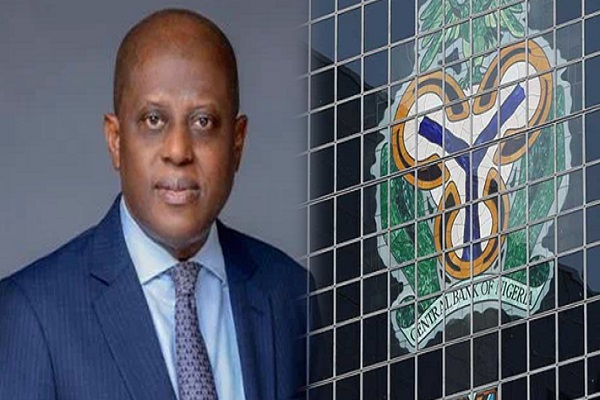
The CBN said the action was approved by Olayemi Cardoso, the apex bank governor, as part of efforts to safeguard the stability of the financial system, protect depositors and ensure compliance with regulatory standards.

“According to the revocation order, the action became necessary because of one or more of the circumstances: Insufficient assets to meet liabilities, closure of operations without the CBN approval, Inactivity and cessation of financial intermediation, failure to commence operations within 12 months of licence approval, and failure to maintain minimum capital funds unimpaired by losses,” CBN said.

See also  Davido in first public outing at Uncle Adeleke’s inauguration after son’s death

“The revocation of the licences is part of the Bank’s ongoing efforts to safeguard the stability of the financial sector, protect depositors, and ensure that licensed institutions comply with current laws and regulatory requirements,” the statement reads.

CBN added that it remains committed to promoting a safe, sound and resilient financial system and would continue to take supervisory and regulatory actions where necessary to maintain public confidence in Nigeria’s financial sector.

The affected microfinance banks are:

1. Minji-Se Churchill MFB (tier 1) in Rivers

2. Merchant MFB (tier 2) in Abia

3. Janmaa MFB (tier 1) in Kwara

4. Busu MFB (tier 2) in Niger

Advertisement

5. Gold MFB (tier 1) in Lagos

6. Zain MFB, formerly Dawakin Tofa MFB, a tier 2 lender in Kano

7. Bompai MFB (tier 1) in Kano

8. Ajwa MFB (tier 2) in Kano

Advertisement

9. Now Now Digital MFB (tier 2) in Kano

10. Crystabel Microfinance Bank (tier 1) in Bayelsa

See also  Meet flamboyant Nigerian pastor, Tobi Adegboyega, facing deportation from UK over ‘£1.87m fraud’

11. Chanelle MFB (state-based) in Lagos

12. Abia SME MFB (tier 1) in Abia

13. Kamba MFB (tier 2) in Kebbi

14. Iwade MFB (tier 2) in Ogun

15. Winview MFB (tier 1) in Abuja

16. Zuru MFB (tier 2) in Kebbi

17. Minjibir MFB (tier 1) in Kano

18. Shanono MFB (tier 2) in Kano

19. Sumaila MFB (tier 2) in Kano

20. Rimin Gado MFB (tier 2) in Kano

21. Mwaghavul MFB (state-based) in Plateau

22. Sycamore MFB (tier 2) Kano

23. TOFA MFB (tier 2) in Kano

24. Safegate MFB (tier 1) in Lagos

25. Creekline MFB (tier 2) in Delta

26. Bestar MFB (tier 1) in Oyo

27. Livingspring MFB (tier 1) in Cross River

28. Apple MFB (tier 2) in Ogun

29. Stanford MFB (state-based) in Uyo

30. Frontline MFB (tier 2) in Anambra

31. Zafec MFB (tier 2) in Kaduna

32. Supreme MFB (tier 1) in Lagos

See also  BREAKING: Nigeria at risk of CBN-induced recession over naira swap, says NGF

33. Bejin-Doko MFB (tier 2) in Niger

34. Kanopoly MFB (tier 1) in Kano

35. Bellbank MFB, formerly Tsanyawa (Tier 2), in Kano

36. Yeneng MFB (tier 2) in Plateau

37. Creditville MFB (tier 1) in Lagos

38. MBAG MFB (tier 1) in Lagos

39. Straight Sahara MFB (tier 1) in Benue

40. Our Pass MFB (tier 2) in Ondo

41. VERDANT MFB (tier 1) in Lagos

42. Basawa MFB (tier 2) in Kaduna

43. Casha MFB (tier 2) in Abuja

44. Esteem MFB (tier 2) in Kano

45. Enterpreneur MFB (tier 1) in Lagos

46. Avantus MFB (tier 2) in Osun

It would be recalled that the CBN increased the capital base for banks, in March 2024, giving them until March 31, 2026, to meet the requirements.

On March 6, 2026, the financial regulator disclosed that 30 banks have met the minimum capital requirement.

Continue Reading

Business

Wema Bank launches Hackaholics 7.0, increases grand prizes to N150m

Published

on

By

introduces 3 tracks, 7 Verticals,

Wema Bank, Nigeria’s oldest indigenous national bank, most innovative and pioneer of Africa’s first fully digital bank, ALAT, has announced the 7th edition of its flagship innovation initiative, Hackaholics.

The announcement was made on Wednesday, July 1, 2026, during the official press conference at the Wema Bank Head Office in Lagos, Nigeria.

Launched in 2019, Hackaholics is Wema Bank’s youth and tech-focused initiative designed to serve as a platform for young Africans with creative, game-changing, tech-driven ideas and products, and to bring innovative their ideas to life.

Since its launch, Hackaholics has discovered thousands of groundbreaking solutions, supported over 10,000 startups, engaged 50,000 participants, developed over 100 solutions from scratch and disbursed $500,000,000 in grant prizes to dozens of winners whose remarkable solutions have earned top spot in the past 6 editions.

With the launch of Hackaholics 7.0, Wema Bank is set to execute the biggest Hackaholics edition yet.

See also  BREAKING: Nigeria at risk of CBN-induced recession over naira swap, says NGF

Themed “Powering Possibilities”, Hackaholics 7.0 will kick off with an open call for applications, calling on all young Africans with creative tech-driven solutions across any of the 7 verticals: Financial Inclusion, Healthcare, Digital Transformation, Education, Sustainability, Social Impact and Future of Work.

Each application is to be made via the portal at hackaholics.wemabank.com, under one of three tracks: The Startup Pitch Competition, Hackathon and the newly introduced Social Impact track.

Following the application window, Hackaholics 7.0 will then proceed on a national tour which will touch 10 pitch centres across the six geopolitical zones of Nigeria.

Each pitch centre will serve as a hub for innovators within the region to pitch their creative solutions and get the opportunity to secure the top spot in their pitch centre, and ultimately, proceed to the grand finale where the winners of Hackaholics 7.0 will be announced.

Speaking on the Bank’s inspiration behind Hackaholics’ exceptional seven-year journey, Wema Bank’s MD/CEO, Moruf Oseni, reiterated the Bank’s commitment to powering innovation, empowering youth and promoting economic growth in Africa.

See also  UK opens Africa’s biggest visa application centre in Lagos

According to him, “At Wema Bank, we believe that institutions have a responsibility that extends beyond providing commercial services. We have a responsibility to create meaningful opportunities, provide the right resources, enable innovation to thrive, and support the ecosystems that will shape today’s youth as well as tomorrow’s economy.

“This sense of responsibility is what has driven the evolution of Hackaholics from inception till date. With Hackaholics, we have, and we are investing in the next generation of innovators, inspiring innovation that will impact lives, strengthening Nigeria’s innovation ecosystem and giving youth a platform to make meaningful use of their creativity; and the numbers continue to speak volumes.”

Declaring the application window open, Tajudeen Bakare, Wema Bank’s Divisional Executive, Business Support, added, “As we launch Hackaholics 7.0 today, we are opening up a new phase of opportunities for more Nigerian youth to challenge themselves, explore their creativity and become startup founders.

“I encourage every young Nigerian with a passion for innovation to leverage the opportunity that we have carefully curated through Hackaholics and get ahead of the curve in today’s dynamic work landscape.

See also  Nigerian student arrested for sexually harassing minors four months after arriving UK

“Together, we can continue to build an ecosystem where innovation flourishes, opportunities expand, and young people are empowered to create solutions that shape the future.”

Hackaholics 7.0 is free, and open to any Nigerian youth who has innovative ideas and solutions to pitch. Interested startups and innovators can apply at hackaholics.wemabank.com. All updates on the Hackaholics 7.0 journey will be made available on the Bank’s website @wemabank.com as well as its social media platforms @wemabank and @alat_ng.

Continue Reading

Trending News