Connect with us

Business

Titan Trust Bank denies alleged illegal acquisition of Union Bank

Published

on


Titan Trust Bank has denied claims of illegalities in its acquisition of the Union Bank of Nigeria Plc.


A report by the special investigation panel on the Central Bank of Nigeria (CBN) and other related entities had accused Titan Trust of acquiring Union Bank of Nigeria through ill-gotten wealth and other sharp practices


In a statement on Sunday, the lender insisted that the “transaction followed due process and met all regulatory requirements, including that of the Securities and Exchange Commission (SEC) and the CBN.


The bank also said Godwin Emefiele, the embattled ex-CBN governor, has no link with its ownership.


“We are aware that our customers, shareholders, employees, and other stakeholders of the two banks will naturally be troubled by this allegation. Consequently, the board and management of Titan Trust Bank Limited wish to make the following clarifications to set the records straight,” the statement reads.

See also  Nigeria's Falconets trash Canada 3-1, to face Holland in q’final


“On December 18, 2021, Titan Trust Bank Limited (on the buy side) signed a Share Sale and Purchase Agreement (SPA) with Atlas Mara Limited, Union Global Partners Limited, Emeka Emuwa, Standard Chartered Bank, Montane Partners West Africa Limited, TLG Africa Growth Impact Fund, and Sanlam Life Assurance Limited on the sale side (otherwise referred to as the “bulk shareholders”).


“The bulk shareholders together owned 93.41% of Union Bank’s issued ordinary share capital. The SPA was a product of a long and tortuous due diligence process that involved leading financial and technical advisers.


“Titan Trust Bank engaged reputable firms like PricewaterhouseCoopers Limited (or PWC) for the financial due diligence, Drey Law Practice (DLP) for the legal due diligence, Norton Rose Fulbright (NRF) UK as legal Advisers and Citibank London as financial/Transaction Advisers.”


According to the firm, the bulk shareholders also engaged a prominent UK law firm “of White & Case as their Legal advisers on the transaction”.

See also  Police commission dismisses three senior officers, reduces ranks of four over ‘serious misconduct’


The lender argued that the acquisition was conducted in the most professional, open, and transparent bidding process.


“The acquisition was funded by a combination of debt ($300 million) and additional equity injection of about $190 million which was contributed by TTB’s two major shareholders – Magna International DMCC, and Luxis International DMCC,” Titan Trust said.


“The Certificates of Capital Importation (CCI) for both the debt and the equity financing evidencing the receipt of these funds into Nigeria by legal means have been made available where requested.


“The $300 million acquisition facility is sourced from Afreximbank and is priced on SOFR with a margin of 6.25% (all together almost 12% pa) and a moratorium period of 30 months. TTB has paid interest on the loan for three interest periods (18 months so far).”


‘NO ILLEGALITY OR FRAUD’

In addition, the bank said there was “no illegality or fraud” in the acquisition and merger with Union Bank. 

See also  D-DAY: Tinubu, Atiku, Obi, Kwankwaso battle to succeed Buhari


“The slow pace of TTB’s acquisition and ultimate merger with Union Bank has been because of TTB’s and the regulators’ determination to ensure that the process remains fully compliant with extant laws, meets best global practices, and is conducted openly and transparently,” Titan Trust added.


“During the special investigation, the board and management of TTB and Union Bank have made all representations to the investigation team.


“There is no illegality or fraud in the acquisition as alleged. We insist that this acquisition can vie for one of the most professional and transparent in the history of this country.”


The bank, therefore, urged its customers, shareholders, and all stakeholders to remain calm, adding that efforts are being made to ensure that everything is legal and the current misunderstanding is clarified. 


Continue Reading
Click to comment

Leave a Reply

Your email address will not be published. Required fields are marked *

Business

Wale Tinubu Leads Oando to Another Landmark Profit

Published

on

By

By Adebayo Adeoye

For Jubril Adewale Tinubu, CON, Group Chief Executive of Oando Plc, the business of building an enduring corporate institution appears to be a journey without a finish line. Just when it seems the indigenous energy giant has taken another significant leap; the company finds yet another reason to command attention in the competitive energy sector.

The energy tycoon has continued to demonstrate that building a formidable business institution requires vision, courage and an unrelenting appetite for growth. At Oando Plc, the results of that determination are increasingly becoming difficult to ignore.

Under his watch as Group Chief Executive, the indigenous energy company has continued to push the boundaries of its operations, recording another impressive performance that reinforces its growing influence in the energy industry.

The energy guru whose corporate journey has been closely intertwined with Oando’s evolution, the latest results represent another opportunity to consolidate the company’s position and strengthen its ambitions in a highly competitive sector.

Oando reported revenue of ₦2.78 trillion for the nine months ended September 30, 2026, representing a nine per cent increase from the ₦2.54 trillion recorded during the corresponding period of the previous year.

See also  Otedola's daughter, DJ Cuppy unveils 'son' Dudu Otedola

However, the real talking point is not just the growth in revenue but the remarkable turnaround in its operating performance. The company posted an operating profit of ₦159.7 billion, reversing the operating loss of ₦109.7 billion recorded in the corresponding period of 2025. Gross profit also climbed significantly to ₦174.5 billion from ₦29.8 billion.

Its production numbers equally tell a story of growing capacity. Average daily production rose by 14 per cent to 42,985 barrels of oil equivalent, compared with 37,614 barrels in the previous year. This improvement reflects increased output across its crude oil, gas and natural gas liquids operations.

For a company that has consistently pursued an ambitious growth strategy, the improvement in production efficiency is particularly significant. Production operating costs declined by 22 per cent to $15.39 per barrel of oil equivalent, while facility uptime improved to 96.1 per cent from 85 per cent.

These developments point to the benefits of sustained investment, improved asset management and a deliberate effort to strengthen operational performance. In an industry where production disruptions and rising operating expenses can significantly affect profitability, Oando’s latest figures suggest that the company is making progress in addressing some of the challenges associated with its expanding operations.

See also  Nigeria's Falconets trash Canada 3-1, to face Holland in q’final

Wale Tinubu, who has remained at the forefront of Oando’s transformation, has continued to push the company towards greater efficiency and expansion. During the reporting period, the company generated ₦285 billion in cash from operations and invested ₦110.7 billion in capital expenditure, largely directed towards drilling activities across its OML 60–63 assets.

The investments underscore the company’s determination to sustain production growth while improving the performance of its existing assets. Rather than resting on the achievements of previous years, Oando appears focused on strengthening its operational foundation and creating room for further expansion.

The company also recorded a reduction in total borrowings to ₦2.16 trillion, another development that speaks to its ongoing efforts to strengthen its financial position. For investors and industry watchers, the combination of improved operating profitability, increased production and lower borrowings provides important indicators of the company’s evolving financial and operational outlook.

Nevertheless, challenges remain. Profit after tax declined to ₦106.5 billion from ₦201.3 billion in the corresponding period of 2025, reflecting, among other factors, the pressure of finance costs associated with its acquisition-related debt. It is a reminder that despite the encouraging operational figures, the company still has financial obligations to manage as it pursues its long-term ambitions.

See also  Suspended RCCG pastor, Idowu Iluyomade launches new church in Lagos

Still, the improvement in operating profitability and production performance provides considerable encouragement. The figures also reinforce the importance of sustained investment and disciplined execution in an energy industry that continues to experience significant changes.

For Tinubu, the latest results represent more than another set of impressive numbers. They reinforce Oando’s determination to deepen its footprint, strengthen its indigenous credentials and position itself as a formidable player in Africa’s evolving energy landscape.

Clearly, the Oando story is still unfolding, and under Tinubu’s watch, the company appears unwilling to surrender its place at the table of industry leaders.

Continue Reading

Business

Wema Bank unveils top 21 finalists for Hackaholics 7.0 grand finale

Published

on

By

Wema Bank, Nigeria’s oldest indigenous bank and pioneer of Africa’s first fully digital bank, has unveiled the Top 21 finalists for Hackaholics 7.0.

The 21 finalists will compete for honours at the grand finale scheduled for Friday, November 6, 2026, in Lagos.

Themed Festival of the Future, the grand finale will bring together innovators, technology leaders, startup founders, investors and key players in Nigeria’s innovation ecosystem for an immersive celebration of ideas, technology and the possibilities shaping the future.

The Top 21 finalists are: Dynalimb, Harthiq, Acceede, Vhorde, URI, Trarrk, SocialSign, RaverPay, All-Arbitrates, CitizensGage, Craft-Planet, FOID, PayByPalm, Niteonn, Nexa-AI, Neural-Forge, MamaAlert, JolliFlow, Becca, CropiQ and Middleman.

Hackaholics is Wema Bank’s youth and start-up-focused initiative, designed to provide young innovators with a platform to transform creative, technology-driven ideas into practical solutions to real-world challenges and gain a competitive edge in the global technology and digital space.

Since its launch in 2019, the initiative has recorded over 21,000 applicants, engaged more than 50,000 participants, supported over 10,000 startups across three countries and developed more than 100 solutions from scratch.

See also  Good morning! Nigerian Newspapers Headlines: 2027: Atiku holds talks with ADP leaders amid Obi–Kwankwaso alliance rumour

The 7th edition, which commenced on July 1, 2026, attracted 5,329 participants and generated 1,632 innovative ideas and solutions across seven pitch-centre locations: Uyo, Kano, YabaTech, Benin, Ibadan, Enugu and Lagos. Following the nationwide tour, 59 participants emerged from the various centres, with the Top 21 selected through a rigorous, multi-stage evaluation process.

The Hackaholics 7.0 grand finale week will feature a three-day programme of strategic engagement and innovation-focused activities.

On Wednesday, November 4, the finalists will participate in the Pre-Pitch, where they will present refined versions of their solutions.

This will be followed by the Ecosystem Tour on Thursday, November 5, powered by Wema Bank, offering participants the opportunity to visit leading institutions within the technology and innovation ecosystem, interact with industry professionals and gain practical insights ahead of the final competition.

The programme will culminate in the grand finale on Friday, November 6, where outstanding innovators will be recognised and celebrated.

See also  Labour Party senator Neda Imasuen defects to APC

Through Hackaholics, Wema Bank continues to demonstrate its commitment to advancing Nigeria’s innovation ecosystem by identifying emerging talent, creating opportunities for young innovators and supporting the development of solutions to real-world challenges.

The initiative reinforces the Bank’s role in empowering the next generation of innovators and building an ecosystem where ideas can thrive and possibilities become reality.

Continue Reading

Business

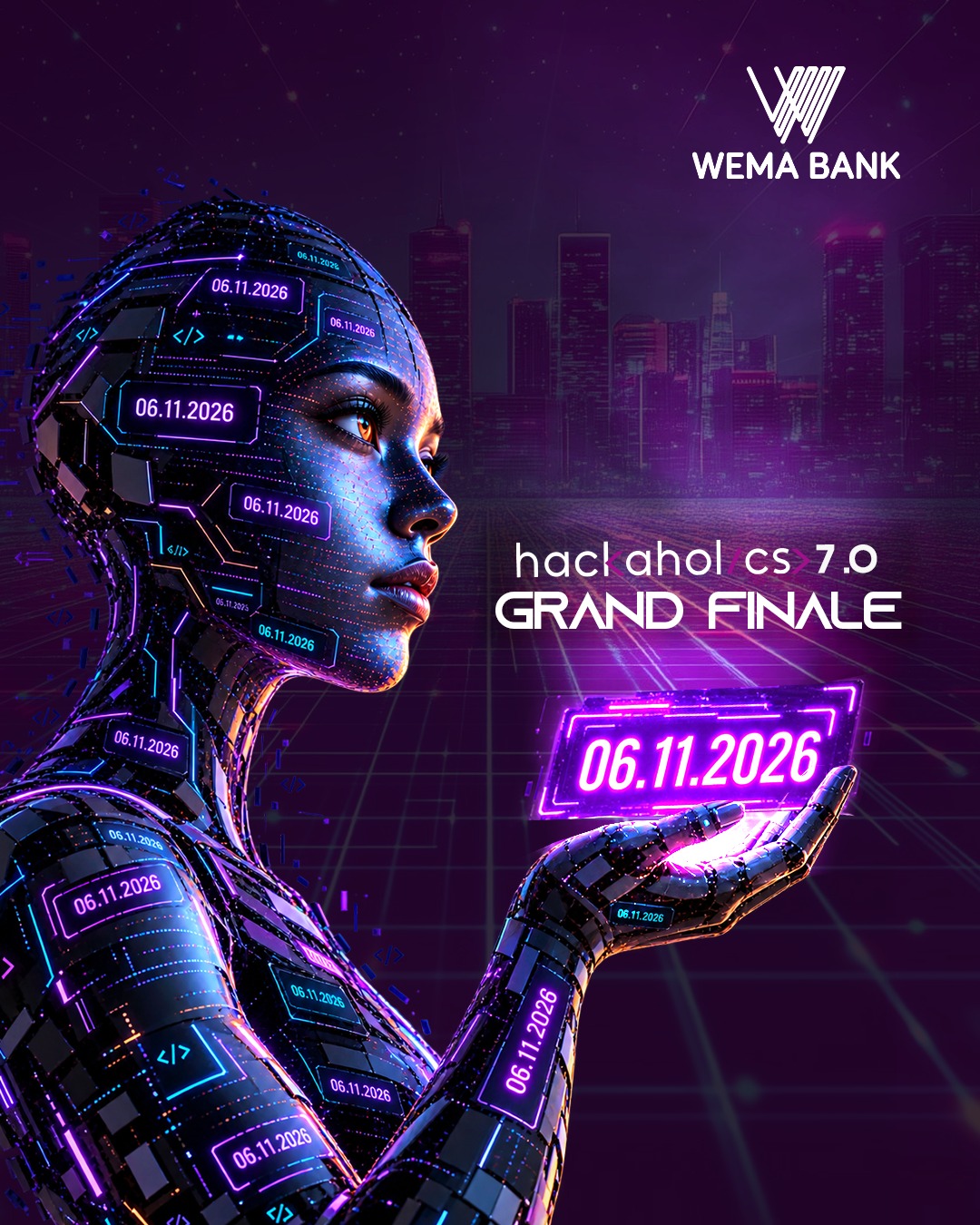
Wema Bank sets November 6 for HACKAHOLICS 7.0 grand finale, unveils ‘Festival of the future’ as theme

Published

on

By

Wema Bank, Nigeria’s oldest indigenous bank, most innovative and pioneer of Africa’s first fully digital bank, ALAT, has announced November 6, 2026, as the date for the grand finale of Hackaholics 7.0, its flagship innovation platform.

Themed ‘Festival of the Future’, the grand finale will bring together innovators, technology leaders, startup founders, investors and other key players in Nigeria’s innovation ecosystem for an immersive celebration of ideas, technology and the possibilities shaping the future.

Beyond the much anticipated announcement of this year’s Hackaholics finalists, the event will feature innovation showcases, interactive experiences and conversations exploring how emerging technologies are transforming the way people live, work, build and create.

Designed to go beyond the traditional innovation competition, the Festival of the Future will provide a platform for participants and attendees to experience emerging technologies, discover innovative solutions, connect with industry players and engage in conversations about the opportunities and challenges of a rapidly evolving world.

The event will also recognise and celebrate outstanding innovators whose ideas have demonstrated the potential to address real-world challenges and create meaningful impact.

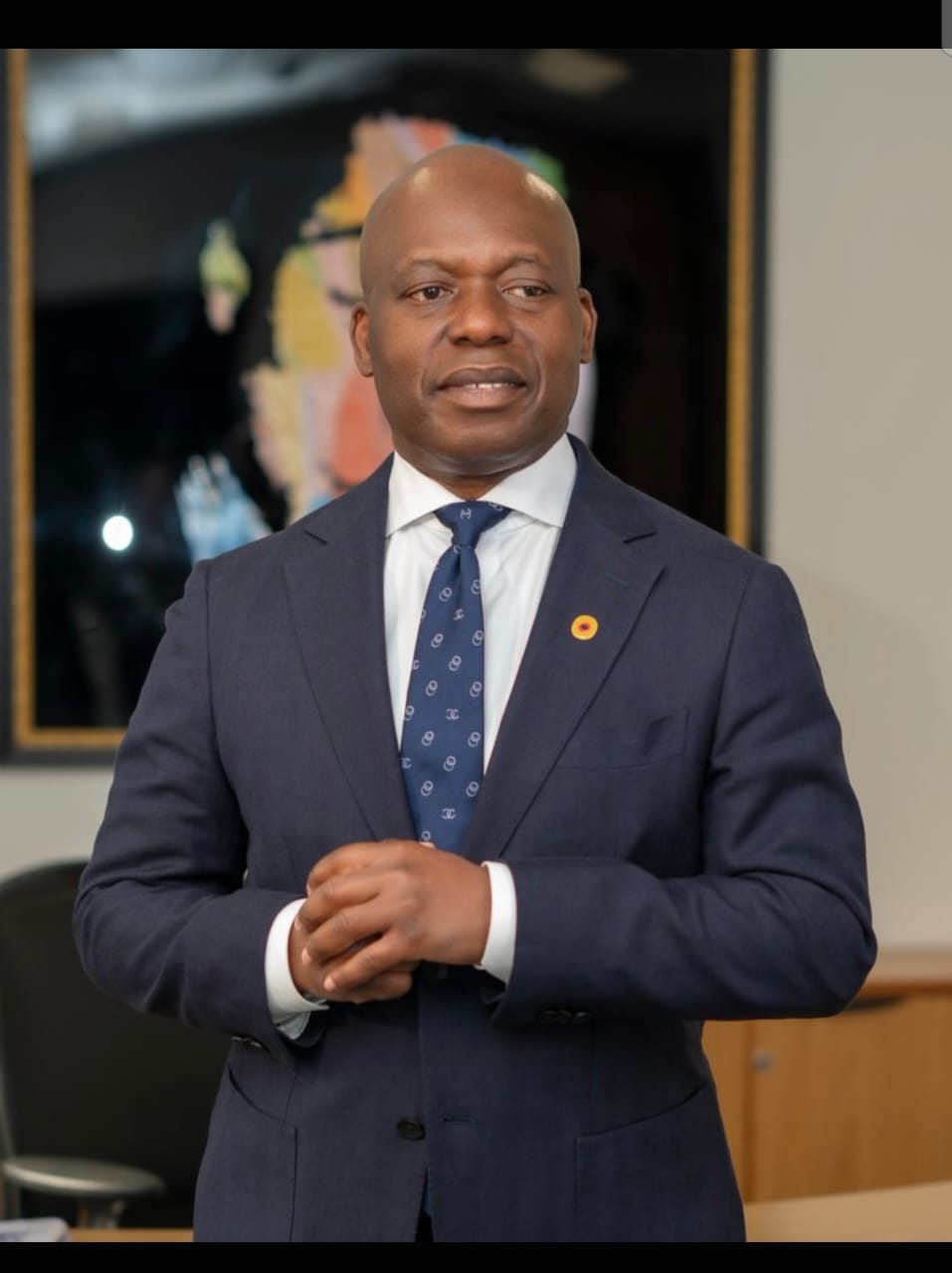
Speaking on the significance of the grand finale and the inspiration behind the Festival of the Future, Wema Bank’s MD/CEO, Moruf Oseni, explained that the concept builds on the Bank’s commitment to creating a future of possibilities while encouraging Nigerians to take a more active role in shaping that future.

See also  D-DAY: Tinubu, Atiku, Obi, Kwankwaso battle to succeed Buhari

“The world is changing at an unprecedented pace. Artificial intelligence and emerging technologies are transforming industries, businesses and everyday life, creating opportunities that would have been difficult to imagine just a few years ago. The question is no longer simply what the future holds, but how prepared we are to shape it.

“This thinking inspired the Festival of the Future. We want to create an experience that brings innovation closer to people, encourages meaningful conversations and challenges us to think differently about how we will live, work, build and create in the years ahead,” he said.

Reaffirming Wema Bank’s commitment to supporting innovation and empowering young Nigerians, Oseni noted that Hackaholics has continued to evolve beyond a competition into a platform for discovering talent, nurturing ideas and connecting innovators with opportunities.

“Since we launched Hackaholics, our goal has remained consistent; to provide young Nigerians with the platform, resources, opportunities and support they need to transform their ideas into practical solutions. We believe that the future of innovation in Nigeria must be driven by the talent, creativity and potential of our people.

See also  Nigeria's Falconets trash Canada 3-1, to face Holland in q’final

“With Hackaholics 7.0, we are taking that commitment further. Beyond recognising outstanding ideas, we want to bring together the people, conversations and experiences that can inspire the next generation of solutions.

“Our ambition is to continue building an ecosystem where innovation thrives, possibilities are unlocked and Nigeria is better positioned for the future,” he added.

Launched on July 1, 2026, under the theme “Powering Possibilities,”Hackaholics 7.0 commenced with a nationwide pitch centre tour designed to discover and support innovative ideas from young Nigerians across different regions of the country.

The four-month tour attracted 5,329 participants and 1,632 innovative ideas and solutions, with pitch centres hosted across seven locations: Uyo, Kano, Yabatech, Benin, Ibadan, Enugu and Lagos.

Through three distinct tracks; the Ideathon, Hackathon and Social Impact, the initiative provided opportunities for students, graduates, technology enthusiasts, developers and social innovators to present solutions addressing challenges across different sectors.

The Ideathon focused on promising ideas, the Hackathon provided a platform for technology developers and builders, while the Social Impact track recognised solutions designed to deliver measurable value to society.

See also  Suspended RCCG pastor, Idowu Iluyomade launches new church in Lagos

At the conclusion of the nationwide tour, 59 participants emerged from the various pitch centres, reflecting the diversity of ideas, talent and innovation discovered throughout the programme.

As Hackaholics 7.0 progresses towards its final stage, the 59 finalists will be further shortlisted to 20, who will present refined versions of their solutions at the Pre-Pitch scheduled for November 4, 2026.

On November 5, the participants will embark on an Ecosystem Tour powered by Wema Bank, providing an opportunity to visit other top institutions within the technology and innovation ecosystem, interact with industry professionals and gain practical insights ahead of the grand finale.

The journey will culminate on November 6 at the Festival of the Future, where the top innovators will be recognised and celebrated.

Through Hackaholics, Wema Bank continues to demonstrate its commitment to driving innovation, supporting entrepreneurship and creating opportunities for young Nigerians to contribute meaningfully to economic development.

Continue Reading

Trending News