Connect with us

News

Full text of President Tinubu’s speech at presentation of 2024 budget to N’Assembly

Published

on


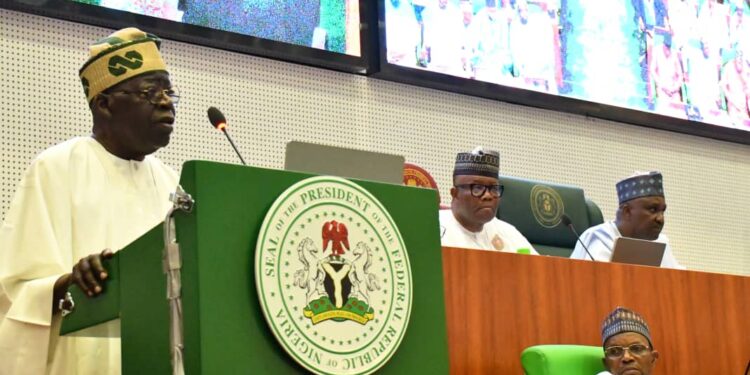
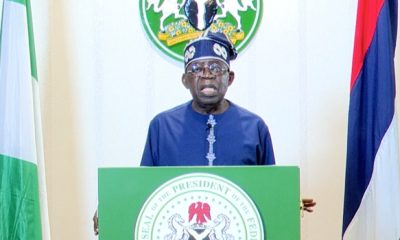
President Bola Tinubu, on Wednesday presented the 2024 budget to the National Assembly’s joint session. 


It is President Tinubu’s first full-year budget since he assumed office in May.

Below is the complete transcript of his speech:

2024 BUDGET SPEECH: Budget of Renewed Hope

In furtherance of my sacred duties and obligations as President of the Federal Republic of Nigeria, it is my honour to be here today to present my administration’s 2024 Budget Proposal to this Joint Session of the 10th National Assembly. This moment is especially profound and significant to me because it is my first annual budgetary presentation to the National Assembly.

Distinguished Senators and Honourable Members of the National Assembly, I commend your swift consideration and passage of the 2023 Supplementary Appropriation Bills and the 2024-2026 Medium Term Expenditure Framework and Fiscal Strategy Paper.

Your prompt action underscores your devotion to economic development and to the greater welfare of our people. It also highlights your desire to work in close collaboration with the Executive branch. We do not serve ourselves. We must always strive to work together to serve and benefit the people of our beloved country.

I am confident that the National Assembly will continue to work closely with us to ensure that deliberations on the 2024 Budget are thorough but also concluded with reasonable dispatch. Our goal is for the Appropriation Act to come into effect on the 1st of January 2024.

It is, by now, a matter of recorded history that my very first fiscal intervention as President of this great nation was to end the fuel subsidy regime which had proven to be so harmful to the overall health of our national economy. The second was to negotiate and subsequently present a supplementary budget to enable my government to fund the items needed to restore macro-economic stability and mitigate the harsh impact of subsidy removal.

The third was to secure a second supplementary budget, this time to enable us to keep our promises to promote national security, invest in infrastructure and provide much needed support to the most vulnerable households in our society.

In swearing-in my cabinet and reflecting on the unique challenges facing us, I invited the Ministers to imagine that we are attempting to draw water from a dry well. Today, I stand before you to present our Budget of Renewed Hope; a budget which will go further than ever before in cementing macro-economic stability, reducing the deficit, increasing capital spending and allocation to reflect the eight priority areas of this Administration. The budget we now present constitutes the foundation upon which we shall erect the future of this great nation.

PREVAILING ECONOMIC ENVIRONMENT

Economic conditions remain challenging both abroad and at home. Despite lingering Post-Covid supply and production bottlenecks, armed conflict in various parts of the world and restrictive monetary policies in major economies, we expect global growth to hover around 3.0 percent in 2024. This relative low rate has significant implications for our economy due to our current reliance on importation.

See also  Kano emirate crisis: Our priority is law and order, Army clarifies role

Distinguished Senators, Honourable Members: despite the global headwinds, the Nigerian economy has proven resilient, maintaining modest but positive growth over the past twelve months.

Inflation has trended upward due to weak global conditions. To contain the rising domestic prices, we will ensure effective coordination of fiscal and monetary policy measures, and collaborate with sub-national governments to address structural factors driving inflation in Nigeria.

The Budget proposal meets our goal of completing critical infrastructure projects which will help address structural problems in the economy by lowering the costs of doing business for companies and the cost of living for the average person, The Honourable Minister of Budget and Economic Planning will provide full details of this proposal.

PERFORMANCE OF THE 2023 BUDGET

Distinguished Senators and Honourable Members, an aggregate revenue of 045 trillion naira was projected to fund the 2023 Budget of 24.82 trillion naira with a deficit of about 6.1 percent of GDP.

As of September 30, the Federal Government’s actual aggregate revenue inflow was 65 trillion naira, approximately 96 percent of the targeted 8.28 trillion naira.

Despite the challenges, we continue to meet our obligations.

THEME AND PRIORITIES OF THE 2024 BUDGET

Distinguished Senators, Honourable Members, permit me to highlight key issues relating to the budget proposals for the next fiscal year. The 2024 Appropriation has been themed the Budget of Renewed Hope. The proposed Budget seeks to achieve job-rich economic growth, macro-economic stability, a better investment environment, enhanced human capital development, as well as poverty reduction and greater access to social security.

Defence and internal security are accorded top priority. The internal security architecture will be overhauled to enhance law enforcement capabilities and safeguard lives, property and investments across the country.

Human capital is the most critical resource for national development. Accordingly, the budget prioritizes human development with particular attention to children, the foundation of our nation.

To improve the effectiveness of our budget performance, government will focus on ensuring value for money, greater transparency and accountability. In this regard, we will work more closely with development partners and the private sector.

To address long-standing issues in the education sector, a more sustainable model of funding tertiary education will be implemented, including the Student Loan Scheme scheduled to become operational by January 2024.

A stable macro-economic environment is important to catalyse private investment and accelerate economic growth. We have and shall continue to implement business and investment friendly measures for sustainable growth.

We expect the economy to grow by a minimum of 76 percent, above the forecasted world average. Inflation is expected to moderate to 21.4 percent in 2024.

See also  Scammers hacked phone number of Osun governor, says aide

In preparing the 2024 Budget, our primary objective has been to sustain our robust foundation for sustainable economic development. A critical focus of this budget and the medium term expenditure framework is Nigeria’s commitment to a greener future.

Emphasizing public-private partnerships, we have strategically made provisions to leverage private capital for big-ticket infrastructure projects in energy, transportation and other sectors. This marks a critical step towards diversifying our energy mix, enhancing efficiency, and fostering the development of renewable energy sources. By allocating resources to support innovative and environmentally conscious initiatives, we aim to position Nigeria as a regional leader in the global movement towards clean and sustainable energy.

As we approach COP 28 climate summit, a pivotal moment for global climate action, I have directed relevant government agencies to diligently work towards securing substantial funding commitments that will bolster Nigeria’s energy transition.

It is imperative that we seize this opportunity to attract international partnerships and investments that align with our national goals. I call upon our representatives to engage proactively to showcase the strides we have made in the quest to create an enabling environment for sustainable energy projects.

Together, we will strive for Nigeria to emerge from COP 28 with tangible commitments, reinforcing our dedication to a future where energy is not only a catalyst for development but also a driver of environmental stewardship.

Distinguished members of the National Assembly, the revised 2024-2026 Medium Term Expenditure Framework (MTEF) and Fiscal Strategy Paper (FSP) sets out the parameters for the 2024 Budget.

After a careful review of developments in the world oil market and domestic conditions, we have adopted a conservative oil price benchmark of 96 US Dollars per barrel and daily oil production estimate of 1.78 million barrels per day. We have also adopted a Naira to US Dollar exchange rate of 750 naira per US Dollar for 2024.

Accordingly, an aggregate expenditure of 5 trillion naira is proposed for the Federal Government in 2024, of which the non-debt recurrent expenditure is 9.92 trillion naira while debt service is projected to be 8.25 trillion naira and capital expenditure is 8.7 trillion naira.

Nigeria remains committed to meeting its debt obligations. Projected debt service is 45% of the expected total revenue.
Budget deficit is projected at 18 trillion naira in 2024 or 3.88 percent of GDP. This is lower than the 13.78 trillion naira deficit recorded in 2023 which represents 6.11 percent of GDP.

The deficit will be financed by new borrowings totalling 83 trillion naira, 298.49 billion naira from Privatization Proceeds and 1.05 trillion naira drawdown on multilateral and bilateral loans secured for specific development projects.

Our government remains committed to broad-based and shared economic prosperity. We are reviewing social investment programmes to enhance their implementation and effectiveness. In particular, the National Social Safety Net project will be expanded to provide targeted cash transfers to poor and vulnerable households. In addition, efforts will made to graduate existing beneficiaries toward productive activities and employment.

See also  Busted: Police arrest kidnappers of Greenfield University, Bethel Baptist School students, recover 40 AK-47 rifles, others

We are currently reviewing our tax and fiscal policies. Our target is to increase the ratio of revenue to GDP from less than 10 percent currently to 18 percent within the term of this Administration. Government will make efforts to further contain financial leakages through effective implementation of key public financial management reforms.

Distinguished Senators and Honourable Members, in view of the limited resources available through the federal budget, we are also exploring Public Private Partnership arrangements to finance critical infrastructure.

We, therefore, invite the private sector to partner with us to ensure that our fiscal, trade and monetary policies, as well as our developmental programs and projects succeed in unlocking the latent potential of our people and other natural endowments, in line with our national aspirations.

Distinguished Senators and Honourable Members, this Budget presentation would be incomplete without commending the patriotic resolve of the 10th National Assembly to collaborate with the Executive on our mission to renew hope and deliver on our promises to the Nigerian people. I assure you of the strong commitment of the Executive to sustain and deepen the relationship with the National Assembly.

As you consider the 2024 Budget estimates, we trust that the legislative review process will be conducted with a view to sustaining our desired return to a predictable January-December fiscal year.

I have no doubt that you will be guided by the interest of all Nigerians. We must ensure that only projects and programs with equitable benefits are allowed into the 2024 Budget. Additionally, only projects and programs which are in line with the sectoral mandates of MDAs and which are capable of realizing the vision of our Government should be included in the budget.

As a Government, we are committed to improving the lot of our people and delivering on our promises to them. The 2024 Budget has the potential to boost performance, promote the development of Micro, Small and Medium-sized Enterprises, enhance security and public safety, and improve the general living conditions of our people.
In closing, I am confident that these budgetary allocations and directives will set Nigeria on a transformative path towards a sustainable and resilient energy future, fostering economic growth, job creation, and environmental preservation.
It is with great pleasure, therefore, that I lay before this distinguished Joint Session of the National Assembly, the 2024 Budget Proposals of the Federal Government of Nigeria, titled The Renewed Hope Budget.

I thank you most sincerely for your attention. May we collectively chart the course towards a brighter and cleaner future for our great nation.

May God bless the Federal Republic of Nigeria.
Continue Reading
Click to comment

Leave a Reply

Your email address will not be published. Required fields are marked *

News

Oyo school abductions: Makinde signs executive order, restricts Okada 

Published

on

By

Governor Seyi Makinde of Oyo state
has signed Executive Order No. 002 of 2026, aimed at strengthening security, enforcing vehicle registration regulations and improving traffic management across the state.

The governor also announced restrictions on the operations of commercial motorcycle operators, popularly known as “Okada” riders.

The development follows growing concerns over security challenges in parts of the state, particularly the continued captivity of teachers and pupils abducted in Oriire Local Government Area more than 20 days ago.

Speaking during the signing ceremony in his Office on Friday, Makinde said the executive order was designed to ensure strict compliance with existing laws governing vehicle registration and traffic regulations.

He noted that unregistered vehicles, motorcycles, and tricycles have increasingly been used to perpetrate criminal activities within the state.

According to the governor, security agencies often encounter difficulties tracking and investigating crimes involving unregistered vehicles because of the absence of identifiable registration details.

Governor Makinde explained that the executive order would provide a legal framework for the strict enforcement of vehicle registration requirements and other traffic regulations, including measures against driving against traffic and related offences.

According to him, designated enforcement authorities have been empowered to arrest offenders and impound vehicles, motorcycles, or tricycles found violating the provisions of the order.

See also  2023: Tinubu meets APC senators, says presidential ambition not for power

The governor said offenders apprehended under the executive order would be prosecuted in accordance with the law, while seized assets and properties would be handled through established legal procedures.

The governor linked the latest security measures to lessons learnt from recent security breaches, especially the abduction of schoolchildren and teachers in Oriire Local Government Area.

“We are living through very trying times; for over 20 days, our teachers and pupils have remained in captivity in the hands of terrorists. Our thoughts and prayers remain with them and with their families who continue to endure unimaginable pain and uncertainty,” He said. 

He assured residents that his administration remained fully committed to securing the safe return of all abducted victims and was working relentlessly with relevant security agencies to achieve that objective.

“As a government, we share in their anxiety and their hope, and we remain committed to doing everything within our power to secure the safe return of every one of them,” Makinde said.

The governor acknowledged the pain being experienced by the affected families and communities, stressing that the abducted teachers and pupils had neither been forgotten nor abandoned.

See also  Heed Tinubu’s call for dialogue, ECOWAS tells protesters

While declining to disclose operational details for security reasons, Makinde maintained that extensive efforts were ongoing behind the scenes and urged residents not to mistake the government’s silence for inaction.

One of the major highlights of the executive order is the restriction placed on commercial motorcycle operations across Oyo State.

Makinde announced that commercial motorcycle operators would no longer be permitted to operate between 10:30 p.m. and 5:30 a.m. statewide, describing the measure as part of additional efforts to improve security and public safety.

The governor said the restriction became necessary as part of broader strategies to curb criminal activities and strengthen surveillance across communities.

He appealed to residents to actively support security agencies by providing timely information on suspicious movements and activities.

According to him, security remains a collective responsibility that requires the cooperation of all citizens.

“If you see something, say something, and authorities will do something,” he said, while reminding residents of the state’s toll-free emergency number, 615, for reporting security threats and emergencies.

Makinde also urged residents to remain vigilant, united and resilient despite the current security challenges, warning against allowing fear to undermine communal harmony and confidence.

See also  Wike hails Nigerians for backing power shift to South, says rotational presidency settled

He commended security agencies and members of the state’s security outfit, Amotekun Corps, for their dedication, sacrifices and professionalism in responding to security threats across Oyo State.

The governor expressed optimism that with sustained collaboration among security agencies, community stakeholders, and residents, the abducted teachers and pupils would be rescued safely and security across the state would be further strengthened.

In his address at the event, the Attorney General of the state and Commissioner for Justice, Abiodun Aikomo, stated that the implementation of the order would be carried out by relevant agencies, including the Oyo State Road Traffic Management Authority (OYRTMA), the Nigeria Police Force and other law enforcement bodies, which would be required to submit periodic reports on enforcement activities to the state government.

To ensure transparency and accountability, Aikomo stated that the Office of the Director of Public Prosecutions would provide oversight on prosecutions arising from the enforcement exercise, while members of the public would be encouraged to report any misconduct by officials involved in implementing the order.

Continue Reading

News

Nigeria set to repatriate over 1,000 nationals from South Africa as violence continues

Published

on

By

The Federal government has kick-started plans to bring back home more than 1,000 Nigerians from South Africa as concerns grow over rising anti-immigrant sentiments and renewed xenophobic tensions in the southern African nation.

According to reports, Nigeria’s Ministry of Foreign Affairs confirmed on Friday that screening for a voluntary repatriation programme began on Thursday, with authorities expecting over 1,000 Nigerians to participate.

Foreign ministry spokesperson Kimiebi Ebienfa told AFP that the final number of those seeking to return home had not yet been determined but noted that the figure was expected to exceed 1,000.

“Total figure not out yet,” he said. “We are expecting over 1,000 persons.”

The move follows a similar action by Ghana, which recently repatriated hundreds of its nationals from South Africa amid increasing fears over protests and violence directed at foreign nationals.

In a statement dated Tuesday, Nigeria’s High Commission in Pretoria said it had “negotiated waivers with host authorities” so that those with “immigration-related offences” would be allowed to leave on the eventual repatriation flights rather than be detained.

See also  Kano emirate crisis: Our priority is law and order, Army clarifies role

South Africa, until recently the continent’s most industrialised economy, has long attracted workers from across the region.

But saddled with an unemployment rate of over 30 per cent, it has seen repeated spurts of xenophobic protests — including renewed violence in recent weeks.

The latest tensions have revived uncomfortable debates across Africa about xenophobia, migration and the gap between pan-African rhetoric and realities facing migration on the continent.

An ultimatum by one citizen-led group for illegal migrants to be expelled by June 30 has raised fears of violence after bouts of anti-immigrant unrest in the past that claimed dozens of lives.

Last month, Ghana repatriated some 300 people, the first batch of what authorities said was expected to be a total of about 800 Ghanaian nationals.

The South African government has said it is stepping up enforcement against undocumented immigrants but urged citizens not to take matters into their own hands.

See also  'An old man that could be your father' — Bode George chides Onanuga for 'insulting' Obasanjo

There are more than three million foreigners living in South Africa, or 5.1 per cent of the population, according to the statistics agency.

More than 63 per cent come from countries in the 16-member Southern African Development Community (SADC) bloc.

Continue Reading

News

Again, WAEC candidates write exams with Torchlight

Published

on

By

The 2026 West African Senior School Certificate Examination (WASSCE) got off to a dark start on Thursday across several centres in Oyo, Lagos, Ogun and Osun states.

Due to the late arrival of examination materials, several candidates were forced to sit for papers late into the evening.

On Monday, candidates reportedly waited several hours before writing the Physics Essay and Objective papers, which were scheduled for 2pm and 3:30pm respectively.

The delays persisted on Wednesday, with the General Mathematics Objective paper starting at 6:30pm in some centres and as late as 8:30pm in others, leaving candidates to finish the examination after 10pm.

The situation was said to be particularly severe in some centres in Ibadan, the Oyo state capital.

The first batch of the Agricultural Science practical examination was slated for 2pm, while the second batch was scheduled for 3:30pm.

However, as of 8pm, some centres in the state had yet to commence the examination.

See also  Busted: Police arrest kidnappers of Greenfield University, Bethel Baptist School students, recover 40 AK-47 rifles, others

Due to the delay, candidates reportedly sat the examination under poor lighting conditions.

In a viral video, several students could be seen writing the examination with torchlights, mobile phone flashlights and solar-powered lamps.

The incident has since triggered widespread outrage on social media.

Mariam Kehinde, an X user, said that as of past 8pm on Thursday, her sister was yet to return home from the examination centre.

“What exactly is happening in this country sef? My sister left for her WAEC exam since morning and still hadn’t returned home,” she wrote.

“She called around 6pm saying their exam paper had just arrived at that time nitori olorun. She was still at the exam centre, and my mum even had to wait.”

Adedeji Adeyinka, another user, described Thursday’s conduct of the examination as “particularly disturbing”.

“Candidates writing Government completed the Theory paper and were instructed to wait for the Objective paper, only for the question paper to arrive more than FOUR HOURS later,” he posted.

See also  Dangote to export urea fertilizer to Brazil, U.S., Mexico, India

“How is this acceptable in a national examination? Even more shocking was the situation faced by students writing Agricultural Science Practical. An examination scheduled for 2:00 p.m. did not commence until about 9:00 p.m. in many parts of Oyo State.

“A seven-hour delay is not a minor inconvenience. It is a systemic failure.”

Another X user identified as Mum Ire also lamented the shortage of question papers during Wednesday’s Mathematics examination.

“Out of 75 candidates, only 35 Mathematics question papers were brought to the examination centre for the entire exam yesterday,” she wrote on Thursday.

“When did WAEC start operating like this?

“Now we are being told that the Agriculture Science practical questions are on the way at 8:10 pm.”

Joel Abodunrin also decried the shortage of question papers.

“WAEC’s been doing well until today,” he wrote on Wednesday.

“An examination hall of about 250 candidates and having Mathematics question papers for only 120.

See also  Heed Tinubu’s call for dialogue, ECOWAS tells protesters

“Getting to tear the questions into pieces so that all could have something to do.”

Hakeem Olaoye, another user, said candidates were being made to write examinations at unreasonable hours.

“WAEC exam being conducted late in the evening.

“The Agric practical exam that was supposed to be held by 2pm just commenced some minutes after 7pm,” he wrote.

“Very disheartening indeed. Likewise for Mathematics. A school with 130 students was given 16 question booklets to share among.”

The development has raised concerns about the safety of candidates amid the country’s growing security challenges.

Continue Reading

Trending News