Connect with us

News

King Charles on state visit to Kenya as colonial abuses loom large

Published

on


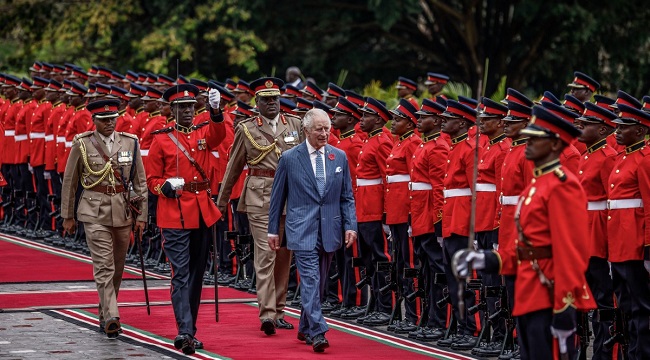
King Charles III and Queen Camilla began a state visit to Kenya on Tuesday, facing widespread calls for an apology over Britain’s bloody colonial past.

Although the four-day trip has been billed as an opportunity to look to the future and build on the cordial modern-day ties between London and Nairobi, the legacy of decades of British colonial rule looms large.

It is the 74-year-old British head of state’s first visit to an African and Commonwealth nation since ascending the throne in September last year on the death of his mother, Queen Elizabeth II.

The royal couple, who arrived late Monday, were welcomed at a formal ceremony on Tuesday by Kenyan President William Ruto, who has hailed the visit as a “significant opportunity to enhance collaboration” in various fields.

The British High Commission said the tour, which follows trips to Germany and France earlier this year, will “spotlight the strong and dynamic partnership between the UK and Kenya”.

But it will also “acknowledge the more painful aspects” of Britain’s historic relationship with Kenya as the East African country prepares to celebrate 60 years of independence in December.

This includes the 1952-60 “Emergency”, when colonial authorities brutally suppressed the Mau Mau guerrilla uprising, one of the bloodiest insurgencies against British rule.

See also  FG to extend suspension of degrees accreditation to Kenya, Uganda

At least 10,000 people — mainly from the Kikuyu tribe — were killed, although some historians and rights groups claim the true figure is higher.

Tens of thousands more were rounded up and detained without trial in camps where reports of executions, torture and vicious beatings were common.

The royal visit also comes as pressure mounts in some Caribbean Commonwealth countries to remove the British monarch as head of state, and as republican voices in the UK grow louder.

– ‘Unequivocal apology’ –
Kenya nevertheless has special resonance for the royal family.

It is the country where Elizabeth learned in 1952 of the death of her father, King George VI, marking the start of her historic 70-year reign.

And it comes almost exactly four decades since Elizabeth’s own state visit in November 1983.

During two days in the capital Nairobi, Charles and Camilla will meet entrepreneurs and young Kenyans, and attend a state banquet hosted by Ruto.

Charles will also lay a wreath at the Tomb of the Unknown Warrior in Uhuru Gardens, where Kenya declared independence in December 1963.

See also  Arsenal vs Manchester United: Saka, Tavares and Xhaka goals secure vital win

The royal couple will then travel to the Indian Ocean port city of Mombasa, with a stop at a nature reserve and a meeting with religious leaders on the agenda.

Although the programme largely focuses on the environment, creative arts, technology and young people, Buckingham Palace said Charles will take time to “deepen his understanding of the wrongs suffered” by Kenyans during colonial rule.

On Sunday, the Kenya Human Rights Commission urged him to make an “unequivocal public apology… for the brutal and inhuman treatment inflicted on Kenyan citizens”, and pay reparations for colonial-era abuses.

Britain agreed in 2013 to compensate more than 5,000 Kenyans who had suffered abuse during the Mau Mau revolt, in a deal worth nearly 20 million pounds ($25 million at today’s rates).

Then foreign secretary William Hague said Britain “sincerely regrets” the abuses but stopped short of a full apology.

– ‘Time to move forward’ –
“The negative impacts of colonisation are still being felt to date, they are being passed from generation to generation, and it’s only fair the king apologises to begin the healing process,” delivery rider Simson Mwangi, 22, told AFP.

But 33-year-old chef Maureen Nkatha disagreed.

See also  Tinubu signed 2023 peace accord, presidency replies Kukah

“He doesn’t have to apologise, it’s time for us to move on and forward. We are now an independent country and he is not coming to save us,” she said.

“It is embarrassing to always ask the British to pay us for the wrongs yet we want to be treated as independent.”

Kenya and Britain are key economic partners with two-way trade at around 1.2 billion pounds over the year to the end of March 2023.

But another lingering source of tension is the presence of British troops in Kenya, with soldiers accused of rape and murder, and civilians maimed by munitions.

In August, the Kenyan parliament launched an inquiry into the activities of the British army, which has a base near Nanyuki, a town about 200 kilometres (120 miles) north of Nairobi.

Britain’s Daily Mail newspaper has billed Kenya as the first stop on Charles’ “mission to save the Commonwealth”.

More than a dozen nations out of the Commonwealth grouping of 56 countries still recognise the UK monarch as head of state.

But clamour to become a republic is growing among some, including Jamaica and Belize, with Barbados making the switch in 2021.

Continue Reading
Click to comment

Leave a Reply

Your email address will not be published. Required fields are marked *

News

Oyo school abductions: Makinde signs executive order, restricts Okada 

Published

on

By

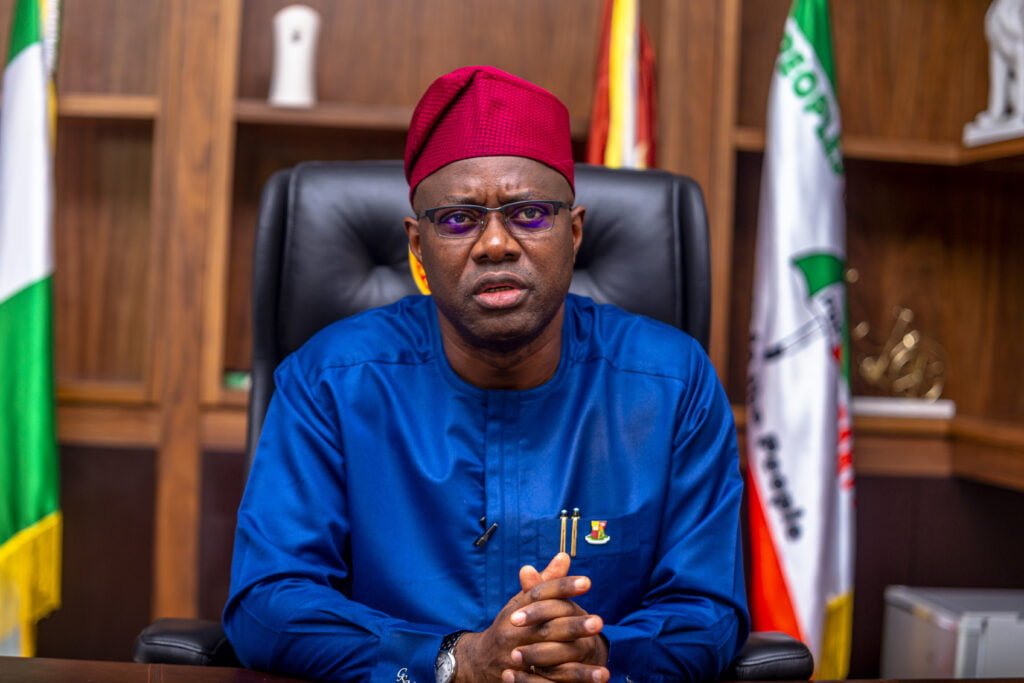
Governor Seyi Makinde of Oyo state
has signed Executive Order No. 002 of 2026, aimed at strengthening security, enforcing vehicle registration regulations and improving traffic management across the state.

The governor also announced restrictions on the operations of commercial motorcycle operators, popularly known as “Okada” riders.

The development follows growing concerns over security challenges in parts of the state, particularly the continued captivity of teachers and pupils abducted in Oriire Local Government Area more than 20 days ago.

Speaking during the signing ceremony in his Office on Friday, Makinde said the executive order was designed to ensure strict compliance with existing laws governing vehicle registration and traffic regulations.

He noted that unregistered vehicles, motorcycles, and tricycles have increasingly been used to perpetrate criminal activities within the state.

According to the governor, security agencies often encounter difficulties tracking and investigating crimes involving unregistered vehicles because of the absence of identifiable registration details.

Governor Makinde explained that the executive order would provide a legal framework for the strict enforcement of vehicle registration requirements and other traffic regulations, including measures against driving against traffic and related offences.

According to him, designated enforcement authorities have been empowered to arrest offenders and impound vehicles, motorcycles, or tricycles found violating the provisions of the order.

See also  FG to extend suspension of degrees accreditation to Kenya, Uganda

The governor said offenders apprehended under the executive order would be prosecuted in accordance with the law, while seized assets and properties would be handled through established legal procedures.

The governor linked the latest security measures to lessons learnt from recent security breaches, especially the abduction of schoolchildren and teachers in Oriire Local Government Area.

“We are living through very trying times; for over 20 days, our teachers and pupils have remained in captivity in the hands of terrorists. Our thoughts and prayers remain with them and with their families who continue to endure unimaginable pain and uncertainty,” He said. 

He assured residents that his administration remained fully committed to securing the safe return of all abducted victims and was working relentlessly with relevant security agencies to achieve that objective.

“As a government, we share in their anxiety and their hope, and we remain committed to doing everything within our power to secure the safe return of every one of them,” Makinde said.

The governor acknowledged the pain being experienced by the affected families and communities, stressing that the abducted teachers and pupils had neither been forgotten nor abandoned.

See also  ‘We have crossed the rubicon’ — History will remember Tinubu as decisive leader, says Shettima

While declining to disclose operational details for security reasons, Makinde maintained that extensive efforts were ongoing behind the scenes and urged residents not to mistake the government’s silence for inaction.

One of the major highlights of the executive order is the restriction placed on commercial motorcycle operations across Oyo State.

Makinde announced that commercial motorcycle operators would no longer be permitted to operate between 10:30 p.m. and 5:30 a.m. statewide, describing the measure as part of additional efforts to improve security and public safety.

The governor said the restriction became necessary as part of broader strategies to curb criminal activities and strengthen surveillance across communities.

He appealed to residents to actively support security agencies by providing timely information on suspicious movements and activities.

According to him, security remains a collective responsibility that requires the cooperation of all citizens.

“If you see something, say something, and authorities will do something,” he said, while reminding residents of the state’s toll-free emergency number, 615, for reporting security threats and emergencies.

Makinde also urged residents to remain vigilant, united and resilient despite the current security challenges, warning against allowing fear to undermine communal harmony and confidence.

See also  Video: How I met Chioma - Davido

He commended security agencies and members of the state’s security outfit, Amotekun Corps, for their dedication, sacrifices and professionalism in responding to security threats across Oyo State.

The governor expressed optimism that with sustained collaboration among security agencies, community stakeholders, and residents, the abducted teachers and pupils would be rescued safely and security across the state would be further strengthened.

In his address at the event, the Attorney General of the state and Commissioner for Justice, Abiodun Aikomo, stated that the implementation of the order would be carried out by relevant agencies, including the Oyo State Road Traffic Management Authority (OYRTMA), the Nigeria Police Force and other law enforcement bodies, which would be required to submit periodic reports on enforcement activities to the state government.

To ensure transparency and accountability, Aikomo stated that the Office of the Director of Public Prosecutions would provide oversight on prosecutions arising from the enforcement exercise, while members of the public would be encouraged to report any misconduct by officials involved in implementing the order.

Continue Reading

News

Nigeria set to repatriate over 1,000 nationals from South Africa as violence continues

Published

on

By

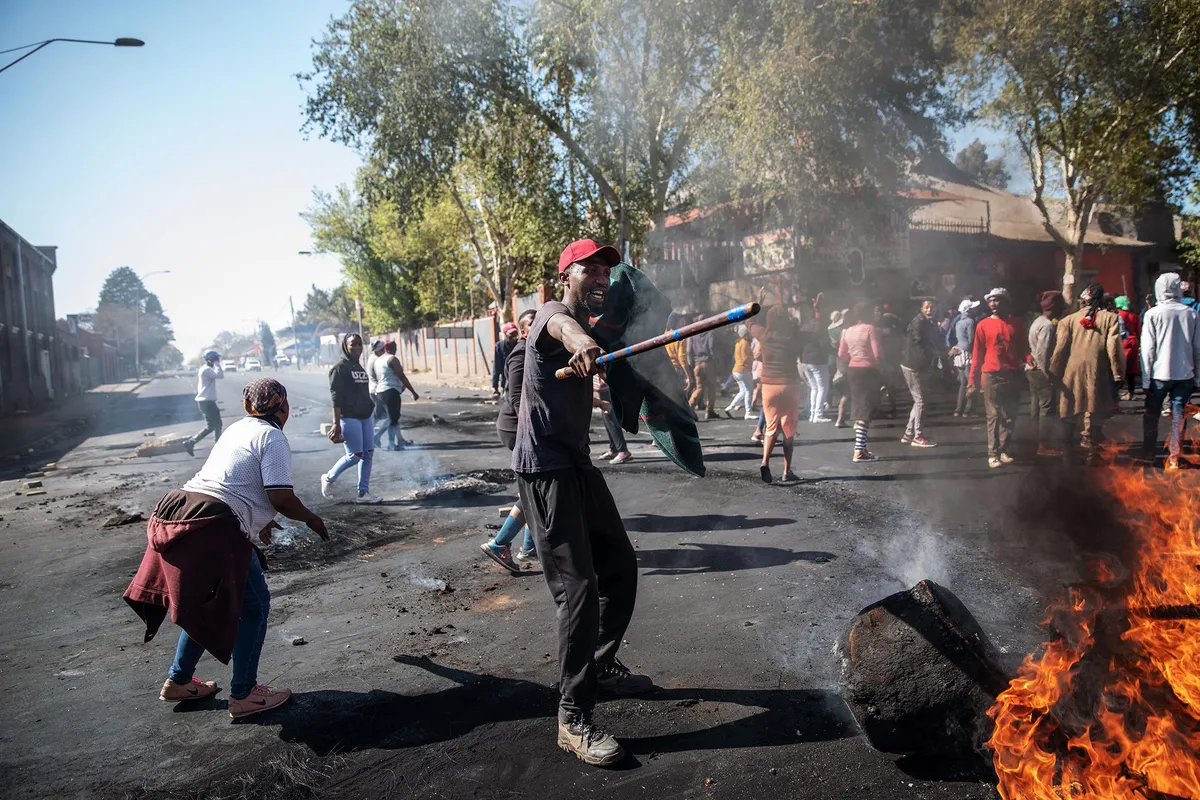
The Federal government has kick-started plans to bring back home more than 1,000 Nigerians from South Africa as concerns grow over rising anti-immigrant sentiments and renewed xenophobic tensions in the southern African nation.

According to reports, Nigeria’s Ministry of Foreign Affairs confirmed on Friday that screening for a voluntary repatriation programme began on Thursday, with authorities expecting over 1,000 Nigerians to participate.

Foreign ministry spokesperson Kimiebi Ebienfa told AFP that the final number of those seeking to return home had not yet been determined but noted that the figure was expected to exceed 1,000.

“Total figure not out yet,” he said. “We are expecting over 1,000 persons.”

The move follows a similar action by Ghana, which recently repatriated hundreds of its nationals from South Africa amid increasing fears over protests and violence directed at foreign nationals.

In a statement dated Tuesday, Nigeria’s High Commission in Pretoria said it had “negotiated waivers with host authorities” so that those with “immigration-related offences” would be allowed to leave on the eventual repatriation flights rather than be detained.

See also  King Charles III: How I made my millions

South Africa, until recently the continent’s most industrialised economy, has long attracted workers from across the region.

But saddled with an unemployment rate of over 30 per cent, it has seen repeated spurts of xenophobic protests — including renewed violence in recent weeks.

The latest tensions have revived uncomfortable debates across Africa about xenophobia, migration and the gap between pan-African rhetoric and realities facing migration on the continent.

An ultimatum by one citizen-led group for illegal migrants to be expelled by June 30 has raised fears of violence after bouts of anti-immigrant unrest in the past that claimed dozens of lives.

Last month, Ghana repatriated some 300 people, the first batch of what authorities said was expected to be a total of about 800 Ghanaian nationals.

The South African government has said it is stepping up enforcement against undocumented immigrants but urged citizens not to take matters into their own hands.

See also  King Charles III diagnosed with cancer

There are more than three million foreigners living in South Africa, or 5.1 per cent of the population, according to the statistics agency.

More than 63 per cent come from countries in the 16-member Southern African Development Community (SADC) bloc.

Continue Reading

News

Again, WAEC candidates write exams with Torchlight

Published

on

By

The 2026 West African Senior School Certificate Examination (WASSCE) got off to a dark start on Thursday across several centres in Oyo, Lagos, Ogun and Osun states.

Due to the late arrival of examination materials, several candidates were forced to sit for papers late into the evening.

On Monday, candidates reportedly waited several hours before writing the Physics Essay and Objective papers, which were scheduled for 2pm and 3:30pm respectively.

The delays persisted on Wednesday, with the General Mathematics Objective paper starting at 6:30pm in some centres and as late as 8:30pm in others, leaving candidates to finish the examination after 10pm.

The situation was said to be particularly severe in some centres in Ibadan, the Oyo state capital.

The first batch of the Agricultural Science practical examination was slated for 2pm, while the second batch was scheduled for 3:30pm.

However, as of 8pm, some centres in the state had yet to commence the examination.

See also  Lagos directs schools to resume Monday

Due to the delay, candidates reportedly sat the examination under poor lighting conditions.

In a viral video, several students could be seen writing the examination with torchlights, mobile phone flashlights and solar-powered lamps.

The incident has since triggered widespread outrage on social media.

Mariam Kehinde, an X user, said that as of past 8pm on Thursday, her sister was yet to return home from the examination centre.

“What exactly is happening in this country sef? My sister left for her WAEC exam since morning and still hadn’t returned home,” she wrote.

“She called around 6pm saying their exam paper had just arrived at that time nitori olorun. She was still at the exam centre, and my mum even had to wait.”

Adedeji Adeyinka, another user, described Thursday’s conduct of the examination as “particularly disturbing”.

“Candidates writing Government completed the Theory paper and were instructed to wait for the Objective paper, only for the question paper to arrive more than FOUR HOURS later,” he posted.

See also  Buhari to King Charles III: I have no house in the UK

“How is this acceptable in a national examination? Even more shocking was the situation faced by students writing Agricultural Science Practical. An examination scheduled for 2:00 p.m. did not commence until about 9:00 p.m. in many parts of Oyo State.

“A seven-hour delay is not a minor inconvenience. It is a systemic failure.”

Another X user identified as Mum Ire also lamented the shortage of question papers during Wednesday’s Mathematics examination.

“Out of 75 candidates, only 35 Mathematics question papers were brought to the examination centre for the entire exam yesterday,” she wrote on Thursday.

“When did WAEC start operating like this?

“Now we are being told that the Agriculture Science practical questions are on the way at 8:10 pm.”

Joel Abodunrin also decried the shortage of question papers.

“WAEC’s been doing well until today,” he wrote on Wednesday.

“An examination hall of about 250 candidates and having Mathematics question papers for only 120.

See also  ‘We have crossed the rubicon’ — History will remember Tinubu as decisive leader, says Shettima

“Getting to tear the questions into pieces so that all could have something to do.”

Hakeem Olaoye, another user, said candidates were being made to write examinations at unreasonable hours.

“WAEC exam being conducted late in the evening.

“The Agric practical exam that was supposed to be held by 2pm just commenced some minutes after 7pm,” he wrote.

“Very disheartening indeed. Likewise for Mathematics. A school with 130 students was given 16 question booklets to share among.”

The development has raised concerns about the safety of candidates amid the country’s growing security challenges.

Continue Reading

Trending News