Connect with us

News

Full speech: Atiku addresses press conference over Supreme Court judgement

Published

on


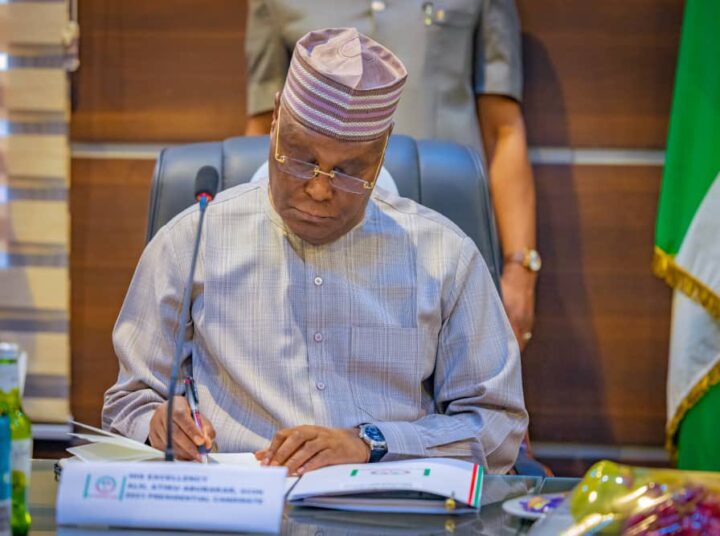
Being text of a World Press Conference on the Presidential Election Petition Judgement by Atiku Abubakar, GCON, Waziri Adamawa, former Vice President of Nigeria (1999-2007) and Presidential Candidate of the Peoples Democratic Party in the 2023 Election, at the PDP Headquarters in Abuja on Monday, 30th October, 2023.

Protocol.

Gentlemen of the Press.


Someone asked me what I would do if I lost my election petition appeal at the Supreme Court. In response, I said that as long as Nigeria wins, the struggle would have been worth the while. By that, I meant that the bigger loss would not be mine but Nigeria’s if the Supreme Court legitimizes illegality, including forgery, identity theft, and perjury.

If the Supreme Court, the highest court in the land, implies by its judgment that crime is good and should be rewarded, then Nigeria has lost and the country is doomed irrespective of who occupies the Presidential seat. If the Supreme Court decides that the Electoral umpire, INEC, can tell the public one thing and then do something else in order to reach a corruptly predetermined outcome, then there is really no hope for the country’s democracy and electoral politics.

Obviously, the consequences of those decisions for the country will not end at the expiration of the current government. They will last for decades. I am absolutely sure that history will vindicate me. We now know what the Supreme Court has decided.

At critical points in my political life, I always ignored the easy but ignoble path and chosen the difficult but dignified path, the path of truth, of morality, of democracy and rule of law.

I always chose freedom over servitude, whatever the personal discomforts my choice entails. When I joined politics, the critical challenge was easing the military out of power so that civilian democratic governance could be restored in Nigeria. It later became a very defining struggle, and, as one of the leaders of that struggle, I was targeted for elimination.

In one incident, nine policemen guarding my home in Kaduna were murdered in an attempt to assassinate me. I was also forced into exile for nine (9) months. In addition, my interest in a logistics company that I co-owned was confiscated and given to friends of the military government. As Vice President in the civilian government that succeeded the military, I, again at great personal cost, chose to oppose the extension of the tenure of the government beyond the two four-year terms enshrined in our constitution.

In response to the official backlash against me, I instituted several cases in the courts, which led to seven landmark decisions that helped to deepen our democracy and rule of law. At the current historic moment, the easier option for me would have been to fold up and retreat after the mandate banditry perpetrated by the APC and INEC.

But I went to the Nigerian courts to seek redress. I even went to an American court to help with unravelling what our state institutions charged with such responsibilities were unwilling or unable to do, including unravelling the qualifying academic records of the person sworn in as our President and by implication, hopefully who he really is.

I offered that evidence procured with the assistance of the American Court to our Supreme Court to help it to do justice in this case. I give this background to underscore that what we are currently dealing with is bigger than one or two presidential elections and is certainly bigger than Atiku Abubakar. It is not about me; it is about our country, Nigeria. It is about the kind of society we want to leave for the next generation and what kind of example we want to set for our children and their children.

It is about the reputation of Nigeria and Nigerians in the eyes of the world. We showed incontrovertible evidence that Bola A. Tinubu was not qualified to contest the Presidential Election because he forged the qualifying academic certificate, which he submitted to INEC. In fact, a simple check of Tinubu’s past records in its possession would have shown INEC that Tinubu broke the law and should not have been allowed to contest the election.

We showed irrefutable evidence of gross irregularities, violence, and manipulations during the elections. We showed incontrovertible evidence that INEC violated the Electoral Act and deliberately sabotaged its own publicly announced processes and procedures in order to illegally declare Tinubu elected. The position of the Supreme Court, even though final, leaves so much unanswered.

See also  Abba Moro: Fielding Atiku as PDP’s 2023 presidential candidate was a mistake

Even the rebuke by retired Justice Musa Dattijo Muhammad is a confirmation from within the apex court that all is not well with the Supreme Court. The court and indeed the judiciary must never lend itself to politicization as it is currently the norm with nearly every institution in Nigeria. By the way, the strong rebuke of the apex court by the revered Justice, who had meritoriously served for more than four decades, should not be swept under the carpet.

The alarm raised by Justice Muhammad and recently, former INEC Chairman, Prof Attahiru Jega, offer Nigerians an explanation into why the electoral and judicial system have become the lost hope of the common man.

Judges are no longer appointed based on merit but are products of the interplay of politics and nepotism. Worse still, the appointment of electoral officials has also been hijacked by the ruling party as seen in the latest nomination of Resident Electoral Commissioners where card carrying members of the ruling party and aides to politicians in the APC are being appointed into INEC. When two critical institutions like the court and the electoral commission are trapped in an evil web of political machination, it becomes next to impossible for democracy to thrive.

As a stakeholder in the presidential election of February 25, I, along with other well-meaning Nigerians have done my bit in ensuring that our democratic process enjoys the privilege of full disclosure of the character deficiencies of the current political leadership. I also believe that even if the Supreme Court believes otherwise, the purpose of technology in our electoral system is to enhance transparency and not merely as a viewing centre. We have to move with the world and not be stuck in time.

Implications of PEPC and Supreme Court judgments

I leave Nigerians and the world to decide what to make of the Supreme Court’s unfortunate decision. But here’s my take. The judgments of the PEPC and the Supreme Court have very far-reaching grave implications, including the following.

One is the erosion of trust in the electoral system and our democracy. Nigerians witnessed as the National Assembly changed the electoral law to improve transparency in the process. Of particular importance was the introduction of modern technology to help eliminate the recurring incidents of electoral manipulation, particularly during the collation of results. Nigerians and the world also witnessed as the leadership of the INEC, especially its Chairman and National Commissioner for Voter Education reassured Nigerians on national television multiple times that the use of that technology would be mandatory.

Yet that same INEC undermined the use of that technology during the elections and collation process and declared as winner someone who clearly did not win the Presidential election. They then went further to take sides in the courts in a dogfight to defend their illegality. Who would convince the millions of Nigerians to vote in future elections after they suffered endlessly on queues to register to vote, to collect PVCs and to vote, based on INEC’s assurances only to see their votes stolen and given to someone they did not vote for?

When people lose trust and confidence in elections, democracy is practically on life support. And by affirming and legitimizing the continued lack of transparency in our electoral system the courts are continuing to usurp the rights of voters to elect their leaders. The other grave implication is that contestants in Nigeria’s elections should do whatever is necessary to be declared the winner. That includes identity theft, impersonation, forging of educational and other documents, perjury, and violence.

And, as they do so, they should ignore whatever the law says and whatever assurances from the leadership of the electoral umpire about what the law says and what they would do in compliance. And they would do so knowing that our courts would approve of their behaviour or at best pretend not to take any notice of it. The third is that if you are robbed of victory, do not bother going to court for redress because your glaring evidence of the robbery will be ignored in favour of the mandate bandit.

See also  Poking the sore: Picking Okowa over Wike was the right decision - Atiku

Also, your lawyers, however distinguished and accomplished, may be ridiculed by the judges who may also go out of their way to make even a stronger case for the so-called “winner” than even their own lawyers were able to do. These are clearly self-help strategies and actions bereft of the law and constitutionalism. Only lawlessness and anarchy will result from such, with violence, destruction and implosion and loss of our country likely to follow.

I believe that we still have a small window to prevent these from happening. I still believe that we can rescue this country from the strange imposters that have seized it illegally and are holding it by the jugular. Let me caution that the leaders of those African countries that have completely collapsed into chaos never came together one day and agreed to collapse their countries. Rather their countries collapsed because of the incremental and compounding individual and collective utterances and actions of those leaders.

Nigerians know more about the person sitting in office as their President and how he got there, and the dangers that it portends for them and the country. It is for them, especially the younger generation whose futures are to be shaped by that man, to decide what they want to do with the knowledge.

Now, let me give a historical perspective to the constitutional evolution that gave birth to the 1999 Constitution. In the build up to the current democratic dispensation, agitation was rife amongst members of the political class and a large number of civil society bodies to envision a constitution that would operate a democracy in a functional order after the nasty military regimes. These agitations and necessities of the circumstance of that time led to the convocation of the 1995 Constitutional Conference, which I was privileged to be a part of, alongside other prominent political actors.

The Constitutional Conference was expected to create the frameworks upon which a new constitution would be built in order to make the dreams of a democratic society. A number of far-reaching reforms and recommendations were made, which drew from our past experiences and aimed at safeguarding the new constitution from the mistakes of the past.

One such headline recommendation was the concept of rotational presidency anchored on the principle of 6 years single term among the 6 geopolitical blocks. Even the notional idea of delineating the country along geo-political blocks was a creation of the 1995 conference. Another thematic recommendation at the conference was that the Federal Capital Territory should be given the democratic opportunity to elect for itself a mayor who shall emerge from popular franchise. These two recommendations were part of the landmark reforms that were submitted to the military government that convoked the Constitutional Conference.

However, and rather disappointingly, the government that midwifed the current democratic dispensation and enacted what is now known as the 1999 Constitution, expunged these two recommendations from what eventually became the body of legislation to govern our fledgling democracy.

As for me and my party this phase of our work is done. However, I am not going away. For as long as I breathe I will continue to struggle, with other Nigerians, to deepen our democracy and rule of law and for the kind of political and economic restructuring the country needs to reach its true potential. That struggle should now be led by the younger generation of Nigerians who have even more at stake than my generation.

So, let me make a few proposals that I believe will help. We can urgently make constitutional amendments that will prevent any court or tribunal from hiding behind technicalities and legal sophistry to affirm electoral heists and undermine the will of the people. Our democracy must mean something; it must be substantive. Above all, it must be expressed through free, fair and transparent elections that respect the will of the people.

Firstly, we must make electronic voting and collation of results mandatory. This is the 21st century and countries less advanced than Nigeria are doing so already. It is only bold initiatives that transform societies.

See also  UPDATED: Kekere-Ekun appears before senate for screening

Secondly, we must provide that all litigation arising from a disputed election must be concluded before the inauguration of a winner. This was the case in 1979. The current time frame between elections and inauguration of winners is inadequate to dispense with election litigations.

What we have currently is akin to asking thieves to keep their loot and use the same to defend themselves while the case of their robbery is being decided. It only encourages mandate banditry rather than discourages it.

Thirdly, in order to ensure popular mandate and real representation, we must move to require a candidate for President to earn 50% +1 of the valid votes cast, failing which a run-off between the top two candidates will be held. Most countries that elect their presidents use this Two-Round System (with slight variations) rather than our current First-Past-the-Post system.

Examples include France, Finland, Austria, Bulgaria, Portugal, Poland, Turkey and Russia, Argentina, Brazil, Ivory Coast, Sierra Leone, Namibia, Mozambique, Madagascar and even Liberia where a run-off is expected to hold in the coming days.

Fourthly, in order to reduce the desperation of incumbents and distractions from governing and also to promote equity and national unity, we need to move to a single six-year term for President to be rotated among the six geo-political zones. This will prevent the ganging up of two or more geo-political zones to alternate the presidency among themselves to the exclusion of other zones.

INEC should be mandated to verify the credentials submitted to it by candidates and their parties and where it is unable to do so – perhaps because the institutions involved did not respond in time – it must publicly state so and have it on record.

A situation where a candidate submits contradictory credentials to INEC in different election cycles and the electoral umpire accepts them without question points to gross negligence, at best, or collusion to break the law by the leadership of the INEC, at worst. The submission of contradictory qualifying documents by a candidate as well as those found to be forged or falsified should disqualify a candidate even if the falsification or forgery is discovered after the person had been sworn into office.

The burden of proving that a document submitted to INEC is forged should not be on the opposing candidates in the election. It is never the responsibility of an applicant for a job to prove that the person who eventually got the job did so with forged documents.

In addition to these proposed constitutional amendments, the Electoral Act should be amended to provide that, except where they explicitly violate the Constitution and other laws, the rules and procedures laid down by the electoral umpire and made public for the benefit of the contestants and the voters will be treated as sacrosanct by the courts in deciding on election disputes.

A referee cannot be allowed to set the rules for the game only to change or ignore them when one side has scored a goal or is about to win the match. We must restore confidence in our electoral system which the current leadership of INEC has completely eroded and undermined. Also, we need well-thought out provisions in the legislation and regulations to reform the judiciary, including the introduction of an automated case assignment system; transparency in the appointment of judges; a practice directory that stresses that the goal of judges in election cases should be to discover and affirm voters’ choice rather than disregarding voters’ choice for the sake of technicalities.

There should also be publicly available annual evaluation of the performance of judges using agreed criteria. By improving the transparency of the electoral process and reducing the incentives to cheat, in addition to transparency in the appointment of judges and other judicial reforms, the number of election petitions as well as corruption in the judiciary will be significantly reduced. More importantly, we would have succeeded in taking away the right to elect leaders from the courts and return it to the voters to whom it truly belongs.

Gentlemen of the Press, I thank you profoundly for listening. May God bless you, and may God bless the Federal Republic of Nigeria.

News

Why I rejected Al Jazeera’s apology over controversial interview — Daniel Bwala

Published

on

By

The special adviser to President Bola Tinubu on policy communication, Daniel Bwala, has said that he received a private apology over his controversial interview on Al Jazeera.

Bwala, speaking when he featured on an episode of The Morayo Show published on Wednesday, said the network admitted it should have informed him beforehand that his credibility and past comments about President Bola Tinubu would form part of the interview.

He said he rejected the private apology and insisted it should be made public, adding that the matter is now before a court in England.

“They apologised to me privately. I said they should put it on social media. They said they would not because it would affect their credibility, because it’s not just them, but their mother programs at the Al Jazeera Network,” Bwala said.

It would be recalled that Bwala appeared on Head to Head hosted by Mehdi Hasan in March. During the interview, Hasan confronted him with old quotes, video clips and statements from his time as spokesperson for Atiku Abubakar’s presidential campaign.

The interviewer repeatedly referenced Bwala’s past criticisms of Tinubu, prompting the presidential aide to deny several of the statements.

“I never said that,” Bwala responded to many of Hasan’s questions.

Clips from the interview later went viral on social media, generating widespread reactions.

When asked by Morayo Afolabi-Brown, the host of the show, if he had taken any steps to reclaim his credibility, Bwala said he had instructed his lawyers in England to institute legal proceedings.

See also  UPDATED: Kekere-Ekun appears before senate for screening

According to him, the broadcaster acknowledged that, under its ethical guidelines, it should have disclosed in advance that his past criticisms of Tinubu and his decision to later support the president would be scrutinised.

“The element of the apology was that they should have told me they were going to interrogate my credibility by asking why I now support someone I previously criticised. By their ethics, they admitted they ought to have told me, and they were sorry they did not,” he said.

“…because I called a number of media analysts, including Piers Morgan, whom I contacted through a third party, and confirmed that what they did was wrong.”

Bwala also accused Hasan of editing the pre-recorded interview in a way that misrepresented his responses.

He claimed the opening portion of the interview, in which he said he had warned Hasan that he would deny further questions about his past remarks because they were outside the agreed scope of the interview, was removed from the final broadcast.

“He took away the opening remark where I told him that I had indeed made those comments against Asiwaju and even said worse things, but that was not what I was invited to discuss. I told him that if he continued on that line of questioning, I would deny them. He removed that part,” Bwala said.

See also  Good morning! Here Are Some Major News Headlines In The Newspapers Today: Man lures friend to Kogi burial ground, slits throat

He argued that the editing created the impression that he was simply denying his previous statements without context.

Bwala said his legal advisers in England believe the broadcast amounts to defamation.

“The case is currently in court. We’re waiting for the verdict because my advisers in England said it is a case of defamation of character,” he said.

Responding to a question from the audience about what the Federal Government was doing to address the rising rate of emigration, popularly known as japa, Bwala said that some Nigerians who believe they are struggling financially are better off than many of their counterparts who migrated to the United Kingdom in search of better opportunities.

He claimed that many highly educated Nigerians in the UK work in care homes despite holding university degrees, adding that the cost of living leaves them with little disposable income.

According to him, some Nigerians with first-class degrees and postgraduate qualifications are employed as care workers, a job he described as “modern-day slavery”.

“Some of you in Nigeria who think you are suffering are better off than your colleagues that japa five years ago,” Bwala said.

“A Nigerian who finished with a first class or second class degree, and even adds another degree in the UK, many of them work in care homes. As far as I am concerned, it is modern-day slavery.

See also  UPDATED: Atiku dumps PDP, says party has derailed from its ideals

“On average, they earn about £2,600 or £2,800 a month, but almost all of it goes to rent, electricity, internet, television and other bills. By the time you add feeding and other expenses, there is very little left. That is why many of them are forced to do two or three jobs.”

Bwala compared their situation with that of a Nigerian earning ₦60,000 monthly, arguing that despite the lower income, such a person may have stronger family and community support and face lower living costs.

“I will compare that person with a Nigerian here earning ₦60,000. I’m just giving an example. That person may have relatives or friends who can lend or support them. Also, what we pay for electricity and some social services here is almost nothing compared to what people pay there,” he said.

Bwala acknowledged that Nigerians living abroad may enjoy better infrastructure and access to healthcare but argued that many still struggle to own assets because of the high cost of living.

“Your challenge here may be that you don’t have enough money to build a house or buy a car. That other person may not even own a car or be able to buy one in the next 20 years. Although they have better infrastructure and access to healthcare, they are not necessarily better off financially,” he said.

Continue Reading

News

Photos: US to deport 124 Nigerians listed on ‘worst-of-the-worst’ criminal register

Published

on

By

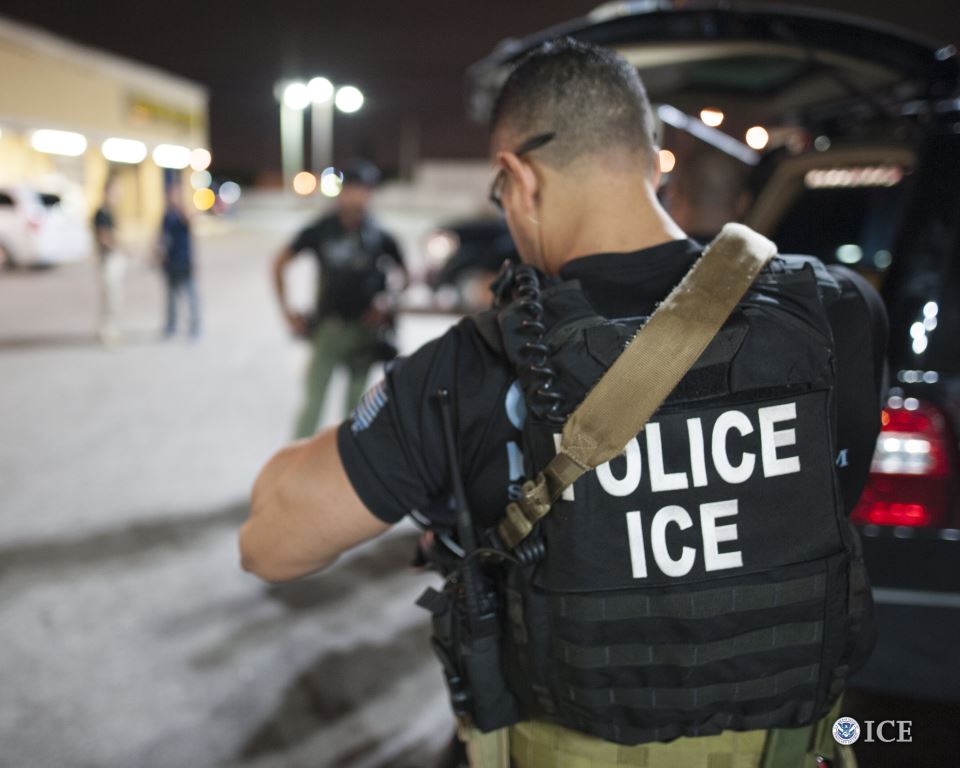
The United States’ Department of Homeland Security (DHS) has announced an updated deportation list featuring 124 Nigerians.

This was disclosed in a statement on the website of the DHS on Wednesday.

According to the DHS, these individuals have been placed on what it described as its “worst-of-the-worst” criminal register.

While the names and photos have been made public, the timeline for deportations remains undisclosed.

However, the US immigration authorities explained that the deportations are part of ongoing immigration enforcement, stressing that those listed were convicted of serious crimes, but declined to provide details about the offences or when deportations would take place.

The statement read, “The U.S. Department of Homeland Security is highlighting the worst of worst criminal aliens arrested by the U.S. Immigration and Customs Enforcement (ICE).

“Under DHS leadership, the hardworking men and women of DHS and ICE are fulfilling President Trump’s promise and carrying out mass deportations – starting with the worst of the worst – including the illegal aliens you see here.”

See also  Huge crowd at Atiku's Katsina mega rally (Photos)

The website then listed, “Sunday Adediora, Sunday Kunkushi, Mkpouto Etukudoh, Marcus Unigwe, Olaniyi Ojikutu, Boluwaji Akingunsoye, Ejike Asiegbunam, Emmanuel Mayegun Adeola, Bamidele Bolatiwa, Ifeanyi Nwaozomudoh, Aderemi Akefe, Solomon Wilfred, Chibundu Anuebunwa, Joshua Ineh, Usman Momoh, Oluwole Odunowo, Bolarinwa Salau, Oriyomi Aloba.”

Others are Oludayo Adeagbo, Olaniyi Akintuyi, Talatu Dada, Olatunde Oladinni, Jelili Qudus, Abayomi Daramola, Toluwani Adebakin, Olamide Jolayemi, Isaiah Okere, Benji Macaulay, Joseph Ogbara, Olusegun Martins, Kingsley Ariegwe, Olugbenga Abass, Oyewole Balogun, Adeyinka Ademokunla, Christian Ogunghide, Christopher Ojuma, Olamide Adedipe, Patrick Onogwu, Olajide Olateru-Olagbegi and Omotayo Akinto.

“Kenneth Unanka, Jeremiah Ehis, Oluwafemi Orimolade, Ayibatonye Bienzigha, Uche Diuno, Akinwale Adaramaja, Boluwatife Afolabi, Chinonso Ochie, Olayinka A. Jones, Theophilus Anwana, Aishatu Umaru, Henry Idiagbonya, Okechukwu Okoronkwo, Daro Kosin, Sakiru Ambali, Kamaludeen Giwa, Cyril Odogwu, Ifeanyi Echigeme, Kingsley Ibhadore, Suraj Tairu, Peter Equere, Dasola Abdulraheem, Adewale Aladekoba and Akeem Adeleke.

“Bernard Ogie Oretekor, Abiemwense Obanor, Olufemi Olufisayo Olutiola, Chukwuemeka Okorie, Abimbola Esan, Elizabeth Miller, Chima Orji, Adetunji Olofinlade, Abdul Akinsanya, Elizabeth Adeshewo, Dennis Ofuoma, Quazeem Adeyinka, Ifeanyi Okoro, Oluwaseun Kassim, Olumide Bankole Morakinyo, Abraham Ola Osoko, Oluchi Jennifer and Chibuzo Nwaonu.”

See also  Supreme court verdict: ‘This is not the end’, Obi tells supporters

The latest action is part of the sweeping immigration enforcement measures introduced by the administration of US President Donald Trump after his return to office on January 20, 2025.

On his first day back in office, Trump signed a series of executive orders declaring illegal immigration a national emergency and directing federal agencies to intensify border security and accelerate the removal of undocumented migrants.

One of the orders, titled Protecting the American People Against Invasion, instructed immigration authorities to prioritise the arrest and deportation of removable migrants, particularly those considered threats to public safety and national security.

Defending the policy, the DHS said the administration was delivering on Trump’s campaign promise to carry out mass deportations, beginning with what it described as the “worst of the worst” criminal offenders.

The department said officers of the US Immigration and Customs Enforcement had been directed to intensify operations nationwide against non-citizens convicted of serious crimes.

See also  Court throws out suit challenging Atiku's Nigerian citizenship, describes plaintiff as busy body

White House Press Secretary Karoline Leavitt has also defended the crackdown, saying the administration remained committed to enforcing immigration laws and removing undocumented immigrants with criminal records in line with President Trump’s immigration agenda.

Official US immigration data indicate that Guatemala has recorded the highest number of deportees since the renewed crackdown began, followed by Honduras, Mexico and El Salvador, reflecting the administration’s focus on migrants from Latin America.

The US has also expanded deportation flights to countries across Africa, Asia and the Caribbean as enforcement operations continue.

Nigeria has also come under increased scrutiny by the Trump administration. In June, Washington imposed partial visa restrictions on Nigerian citizens, citing concerns over identity management, information sharing, visa overstay rates and security screening.

Continue Reading

News

Six ISWAP fighters surrender to troops in Borno

Published

on

By

Six suspected fighters of the Islamic State West Africa Province, alongside their family members, have surrendered to troops of the 192 Battalion, Sector 1, Operation Hadin Kai, in Gwoza Local Government Area of Borno State.

The Acting Military Information Officer, Headquarters North-East Joint Task Force, Operation Hadin Kai, Lt. Col. Mohammed Goni, who disclosed this in a statement on Thursday, said preliminary investigations revealed that the group fled from the Guduf Bubayagwa and Chikide terrorist enclaves in the Mandara Mountains of Gwoza LGA.

The statement read, “The Joint Task Force North East, Operation HADIN KAI (OPHK), has continued to sustain its operational momentum across the North-East Theatre, recording another series of significant successes through relentless search-and-rescue operations, intelligence-led missions and coordinated security efforts aimed at denying terrorist groups freedom of action.”

In Askira/Uba Local Government Area, Goni said troops of the 115 Task Force Battalion, on July 7, 2026, while conducting ongoing search-and-rescue operations, successfully rescued two additional abductees from a terrorist hideout.

“During the operation, troops recovered cash totalling One Million, Two Hundred Thousand Naira (N1.2m), suspected to be proceeds of criminal activities, as well as food items and other logistics believed to have supported terrorist operations,” he said.

He added that the rescued victims had been evacuated to a secure location, where they were receiving medical care and psychosocial support.

See also  VIDEO: Auto parts dealer arrested over heroin, loud shipments concealed in lamps, sofa legs

“Additionally, six suspected ISWAP terrorists, alongside their families, surrendered to troops of the 192 Battalion (Main), Sector 1, OPHK. Preliminary investigations revealed that the families escaped from the Guduf Bubayagwa and Chikide terrorist enclaves in the Mandara Mountains, Gwoza LGA.

“Items recovered from the terrorists and their families include the cumulative sum of One Million, Five Hundred and Forty-One Thousand, Five Hundred Naira (N1,541,500), two Tecno mobile phones and other items,” he stated.

The army spokesman also said troops apprehended a suspected Boko Haram/ISWAP logistics supplier at the Molai checkpoint while in possession of large quantities of medical supplies without the required clearance.

“The suspect and the items are in custody for further interrogation,” he said.

During the same period, Goni said troops of Operation Hadin Kai deployed at the Forward Operating Base, Logomani, in Ngala Local Government Area of Borno State, under Sector 1, successfully repelled a coordinated attack by ISWAP terrorists.

“Although the insurgents briefly breached a section of the base’s defensive perimeter during the intense firefight, the troops rapidly regrouped, mounted a determined counter-offensive and decisively repelled the attackers, inflicting significant casualties and forcing the surviving terrorists to flee with varying degrees of gunshot wounds.

“Regrettably, one gallant soldier paid the supreme price, while two gun trucks and some combat enablers were damaged during the engagement,” he said.

See also  Abba Moro: Fielding Atiku as PDP’s 2023 presidential candidate was a mistake

According to him, the situation at FOB Logomani remains firmly under the control of Operation Hadin Kai troops, with reinforcements deployed, exploitation operations ongoing and additional measures being implemented to strengthen the base’s defensive capability.

In another operation, Goni said troops of the 232 Battalion, acting on credible intelligence, arrested a notorious criminal in Gombi Local Government Area of Adamawa State.

He added that follow-up operations led to the recovery of one AK-47 rifle, two magazines and 28 rounds of 7.62mm special ammunition.

“The suspect and recovered items are currently in military custody, while further investigations are underway to identify and apprehend other members of the criminal network,” he said.

Meanwhile, troops of the 149 Battalion also arrested two suspected terrorist logistics suppliers in Mobbar Local Government Area of Borno State.

Recovered items included cash, a Volkswagen Golf car, construction materials, household items and other supplies suspected to have been destined for terrorist elements.

“The suspects are currently undergoing interrogation, while the recovered items remain in military custody as investigations continue,” he added.

As part of ongoing offensive operations, Goni said troops of the 24 Task Force Brigade, in conjunction with members of the Civilian Joint Task Force, carried out a clearance operation on known terrorist enclaves around Wulgo.

See also  EFCC arrests 41 suspected ‘Yahoo boys’ in Akure

“During the operation, troops exploited the terrorists’ hasty withdrawal and recovered a sack containing assorted illicit drugs abandoned by the fleeing insurgents,” he said.

He noted that the recovery further demonstrated the sustained pressure being mounted on terrorist groups, disrupting their operations and denying them freedom of movement.

In Sector 2, troops of the 233 Tank Battalion, in conjunction with hunters, intercepted and arrested a suspected Boko Haram/ISWAP logistics supplier from Ngirya village in Tarmuwa Local Government Area with five motorcycle tyres.

“The suspect and the items are in military custody for investigation,” he added.

According to Goni, the latest operational gains underscore the effectiveness of sustained offensive operations, actionable intelligence and collaboration among security agencies and auxiliary forces in dismantling terrorist logistics networks, disrupting criminal activities and protecting vulnerable communities across the North-East.

“Headquarters Operation HADIN KAI assures the public that ongoing search-and-rescue operations will continue with unwavering resolve until every abducted person is accounted for and safely reunited with their families,” he said.

He also warned individuals supplying food, fuel, construction materials, transportation or any other form of logistics to terrorist groups to desist immediately.

“Anyone found aiding, abetting or collaborating with terrorist elements, directly or indirectly, will be identified, apprehended and prosecuted in accordance with the law,” the statement added.

Continue Reading

Trending News