News
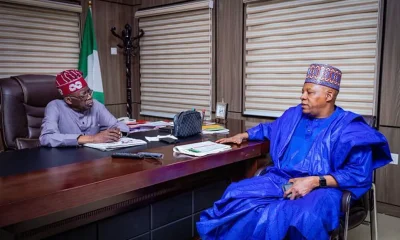
Presidential tussle: Meet the seven Supreme Court Justices to determine Tinubu, Atiku, Obi’s fate
Published
3 years agoon
By
admin
The Supreme Court will on Thursday, settle the legal dispute that has been trailing the presidential election that was held in the country on February 25.
Though five petitions were initially entered against the declaration of President Bola Tinubu of the ruling All Progressives Congress, APC, as the winner of the presidential contest that involved 17 candidates, however, only three of the petitions made it to the apex court.
Whereas two of the petitions were withdrawn before they could even be heard by the Presidential Election Petition Court, PEPC, that held its proceedings at the Abuja Division of the Court of Appeal, of the three petitions that were entered at the Supreme Court, only two of them made it to the last lap of the litigation.
A seven-man panel of the apex court had last Monday, dismissed the case the Allied Peoples Movement, APM, instituted to nullify President Tinubu’s election victory, after the party reluctantly withdrew its appeal which the panel insisted was academic and of no useful legal purpose.
Consequently, the surviving appeals were the ones filed by a former Vice President and candidate of the Peoples Democratic Party, Alhaji Atiku Abubakar, as well as his counterpart in the Labour Party, LP, Mr. Peter Obi.
The apex court reserved the to appeals for judgement after all the parties adopted their final briefs of argument past Monday.
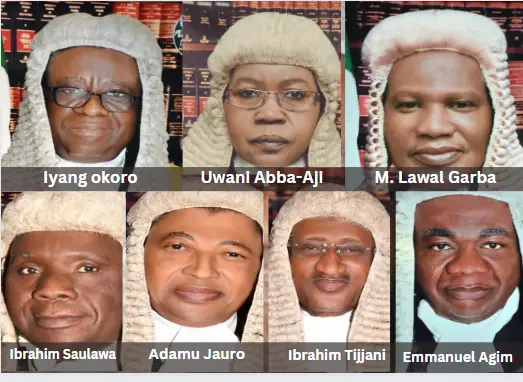
Meanwhile, Vanguard, in his report, examines the profile of the seven Justices of the Supreme Court that will determine the fate of Tinubu, Atiku and Obi, tomorrow.
Justice John Inyang Okoro
Justice Okoro is the head of the panel that will decide the petitions seeking to remove President Tinubu from office.
He was born on July 11, 1959 in Nung Ukim, Ikono Local Government Area of Akwa Ibom State.
He attended Methodist School, Nung Ukim from 1965-1972, Boys High School, Oron from 1973-1977, School of Arts &Science, Uyo 1979-1981 and the University of Lagos from 1981-1984.
He attended the Nigerian Law School, Lagos and was called to the Nigerian Bar in 1985.
Justice Okoro started his legal career as Magistrate Grade 11 in 1986 and rose through the Magisterial Cadre culminating in his promotion to the post of Chief Magistrate Grade 1 in 1996.
He was then appointed a Judge of the High Court of Akwa Ibom State from 1998-2006. His Lordship was elevated to the Court of Appeal in 2006 and served in that capacity up to 2013.
He has over the years served in different capacities and bodies, including; Member, Election Petition Tribunal, Kano, 1998, Member, Governorship and Legislative Houses Election Petition Tribunal, Ondo State, 2003, Member, Governorship and Legislative Houses Election Petition Tribunal No.2 Delta State, 2003.
He has also attended several seminars, workshops and conferences both locally and internationally.
Justice Okoro was elevated to the Supreme Court on November 15, 2013.
He is currently the fourth most senior justice of the court.
Justice Uwani Musa Abba-Aji
Justice Abba Aji is the most ranking female jurist on the apex court bench and the only female of the panel.
She was born on November 7, 1956, in Gashua, Yobe State. She attended Central Primary School Gashua and Government Girls Secondary School Maiduguri for her Primary and Secondary Education between 1961 and 1972.
She obtained a Diploma in Law from Ahmadu Bello University Zaria in 1976 and subsequently, an L.L.B Hons from the same institution in 1980. She was called to Bar in 1981 and commenced her career as State Counsel in 1982.
Justice Abba-Aji previously held positions of Clerical Assistant (Area Courts Division), Assistant Registrar, Acting Registrar and Higher Registrar between 1973 and 1982. After her appointment as State Counsel in 1982, she rose through various positions becoming an Acting Senior State Counsel in 1984, Senior Magistrate II in 1986, Senior Magistrate I in 1987, Chief Magistrate II in 1989, Chief Magistrate I in 1991 and Chief Registrar in November 1991.
She was appointed Higher Court Judge of Yobe State Judiciary in December 1991 making her the first Lady Judge at Yobe State Judiciary, a position she held until July 2004 when she was elevated to the Court of Appeal.
Before her elevation to the Supreme Court on January 8, 2019, Justice Abba-Aji was the Presiding Justice, Court of Appeal Kaduna Division, a position she held for 4 years.
Justice Mohammed Lawal Garba
Justice Mohammed Lawal Garba was born on November 16, 1958. He hails from Gusau Local Government Area of Zamfara State.
He attended Demonstration Primary School, Maru from 1965-1971, Government Secondary School, Gusau from 1972 -1976, School of Basic Studies Ahmadu Bello University, Zaria from 1976-1977, Faculty of Law, A.B.U, Zaria from 1977-1980, Nigerian Law School, Lagos, from 1980-1981 and the Nigerian Institute of Advanced Legal Studies (UNILAG) Akoka, Lagos in 1989.
He was called to the Nigerian Bar in 1981.
He served as Magistrate in the Sokoto State Judiciary from 1982-1986, Deputy Chief Registrar High Court of Justice, Sokoto State from 1989-1991, appointed Solicitor-General/Director-General Ministry of Justice Sokoto State from 1991-1993.
He was then appointed a Judge of the High Court of Justice, Sokoto State from 1993-1996. He served as Chief Judge, High Court of Justice, Zamfara State from 1996-2004.
In 2004, Justice Garba was elevated to the Court of Appeal and served at various times as the Presiding Justice at Abuja, Calabar, Port Harcourt and Lagos Divisions of the Court from 2010-2020.
He has over the years, served on different capacities and bodies, including as; Member Body of Benchers from 1996-2004, Member, Board of Governors of the National Judicial Institute (NJI), Abuja 1996-2004, Member, Legal Practitioners’ Privileges Committee (LPPC) 1997-1999, Member Body of Benchers 2010 to date, Life Bencher 2018 to date.
Remarkably, he served as a member of the Presidential Election Panel in 2011 and also as Chairman of the Presidential Election Panel that dismissed the petition that Atiku filed to challenge the election of former President Muhammadu Buhari, in 2019.
He was elevated to the Supreme Court on November 6, 2020.
Justice Ibrahim Saulawa
Justice Saulawa was born on September 29, 1956 in the ancient city of Katsina. Katina State. He attended both Primary and Secondary Schools in Katsina from 1965 to 1976 after which he proceeded to the Bayero University Kano in September 1977 and graduated in June 1981 with a Bachelor of Law degree.
The same year, he proceeded to the Nigerian Law School Lagos and was eventually called to the Nigerian Bar on July 2, 1982.
He began his career with the Ministry of Justice, Kaduna State in August 1982 as a Pupil State Counsel (NYSC: (ii) Secretary, Law Officers (Attorneys – General) Committee of the then 10 Northern States; (iii) a Visiting Lecturer, College of Legal and Extra-Mural Studies, Katsina Polytechnic, Katsina 1982-83
He a short private practice, he was made a Magistrate Grade 2 in the Kaduna State Judiciary on September 1, 1983
He served as Chief Magistrate, Katsina State Judiciary, 1987 – 1991; Deputy Chief Registrar/ Chief Registrar, Court of Appeal Lagos 1991 – 1994, High Court Judge, Katsina State Judiciary 1994 – 2006.
Justice Saulawa was elevated to the Bench of the Court of Appeal on June 10. 2006.
He subsequently served as Presiding Justice: Calaber Judicial Division October, 2015 – August. 2018;
Ilorin Judicial Division – September, 2018 – January, 2020 and Port Harcourt Judicial Division – January, 2020 – November 9, 2020.
Justice Saulawa was elevated to the Bench of the Supreme Court on November 10, 2020.
Justice Adamu Jauro
Justice Adamu Jauro was born on June 26, 1959. He hails from Gombe State. He attended Central Primary School, Gombe, Government Secondary School, Bauchi and the School of Basic Science, Zaria.
In 1980, he studied Law at the Ahmadu Bello University, Zaria where he bagged his LLB.
Justice Jauro holds a master’s degree in Law from the University of Jos and also has a certificate from the Institute of Advanced Legal Studies.
After he was called to Bar, Jauro worked with the Ministry of Justice in 1983 and was promoted as Director of Public Prosecution.
He served in various capacities before being appointed as a judge of the Gombe State Judiciary where he served till 2007.
In 2007, he was promoted to the Court of Appeal and served in Jos, Lagos, Yola, Ibadan and Port Harcourt.
Justice Jauro was elevated to the Supreme Court bench in November 2020.
Justice Tijjani Abubakar
Justice Tijjani Abubakar, who is a native of Base Local Government Area of Yobe State, was born on April 15, 1960.
He attended Gashua Central Primary School and Government Secondary School, Gashua.
He later attended the School of Basic Science, University of Maiduguri as well as the University of Maiduguri where he studied Law and graduated in 1982.
After graduating from the Nigerian Law School, Justice Abubakar was called to the Bar in 1983.
He had worked as Attorney General, Permanent Secretary and Commissioner for Justice of Yobe State at various times.
He subsequently went into private practice and set up his own law firm, known as Tijani Abubakar and Co. in 2004.
Abubakar returned to public practice with his appointment as a judge of the Federal High Court.
In 2012, he was appointed as Justice of the Court of Appeal.
He was serving at the Lagos Division of the appellate the court when he was elevated to the Supreme Court bench in 2020.
Justice Emmanuel Agim
Justice Emmanuel Agim was born on April 26, 1960, in Obudu, Cross Rivers State.
He obtained his first degree, LLB, at University of Calabar, then BL from the Nigerian Law School, Lagos, and subsequently, LLM, from the University of Wolverhampton, United Kingdom.
After serving as President of the Court of Appeal of The Gambia, and three years as Chief Justice of The Gambia, Justice Agim was later sworn in as a Justice of the Supreme Court of Swaziland on May 2, 2012 where he served in the first all-black bench in the history of Swaziland and her sister countries- Botswana and Lesotho.
On November 5, 2012, he was sworn in as a Justice of the Court of Appeal of Nigeria by the first female Chief Justice of Nigeria, Justice Aloma Mariam Mukhtar.
In October 2019, he was elevated to the Supreme Court of Nigeria.
It be recalled that both Justice Agim and Justice Jauro, were the two members of the apex court bench that gave dissenting judgements that would have dashed hopes of the immediate past Senate President, Ahmed Lawan to contest the 2023 general election.
The duo, contrary to the position of the head of the panel, late Justice Centus Nweze and two other members of the panel, maintained that Lawan was not qualified to contest the Yobe North Senatorial election.
The gave their judgement in favour of Bashir Machina, stressing that Lawan was not the validly nominated candidate of the APC for the senatorial contest.
Notwithstanding the dissenting judgements of Justices Agim and Jauro, Lawan still survived the sledgehammer as the majority decision of three other members of the panel, favoured him.

You may like
-
Tinubu orders ICPC probe into fictitious Presidential Council
-
Babachir Lawal quits ADC, says primaries rigged for Atiku
-
BREAKING: Atiku wins ADC presidential primary election
-
Peter Obi, Kwankwaso receive NDC membership cards
-
Good morning! Nigerian Newspapers Headlines: Automatic ticket: Tinubu leaves lawmakers’ fate in govs’ hands
-
ADC crisis: Presidential ticket tears Atiku, Obi, Kwankwaso apart
News
Why I rejected Al Jazeera’s apology over controversial interview — Daniel Bwala
Published
7 hours agoon
July 9, 2026By
admin
The special adviser to President Bola Tinubu on policy communication, Daniel Bwala, has said that he received a private apology over his controversial interview on Al Jazeera.
Bwala, speaking when he featured on an episode of The Morayo Show published on Wednesday, said the network admitted it should have informed him beforehand that his credibility and past comments about President Bola Tinubu would form part of the interview.
He said he rejected the private apology and insisted it should be made public, adding that the matter is now before a court in England.
“They apologised to me privately. I said they should put it on social media. They said they would not because it would affect their credibility, because it’s not just them, but their mother programs at the Al Jazeera Network,” Bwala said.
It would be recalled that Bwala appeared on Head to Head hosted by Mehdi Hasan in March. During the interview, Hasan confronted him with old quotes, video clips and statements from his time as spokesperson for Atiku Abubakar’s presidential campaign.
The interviewer repeatedly referenced Bwala’s past criticisms of Tinubu, prompting the presidential aide to deny several of the statements.
“I never said that,” Bwala responded to many of Hasan’s questions.
Clips from the interview later went viral on social media, generating widespread reactions.
When asked by Morayo Afolabi-Brown, the host of the show, if he had taken any steps to reclaim his credibility, Bwala said he had instructed his lawyers in England to institute legal proceedings.
According to him, the broadcaster acknowledged that, under its ethical guidelines, it should have disclosed in advance that his past criticisms of Tinubu and his decision to later support the president would be scrutinised.
“The element of the apology was that they should have told me they were going to interrogate my credibility by asking why I now support someone I previously criticised. By their ethics, they admitted they ought to have told me, and they were sorry they did not,” he said.
“…because I called a number of media analysts, including Piers Morgan, whom I contacted through a third party, and confirmed that what they did was wrong.”
Bwala also accused Hasan of editing the pre-recorded interview in a way that misrepresented his responses.
He claimed the opening portion of the interview, in which he said he had warned Hasan that he would deny further questions about his past remarks because they were outside the agreed scope of the interview, was removed from the final broadcast.
“He took away the opening remark where I told him that I had indeed made those comments against Asiwaju and even said worse things, but that was not what I was invited to discuss. I told him that if he continued on that line of questioning, I would deny them. He removed that part,” Bwala said.
He argued that the editing created the impression that he was simply denying his previous statements without context.
Bwala said his legal advisers in England believe the broadcast amounts to defamation.
“The case is currently in court. We’re waiting for the verdict because my advisers in England said it is a case of defamation of character,” he said.
Responding to a question from the audience about what the Federal Government was doing to address the rising rate of emigration, popularly known as japa, Bwala said that some Nigerians who believe they are struggling financially are better off than many of their counterparts who migrated to the United Kingdom in search of better opportunities.
He claimed that many highly educated Nigerians in the UK work in care homes despite holding university degrees, adding that the cost of living leaves them with little disposable income.
According to him, some Nigerians with first-class degrees and postgraduate qualifications are employed as care workers, a job he described as “modern-day slavery”.
“Some of you in Nigeria who think you are suffering are better off than your colleagues that japa five years ago,” Bwala said.
“A Nigerian who finished with a first class or second class degree, and even adds another degree in the UK, many of them work in care homes. As far as I am concerned, it is modern-day slavery.
“On average, they earn about £2,600 or £2,800 a month, but almost all of it goes to rent, electricity, internet, television and other bills. By the time you add feeding and other expenses, there is very little left. That is why many of them are forced to do two or three jobs.”
Bwala compared their situation with that of a Nigerian earning ₦60,000 monthly, arguing that despite the lower income, such a person may have stronger family and community support and face lower living costs.
“I will compare that person with a Nigerian here earning ₦60,000. I’m just giving an example. That person may have relatives or friends who can lend or support them. Also, what we pay for electricity and some social services here is almost nothing compared to what people pay there,” he said.
Bwala acknowledged that Nigerians living abroad may enjoy better infrastructure and access to healthcare but argued that many still struggle to own assets because of the high cost of living.
“Your challenge here may be that you don’t have enough money to build a house or buy a car. That other person may not even own a car or be able to buy one in the next 20 years. Although they have better infrastructure and access to healthcare, they are not necessarily better off financially,” he said.
News
Photos: US to deport 124 Nigerians listed on ‘worst-of-the-worst’ criminal register
Published
18 hours agoon
July 9, 2026By
admin
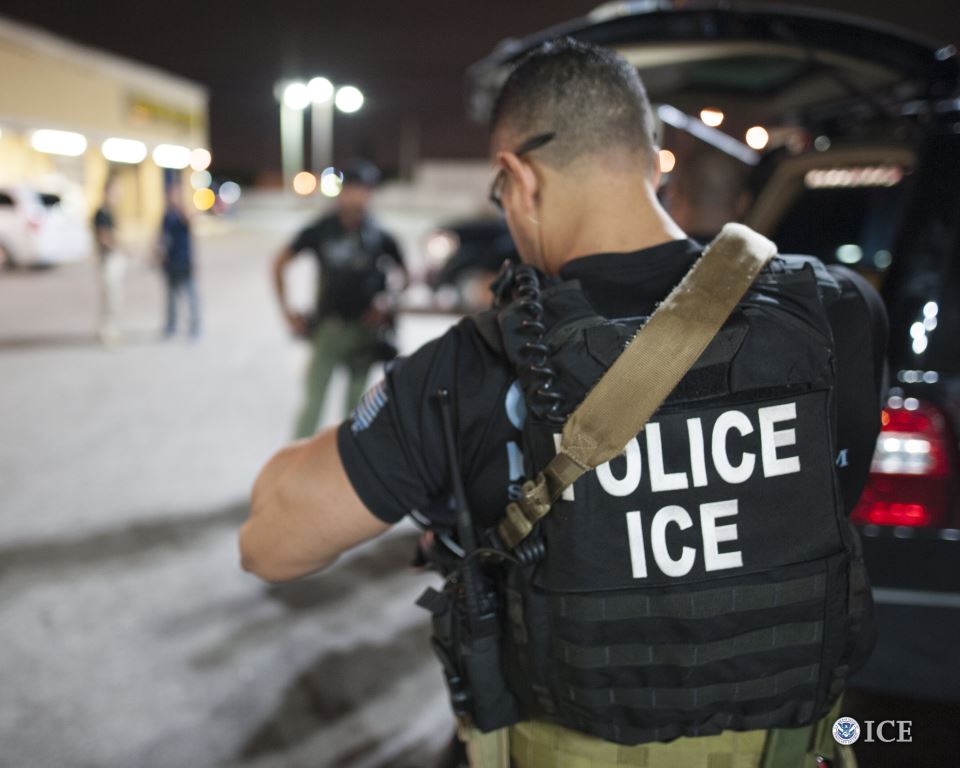
The United States’ Department of Homeland Security (DHS) has announced an updated deportation list featuring 124 Nigerians.
This was disclosed in a statement on the website of the DHS on Wednesday.
According to the DHS, these individuals have been placed on what it described as its “worst-of-the-worst” criminal register.
While the names and photos have been made public, the timeline for deportations remains undisclosed.
However, the US immigration authorities explained that the deportations are part of ongoing immigration enforcement, stressing that those listed were convicted of serious crimes, but declined to provide details about the offences or when deportations would take place.
The statement read, “The U.S. Department of Homeland Security is highlighting the worst of worst criminal aliens arrested by the U.S. Immigration and Customs Enforcement (ICE).
“Under DHS leadership, the hardworking men and women of DHS and ICE are fulfilling President Trump’s promise and carrying out mass deportations – starting with the worst of the worst – including the illegal aliens you see here.”
The website then listed, “Sunday Adediora, Sunday Kunkushi, Mkpouto Etukudoh, Marcus Unigwe, Olaniyi Ojikutu, Boluwaji Akingunsoye, Ejike Asiegbunam, Emmanuel Mayegun Adeola, Bamidele Bolatiwa, Ifeanyi Nwaozomudoh, Aderemi Akefe, Solomon Wilfred, Chibundu Anuebunwa, Joshua Ineh, Usman Momoh, Oluwole Odunowo, Bolarinwa Salau, Oriyomi Aloba.”
Others are Oludayo Adeagbo, Olaniyi Akintuyi, Talatu Dada, Olatunde Oladinni, Jelili Qudus, Abayomi Daramola, Toluwani Adebakin, Olamide Jolayemi, Isaiah Okere, Benji Macaulay, Joseph Ogbara, Olusegun Martins, Kingsley Ariegwe, Olugbenga Abass, Oyewole Balogun, Adeyinka Ademokunla, Christian Ogunghide, Christopher Ojuma, Olamide Adedipe, Patrick Onogwu, Olajide Olateru-Olagbegi and Omotayo Akinto.
“Kenneth Unanka, Jeremiah Ehis, Oluwafemi Orimolade, Ayibatonye Bienzigha, Uche Diuno, Akinwale Adaramaja, Boluwatife Afolabi, Chinonso Ochie, Olayinka A. Jones, Theophilus Anwana, Aishatu Umaru, Henry Idiagbonya, Okechukwu Okoronkwo, Daro Kosin, Sakiru Ambali, Kamaludeen Giwa, Cyril Odogwu, Ifeanyi Echigeme, Kingsley Ibhadore, Suraj Tairu, Peter Equere, Dasola Abdulraheem, Adewale Aladekoba and Akeem Adeleke.
“Bernard Ogie Oretekor, Abiemwense Obanor, Olufemi Olufisayo Olutiola, Chukwuemeka Okorie, Abimbola Esan, Elizabeth Miller, Chima Orji, Adetunji Olofinlade, Abdul Akinsanya, Elizabeth Adeshewo, Dennis Ofuoma, Quazeem Adeyinka, Ifeanyi Okoro, Oluwaseun Kassim, Olumide Bankole Morakinyo, Abraham Ola Osoko, Oluchi Jennifer and Chibuzo Nwaonu.”
The latest action is part of the sweeping immigration enforcement measures introduced by the administration of US President Donald Trump after his return to office on January 20, 2025.
On his first day back in office, Trump signed a series of executive orders declaring illegal immigration a national emergency and directing federal agencies to intensify border security and accelerate the removal of undocumented migrants.
One of the orders, titled Protecting the American People Against Invasion, instructed immigration authorities to prioritise the arrest and deportation of removable migrants, particularly those considered threats to public safety and national security.
Defending the policy, the DHS said the administration was delivering on Trump’s campaign promise to carry out mass deportations, beginning with what it described as the “worst of the worst” criminal offenders.
The department said officers of the US Immigration and Customs Enforcement had been directed to intensify operations nationwide against non-citizens convicted of serious crimes.
White House Press Secretary Karoline Leavitt has also defended the crackdown, saying the administration remained committed to enforcing immigration laws and removing undocumented immigrants with criminal records in line with President Trump’s immigration agenda.
Official US immigration data indicate that Guatemala has recorded the highest number of deportees since the renewed crackdown began, followed by Honduras, Mexico and El Salvador, reflecting the administration’s focus on migrants from Latin America.
The US has also expanded deportation flights to countries across Africa, Asia and the Caribbean as enforcement operations continue.
Nigeria has also come under increased scrutiny by the Trump administration. In June, Washington imposed partial visa restrictions on Nigerian citizens, citing concerns over identity management, information sharing, visa overstay rates and security screening.
News
Six ISWAP fighters surrender to troops in Borno
Published
21 hours agoon
July 9, 2026By
admin
Six suspected fighters of the Islamic State West Africa Province, alongside their family members, have surrendered to troops of the 192 Battalion, Sector 1, Operation Hadin Kai, in Gwoza Local Government Area of Borno State.
The Acting Military Information Officer, Headquarters North-East Joint Task Force, Operation Hadin Kai, Lt. Col. Mohammed Goni, who disclosed this in a statement on Thursday, said preliminary investigations revealed that the group fled from the Guduf Bubayagwa and Chikide terrorist enclaves in the Mandara Mountains of Gwoza LGA.
The statement read, “The Joint Task Force North East, Operation HADIN KAI (OPHK), has continued to sustain its operational momentum across the North-East Theatre, recording another series of significant successes through relentless search-and-rescue operations, intelligence-led missions and coordinated security efforts aimed at denying terrorist groups freedom of action.”
In Askira/Uba Local Government Area, Goni said troops of the 115 Task Force Battalion, on July 7, 2026, while conducting ongoing search-and-rescue operations, successfully rescued two additional abductees from a terrorist hideout.
“During the operation, troops recovered cash totalling One Million, Two Hundred Thousand Naira (N1.2m), suspected to be proceeds of criminal activities, as well as food items and other logistics believed to have supported terrorist operations,” he said.
He added that the rescued victims had been evacuated to a secure location, where they were receiving medical care and psychosocial support.
“Additionally, six suspected ISWAP terrorists, alongside their families, surrendered to troops of the 192 Battalion (Main), Sector 1, OPHK. Preliminary investigations revealed that the families escaped from the Guduf Bubayagwa and Chikide terrorist enclaves in the Mandara Mountains, Gwoza LGA.
“Items recovered from the terrorists and their families include the cumulative sum of One Million, Five Hundred and Forty-One Thousand, Five Hundred Naira (N1,541,500), two Tecno mobile phones and other items,” he stated.
The army spokesman also said troops apprehended a suspected Boko Haram/ISWAP logistics supplier at the Molai checkpoint while in possession of large quantities of medical supplies without the required clearance.
“The suspect and the items are in custody for further interrogation,” he said.
During the same period, Goni said troops of Operation Hadin Kai deployed at the Forward Operating Base, Logomani, in Ngala Local Government Area of Borno State, under Sector 1, successfully repelled a coordinated attack by ISWAP terrorists.
“Although the insurgents briefly breached a section of the base’s defensive perimeter during the intense firefight, the troops rapidly regrouped, mounted a determined counter-offensive and decisively repelled the attackers, inflicting significant casualties and forcing the surviving terrorists to flee with varying degrees of gunshot wounds.
“Regrettably, one gallant soldier paid the supreme price, while two gun trucks and some combat enablers were damaged during the engagement,” he said.
According to him, the situation at FOB Logomani remains firmly under the control of Operation Hadin Kai troops, with reinforcements deployed, exploitation operations ongoing and additional measures being implemented to strengthen the base’s defensive capability.
In another operation, Goni said troops of the 232 Battalion, acting on credible intelligence, arrested a notorious criminal in Gombi Local Government Area of Adamawa State.
He added that follow-up operations led to the recovery of one AK-47 rifle, two magazines and 28 rounds of 7.62mm special ammunition.
“The suspect and recovered items are currently in military custody, while further investigations are underway to identify and apprehend other members of the criminal network,” he said.
Meanwhile, troops of the 149 Battalion also arrested two suspected terrorist logistics suppliers in Mobbar Local Government Area of Borno State.
Recovered items included cash, a Volkswagen Golf car, construction materials, household items and other supplies suspected to have been destined for terrorist elements.
“The suspects are currently undergoing interrogation, while the recovered items remain in military custody as investigations continue,” he added.
As part of ongoing offensive operations, Goni said troops of the 24 Task Force Brigade, in conjunction with members of the Civilian Joint Task Force, carried out a clearance operation on known terrorist enclaves around Wulgo.
“During the operation, troops exploited the terrorists’ hasty withdrawal and recovered a sack containing assorted illicit drugs abandoned by the fleeing insurgents,” he said.
He noted that the recovery further demonstrated the sustained pressure being mounted on terrorist groups, disrupting their operations and denying them freedom of movement.
In Sector 2, troops of the 233 Tank Battalion, in conjunction with hunters, intercepted and arrested a suspected Boko Haram/ISWAP logistics supplier from Ngirya village in Tarmuwa Local Government Area with five motorcycle tyres.
“The suspect and the items are in military custody for investigation,” he added.
According to Goni, the latest operational gains underscore the effectiveness of sustained offensive operations, actionable intelligence and collaboration among security agencies and auxiliary forces in dismantling terrorist logistics networks, disrupting criminal activities and protecting vulnerable communities across the North-East.
“Headquarters Operation HADIN KAI assures the public that ongoing search-and-rescue operations will continue with unwavering resolve until every abducted person is accounted for and safely reunited with their families,” he said.
He also warned individuals supplying food, fuel, construction materials, transportation or any other form of logistics to terrorist groups to desist immediately.
“Anyone found aiding, abetting or collaborating with terrorist elements, directly or indirectly, will be identified, apprehended and prosecuted in accordance with the law,” the statement added.
Trending News
-
News4 years agoInsecurity: Buhari presides over National Security Council meeting (Photos)
-
Privacy5 years agoSelf-imposed Oba vacates ‘palace’ after warnings by community
-
News5 years agoNollywood Actress Nkechi Blessing speaks on plastic surgery, big butts
-
Entertainment4 years agoDJ Dimple Nipple dropped by longtime boyfriend after claiming D’Prince allegedly demanded sex for roles
-
News5 years agoPlus size rocks: Ghanaian plus size dancer who can’t travel by air because of her size
-
Opinion5 years agoLeave our community, Imobi orders self-imposed Oba
-
News5 years agoHow CCTV ’caught’ Baba Ijesha molesting minor
-
Sports4 years agoMeet Ashleigh Plumptre, the ‘Oyinbo’ member of Nigeria Super Falcons [Video]