Connect with us

Business

FAAC shares N1.1trillion to FG, states, LGs for August

Published

on


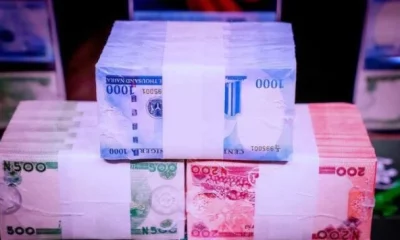
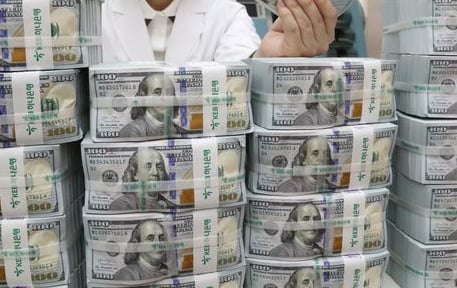
The Federation Account Allocation Committee (FAAC), has shared N1.1 trillion among the Federal Government, states and Local Government Councils for August.

This is more than the N966 billion shared in July.

According to the FAAC communique, the N1.1 trillion total distributable revenue comprised statutory revenue of N357.398 billion, Value Added Tax (VAT) revenue of N 321.941 billion and Electronic Money Transfer Levy (EMTL) revenue of N14.102 billion.

It also comprised Exchange Difference revenue of N229.568 billion and Augmentation of N177.092 billion.

The communiqué said total revenue of N1.48 trillion billion was available in the month of August 2023.

“Total deductions for cost of collection was N58.755 billion, total transfers and refunds was N254.046 billion and savings was N71 billion.

“Gross statutory revenue of N 891.934 billion was received for the month of August 2023. This was lower than the N1.1 trillion received in the month of July by N258.49 billion.

See also  FG, states, LGAs shared N906.9bn as allocation in October, up by N3.48bn - FAAC

“The gross revenue available from VAT was N345.727 billion. This was higher than the N298.78 billion available in the month of July by N46.938 billion,’’ it said.

It said that from the N1.1 trillion total distributable revenue, the Federal Government received N431.245 billion, the state governments received N361.188 billion and the LGCs received N266.538 billion.

“A total sum of N26.473 billion, (13 per cent of mineral revenue) and N14.657 billion (13 per cent of savings from NNPCL), were shared to the relevant states as derivation revenue.

“From the N357.398 billion distributable statutory revenue, the Federal Government received N173.102 billion, the state governments received N87.800 billion and the LGs received N67.690 billion.

“The Federal Government received N48.291 billion, the state governments received N160.971 billion and the LGs received N112.679 billion from the N321.941 billion distributable VAT revenue,” it said.

The communiqué said the N14.102 billion EMTL was shared among the three tiers of government.

See also  FG, states, LGAs share ₦1.727trn November 2024 revenue

“The Federal Government received N2.115 billion, the state governments received N7.051 billion and the LGCs received N4.936 billion.

“The Federal Government received N114.445 billion from the N229.568 billion Exchange Difference revenue.

“The state governments received N58.048 billion, and the LGCs received N44.752 billion.

“The sum of N12.027 billion (13 per cent of mineral revenue) and N0.296 billion (13 per cent of savings from NNPCL) went to the relevant states as derivation revenue,’’ it said.

It said that from the N177.092 billion augmentation, the Federal Government received N93.292 billion, the state governments received N47.319 billion and the LGCs received N36.481 billion.

“In the month of August, VAT, Import and Excise Duties and EMTL increased considerably while Petroleum Profit Tax (PPT), Companies Income Tax (CIT), Oil and Gas Royalties recorded significant decreases.

“The balance in the Excess Crude Account (ECA) was 473.75 million dollars.

Continue Reading
Click to comment

Leave a Reply

Your email address will not be published. Required fields are marked *

Business

Wema Bank meets CBN’s recapitalisation, retains national banking license

Published

on

By

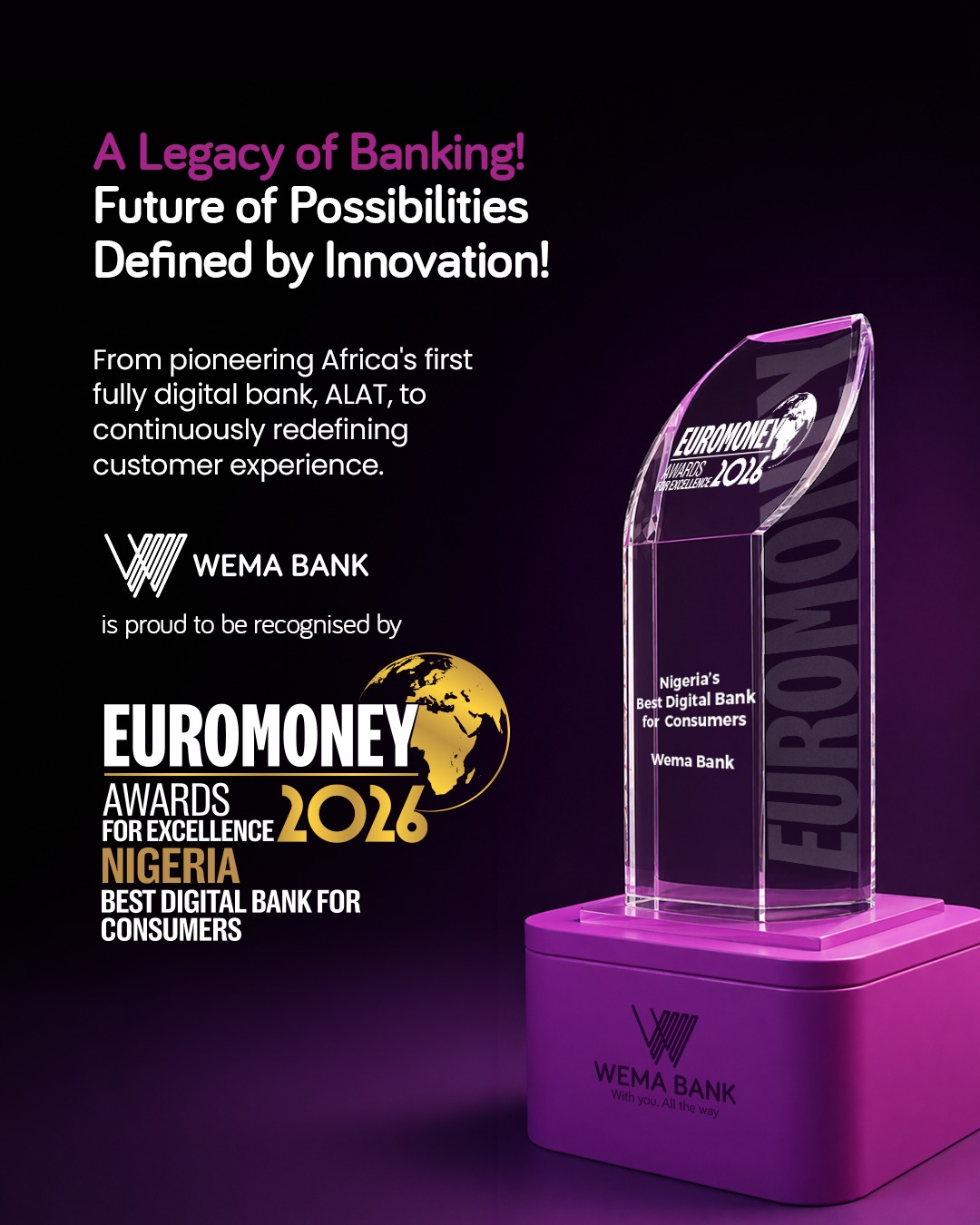
Wema Bank, Nigeria’s oldest indigenous national bank and pioneer of Africa’s first fully digital bank, ALAT, has successfully met and surpassed the Central Bank of Nigeria’s (CBN) recapitalisation requirements, reaffirming its status as a National bank.

This achievement represents a critical milestone in the Bank’s growth journey, reflecting its ability to meet regulatory expectations and its deliberate strategy to scale sustainably, strengthen its balance sheet, and reinforce its position within Nigeria’s banking sector.

The milestone follows the Bank’s successful completion of a ₦150 billion Rights Issue and an additional ₦50 billion special placement in 2025, bringing its Total Qualifying Capital to ₦264.7 billion, well above the regulatory minimum.

This achievement was concluded six months ahead of the CBN’s stipulated deadline, further reinforcing the Bank’s strong financial position, shareholder confidence, and long-term growth trajectory.

Earlier in April 2026, the Central Bank of Nigeria also formally confirmed that Wema Bank, alongside 32 other financial institutions across international, national, and regional categories, had successfully concluded the recapitalisation process.

Notably, Wema stands among only ten national banks that met and surpassed the minimum required capital threshold, thereby sustaining its national banking license.

See also  Chaos as 'Omo oniles' invade Lagos school, chase away students

This milestone not only affirms regulatory compliance but also signals a new phase of accelerated growth for the Bank; one defined by stronger capital base, increased capacity to support customers, and a reinforced position within Nigeria’s competitive banking landscape.

Commenting on the milestone, the Managing Director/Chief Executive Officer of Wema Bank, Moruf Oseni, stated, “The successful completion of our recapitalisation exercise is a defining moment for Wema Bank. It is a strong validation of our strategy, our performance, and the enduring confidence our shareholders and stakeholders have in our vision. We have not only met the CBN’s requirements; we have exceeded them, reinforcing our position as a National Bank with the scale, strength, and stability to compete and lead.”

In March 2024, the Central Bank of Nigeria announced the recapitalisation programme requiring all national banks to maintain a minimum capital base of ₦200 billion.

The initiative was designed to strengthen the resilience of financial institutions, enhance their capacity to absorb economic shocks, and position them to drive sustainable economic growth.

In response, Wema Bank embarked on a strategic capital raise through the stock market, successfully strengthening its shareholder base and securing the required capital through strong participation from existing investors.

See also  FAAC: FG, states, LGAs shared N1.2trn in April — up by N85bn

The ₦150 billion Rights Issue, which opened on April 14, 2025, and closed on May 21, 2025, marked a significant step in this journey. This was subsequently complemented by a ₦50 billion special placement later in the year, ensuring the Bank not only met but exceeded the regulatory threshold well ahead of schedule.

For Wema Bank, this journey is a testament to its transformation. After regaining its national license in 2015, the Bank has consistently demonstrated financial discipline and strategic foresight. By raising the necessary capital primarily from existing shareholders, the Bank has underscored a deep-seated mutual trust between the institution and its investors.

Speaking further on what this achievement means for the Bank’s future and its customers, Oseni added: “This milestone strengthens our ability to compete at scale, deepen our market presence, and deliver more value to our customers across Nigeria through improved access to credit, enhanced digital banking experiences, and innovative financial solutions. It positions us to play an even bigger role in powering Nigeria’s economy while continuing to deliver sustainable value to all our stakeholders.

See also  Troops neutralise many bandits in coordinated operations in Zamfara, Katsina forests

Looking ahead, we remain focused on deepening our market presence, driving customer-centric innovation, and strengthening our role as a catalyst for growth across retail, SME, and corporate segments. This is not just about retaining our license; it is about building a bigger, stronger, and more impactful Wema Bank.”

The successful conclusion of the recapitalisation process underscores Wema Bank’s financial strength, disciplined execution, and unwavering commitment to regulatory compliance as it continues to expand its footprint across Nigeria.

With a significantly strengthened capital base, the Bank is now positioned to do more – support more customers, enable more businesses, and unlock more opportunities across every segment it serves.

As it enters this new phase, Wema Bank is not only reaffirming its status as a National Bank; it is stepping forward with greater scale, sharper ambition, and a clear intent to lead.

The Bank remains firmly committed to powering progress, driving innovation through ALAT, and delivering sustained value; powering a future of possibilities for all its stakeholders.

Continue Reading

Business

Oando plans $750 million drilling campaign, expects funding boost from Iran turmoil

Published

on

By

Nigeria’s leading energy firm, Oando, plans to raise up to $750 million this year for a drilling campaign that could boost output by 300%, tapping improved investor appetite for West African producers amid turmoil linked to the Iran war, Group Chief Executive of the firm Jubril Adewale ‌Tinubu, CON, told Reuters in an interview recently.

The oil and gas company is among a handful of local companies that have snapped up assets from oil majors in the past decade as they exit Nigerian onshore. This year, surging energy prices should open more funding sources for producers in the region, Tinubu said.

We are pushing very, very hard towards getting the financing that we need to do an extensive drilling campaign,” Tinubu told Reuters.

Nigeria is Africa’s biggest oil producer with crude and condensate output of around 1.6 million barrels a day.

Oando, whose production averaged just over 32,000 barrels of oil equivalent per day in ⁠fiscal 2025, aims to drill as many as 100 wells to boost output, particularly from assets purchased from Western majors ConocoPhillips and Eni.

See also  RECONLIATORY MOVE? Tuface appears to appease Annie with apology

While in the past the company had struggled with securing cash for drilling due to investor worries that Africa was an “unsafe environment”, the Iran war and Russia’s invasion of Ukraine in 2022 have shifted that view, Tinubu said.

“Africa is very, very peaceful compared to these regions,” he said.

Already, Tinubu said there was a shift in demand for Nigeria’s crude, with more cargoes sailing to Asia to replace Gulf oil trapped due to the closure of the Strait of Hormuz.

FUNDING SQUEEZE FROM EUROPE
Oando has raised $3 billion-$4 billion in the past decade, much of it from European banks, the GCE said, the bulk of which went toward acquisitions.

European banks had now almost completely withdrawn from African hydrocarbons due to climate concerns, he said, pushing Oando to funders including the African Export-Import Bank and the African Finance Corporation, and to oil trading houses ‌including Vitol, ⁠Trafigura, Glencore and Mercuria.

See also  See what your state got for February 2024 allocation from FAAC

However, Africa needed more “substantial long-term funding”, he added.
More Gulf banks were interested in hydrocarbon projects in Africa and more parties were joining their syndications, while private equity funds and hedge funds were also more active in funding African energy, he said.

Oando recently expanded into Angola, and Tinubu said they are exploring opportunities in Ghana and Ivory Coast.

Africa should pool capital available at home, via pension funds and other sources, to fund large-scale capital projects, he added.

Geopolitical turmoil will have “long-reaching strategic implications for global ⁠energy security”, he said, and keep focus on West Africa’s reserves.

“Even if the ceasefire lasts, which, hopefully it will, it wouldn’t change the fact that consistently, you’re going to find disruptions,” he said.

GASOLINE EXPORTS, BUSINESS OPPORTUNITIES

Nigeria, Tinubu said, is well placed to draw funding after a landmark 2021 overhaul of its hydrocarbon law and reforms by current President ⁠Bola Tinubu, his uncle, to currency and costly petrol subsidies.

See also  Chaos as 'Omo oniles' invade Lagos school, chase away students

The new 650,000 barrel-per-day Dangote Oil Refinery on the outskirts of Lagos, Tinubu said, highlighted the value of Nigeria’s resources.

Tinubu, whose company was once among the nation’s largest fuel importers, said imports were now only needed to test for pricing or during refinery maintenance.

Longer term, ⁠Tinubu hopes to exploit some of Oando’s own gas production for petrochemicals and fertilizers to further boost the value added to Nigerian resources.

The company was working to “streamline” financials to avoid further delays in filing audited statements with the Nigerian Exchange after deadline extension in recent years.

In August, Oando’s board signed off on a proposal to launch a multi-instrument issuance programme of up to $1.5 billion.
-Culled from Reuters.

Continue Reading

Business

Oando plans $750 million drilling campaign, expects funding boost from Iran turmoil

Published

on

By

Nigeria’s leading energy firm Oando plans to raise up to $750 million this year for a drilling campaign that could boost output by 300%, tapping improved investor appetite for West African producers amid turmoil linked to the Iran war, Group Chief Executive of the firm Jubril Adewale ‌Tinubu, CON, told Reuters in an interview recently.

The oil and gas company is among a handful of local companies that have snapped up assets from oil majors in the past decade as they exit Nigerian onshore. This year, surging energy prices should open more funding sources for producers in the region, Tinubu said.

We are pushing very, very hard towards getting the financing that we need to do an extensive drilling campaign,” Tinubu told Reuters.

Nigeria is Africa’s biggest oil producer with crude and condensate output of around 1.6 million barrels a day.

Oando, whose production averaged just over 32,000 barrels of oil equivalent per day in ⁠fiscal 2025, aims to drill as many as 100 wells to boost output, particularly from assets purchased from Western majors ConocoPhillips and Eni.

See also  Good morning! Here Are Some Major News Headlines In The Newspapers Today: FG projects massive food price crash January

While in the past the company had struggled with securing cash for drilling due to investor worries that Africa was an “unsafe environment”, the Iran war and Russia’s invasion of Ukraine in 2022 have shifted that view, Tinubu said.

“Africa is very, very peaceful compared to these regions,” he said.

Already, Tinubu said there was a shift in demand for Nigeria’s crude, with more cargoes sailing to Asia to replace Gulf oil trapped due to the closure of the Strait of Hormuz.

FUNDING SQUEEZE FROM EUROPE
Oando has raised $3 billion-$4 billion in the past decade, much of it from European banks, the GCE said, the bulk of which went toward acquisitions.

European banks had now almost completely withdrawn from African hydrocarbons due to climate concerns, he said, pushing Oando to funders including the African Export-Import Bank and the African Finance Corporation, and to oil trading houses ‌including Vitol, ⁠Trafigura, Glencore and Mercuria.

See also  Good morning! Here Are Some Major News Headlines In The Newspapers Today: FG, States, LGs Share N1.298 Trillion September 2024 Revenue

However, Africa needed more “substantial long-term funding”, he added.

More Gulf banks were interested in hydrocarbon projects in Africa and more parties were joining their syndications, while private equity funds and hedge funds were also more active in funding African energy, he said.

Oando recently expanded into Angola, and Tinubu said they are exploring opportunities in Ghana and Ivory Coast. Africa should pool capital available at home, via pension funds and other sources, to fund large-scale capital projects, he added.

Geopolitical turmoil will have “long-reaching strategic implications for global ⁠energy security”, he said, and keep focus on West Africa’s reserves.
“Even if the ceasefire lasts, which, hopefully it will, it wouldn’t change the fact that consistently, you’re going to find disruptions,” he said.

GASOLINE EXPORTS, BUSINESS OPPORTUNITIES
Nigeria, Tinubu said, is well placed to draw funding after a landmark 2021 overhaul of its hydrocarbon law and reforms by current President ⁠Bola Tinubu, his uncle, to currency and costly petrol subsidies.

See also  Troops neutralise many bandits in coordinated operations in Zamfara, Katsina forests

The new 650,000 barrel-per-day Dangote Oil Refinery on the outskirts of Lagos, Tinubu said, highlighted the value of Nigeria’s resources.

Tinubu, whose company was once among the nation’s largest fuel importers, said imports were now only needed to test for pricing or during refinery maintenance.
Longer term, ⁠Tinubu hopes to exploit some of Oando’s own gas production for petrochemicals and fertilizers to further boost the value added to Nigerian resources.

The company was working to “streamline” financials to avoid further delays in filing audited statements with the Nigerian Exchange after deadline extension in recent years.

In August, Oando’s board signed off on a proposal to launch a multi-instrument issuance programme of up to $1.5 billion.
-Culled from Reuters.

Continue Reading

Trending News