Connect with us

Opinion

Of ‘sins’ of Buhari, Emefiele, Bawa

Published

on

By Kehinde Aderemi
Leadership is nothing but service to humanity. It is the ability to deliver and bring about the necessary changes needed in advancing the cause of humanity. No matter who is saddled with the responsibility of leadership, either the young or old, the most important thing is the strength of character of the leader as well as the manner by which the leader handles difficult situation.
The way the Buhari Administration handled the naira redesign policy showed the weaknesses of a leader that was never been in charge.
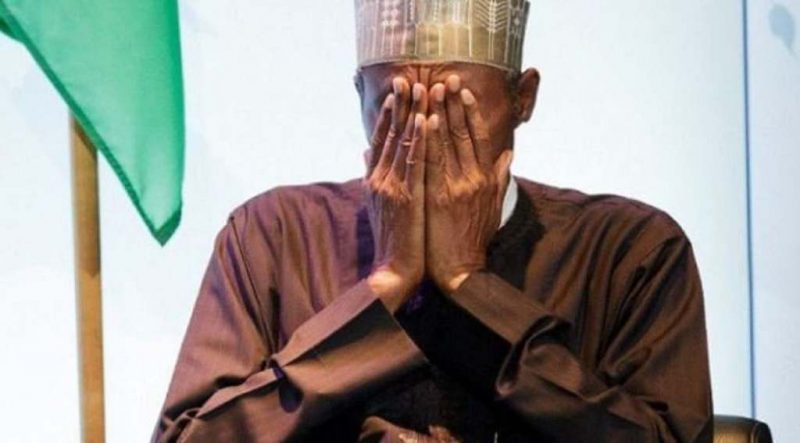
At that critical time of our national life, Nigerians looked up to President Muhammadu Buhari as a leader that could understand their plights and proffer better solution. But in the end, the old man from Daura made a mess of the entire policy. And the new naira note became a scarce commodity even till this present moment.
This piece is not to assess Buhari’s administration, but I must admit that the former president’s eight years was like hell on earth for Nigeria and Nigerians. And his failures as a leader is now obvious with the recent suspension of the governor of the Central Bank of Nigeria, Godwin Emefiele, and the Chairman of the Economic and Financial Crimes Commission, AbdulRasheed Bawa.
It is a matter of concern that within just 10 days into the life of a new administration, Emefiele and Bawa had been in the news for the wrong reasons. The duo had been suspended over their alleged financial malfeasance in their various positions.
Eight years in the life of a nation is very important. The recent drama involving Emefiele and Bawa had shown that the immediate past administration of President Buhari had failed the nation. The unfolding events have shown that Buhari was never in charge of the leadership of this great nation. For eight years, there were some cabals that had taken charge of his administration at the expense of the entire nation.
Buhari rode to power in 2015 with his credentials intact with high hope and integrity. He became Nigeria’s president when we needed a complete change from the usual tradition of waste and corruption.
But it is an irony of fate that he ended up becoming the leader of the most corrupt public office holders in Nigeria.
The CBN governor under his watch took Nigeria for granted and made nonsense of the value of our currency. Emefiele as the CBN governor had the support of Buhari to plunge the nation into a prolonged economic stagnation, especially with unrestricted loans and naira redesign policy.
The reason for the introduction of the new naira note was not in tandem with the results. The timing and the impact on the Nigerian economy was nothing but scam and corruption in disguise.
Emefiele was arrested by the Department of State Services on June 9, a day after his suspension by President Bola Tinubu. He is currently undergoing interrogation at the secret police’s headquarters in Abuja for alleged terrorism financing, economic sabotage, mismanagement of forex and the naira redesign policy, among others.
Now that the CBN governor had been under investigation, I am sure there would be more revelations into many of the “sins” committed either by him or his allies in the government. I pray that his case would not go under the carpet as many of the cases that had happened in Nigeria.
But the lesson here is that we must know that no matter how powerful we are, there is still a day of reckoning. Now that Emefiele is facing the music and the disgrace of not doing the right thing at the right time, the acting and interim CBN Governor, Folashodun Shonubi, should learn great lessons about good leadership and how it affects the people. He must be pro active and see how he can save the nation from this economic downturn.
In truth, Emefiele couldn’t have thought that he would end his tenure as the CBN boss unceremoniously and in such an inglorious manner. But whether he is left off the hook or not, it is in Nigeria’s history that there was a CBN governor that was disgraced out of office for various financial misappropriations and charges. And if he really has a conscience, he would always live to rue this for the rest of his life
The difference between Emefiele and Bawa is not that much. While the former CBN boss represented the old forces, the former EFCC boss represented the young forces.
The Bawa story is that of a young guy that had all the opportunity to write his name in gold in the book of history, but the young guy got drunk with power and found himself on the wrong side of history. From his background, I thought Bawa would transform the anti-graft agency and bring about the needed reform in the fight against corruption.
Reports have it that the suspended Chairman of the EFCC is being investigated by the DSS for alleged misappropriation of proceeds of assets seized by the anti-graft agency from suspects, among other issues. It is sad that Bawa is corruption himself.
Bawa was allegedly arrested and detained by the anti-graft agency in 2019 for allegedly selling at least 244 trucks worth between N20 million and N30 million each to his cronies at the cost of N100,000 per unit, hence depriving the country of about N4.8 billion in potential loot recovery. Bawa’s “sins” were that the forfeiture proceedings of most of the trucks were yet to be concluded when he allegedly disposed of them.
There was another story of how the suspended EFCC chairman allegedly collaborated with the suspended CBN Governor to carry out fraudulent deals with Bureau De Change operators. And, sadly, when we say the youth are the future of tomorrow, how can we explain the pattern of life the youth of this country live.
However, former President Buhari may have gone to Niger Republic to relax as he had said. Yet the corruption engaged in by his allies during his administration would continue to haunt him as a leader with little or no courage. Buhari’s administration will continue to be a bad reference in the Nigerian history, especially with the subsidy regime he ran for the eight inglorious years.
Today, a new chapter of their activities is open to the Nigerian public and we begin to wonder if Nigeria can still survive the harrowing experience of the Buhari administration.
For President Bola Ahmed Tinubu, nobody gave him a chance of succeeding in his plum job. But the first 10 days of his administration had shown that the Emilokan truly knows the extent of the Nigerian burden on his neck. Nigeria will continue to hope in his “Renewed Hope Project” and see whether the Jagaban would turn the Nigerian story around or that we will continue the old story of bad leadership.
In conclusion, I pray God saves the nation from this peculiar mess of bad leadership and corruption that had been the bane of our great nation.
. Kehinde Aderemi writes from Lagos.

See also  Buhari meets Tunde Bakare in Aso Villa
Continue Reading
Click to comment

Leave a Reply

Your email address will not be published. Required fields are marked *

Opinion

Monday Lines 1| Ibadan Is Oyo | Lasisi Olagunju

Published

on

By

On Monday, 25 March, 1946, Chief I. B. Akinyele, Chief James Ladejo Ogunsola, Messrs D. T. Akinbiyi and E. A. Sanda, the very cream of the Ibadan educated elite, met behind closed doors with Oyo town delegates at the secretariat in Ibadan. One of them got home that day and wrote in his diary that they “could reach no agreement because we (Ibadan) flatly refused to pay one penny towards the Alaafin’s salary.”

Yet, some 84 years earlier (1862), the same Ibadan went to war against friends, family, and acquaintances in support of Alaafin. Ibadan destroyed Ijaiye because its ruler, Kurunmi, was rude and unruly to the Alaafin. He had to die because he refused to recognise the king whose father made him Aare, and who made Oluyole Basorun of Ibadan.

Ibadan of 1862 served Oyo and its Alaafin; that of 1946 damned them. Between the first stance and the second, what changed or what caused the change? The tongue. The body. Disposition. Reciprocal respect. My Christian friend pointed at a verse in the Bible: “And the king answered the people roughly. In a blustering manner, gave them hard words and severe menaces…” Then it was “To your tent, O Israel!”

On Sunday, 3 February, 2008, twelve out of the then seventeen members of Oyo State Council of Obas and Chiefs visited the Alaafin in Oyo. They said they were there “to solidarise and pay traditional respect to our permanent chairman.” From that visit came a ten-point resolution which was published as an advertorial on page 27 of the Nigerian Tribune of 5 February, 2008. The title of that advert is: ‘Oyo obas back Alaafin for permanent chairmanship of Council of Obas and Chiefs.’ The fifth of the resolutions is the shortest and most categorical: The obas declared that in Oyo State, “remove the Alaafin, and all other obas are equal.”

The obas who signed that statement were the Eleruwa of Eruwa, Olugbon of Orile Igbon, Okere of Saki, Aseyin of Iseyin, Iba of Kisi, Onpetu of Ijeru, Onjo of Okeho, Sabi Ganna of Iganna, Aresaadu of Iresaadu, Onilalupon of Lalupon, Onijaye of Ijaye and Olu of Igboora.

Now, read that list again – and this is where I am going: In the Saturday Tribune of January 17, 2026 (two days ago), an advert celebrating the reconstitution of the obas’ council with the Olubadan as rotational chairman was signed by six of those who signed the 2008 advert which celebrated Alaafin’s permanent chairmanship. These are: Eleruwa of Eruwa, Olu of Igboora, Olugbon of Orile-Igbon, Onpetu of Ijeru, Okere of Saki and Aseyin of Iseyin.

Yesterday’s “permanence” becomes today’s “rotation,” each wrapped in the rhetoric of unity, justice, and tradition. We see obas who were with Oyo in 2008 shifting allegiance to Ibadan in 2026. What this suggests is not moral collapse but the old, unembarrassed truth about power: it obeys seasons. Our obas, like politicians, have read too much of Geoffrey Chaucer. They move in steps that suggest that time, when it shifts, rearranges loyalties as effortlessly as it rearranges hierarchies.

See also  Open letter to President Bola Tinubu

Friendship and politics define statuses and hierarchies. Governor Rashidi Ladoja in 2004 decentralised the council of obas into zones and directed each paramount oba to preside over their area. His decision was based on the fact and logic that there was no throne of Oyo State for the kings to fight over. I agree with that reasoning, and, in fact I do not think any council anywhere is necessary as conclave of obas. However, last week, Oba Rashidi Ladoja assumed office as chairman of an undecentralised council of obas. What has changed?

Ladoja’s successor, Governor Adebayo Alao-Akala in 2007, made Alaafin permanent chairman. The Olubadan and Soun of Ogbomoso kicked and would have nothing to do with that arrangement. The governor ignored them. He said he was following the law. But the same Alao-Akala, on his way out of government in May 2011, used the House of Assembly to reverse that decision. Because his friendship with the Alaafin had expired, he made the position rotational in the following order: 1. Olubadan; 2. Soun of Ogbomoso; 3. Alaafin of Oyo. Check the Nigerian Tribune of 3 May, 2011, page 4.

Were all these about history, or about that fluid thing called change? What was obviously at play there was (and is) politics; and in politics, nothing is constant; not truth, not friendship. What exists is interest. “There is no fellowship inviolate, No faith is kept, when kingship is concerned,” says Second Century BC Roman poet, Ennius. Obas, institutions and palaces that took a position in 2008, are this year taking a directly opposing stand. What changed? Is it about the person of the last Alaafin and the persona of the incumbent?

In his caustic response to last week’s inauguration of Oyo State Council of Obas, Alaafin Akeem Owoade referred to himself as “superior head of Yorubaland.” Did he have to write that? And, what does it mean? Whatever that claim was meant to achieve has attracted negative vibes from every corner of Yorubaland. I read resentment and resistance even when its author knows it is a plastic claim. In the old understanding of the world, the ancients spoke of two ruling forces: Love, which binds; and Strife, which sunders. The palace, no less than the cosmos, is governed by this uneasy pair. The oba in Yorubaland reigns within the contradiction. The crown draws devotion even as it breeds resentment. It commands reverence when it is humble and just in its royalty; it invites resistance when haughty and proud.

Shakespeare, in Richard III, speaks about kings’ “outward honour” and “inward toil.” In Hamlet, he says “The king is a thing…Of nothing.” In Henry V, he says the “king is but a man, as I am” and therefore prone to errors courtiers make. No two kings are the same; no two reigns score the same marks. There are definitely differences in engagement between the last Alaafin and this new one. Alaafin Adeyemi III went out to make quality friends and read good books; his successor, so far, appears distant and aloof. I am interested in who, among obas and commoners, are his friends. I am eager to know the books he reads. His handlers should help him to succeed by telling him to look more forward than backwards. A lot of 19th century data which he romanticises are no longer valid. For instance, Ibadan of the past saw itself as part of Oyo; today’s Ibadan sees Oyo as part of its inheritance. Read Professor Bolanle Awe in her ‘The Ajele System: A Study of Ibadan Imperialism in the Nineteenth Century’ (1964). Mama reminds everyone who argues with history that “the direct heirs of the Old Oyo empire…regrouped themselves in three main centres at Oyo, Ijaye and Ibadan.” So, Ibadan is Oyo while today’s Oyo is not necessarily Ibadan.

See also  Buhari, Osinbajo, Jonathan, Atiku, others grace Yusuf Buhari’s wedding ceremony

People who understand the dynamics of power and history would insist that Ibadan’s defiance in 1946 and its earlier zeal in 1862 are not contradictions so much as timestamps. We see and feel Ibadan challenging Oyo, even feeling insulted by suggestions of being subjects of Alaafin. Authority once defended as sacred becomes, under a new alignment of interests, negotiable. This Oyo has everything a father has, except age. It has a history of leadership. But has Oyo provided the right leadership in the last one year? You remember what King Sunny Ade sings should be done to Egungun that dances for twenty years and remains in poverty? You throw away its mask and costume and promote Gelede. That is why institutions today act selectively; and actors remember the past strategically. What appears as amnesia or inconsistency is cold calculation. The past is not denied; it is merely edited.

Every Alaafin since 1830 has had to contend with the Ibadan factor. Ibadan is pro-Oyo but it won’t accept suggestions of Alaafin and Oyo overlordship. And that is because the founders of Ibadan were shareholders of Oyo, both the old and the new. In particular, they see in Oyo and its monarchy partners, not lords. Indeed, Ibadan never believed/believes there was (is) a king anywhere for them to worship. Professors I. A. Akinjogbin and E. A. Ayandele say the early Ibadan “prided themselves as a group who had nothing but contempt for the crowns.” Indeed, in July 1936 when the city wanted its Baale to become known and called ‘Olubadan’, its leaders made it clear that what they wanted was the change in title; they did not want an oba who would rob them of their republican freedom. Is that not the reason for its very unique lack of royal or ruling houses? Read Toyin Falola’s ‘Ibadan’, pages 681 and 682.

See also  Buhari orders military, police to rescue 140 kidnapped Kaduna school students

The new Alaafin has no excuse for making cheap and expensive mistakes. His heritage is goodly and his court is not lacking in quality men and women. When he was made oba a year ago (January 2025), Professor Toyin Falola, easily Africa’s preeminent historian and Yoruba patriot, wrote a long piece of advice for the man chosen as our Alaafin. The title of that piece is: ‘Alaafin Owoade and Yorùbá Renaissance.’ It was primarily written for the new king to read. If he read it, I am not sure many of today’s challenges would spring and hang on his nascent reign. Every paragraph of the essay is gold, every line golden. If he read it last year, he should read it again and make it his operations manual. Take these: “He must learn history. I can reveal to the new Alaafin that his immediate predecessor took time to understand history. Alaafin Adeyemi’s power of retentive memory was second to none. He had a memory arsenal covering almost 500 years…

“Alaafin Owoade must know history…The new Alaafin must not engage in historical revisionism as his counterparts now do. Rewriting history is dangerous, as in saying the Benin Empire owes little to Ile-Ife and Oranmiyan. Conflating Ugbo with Igbo is a wrong-footed interpretation of the past. He needs not to dabble into issues of superiority around who the superior king was in the past. Oyo and Ile-Ife are constant in the people’s history because they represented the seats of economic and political power and the spiritual rallying point of the Yorùbá people. Let him explore the consensus around historical prestige: the foundation of prominent Yorùbá ancestors and the creation of a glorious history.”

So far, it would appear that Alaafin Owoade has not benefited from the nuggets in the Falola advice. He should go back to it. He should also go out to make quality friends among his brother obas. He needs them. If there are people he needs to beg, he should beg them. Nothing is damaged (yet) beyond repairs. Like flights of planes, every reign has tough beginnings. In tension and turbulence, the expertise of the pilot makes a lot of difference. If the Alaafin refuses to spread his eyes first, no guest will sit on the mat he spreads, no matter how beautiful.

He also needs to know (or remember) that power attracts, but it also repels. This is why allegiance cannot be ordered into existence; it must be patiently won. It is also why sovereignty carries its own burden, captured in the timeless lament of the dramatist: uneasy lies the head that wears a crown. For the Alaafin to remain tall, he must woo Ibadan and other Yoruba towns with friendship; he cannot summon their loyalty by proclamation.

(Published in the Nigerian Tribune on Monday, 19 January, 2026

Continue Reading

Opinion

PDP and the Ekiti Question: A Party at the Crossroads

Published

on

By


The judgment of the Federal High Court nullifying the last PDP governorship primary in Ekiti should be more than a legal setback. it should serve as a loud warning.


The PDP is on the edge of losing Ekiti, not because it lacks popular support, but because it has failed, repeatedly, to build and deploy an effective internal crisis-resolution mechanism.


For a party that prides itself on experience and structure, it is troubling that internal disagreements are allowed to fester until they are settled by the courts. This is not strength; it is institutional weakness.


If this trend continues, history will not be kind to those currently entrusted with leadership of the party in the South West. They will be remembered, not for rebuilding the PDP, but for presiding over avoidable damage to its fortunes.


The reality is simple. If a fresh primary is conducted and Dr Wole Oluyede emerges again, there is no guarantee that supporters of Funsho Ayeni will fully mobilise for him. The reverse is also true. A divided PDP cannot win a governorship election in Ekiti, no matter how unpopular the ruling party may be.

See also  Good morning! Here Are Some Major News Headlines In The Newspapers Today: Suspended EFCC Chairman Bawa in DSS custody


This is why the party must think beyond ego and faction. PDP leaders should urgently explore a consensus option that prioritises unity, stability, and electability.


The party must resolve to embrace a candidate that has displayed clear examples of restraint, loyalty, and a willingness to sacrifice personal ambition for the survival of the party. The PDP needs a natural unifying force at a time when the PDP needs healing, not further strain.


Ekiti is too important to be lost on the altar of unresolved internal conflicts. The PDP must choose unity now, or risk collective regret tomorrow.

Continue Reading

Opinion

OGUN WEST AND THE POLITICS OF 2027: TIME FOR A COLLECTIVE RESET

Published

on

By


As a long-standing stakeholder in Ogun State’s political evolution, actively involved since the second-term bid of Otunba Gbenga Daniel in 2005–2006 and deeply committed to the Ogun West struggle since 2011, I find it necessary, even urgent, to lend my voice to the ongoing political conversation shaping our collective future.


To my fellow advocates of the Ogun West agenda, I pose a sincere question: Can we confidently say that our current approach is yielding the results we desire? If we are candid with ourselves, the answer forces a sober reflection.


We must pause and interrogate our journey with clear, unblinking honesty:


• Why has our collective aspiration remained elusive?
• Has our struggle been reduced unfairly to the size of one’s pocket?
• How do we restrategize to give our dream a stronger footing?
• Is our present approach the finest representation of our capacity?
• How do we unify our political actors without silencing legitimate voices?
• While aiming for the governorship, are we also grooming our best minds for national leadership; Senate President, Deputy Senate President, Speaker of the House?
• Why do we remain divided when unity remains our strongest tool?


Our struggle must remain free from personal gain. The moment personal interests take control, the core of our agitation becomes compromised. Our political leaders and traditional institutions owe us the fairness to create a level playing field for every son and daughter with capacity. Thankfully, most of these actors remain under one political umbrella, a situation that makes harmony easily achievable.

See also  Kosofe 2023: Who the cap fits


Fragmentation weakens us. Disunity destroys the leverage we need at critical political moments. To be taken seriously, we must present a solid, unbroken front free from internal sabotage, petty rivalries, and external manipulation.


I recall the Ijebu Agenda toward the 2019 election. It grew as a movement driven by collective purpose. Ogun Easterners rallied behind it with remarkable cohesion irrespective of their political party affiliation. When Prince Dapo Abiodun emerged as the APC candidate, stakeholders including traditional institutions aligned with ease. A premature endorsement of any aspirant would have created avoidable resistance.


This remains a crucial lesson for Ogun West: the movement must take prominence over individuals.


Our struggle cannot shrink to the ambition of one person. The Ogun West cause carries a weight that requires broad-based support, deliberate strategy, and inclusive leadership. Any attempt to center the entire project on a single individual limits our options and weakens our bargaining strength. We must also not forget that most of our political actors have sizeable support base beyond our senatorial district. How do we take advantage of that?


Our focus should remain on strengthening institutions, deepening alliances, and articulating a vision that outlives personalities. Our power grows when unity leads the process.


If Ogun West truly seeks the support of Governor Dapo Abiodun, CON, ahead of 2027, our posture must reflect strategic engagement. Recent actions by a few supporters give the impression of confrontation before the race even begins. This approach creates unnecessary tension and offers no advantage.


We need a thoughtful, collaborative, politically grounded strategy, one that demonstrates maturity and commitment to the progress of Ogun State.

See also  CELEBRATING A CONSUMMATE, VISIONARY AND FOREMOST COMMUNITY LEADER


Our advocacy should rise on the strength of ideas, research, and clarity. Instead of inflamed rhetoric, we should:


• Present research-driven proposals.
• Engage in dialogue that elevates understanding.
• Contribute development blueprints aligned with the founding vision of Ogun State.


This positions Ogun West as a partner in progress and strengthens our image in the political landscape.


The All Progressives Congress (APC) has been fair to Ogun West. Recognition is necessary. From impactful bills and motions, to federal empowerment schemes and infrastructural strides, our region has benefited from purposeful representation at the federal level both at the legislative and executive arms of government.


We express sincere appreciation to Mr. President, His Excellency Asiwaju Bola Ahmed Tinubu, GCFR, whose support has amplified these developmental gains.


The competition among our federal lawmakers remains encouraging. A few individuals may attempt to sow discord, yet the wider picture shows lawmakers committed to employment facilitation, youth empowerment, and community upliftment. This form of competition drives progress and lifts communities.


To sustain this rise, collaboration must lead the way. Passion from one person cannot match the force of collective strategy. Unity, shared purpose, and mutual respect carry greater weight.


Let us build bridges that hold firm.
Let us elevate our collective voice through cooperation.
Ogun West is rising, and our actions will determine the strength and longevity of that rise.


Political support grows through trust, consistency, and loyalty. By cultivating respectful relationships with key stakeholders, especially Governor Abiodun, the leader of the party in the state, we create the foundation for long-term synergy and shared achievements.

See also  Subsidy removal: Ojodu LCDA launches free public transport intervention for residents


Supporters have the right to canvass for their aspirants, provided such efforts do not silence others. Democracy grows through open dialogue.


Today, Ogun West boasts some of the most effective federal lawmakers in the country, from our Senator to our House of Representatives members supported during the 2023 elections by our amiable Governor, Prince Dapo Abiodun, CON. We also have an elegant and capable Deputy Governor whose poise and maturity uplift our region’s image.


Yet we must confront a critical question:
How do we bring all these leaders together without pushing one aside to lift another?


Governor Abiodun has demonstrated a style of leadership anchored on peace, development, and inclusive governance. If Ogun West intends to remain part of that vision, our strategy must align with his temperament and priorities. His support carries weight because of his role as party leader and his influence in the electoral process.


The future of the Ogun West project rests on strategic partnership. When we embrace this path, we strengthen our chances of winning support, deepening unity, and contributing meaningfully to the broader future of Ogun State.


Ogun 2027 presents a moment that demands wisdom, calm strategy, and shared purpose.

Thank you.

God Bless Ogun State.
God Bless the Federal Republic of Nigeria.

Lateef Olusoji
Emilandu Compound, Imeko
Imeko Ward
Imeko Afon Local Government
Ogun State

Continue Reading

Trending News