Connect with us

Trending News

2023: Political parties frown at cash withdrawal limits, say it will cripple campaign funding

Published

on


Ahead of the 2023 general elections, political parties have kicked against the new cash withdrawal limits introduced by the Central Bank of Nigeria, CBN, stating that it could choke the political process.

Parties, including the Peoples Democratic Party, Social Democratic Party, Africa Democratic Congress and African Democratic Party contended that the policy would affect the fundraising required by the candidates to sustain their campaigns ahead of the 2023 elections.

Also, speaking, the African Action Alliance, Zenith Labour Party, and the All Progressives Grand Alliance declared that it would impact the poor rural dwellers.

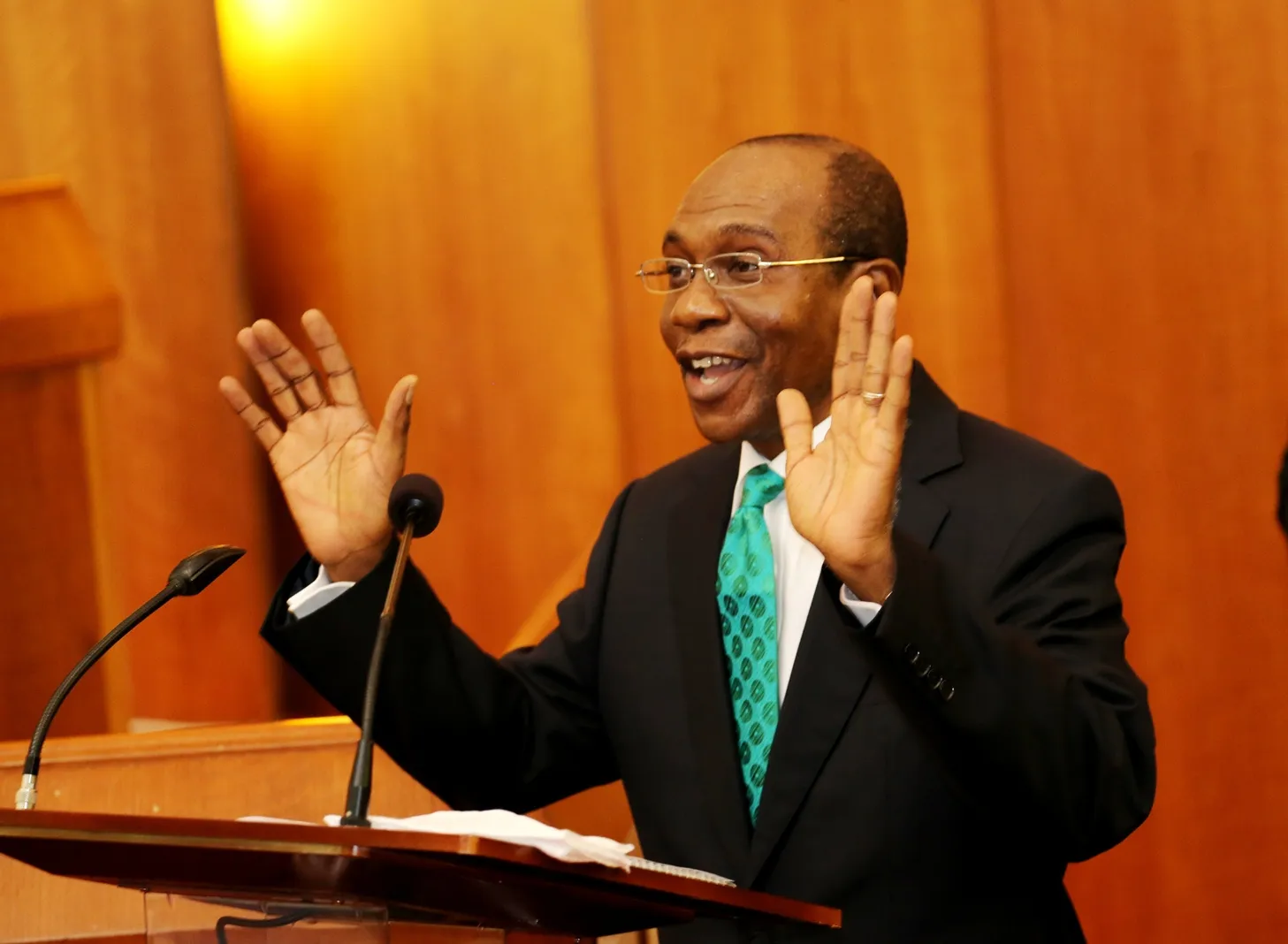
Governor Ahmadu Fintiri of Adamawa State had accused the CBN Governor, Godwin Emefiele, of targeting the political class with the new cash withdrawal limit which restricts over-the-counter cash withdrawal by individuals and companies to N100,000 and N500,000, respectively, per week.

It also limited point-of-sale machines and automated teller machine withdrawals to N20,000 daily.

According to a memo signed Tuesday by the CBN’s Director of Banking Supervision, Haruna Mustafa, withdrawals above the thresholds would attract processing fees of five per cent and 10 per cent, respectively, for individuals and corporate entities going forward.

In addition, third-party cheques above N50,000 shall not be eligible for OTC payment while extant limits of N10m on clearing cheques still remain.

The circular also directed banks to load only N200 and lower denominations into their ATMs and restricted withdrawal to N20, 000 per day from ATMs.

See also  2023: Akpabio, Onu resign to focus on presidential race

The policy, which will become effective on January 9, 2023, has generated criticisms but the CBN clarified on Wednesday that PoS operators could apply for waivers.

Commenting on the circular, the Director, Strategic Communications, National Election Management Committee of the PDP Presidential Campaign Council, Chief Dele Momodu, said the recent cash withdrawal policy announced would affect the parties’ funding activities, adding that “if enforced, the policy will strangulate the political process, not the PDP alone.”

He said, “In 2014/2015, I am sure if (President) Buhari had no access to funding, he would never have been the President of Nigeria. There are people who are making contributions to the political parties and some parties have set up structures to receive support from people. How then will they be able to access the fund if they are saying you cannot withdraw more than N100, 000 a week?’’ he asked

“I read somewhere that the CBN said the policy would not be rigid but why make the policy in the first place if it is not going to be rigid?” he queried.

On how the policy implementation may affect the PDP, Momodu said, “the Finance Committee is better placed to say the extent this will affect us as we prepare for a series of activities leading to the general elections. Maybe, the Finance Committee, if it thinks the party will be negatively affected, will consider writing to the CBN but like I said earlier, this is more of a problem for the ordinary man on the street than it is for a political party.”

See also  Super Eagles move up 14 places in latest FIFA ranking

He also spoke on how the new CBN policy would affect the poor.

He added, “Why make a policy that will largely affect the poor more than the rich? My worry is that most of our policies always target the poor. The PDP is worried about the poor market woman, the ordinary man on the street because we still run a cash-and-carry economy.

The National Chairman of the Africa Democratic Congress, Chief Ralph Nwosu, observed that the policy might pose a challenge to the parties, noting that the CBN did not carry out adequate sensitisation campaigns on it, stressing that it was politically motivated.

Nwosu noted that the policy would affect the party’s campaign, explaining that paying the ADC agents in the rural areas might be a challenge.

He added, ‘’How do you expect the ADC candidate to have the cash to do the things he wants to do and how do you think that this is the best time for such an undertaking?

‘’We have almost 200,000 agents that we must pay and 80 per cent of them live in rural areas. Is it that N2,000 or N5,000 that you pay them that you would transfer to each of them? How many of them have such a facility? So it’s completely inconsiderate of them.”

See also  Man commits suicide after ‘losing N2.5m to betting’

He added that the cash withdrawal policy would affect Nigerians negatively.

He said “What is the literacy level (of Nigerians), what kind of campaign have they done so far on the policy? You know, you can’t continue dealing with Nigerians as if we are still in the military, especially when that dictatorship is meted out by people who are not even in the military. It’s most irresponsible.

‘’We want to believe that the intention this time is also political. It is not only affecting the election but will affect the general way of living in Nigeria.

‘’This is part of the challenge we have as a country in that people in government occasionally just take actions on their own without caring how it will affect the masses. So, generally it’s not about how it affects the elections but about how it affects the society.

“There are people selling rice, beans and every day, people come to them to buy things and pay with naira and kobo, so before the CBN should do anything they should think about the society.’’

Continue Reading
Click to comment

Leave a Reply

Your email address will not be published. Required fields are marked *

News

EFCC says it froze Osun account over ‘fraudulent handling’ of N11bn ecological, intervention funds

Published

on

By

The Economic and Financial Crimes Commission (EFCC) has explained that it froze the bank account of the Osun state government over alleged fraudulent handling of N11 billion ecological and intervention funds.

The anti-graft agency, in a statement on Wednesday, said it has been investigating the Osun state government since March regarding the alleged mishandling of the funds.

According to the agency, some officials of the state government, including the accountant-general of the state, had been interviewed by EFCC investigators.

The agency said amid the probe, it observed that huge transfers of funds were being made from the account into different corporate entities since August 2.

“These ongoing investigations of the state government would not have warranted any placement of Post No Debit order on its account but for the precipitate and unwarranted movement of funds from the accounts to different suspicious accounts since August 2, 2026,” the statement reads.

See also  Super Eagles move up 14 places in latest FIFA ranking

“The Commission noticed huge transfers of funds into different corporate entities and had to swiftly halt the trend by freezing the accounts from which such heavy funds are being moved.

“The EFCC’s preventive mandate is a public-inclined framework of safeguarding public funds, assets and resources.

“The Commission cannot watch idly while a state government’s account is being pillaged.”

The anti-graft agency said it is aware of the forthcoming Osun governorship election, adding that it is “uncharitable” to overlook the huge transfers of funds over the “excuse of an upcoming election”.

“The Osun State government account was frozen to save public funds from being looted,” the agency said.

In a letter dated August 5, 2026, and signed by Adenike Babalola, assistant commander of the EFCC on behalf of the director of investigation, the anti-graft agency directed First Bank not to allow withdrawals from the Osun state government’s statutory allocation account as part of an ongoing investigation.

See also  I am not aware of Atiku’s plan to contest 2023 presidency - Wike

The agency instructed the bank to place a post-no-debit restriction on the account pending the conclusion of the probe.

Reacting to the development, Ademola Adeleke, Osun governor, said the state government will not accept a situation in which federal government agencies trample upon the rights of subnational governments.

Adeleke said the Osun government has been witnessing numerous sponsored attacks, including the harassment of Accord party members and the move to stall the operations of LGAs in the state.

Adeleke said he has directed the attorney-general of the state to challenge the “illegality”.

Continue Reading

News

Osun threatens lawsuit as EFCC freezes govt account 10 days to election

Published

on

By

Less than 24 hours after Governor Ademola Adeleke alleged that the Economic and Financial Crimes Commission (EFCC) was planning to freeze the state government account domiciled with First Bank, the anti-graft agency has reportedly freezed the account, according to Vanguard.

The account, reportedly used for the payment of workers’ salaries, was placed on “Post No Debit” status by the anti-graft agency.

The development came hours after Governor Ademola Adeleke raised the alarm that the EFCC was planning to freeze the state government’s accounts and those of top government officials ahead of the August 15 governorship election.

In a statement issued earlier on Wednesday by the Commissioner for Information and Public Enlightenment, Kolapo Alimi, Adeleke described the alleged move as an attempt to cripple government activities before the poll.

The governor had insisted that there was no legal basis for freezing the accounts of a state government, arguing that the EFCC lacked the statutory powers to take such action.

See also  UPDATED: Tinubu confers national honours on Super Eagles, gifts them plots of land in FCT

However, a source reportedly told Vanguard that the account had already been restricted.

“I can confirm that the state government account has been frozen by the EFCC. It is no longer an allegation. The governor will address the press shortly to update the public on the situation,” the source reportedly told Vanguard.

The reason for the restriction was not immediately known as of the time of filing this report.

The EFCC had yet to issue an official statement on the development.

The development comes as Osun prepares for its August 15 governorship election, with the account restriction expected to generate political reactions ahead of the poll.

Meanwhile, the state’s Attorney General and Commissioner for Justice, Oluwole Jimi-Bada, had said he has the mandate of the governor to sue the Economic and Financial Crimes Commission for freezing the government accounts.

Jimi-Bada said a ‘Post no debit’ letter from the EFCC was forwarded to the management of the First Bank where Osun government accounts were domiciled on Wednesday.

See also  BRT Passengers to pay extra N100 from July 13

The commissioner, who expressed readiness to proceed to court, said the move by the anti-graft agency may hamper government’s business, noted that Governor Ademola Adeleke was not using state funds to run its campaign for reelection.

“I have the mandate of the governor to proceed to the Federal High Court to challenge this move. EFCC can investigate the accounts but it can’t freeze the accounts without order of court.

Continue Reading

News

WAEC releases 2026 WASSCE results, withholds 167,486 candidate’s results over malpractice 

Published

on

By

The West African Examinations Council says it is withholding the results of 167,486 candidates, representing 8.59 per cent of those who sat the 2026 Computer-Based West African Senior School Certificate Examination for School candidates, over alleged examination malpractice.

This was disclosed by the Head of WAEC Nigeria National Office, Dr Amos Dangut, who announced the release of the results in Lagos on Wednesday.

The number of withheld reults, however, represents a decline from the 9.7 per cent recorded in 2025.

Dangut said the council withheld the affected results due to various infractions, including the increasing use of mobile phones in examination halls despite the existing ban and organised cheating in some schools.

“The increasing use of cell phones in the examination hall, in spite of the existing ban, and organised cheating in some schools, are other nagging issues,” Dangut said.

He added that some supervisors and invigilators found assisting candidates in malpractice had been arrested and would face disciplinary action through the relevant state ministries of education.

See also  JAMB sets 140 as cut-off mark for varsity admission

A total of 1,959,668 candidates from 24,207 schools registered for the examination across Nigeria, Benin Republic, Côte d’Ivoire and Equatorial Guinea, while 1,950,726 candidates eventually sat for the examination.

1,200,514 candidates (61.54 per cent) obtained credits and above in at least five subjects, including English Language and Mathematics.

1,687,378 candidates (86.50 per cent) secured credits and above in a minimum of five subjects, with or without English Language and Mathematics.

The number of candidates who obtained credits in five subjects including English and Mathematics dropped by 1.42 percentage points compared with the 2025 examination.

Of the 1.2 million candidates who achieved credits in English and Mathematics:

558,883 (28.65 per cent) were male.

641,631 (32.89 per cent) were female.

Overall, 997,267 females (51.12 per cent) and 953,459 males (48.88 per cent) participated in the examination.

WAEC said 1,834,695 candidates, representing 94.05 per cent, had their results fully processed and released, while the results of 116,031 candidates (5.95 per cent) were still being processed.

See also  I am not aware of Atiku’s plan to contest 2023 presidency - Wike

The council also disclosed that 1,213 candidates with special needs participated in the examination. They included:

137 visually impaired candidates;

491 candidates with hearing impairment;

55 spastic and mentally challenged candidates; and

41 physically challenged candidates.

The 2026 examination marked the second edition of the Computer-Based WASSCE for School Candidates, following the introduction of the format by WAEC.

Dangut said the council introduced several innovations, including the Digital Examiner Mark System to improve the speed of processing results, serialisation of question papers to curb malpractice, and a new portal that allows candidates to generate e-PINs directly for checking their results.

The examination was conducted between April 24 and June 19, 2026, with 102,708 examiners involved in marking across 88 marking venues.

Dangut, who described the briefing as his third and final engagement as WAEC Nigeria National Office head, said candidates sponsored by states indebted to the council would not have their results released until the outstanding payments were cleared.

See also  Buhari’s children, Gbajabiamila, several others affected as FCTA threatens to revoke land rights over ‘unpaid dues’

Continue Reading

Trending News