Connect with us

Business

NNPC Ltd acquires 380 Oando stations, other assets across Nigeria

Published

on


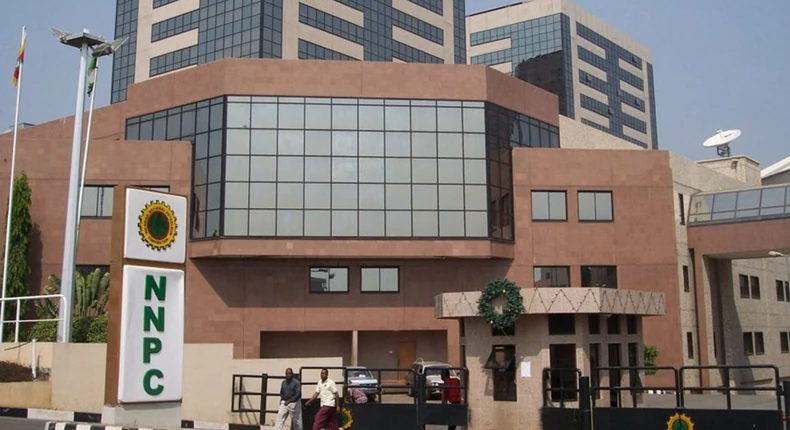
The Nigerian National Petroleum Company Limited (NNPCL) has acquired all 380 Oando retail outlets, aviation and gas brands nationwide from OVH Energy.

Speaking at the unveiling of one of the new NNPC Ltd stations formerly Oando in Abuja on Saturday, the Group Chief Executive Officer NNPC Limited, Mele Kyari, said, “The acquisition will bring over 380 additional filling stations under NNPC Retail brand in Nigeria and Togo, on our journey to attaining 1,500 stations. We will be the largest petroleum product retail network in Africa.”

Kyari also noted that the acquisition was to strengthen the downstream business portfolio to enhance profitability and guarantee National Energy Security.

“NNPC has under an Accelerated Network Expansion (ANEX) Initiative completed the acquisition of OVH downstream assets including reception jetty (ASPM) with 240,000 metric tons monthly capacity, eight Liquefied Petroleum Gas (LPG) plants, three lubes blending plants, three aviation depots, and 12 warehouses,” he said.

See also  Oando-NOAC deal followed due process, complied with PIA - NUPRC

He commended the board for the acquisition just as he lauded President Muhammadu Buhari who is also the Minister of Petroleum for laying the foundation for improving energy access.

“It is absolutely not about assets, we are building relationships. At this moment, we are the largest downstream company in Nigeria and by this merger, we are also likely going to be the largest downstream company in Africa.”

He also assured the 200 million shareholders and Nigerians that the firm will prudently manage the business noting that, “We will make money for NNPC because this is a very profitable business.”

Chairman of the NNPC Ltd Board, Sen. Margery Chuba-Okadigbo, lauded the acquisition deal, saying, “NNPC retail station is now in Togo and we are on our journey to attain 1,500 retail stations. OVH, you have given us so much and we promise that we will look after the investments.”

The Managing Director and CEO of OVH Energy, Huub Stokman, said the acquisition comes at a time when NNPC Ltd was accelerating energy transition in line with the Petroleum Industry Act 2021 (PIA).

See also  Former IGP, Tafa Balogun buried in home town

He said, “With a combined entity, NNPC is well positioned to take the opportunities in a way that it will positively impact the Nigerian oil and gas downstream sector. As a company, OVH Energy always focuses on delivering value to customers.

“With this acquisition as a combined entity, we will get innovative offerings and infrastructure to transform the downstream energy sector not just in Nigeria but also in West Africa.”


Business

Wema Bank meets CBN’s recapitalisation, retains national banking license

Published

on

By

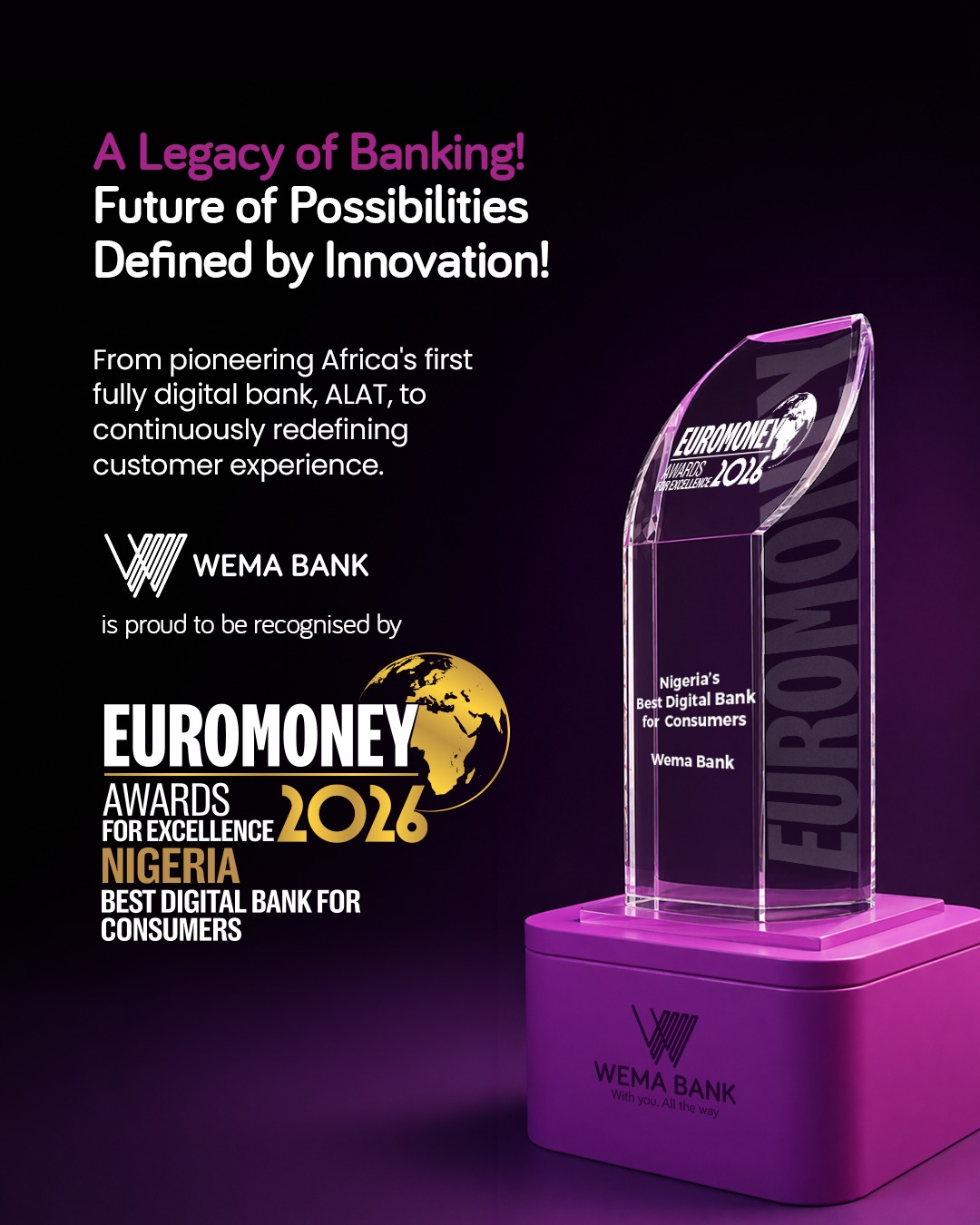
Wema Bank, Nigeria’s oldest indigenous national bank and pioneer of Africa’s first fully digital bank, ALAT, has successfully met and surpassed the Central Bank of Nigeria’s (CBN) recapitalisation requirements, reaffirming its status as a National bank.

This achievement represents a critical milestone in the Bank’s growth journey, reflecting its ability to meet regulatory expectations and its deliberate strategy to scale sustainably, strengthen its balance sheet, and reinforce its position within Nigeria’s banking sector.

The milestone follows the Bank’s successful completion of a ₦150 billion Rights Issue and an additional ₦50 billion special placement in 2025, bringing its Total Qualifying Capital to ₦264.7 billion, well above the regulatory minimum.

This achievement was concluded six months ahead of the CBN’s stipulated deadline, further reinforcing the Bank’s strong financial position, shareholder confidence, and long-term growth trajectory.

Earlier in April 2026, the Central Bank of Nigeria also formally confirmed that Wema Bank, alongside 32 other financial institutions across international, national, and regional categories, had successfully concluded the recapitalisation process.

Notably, Wema stands among only ten national banks that met and surpassed the minimum required capital threshold, thereby sustaining its national banking license.

See also  Arsenal beat Bournemouth to go four points clear at top of table

This milestone not only affirms regulatory compliance but also signals a new phase of accelerated growth for the Bank; one defined by stronger capital base, increased capacity to support customers, and a reinforced position within Nigeria’s competitive banking landscape.

Commenting on the milestone, the Managing Director/Chief Executive Officer of Wema Bank, Moruf Oseni, stated, “The successful completion of our recapitalisation exercise is a defining moment for Wema Bank. It is a strong validation of our strategy, our performance, and the enduring confidence our shareholders and stakeholders have in our vision. We have not only met the CBN’s requirements; we have exceeded them, reinforcing our position as a National Bank with the scale, strength, and stability to compete and lead.”

In March 2024, the Central Bank of Nigeria announced the recapitalisation programme requiring all national banks to maintain a minimum capital base of ₦200 billion.

The initiative was designed to strengthen the resilience of financial institutions, enhance their capacity to absorb economic shocks, and position them to drive sustainable economic growth.

In response, Wema Bank embarked on a strategic capital raise through the stock market, successfully strengthening its shareholder base and securing the required capital through strong participation from existing investors.

See also  Senate to NNPCL: Refund ₦210trn unaccounted funds to federation account

The ₦150 billion Rights Issue, which opened on April 14, 2025, and closed on May 21, 2025, marked a significant step in this journey. This was subsequently complemented by a ₦50 billion special placement later in the year, ensuring the Bank not only met but exceeded the regulatory threshold well ahead of schedule.

For Wema Bank, this journey is a testament to its transformation. After regaining its national license in 2015, the Bank has consistently demonstrated financial discipline and strategic foresight. By raising the necessary capital primarily from existing shareholders, the Bank has underscored a deep-seated mutual trust between the institution and its investors.

Speaking further on what this achievement means for the Bank’s future and its customers, Oseni added: “This milestone strengthens our ability to compete at scale, deepen our market presence, and deliver more value to our customers across Nigeria through improved access to credit, enhanced digital banking experiences, and innovative financial solutions. It positions us to play an even bigger role in powering Nigeria’s economy while continuing to deliver sustainable value to all our stakeholders.

See also  UTM Offshore, Delta State, NNPCL, sign agreement to develop floating LNG

Looking ahead, we remain focused on deepening our market presence, driving customer-centric innovation, and strengthening our role as a catalyst for growth across retail, SME, and corporate segments. This is not just about retaining our license; it is about building a bigger, stronger, and more impactful Wema Bank.”

The successful conclusion of the recapitalisation process underscores Wema Bank’s financial strength, disciplined execution, and unwavering commitment to regulatory compliance as it continues to expand its footprint across Nigeria.

With a significantly strengthened capital base, the Bank is now positioned to do more – support more customers, enable more businesses, and unlock more opportunities across every segment it serves.

As it enters this new phase, Wema Bank is not only reaffirming its status as a National Bank; it is stepping forward with greater scale, sharper ambition, and a clear intent to lead.

The Bank remains firmly committed to powering progress, driving innovation through ALAT, and delivering sustained value; powering a future of possibilities for all its stakeholders.

Continue Reading

Business

Oando plans $750 million drilling campaign, expects funding boost from Iran turmoil

Published

on

By

Nigeria’s leading energy firm, Oando, plans to raise up to $750 million this year for a drilling campaign that could boost output by 300%, tapping improved investor appetite for West African producers amid turmoil linked to the Iran war, Group Chief Executive of the firm Jubril Adewale ‌Tinubu, CON, told Reuters in an interview recently.

The oil and gas company is among a handful of local companies that have snapped up assets from oil majors in the past decade as they exit Nigerian onshore. This year, surging energy prices should open more funding sources for producers in the region, Tinubu said.

We are pushing very, very hard towards getting the financing that we need to do an extensive drilling campaign,” Tinubu told Reuters.

Nigeria is Africa’s biggest oil producer with crude and condensate output of around 1.6 million barrels a day.

Oando, whose production averaged just over 32,000 barrels of oil equivalent per day in ⁠fiscal 2025, aims to drill as many as 100 wells to boost output, particularly from assets purchased from Western majors ConocoPhillips and Eni.

See also  Former IGP, Tafa Balogun buried in home town

While in the past the company had struggled with securing cash for drilling due to investor worries that Africa was an “unsafe environment”, the Iran war and Russia’s invasion of Ukraine in 2022 have shifted that view, Tinubu said.

“Africa is very, very peaceful compared to these regions,” he said.

Already, Tinubu said there was a shift in demand for Nigeria’s crude, with more cargoes sailing to Asia to replace Gulf oil trapped due to the closure of the Strait of Hormuz.

FUNDING SQUEEZE FROM EUROPE
Oando has raised $3 billion-$4 billion in the past decade, much of it from European banks, the GCE said, the bulk of which went toward acquisitions.

European banks had now almost completely withdrawn from African hydrocarbons due to climate concerns, he said, pushing Oando to funders including the African Export-Import Bank and the African Finance Corporation, and to oil trading houses ‌including Vitol, ⁠Trafigura, Glencore and Mercuria.

See also  OANDO @30: The success story of an iconic brand

However, Africa needed more “substantial long-term funding”, he added.
More Gulf banks were interested in hydrocarbon projects in Africa and more parties were joining their syndications, while private equity funds and hedge funds were also more active in funding African energy, he said.

Oando recently expanded into Angola, and Tinubu said they are exploring opportunities in Ghana and Ivory Coast.

Africa should pool capital available at home, via pension funds and other sources, to fund large-scale capital projects, he added.

Geopolitical turmoil will have “long-reaching strategic implications for global ⁠energy security”, he said, and keep focus on West Africa’s reserves.

“Even if the ceasefire lasts, which, hopefully it will, it wouldn’t change the fact that consistently, you’re going to find disruptions,” he said.

GASOLINE EXPORTS, BUSINESS OPPORTUNITIES

Nigeria, Tinubu said, is well placed to draw funding after a landmark 2021 overhaul of its hydrocarbon law and reforms by current President ⁠Bola Tinubu, his uncle, to currency and costly petrol subsidies.

See also  Man bags life jail for defiling JSS 3 student in Ekiti

The new 650,000 barrel-per-day Dangote Oil Refinery on the outskirts of Lagos, Tinubu said, highlighted the value of Nigeria’s resources.

Tinubu, whose company was once among the nation’s largest fuel importers, said imports were now only needed to test for pricing or during refinery maintenance.

Longer term, ⁠Tinubu hopes to exploit some of Oando’s own gas production for petrochemicals and fertilizers to further boost the value added to Nigerian resources.

The company was working to “streamline” financials to avoid further delays in filing audited statements with the Nigerian Exchange after deadline extension in recent years.

In August, Oando’s board signed off on a proposal to launch a multi-instrument issuance programme of up to $1.5 billion.
-Culled from Reuters.

Continue Reading

Business

Oando plans $750 million drilling campaign, expects funding boost from Iran turmoil

Published

on

By

Nigeria’s leading energy firm Oando plans to raise up to $750 million this year for a drilling campaign that could boost output by 300%, tapping improved investor appetite for West African producers amid turmoil linked to the Iran war, Group Chief Executive of the firm Jubril Adewale ‌Tinubu, CON, told Reuters in an interview recently.

The oil and gas company is among a handful of local companies that have snapped up assets from oil majors in the past decade as they exit Nigerian onshore. This year, surging energy prices should open more funding sources for producers in the region, Tinubu said.

We are pushing very, very hard towards getting the financing that we need to do an extensive drilling campaign,” Tinubu told Reuters.

Nigeria is Africa’s biggest oil producer with crude and condensate output of around 1.6 million barrels a day.

Oando, whose production averaged just over 32,000 barrels of oil equivalent per day in ⁠fiscal 2025, aims to drill as many as 100 wells to boost output, particularly from assets purchased from Western majors ConocoPhillips and Eni.

See also  Fuel queues back in Lagos, others as oil thieves vandalise pipelines

While in the past the company had struggled with securing cash for drilling due to investor worries that Africa was an “unsafe environment”, the Iran war and Russia’s invasion of Ukraine in 2022 have shifted that view, Tinubu said.

“Africa is very, very peaceful compared to these regions,” he said.

Already, Tinubu said there was a shift in demand for Nigeria’s crude, with more cargoes sailing to Asia to replace Gulf oil trapped due to the closure of the Strait of Hormuz.

FUNDING SQUEEZE FROM EUROPE
Oando has raised $3 billion-$4 billion in the past decade, much of it from European banks, the GCE said, the bulk of which went toward acquisitions.

European banks had now almost completely withdrawn from African hydrocarbons due to climate concerns, he said, pushing Oando to funders including the African Export-Import Bank and the African Finance Corporation, and to oil trading houses ‌including Vitol, ⁠Trafigura, Glencore and Mercuria.

See also  Senate to NNPCL: Refund ₦210trn unaccounted funds to federation account

However, Africa needed more “substantial long-term funding”, he added.

More Gulf banks were interested in hydrocarbon projects in Africa and more parties were joining their syndications, while private equity funds and hedge funds were also more active in funding African energy, he said.

Oando recently expanded into Angola, and Tinubu said they are exploring opportunities in Ghana and Ivory Coast. Africa should pool capital available at home, via pension funds and other sources, to fund large-scale capital projects, he added.

Geopolitical turmoil will have “long-reaching strategic implications for global ⁠energy security”, he said, and keep focus on West Africa’s reserves.
“Even if the ceasefire lasts, which, hopefully it will, it wouldn’t change the fact that consistently, you’re going to find disruptions,” he said.

GASOLINE EXPORTS, BUSINESS OPPORTUNITIES
Nigeria, Tinubu said, is well placed to draw funding after a landmark 2021 overhaul of its hydrocarbon law and reforms by current President ⁠Bola Tinubu, his uncle, to currency and costly petrol subsidies.

See also  Port Harcourt refinery to kick off production early August — NNPCL

The new 650,000 barrel-per-day Dangote Oil Refinery on the outskirts of Lagos, Tinubu said, highlighted the value of Nigeria’s resources.

Tinubu, whose company was once among the nation’s largest fuel importers, said imports were now only needed to test for pricing or during refinery maintenance.
Longer term, ⁠Tinubu hopes to exploit some of Oando’s own gas production for petrochemicals and fertilizers to further boost the value added to Nigerian resources.

The company was working to “streamline” financials to avoid further delays in filing audited statements with the Nigerian Exchange after deadline extension in recent years.

In August, Oando’s board signed off on a proposal to launch a multi-instrument issuance programme of up to $1.5 billion.
-Culled from Reuters.

Continue Reading

Trending News