Connect with us

Metro News

Fraudsters stole $45.6bn from U.S. COVID fund

Published

on


A total of $45.6 billion may have been stolen from the United States’ unemployment insurance programme during the COVID-19 pandemic by fraudsters using different means, including Social Security numbers of dead individuals, a report by Labour Department indicated on Thursday.

The report indicated that an increase of $29.6 billion in potentially fraudulent payments from the programme in addition to about $16 billion in potential fraud identified about a year ago, Reuters reported.

The United States’ jobless aid program started in 2020 in the early days of the coronavirus outbreak.

But the report indicated that fraudsters filed billions of dollars in unemployment claims in many states simultaneously.

Some of them got benefits using the identities of dead people and prisoners who were not eligible for aid.

They also relied on suspicious emails that were hard to trace, the watchdog said in its report.

“We determined 205,766 Social Security numbers of deceased persons were used to file claims for UI (unemployment insurance) pandemic benefits,” the report added.

See also  Osun monarch, Apetu of Ipetumodu, jailed four years in US for $4.2m COVID-19 fraud

Earlier this year, the U.S. Justice Department tapped federal prosecutor Kevin Chambers to lead the department’s efforts to help investigate fraudsters who used the pandemic as an excuse to bilk government assistance programs. read more

In May 2021, Attorney General Merrick Garland launched a COVID-19 Fraud Enforcement Task Force. The United States is probing many fraud cases pegged to U.S. government assistance programs, such as the Paycheck Protection Program, unemployment insurance and Medicare.

Earlier this week, federal prosecutors charged 47 defendants, who were accused of stealing $250 million from a government aid program that was supposed to feed children in need during the pandemic.

A Minnesota non-profit organization, Feeding Our Future, was accused of orchestrating the plot. Its founder, Aimee Bock, denied wrongdoing.

In March, the Justice Department said it had brought over 1,000 cases of crimes involving jobless benefits during the pandemic.

Metro News

Okada rider stabbed to death over N100 ticket in Ogun

Published

on

By


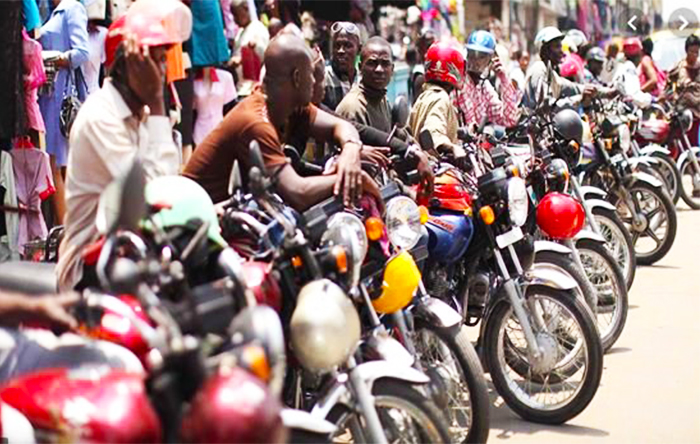
A commercial motorcyclist has reportedly been stabbed to death by a transport union tax collection group, popularly known as agberos, following an argument over a N100 ticket in the Ijoko area of Ogun State.

According to reports, the incident occurred on Tuesday night after a disagreement between the deceased and some levy collectors escalated into a violent confrontation.

While it was unclear if the suspect had been arrested, the killing reportedly sparked protests by commercial motorcyclists across Lambe, Agbado and Akute communities.

Some riders were seen confronting levy collectors in parts of the affected areas, disrupting transport activities and forcing many commuters to trek to their destinations.

A motorcyclist said that two persons were stabbed during the altercation, but only one survived.

“They were fighting over a N100 ticket. It started as a small argument before it escalated on Tuesday night. The person who was killed is one of the motorcyclists from Nasarawa,” he said.

See also  Police go after ‘area boys’ who killed varsity final-year student over N150 levy one week to graduation

“His colleagues are the ones now confronting agberos in Lambe, Ijoko and parts of Akute.”

Another rider in Akute confirmed the incident, saying tensions had remained high since the killing.

“The man was stabbed to death by one of the agberos during an argument over the ticket. The agbero suddenly brought out a knife and stabbed him,” he said.

“Some riders have refused to work since then, which is why there are fewer commercial motorcyclists around today. The police are aware and arrested some people during another confrontation.”

Violent clashes between commercial motorcyclists and levy collectors are not new in the state. In recent years, riders have repeatedly protested what they describe as extortion and harassment.

Continue Reading

Metro News

VIDEO: Police bust illegal baby factory in Ekiti

Published

on

By

The Ekiti State Police Command says its operatives have uncovered an illegal baby factory located in Ikere Local Government Area of the state.

The state commissioner of police, Joe Eribo, who disclosed this to journalists, said the command received a tip-off and arrested one Onyechi Oluwadare, alongside four other suspects behind a popular hotel along Ise-Ekiti Road, Ikere-Ekiti.

Other people arrested were, Onuoha Gloria, Victoria Linus, Ihegbogu Mercy, and a pregnant woman, Emmanuel Esther.


The statement read in part, “On the 24/01/2026 at about 08:30hrs, the Command received a credible tip-off that the prime suspect, Oluwadare Onyechi, a 43-year old woman, runs an illegal baby gactory alongside four other suspects somewhere behind Inisa Hotel and Suit, along Ise-Ekiti Road, Ikere-Ekiti.

“Upon the receipt of the information, the Command Operatives swung into action, cordon off the premises used for the illegal business, and arrested Oluwadare Onyechi and four other accomplices namely, Onuoha Gloria ‘28 yrs’, Victoria Linus ‘25 yrs’, Ihegbogu Mercy ‘21 yrs’ and a heavily pregnant Emmanuel Esther ’23yrs’.

See also  US court sentences 'career fraudster' Nigerian to 20 years imprisonment for bank fraud

“Search was conducted in the premises and six children within the age of 2 and 9 reasonably suspected to be under bondage and exploitation were rescued. Items such as baby delivery materials, some rolls of dexamethasone tablet, and some bottles of Goya oil were recovered from the scene”.

The prime suspect in the alleged baby factory, Onyechi, denied the allegations, saying she only prays in the building for those seeking God’s favour.

The Command’s operatives also arrested one Ibrahim Abubakar, a notorious cattle rustler.

Investigation revealed that Ibrahim Abubakar has over the years, rustled numerous cattle in Ekiti, Kwara and Kogi States and has been on the wanted list of the three States.

During investigation, Ibrahim Abubakar confessed that he is into cattle rustling business and equally mentioned different occasions in the past where he attacked Cattle owners and made away with their cattle.

A large number of rustled cattle numbering two hundred and fifty-five(255) were recovered from him, alongside other 303 cattles recovered from prime suspect, making 558 cattles.

See also  US to release 180m barrels of crude oil to crash prices

Continue Reading

Metro News

NAFDAC uncovers fake Goya oil factory, counterfeit alcoholic drinks syndicate in Lagos

Published

on

By

Operatives of the National Agency for Food and Drug Administration and Control (NAFDAC) have uncovered an illegal factory producing fake Goya oil in Lagos.

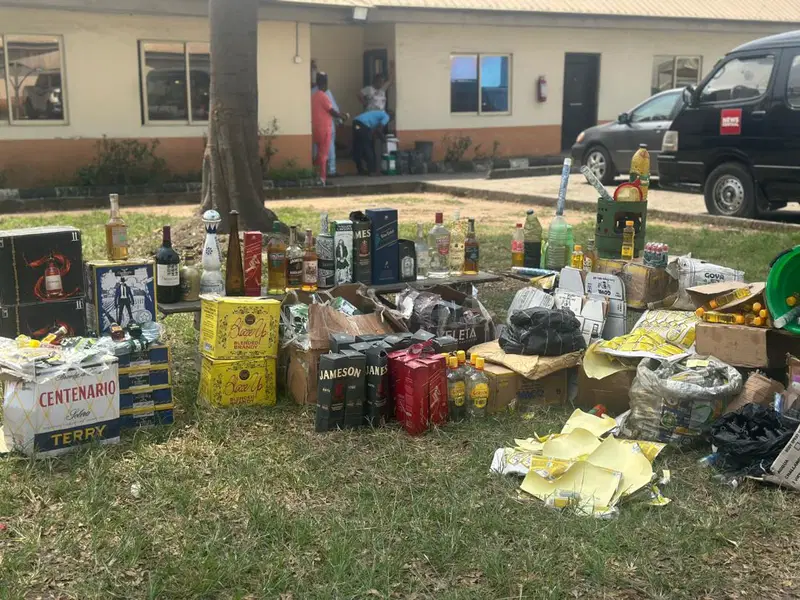
The agency also dismantled a major syndicate involved in the counterfeiting of alcoholic drinks in Lagos, warning that the activities pose grave dangers to public health.

Martins Iluyomade, Director of Investigation and Enforcement at NAFDAC and Chairman of the Federal Task Force on Fake and Substandard Products, said the discoveries were made during surveillance and enforcement operations carried out over the past few weeks.

“We have carried out a couple of activities in recent weeks, and what we discovered was very surprising to us. We felt it was important to speak with Nigerians so they can know what has been going on,” Iluyomade said.

He disclosed that NAFDAC operatives uncovered an illegal operation inside Oke-Arin market, Lagos, where counterfeit Goya oil was being produced locally.

“The original Goya oil is imported into this country through a reputable company, and there are still original products in circulation. But we discovered that some people were faking this product and manufacturing it inside the market,” he said.

According to Iluyomade, the fake oil was produced by burning palm oil and adding chlorine, using crude equipment like stove.

See also  US presidential election: Trump agrees to debate Harris on Sept 4

“They were using a stove. We saw the stove and everything they were using. We also saw a large number of empty bottles they were refilling and repackaging,” he added.

Iluyomade warned Nigerians, particularly, churches and prayer houses, stressing that original Goya oil is never packaged in plastic (PET) bottles.

“Let me say this clearly to everybody—churches, prayer houses, and anywhere this oil is used: there is no original Goya oil packed in plastic bottles. Original Goya oil comes in glass bottles,” he said.

He urged Nigerians to report anyone selling the product in plastic bottles to the nearest NAFDAC office.

“Anywhere you see Goya oil being sold in PET bottles, report it. People should beware, noting that the use of fake anointing oils in religious settings had become widespread and dangerous.

“Some people even drink anointing oil. You are not drinking anointing oil—you are drinking poison,” Iluyomade said.

The enforcement director explained that NAFDAC’s strategy is to halt production at the source rather than punish unsuspecting traders.

“We are stopping the production. Once there is no new supply, whatever is in the market will dry up,” he said.

See also  Why I sentenced Nnamdi Kanu to life imprisonment – Justice Omotosho

“We do not want to compound the problem of market women and others who may not know. But for the producers, it is the end of the road.”

He appealed to religious bodies to cooperate with the agency.

“We are not issuing threats, but it will not be nice for us to arrest people within your premises. Please partner with us and do not allow the sale or use of this product,” he said.

Iluyomade also revealed that NAFDAC had busted a major operation involved in the production of fake alcoholic drinks in Lagos.

“The faking of alcoholic drinks has become seriously endemic in Nigeria because it is one of the easiest products to counterfeit,” he said.

He said a suspect, Mr. Moses Nelson, was arrested in the Badagry area of Lagos and has been charged to court.

“In his house, we found all manner of fake products—virtually every major brand. There was none we did not see,” Iluyomade said.

According to him, the syndicate operated a distribution chain, producing the drinks in Badagry and supplying them to major markets across Lagos.

See also  U.S. offers 280,000 Green Cards for nurses, other professionals

NAFDAC also warned distributors against patronising unauthorised suppliers.

“You know the original owners of these brands. Why buy from people you know are not the owners just to make more money? In the process, you are killing people,” he cautioned.

He also advised Nigerians to be wary of unusually cheap products.

“If the normal price is five naira and someone offers it at three naira, you should be suspicious. The little money you want to save, I hope you will not spend it in the hospital,” he said.

Stating that no one has the right to endanger the lives of others, Iluyomade appealed to Nigerians engaged in such illegal businesses to desist.

“We are all Nigerians and everyone wants to make ends meet, but no Nigerian has the right to make ends meet at the expense of the health of another Nigerian,” he said.

“No one has the right to make huge profits while increasing the health burden of this country.”

He assured Nigerians that NAFDAC would sustain enforcement actions nationwide and urged the public to stop patronising counterfeit products and report suspicious activities to the agency.

Continue Reading

Trending News