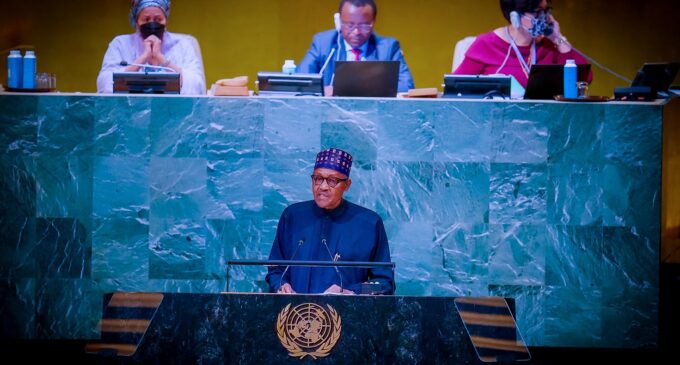
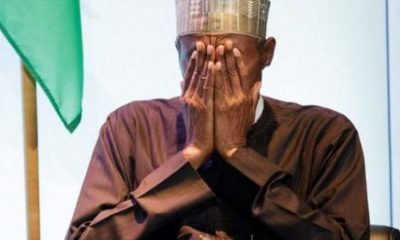
President Muhammadu Buhari, on Wednesday, delivered a speech at United Nations general assembly (UNGA77).
Speaking on climate change, the Russia-Ukraine war, and the need for credible elections, Buhari called on world leaders to remain committed towards ensuring sustainable development.
Below is the full speech.
Mr. President,
Heads of State and Government,
Mr. Secretary-General,
Distinguished delegates,
Ladies and gentlemen,
Mr. President,
On behalf of the Government and people of Nigeria, I congratulate you on your well-deserved election as President of the 77th Session of this August Assembly. I assure you of the full support and cooperation of the Nigerian delegation during your tenure.
I commend your predecessor, H.E. Abdullah Shahid, for the many remarkable achievements of the General Assembly under his leadership during these challenging times.
May I also congratulate the Secretary-General, Mr. Antonio Guterres on his ceaseless and untiring efforts to promote peace, security and development, very much in line with his exalted role.
Mr. President, the first time I could have addressed this August Assembly was in 1984, when I was the Military Head of State of the Federal Republic of Nigeria. Thirty-one years later, I had the great privilege to personally address the Assembly in 2015, as the democratically elected President of my country. As I approach the end of my second and final four-year term, I am reminded of how much has changed in Nigeria, in Africa, and in the world, and yet, how some challenges remain.
We are now more severely tested by these enduring and new global challenges, paramount among which are conflicts increasingly being driven by non-state actors, proliferation of small arms and light weapons, terrorism, violent extremism, malignant use of technology, climate change, irregular migration, and disparities in opportunities for improved standards of living.
Despite the challenging international environment, the United Nations has proved that it can be strong when the will of its members is harnessed for positive collective action. The guiding principles of this extraordinary institution is the promotion of peace and security, development and human rights. Latest in a chain of events challenging these principles is the Ukraine conflict which has already created strains that are perhaps unprecedented for a generation.
Such a conflict will have adverse consequences for us all, hindering our capacity to work together to resolve conflicts elsewhere, especially in Africa, the Middle-East and Asia. Indeed, the ongoing war in Ukraine is making it more difficult to tackle the perennial issues that feature each year in the deliberations of this Assembly, such as nuclear disarmament, the right of the Rohingya refugees to return to their homes in Myanmar, and the Palestinians’ legitimate aspirations for statehood and reduction of inequalities within and amongst nations.
The danger of escalation of the war in Ukraine further justifies Nigeria’s resolute calls for a nuclear-free world and a universal Arms Trade Treaty, which are also necessary measures to prevent global human disasters. In this regards we must find quick means to reach consensus on the Nuclear Non-proliferation Treaty with related commitments by nuclear weapon states.
I remain firmly convinced that the challenges that have come so sharply into focus in recent years and months emphasise the call by Nigeria and many other Member-States for the reform of the Security Council and other UN Agencies. We need more effective and representative structures to meet today’s demands that have since outgrown a system designed for the very different world that prevailed at its foundation in 1945. Change is long overdue.
Mr. President, this is the first meeting we are having here in New York without the restrictions that characterised the last three years. The COVID-19 pandemic ripped across national borders like a toxic whirlwind, leaving in its wake a legacy of pain and loss.
Happily, we also witnessed an incredible level of innovation and creativity from those who devised treatments and vaccines. These laudable achievements were underpinned by partnerships and international cooperation. We have also seen the bravery, care, and endurance of health professionals at every corner of the globe.
I am happy to note that in Nigeria, our healthcare agencies were able to form effective local management and engaged international partnerships with multinational initiatives like COVAX and private groups like the Bill and Melinda Gates Foundation. These efforts helped mitigate the impact of the pandemic and we were mercifully spared the images of overwhelmed hospitals, overworked healthcare personnel and high mortality which sadly we saw elsewhere.
With COVID-19, we saw very clearly how states tried to meet the challenge of a threat that could not be contained within national borders. The results were mixed; but at its best, cooperation among stakeholders was outstanding. It facilitated solutions that saved countless lives and eased the huge burden of human suffering.
That same theme of unilateralism and the promotion of national interest competing with the common cause in the face of an existential threat has been our recurring experience in recent times. In every address I have delivered to this august Assembly, I have dwelt on the issue of climate change, especially as it fuels conflicts and complicates food security.
Climate change reduces opportunity and prosperity which, in Africa, Latin America and some parts of Asia also contribute to transnational organised crimes.
As part of Nigeria’s efforts at achieving our Global Net-zero aspiration, the current Administration last year adopted a National Climate Change Strategy that aims to deliver climate change mitigation in a sustainable manner.
The measures we took at the national level also require climate justice. Africa and other developing nations produce only a small proportion of greenhouse gas emissions, compared to industrial economies. Yet, we are the hardest hit by the consequences of climate change as we see in the sustained droughts in Somalia and floods of unprecedented severity in Pakistan.
These and other climate-related occurrences are now sadly becoming widely commonplace in the developing world. We are, in effect, literally paying the price for policies that others pursue. This needs to change.
At the COP26 in Glasgow last year, I did say that Nigeria was not asking for permission to make the same mistakes that others have made in creating the climate emergency.
Fortunately, we now know what we can do to mitigate the effects of the climate crisis and the related energy challenge. As a first step, we must all commit to releasing the financing and the technology to create a stable and affordable framework for energy transition.
Development Financial Institutions must prioritise de-risking energy projects to improve access of renewable projects to credit facilities. There should be no countries “left behind” in this equation.
Rocketing energy costs worldwide are, in part, the product of conflict and supply disruptions to Europe and the Americas. Yet, we are all paying the price. It is, therefore, our expectation that this UNGA 77 and the upcoming COP27 will help galvanise the political will required to drive action towards the fulfilment of the various existing climate change initiatives.
Another feature of the last decade has been the growing partnership between states and the increasingly influential non-state actors. There was a time when the most important event at this Assembly was the speech by the world’s most powerful leaders. Now a Tweet or Instagram post by an influencer on social or environmental issues may have greater impact.
Technology offers us nearly limitless opportunities and sometimes runs ahead of the imagination of regulators and legislators. At its best, social media helps strengthen the foundations of our society and our common values. At its worst, it is a corrosive digital version of the mob, bristling with intolerance and division.
When I began my tenure as President in 2015, distinctions were drawn between the experience of poorer countries and those apparently better able to manage the avalanche of unfiltered information. Nigeria has had many unsavoury experiences with hate speech and divisive disinformation. Increasingly, we also see that many countries face the same challenge. Clearly, data also know no borders.
In confronting these challenges, we must also come together to defend freedom of speech, while upholding other values that we cherish. We must continue to work for a common standard that balances rights with responsibilities to keep the most vulnerable from harm and help strengthen and enrich communities.
Efforts to protect communities from the scourge of disinformation and misinformation must also be matched with efforts to reduce inequalities and restore hope to our poorer and most vulnerable of our communities as a means to stem the many socio-economic conflict drivers with which we are faced.
In spite of our efforts, humanitarian crises will continue to ravage some of our communities. Nigeria, therefore, implores our global partners to do more to complement our endeavours.
Indeed, the multifaceted challenges facing most developing countries have placed a debilitating chokehold on their fiscal space. This equally calls for the need to address the burden of unsustainable external debt by a global commitment to the expansion and extension of the Debt Service Suspension Initiative to countries facing fiscal and liquidity challenges as well as outright cancellation for countries facing the most severe challenges.
Mr. President, Your Excellencies, Distinguished Delegates,
Democracy is an idea that crosses time and borders. Certainly, democracy does have its limitations. The wheels of democracy turn slowly. It can demand compromises that dilute decisions. Sometimes, it bends too much to special interests that exercise influence, not always for the general good, in a manner disproportionate to their numbers. But it has been my experience that a democratic culture provides a Government with the legitimacy it needs to deliver positive change.
In Nigeria, not only have we worked to strengthen our democracy, but we have supported it and promoted the Rule of Law in our sub-region. In The Gambia, we helped guarantee the first democratic transition since independence. In Guinea-Bissau we stood by the democratically elected Government when it faced mutiny. And in the Republic of Chad, following the tragic death of its President, the late Idris Deby Itno in the battle field, we joined forces with its other neighbours and international partners to stabilise the country and encourage the peaceful transition to democracy, a process which is ongoing.
We believe in the sanctity of constitutional term limits and we have steadfastly adhered to it in Nigeria. We have seen the corrosive impact on values when leaders elsewhere seek to change the rules to stay on in power. Indeed, we now are preparing for general elections in Nigeria next February. At the 78th UNGA, there will be a new face at this podium speaking for Nigeria.
Ours is a vast country strengthened by its diversity and its common values of hard work, enduring faith and a sense of community. We have invested heavily to strengthen our framework for free and fair elections. I thank our partners for all the support that they have provided our election institutions.
As President, I have set the goal that one of the enduring legacies I would like to leave is to entrench a process of free, fair and transparent and credible elections through which Nigerians elect leaders of their choice.
Mr. President,
The multiple challenges that face us are truly interconnected and urgent, and your choice of this Session’s theme, “A watershed moment: Transformative solutions to interlocking challenges”, is apt. In keeping with our obligations as Member States of this noble Organisation, we all must do our utmost to work with you toward resolving them. In this regard, I reiterate my Delegation’s full and resolute cooperation.
Let me convey my final reflection from this famous podium. We live in extraordinary times with interdependent challenges but enormous opportunities. The pace of change can seem bewildering, with sometimes a palpable and unsettling sense of uncertainty about our future. But if my years in public service have taught me anything, it is that we must keep faith with those values that endure. These include, but are not limited to such values as justice, honour, integrity, ceaseless endeavour, and partnership within and between nations.
Our strongest moments have always been when we remain true to the basic principles of tolerance, community, and abiding commitment to peace and goodwill towards all.
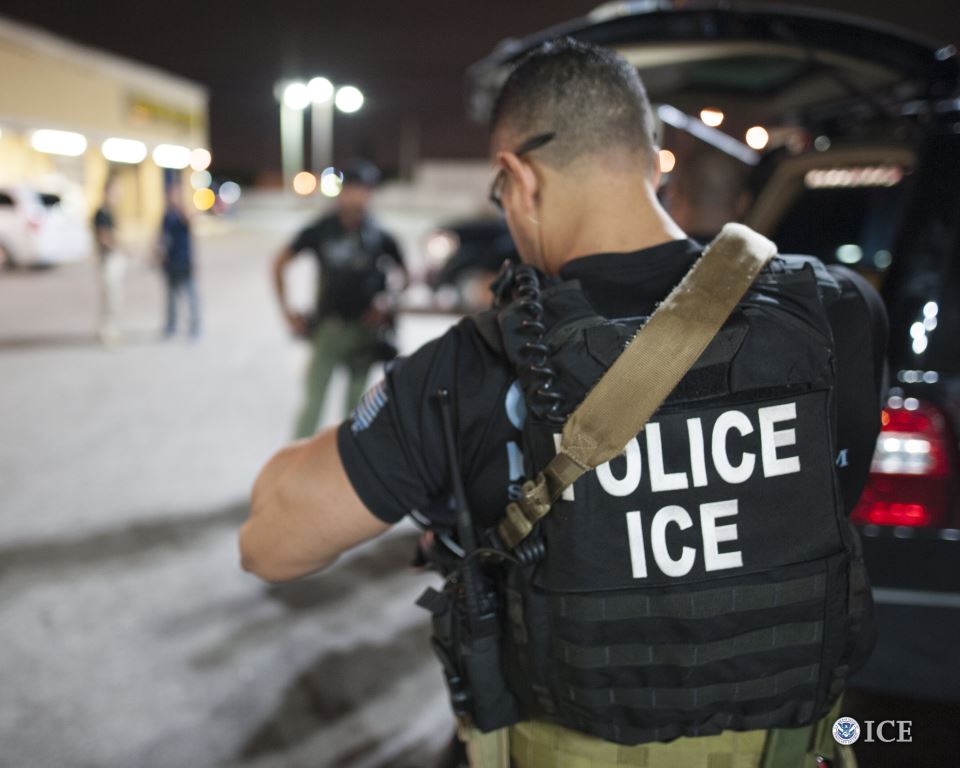
The United States Department of Homeland Security (DHS) has released the names and photographs of 24 Nigerians arrested by immigration authorities in relation to alleged criminal offences, as the country continues its deportation operations.
According to the DHS, the suspects were arrested in different parts of the United States by Immigration and Customs Enforcement (ICE).
The alleged offences listed against them include wire and mail fraud, money laundering, drug-related crimes, identity theft, assault, forgery and cruelty towards a child.
In a statement announcing the arrests, the DHS said the publication was intended to show non-US citizens with criminal records who had been arrested by immigration enforcement officers.
“The U.S. Department of Homeland Security is highlighting the worst of worst criminal aliens arrested by the U.S. Immigration and Customs Enforcement (ICE),” the statement reads.
“Under DHS leadership, the hardworking men and women of DHS and ICE are fulfilling President Trump’s promise and carrying out mass deportations – starting with the worst of the worst – including the illegal aliens you see here.”
The list released by DHS identifies the Nigerian nationals, the alleged offences associated with their arrests and the locations where they were apprehended.
The list published by the department identifies the Nigerian nationals, the offences associated with their cases and the locations where they were arrested.
Emmanuel Omowaiye was arrested for mail fraud in Richmond, Texas.
Laurene Onwuka arrested for fraud and impersonation in Chantilly, Virginia.
Olusegun Shonekan arrested for wire fraud in Newark, New Jersey.
Olusegun Olaseni was arrested for amphetamine sale in Greencastle, Indiana.
Peter Ude was arrested for wire fraud; in Atlanta, Georgia.
Newton Jemide was arrested for wire fraud, conspiracy and mail fraud in Fort Dix, New Jersey.
Shedrack Umukoro was arrested for money laundering, Yazoo City, Mississippi.
Olasoji Akinbode was arrested for fraud and impersonation in Kearny, New Jersey.
Oluwatosin Afolabi was arrested for fraud, Conroe, Texas.
Alameen Adetunji Tokosi was arrested for drug possession in Chicago, Illinois.
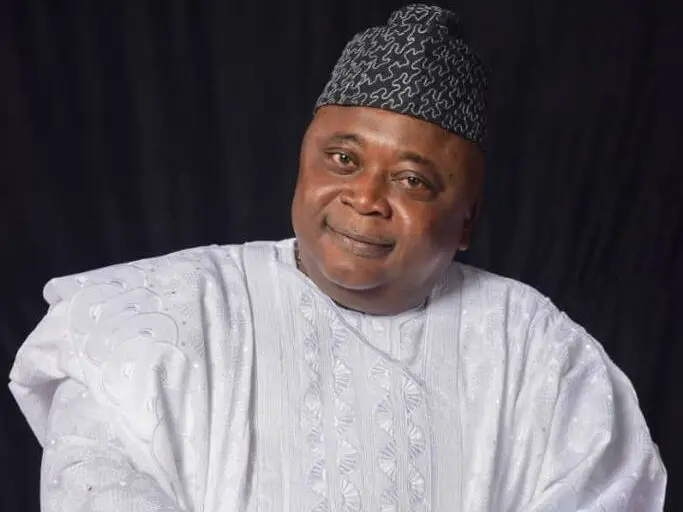
Oladipupo Adebutu, the Peoples Democratic Party (PDP) governorship candidate in Ogun State, has faulted the decision of the Independent National Electoral Commission (INEC) to leave out his name from the list of governorship candidates.
Adebutu, in a statement addressing the development, said he remained a registered member of the PDP and had completed the necessary registration and documentation within the stipulated period.
“I have not at any point left the PDP, and my commitment to our great party remains unwavering,” he said.
According to him, the governorship primary that produced him as the party’s candidate was conducted with INEC officials present as observers, adding that relevant documents were submitted for verification, certification and confirmation.
The PDP candidate said the circumstances surrounding the exclusion raised concerns, particularly as other party candidates contesting for the House of Assembly, House of Representatives and Senate had appeared on INEC’s published lists.
Adebutu said the Ogun State PDP had expressed concern over what it described as undue pressure from the ruling All Progressives Congress (APC) on INEC, adding that the party would pursue the matter through appropriate channels.
“We will pursue this matter through the appropriate channels and insist that due process is respected,” he said.
He also alleged that the party had faced attempts to frustrate its campaign, including restrictions on its billboards, attacks at campaign grounds and harassment of members.
According to him, such challenges would not deter the party from participating in the democratic process or seeking the support of voters across the state.
“No amount of intimidation should prevent the people of Ogun State from having a fair opportunity to choose leaders of choice,” Adebutu said.
He urged PDP members, supporters and residents of Ogun State to remain calm while the party takes the necessary steps to address the omission.
“The party has spoken, and the necessary steps are being taken to address this matter. I remain confident that it will be resolved, and I assure you that I will not abandon the struggle to bring the leadership and relief our people deserve,” he said.
Adebutu described the party’s ambition as a broader effort to improve the welfare and development of Ogun State, rather than a struggle centred on an individual.
“Our cause is bigger than any individual. It is about the dignity of our people, the progress of our state and the right of Ogun people to determine our own future,” he said.
Reaffirming his commitment to the party’s campaign message, Adebutu said, “OGUN FOR OGUN is more than a slogan. It is a call for leadership rooted in our people, responsive to our needs and committed to our welfare.”
He concluded by urging supporters to remain focused and resolute, declaring: “The journey to a better Ogun continues.”
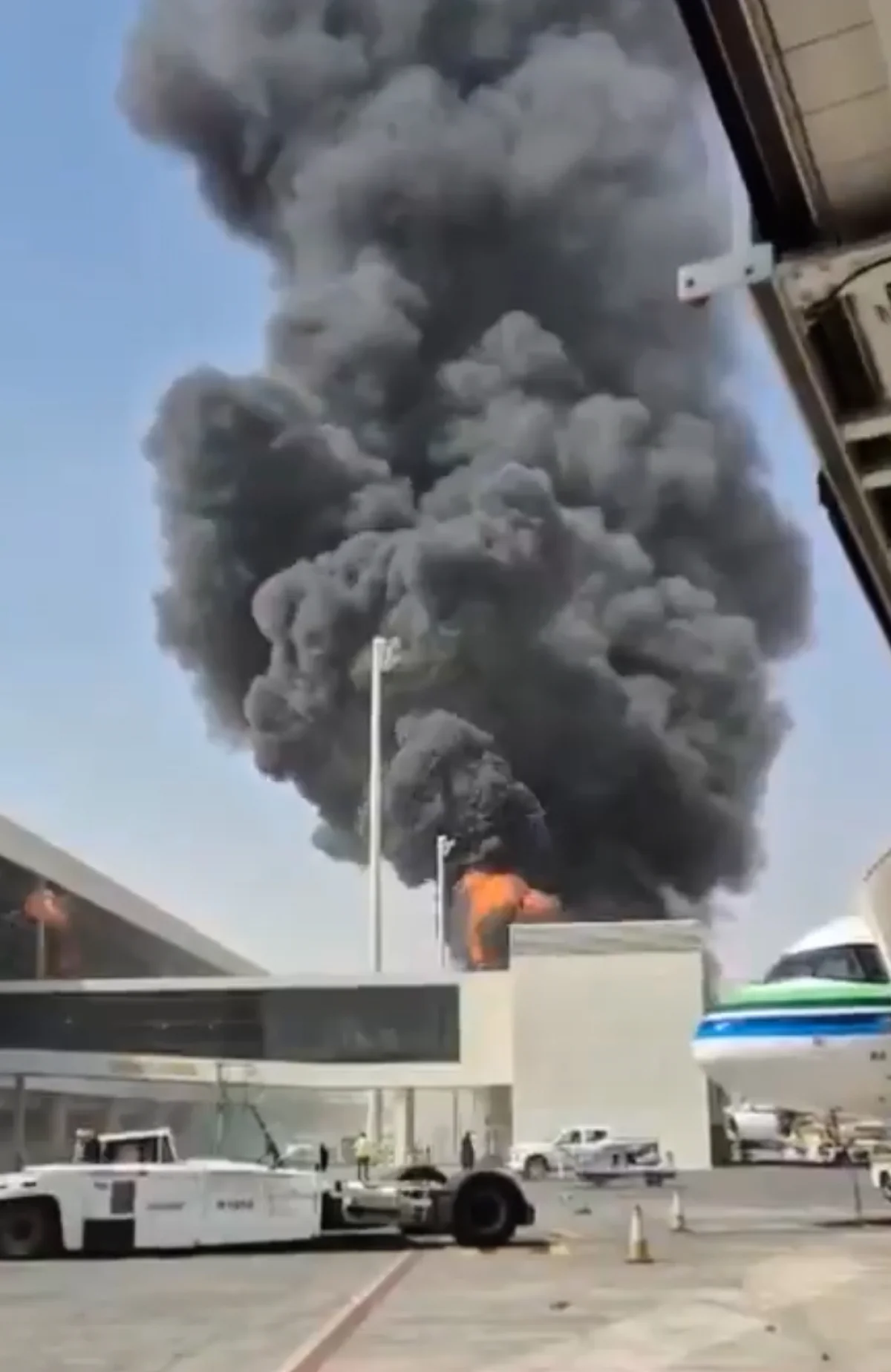
Twelve people were killed, while 309 others were injured following a deadly attack on theRiyadh’s international airportin Saudi Arabia by suspectedYemen’s Houthis.
The attack, reportedly the deadliest on Saudi soil in more than a decade, has prompted the Saudi-led coalition to vow on Sunday a decisive response against the group.
The coalition described the attack as a “full-fledged war crime” that a diplomatic source attributed to a missile.
The attack came during an unprecedented wave of Houthi strikes on the kingdom since a truce in the group’s long-running war with Yemen’s Riyadh-backed government unravelled in July.
The spiralling violence has raised the possibility of a wider escalation, with US President Donald Trump signalling Washington could join military action against the fighters.
A passenger told AFP they witnessed a strike in the airport’s domestic terminal.
“I was on gate 403,” the witness said. “I saw 401 hit, I saw injured in front of my eyes. Everyone was running.”
According to reports, four Saudi citizens were among those killed in the attack, as well as two Bangladeshis, one US citizen, one Egyptian, one Jordanian, one Syrian, one Palestinian and one Sudanese, the kingdom’s civil aviation authority said in a statement.
It said some of the 309 wounded were in serious condition.
Operations at the airport were suspended following the attack and authorities said damage assessments were ongoing.
The attack prompted health officials to activate a rare mass call-up of doctors to deal with the “serious emergency situation”, a medical source said.
Two doctors said that several pilgrims headed to Mecca were among the wounded.
Schools in Riyadh switched to remote learning for the second time in a month.
Parents in the capital received emails Sunday seen by AFP, citing an order from the education ministry, saying “all schools in Riyadh will switch to distance learning for the entire week”.
“The cowardly terrorist attack by the Terrorist Houthi Militia… which resulted in deaths and injuries among civilian passengers and airport staff, constitutes a full-fledged war crime,” coalition spokesman Major General Turki al-Malki said in a statement on X.
Earlier, the coalition said it had intercepted missiles targeting Saudi Arabia and destroyed launch platforms.
The Houthis claimed a series of attacks targeting the airport on Thursday that killed three people and damaged a plane, though they did not immediately take responsibility for any new strikes on Saturday.
Saturday’s attack was the deadliest in the kingdom since May 2015, when a suicide bombing by the Islamic State (IS) jihadist group killed 21 worshippers in a Shia mosque in the eastern Qatif governorate.
The civil war in Yemen flared back to life in July after a four-year, UN-brokered truce collapsed, months into a wider Middle East war that has rocked the region and roiled energy supplies and markets.
Saudi Arabia leads an international coalition that has supported Yemen’s government militarily since 2015 and is now being drawn deeper into its impoverished neighbour’s conflict.
Asked on Saturday whether he had changed his mind about joining Saudi strikes on the group, Trump said: “We may.”







 News4 years ago
 Privacy5 years ago
 News5 years ago

 News5 years ago
 Opinion5 years ago
 News5 years ago
 Sports5 years ago